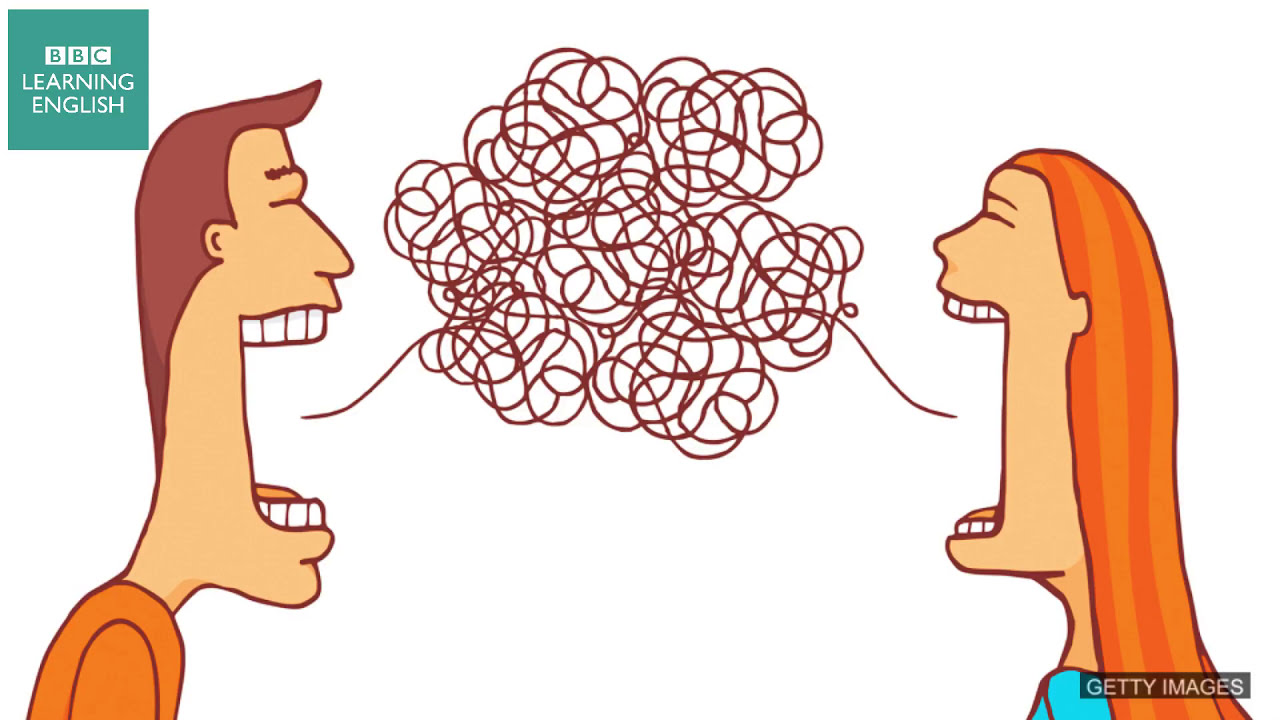
Learn about cultural differences in 6 minutes
video description
Date: 2020-09-18
Related videos



Comments and reviews: 9
Pepe
Hi! In case somenoe needs it, I'm posting the transcript, already formatted. I took it from the video subtitles.
---------------
Neil: Welcome to 6 Minute English. In this programme we bring you an expressive topic and six items of vocabulary. I'm Neil.
Tim: And I'm Tim. So, we had an argument just before we started the show.
Neil: We did, Tim. But no hard feelings?
Tim: None. No hard feelings is something you say to somebody you have argued with to say you'd still like to be friends. We often fall out over silly things.
Neil: Like who's going to introduce the show.
Tim: Or who's going to choose the quiz question.
Neil: But we understand each other. That's the important thing, isn't it? To fall out with somebody by the way, is another way of saying to argue or disagree with them. Did you know that you wave your arms around a lot when you're arguing, Tim?
Tim: No, I didn't know I did that.
Neil: That isn't very British.
Tim: I know. Using gestures, or movements you make with your hands or your head to express what you are thinking of feeling is common in some countries but not in others. Then there are some movements, like shaking your head, which mostly means 'no' but in some countries can mean the opposite.
Neil: That's right. In which country does shaking your head mean 'yes', Tim? Is it? a) Greece, b) Japan or c) Bulgaria?
Tim: No idea. I'll guess Greece. I do know that in India people shake their heads to mean lots of different things.
Neil: There are plenty of gestures you need to be careful with when you're meeting and greeting people from a culture that's different to your own, to avoid offending people or making an awkward faux pas.
Tim: If you make a faux pas it means you say or do something embarrassing in a social situation. For example, our every day use of the thumbs-up signal might offend people from the Middle East.
Neil: And to offend means to make somebody angry or upset.
Tim: Let's hear now from Business Professor Erin Meyer talking about how easy it is to misunderstand why some people behave the way they do in everyday situations when we don't belong to the same culture.
Professor Erin Meyer: A while ago I was in Dubai and one of my Emirati students was driving me home after a session and the car stopped at a light and she rolled down her window, and she started shouting at someone outside of the window. This guy was crossing the street with a big box of cloth. And he started shouting back, and she opened up the door, and they started gesticulating and shouting at one another. And I thought, wow, they're having a huge fight, I thought maybe he was going to hit her. And she got back in the car, and I said, well, what were you fighting about? And she said, 'Oh no, we weren't fighting, he was giving me directions to your hotel. And I thought that was a great example of how someone from another culture may misperceive or misunderstand something as a fight when in fact they were just being emotionally expressive. '
Neil: Gesticulating. What does that mean?
Tim: It means what I was doing earlier! Waving your arms around to express what you're feeling.
Neil: Erin Meyer was worried because her student and the man on the street were shouting and gesticulating at each other. She thought they were having a fight when in fact they were just being emotionally expressive.
Tim: And expressive means showing what you think or feel.
Neil: You were nodding in agreement, there, Tim. Which reminds me of our quiz question. In which country does shaking your head mean 'yes'? Is it? a) Greece, b) Japan or c) Bulgaria?
Tim: I said Greece.
Neil: That's the wrong answer I'm afraid. The right answer is Bulgaria. In some Southeastern European areas such as Bulgaria and southern Albania, shaking your head is used to indicate 'yes'. In those regions, nodding in fact means 'no' as well.
Tim: OK, I hope I remember that next time I meet somebody from Southeastern Europe. OK, shall we look back at the words we learned today?
Neil: No hard feelings is something you say to somebody you have argued with or beaten in a game or contest to say you'd still like to be friends.
Tim: For example, I always get the quiz questions right, unlike you Neil. But no hard feelings, OK?
Neil: That's not a very realistic example, Tim, But I'll let it go. Number two... to fall out with somebody means to argue or disagree with them.
Tim: I fell out with my best friend at school. We didn't talk to each other for a whole week!
Neil: That must've been a serious disagreement, Tim! What were you arguing about?
Tim: I can't remember. It was a long time ago. Number three, a 'gesture' is a movement you make with your hands or head to express what you are thinking of feeling.
Neil: She opened her arms wide in a gesture of welcome.
Tim: Or the verb: 'I gestured to Neil that we only had one minute left to finish the show!'
Neil: Is that true, Tim? You're nodding your head, but we should also quickly mention 'gesticulate' which means to make gestures with your hands or arms!
Tim: A 'faux pas' is saying or doing something embarrassing in a social situation. For example, I committed a serious faux pas at a party last night that I'm too embarrassed to tell you about!
Neil: Oh dear, Tim. I hope you didn't offend too many people - 'offend' is our next word and it means to make somebody angry or upset.
Tim: Well, you've given us a good example already, Neil, so let's move on to the final word - 'expressive', which means showing what you think or feel.
Neil: Tim has a very expressive face.
Tim: Thanks! Another quick example - 'I waved my hand expressively to signal to Neil that it was time to finish the show.
Neil: Taking my cue from Tim, that's all for today. But please remember to check out our Instagram, Twitter, Facebook and YouTube pages.
Both: Bye!
reply
Familia
What I understood was that gestures or expressions are a big way to communicate something, and you have to be carefull about this because if you don't know the manners in some countries, you can offend somebody. And I found interesting how the things change in different cultures, as the example of the teacher in Dubai who was thinking that her student was figthing with a guy but actually he was giving her directions, and that makes me thing how many people in Costa Rica offend a friend as a greeting or as way to say I love you probably foragners thinks that they are enemies haha but I guess that is quite important to know those things before to travel in a country, to avoid do something misrespectful or just understand that some actions are completely normal and you don't have to worry about
reply
Nawar
When I heard you saying ' faux pas' , I though that I was listening to another language then I looked it up in a dictionary to find out its origin and it was as I expected, a French word.
In my country there are so many body gestures especially with our hands, head, eyes, nose, lips, and even eyebrows
I think that globalization has helped people from different cultures understand each other more easily. So, nowadays you can see people, for example from the far east, are doing western gestures they have not been familiar with before and vice versa .
reply
Nicole
When someone travels to another country, you are in another completely different world even being the closest country, for example Nicaragua is one of the closest countries of Costa Rica and it has a lot of differents words between Costa Rica and Nicaragua, that represents our culture always is different even in the same continent.
Everything changes our food, greetings, words, lifestyle, that is a good reason to research before travel to another country that for fixing our experience in another country.
reply
Halima
Can you make some videos and lessons for lower levels please. I am a teacher and try to help my students do things out of class, but many have a lower level - and most of your lessons seem to be aimed at upper intermediate, or some intermediate. what about elementary levels or even beginner?
reply
Abu-Aley
Thumb up in the middle east is NOT offensive at all, opposite we, as I'm from the middle east, use it to show the other person that they have done or said something very good.
cheers,
Ahmad,
reply
Huda
please can someone help with spelling the word means ; saying or doying somthing embarrassing in a social situation. mentioned ad the last part of first topic (cultural differences )
reply
education
It's ok to use thumbs-up in my culture(middle east ) and it doesn't upsets or offends us
I think you mintion something is wrong in your video about my culture
Thank you
reply
ladakh
Long live the bbc and it's team members for your news service and 6 minutes English class to improve my English thanks a lot.
reply
Add a review, comment
Other channel videos