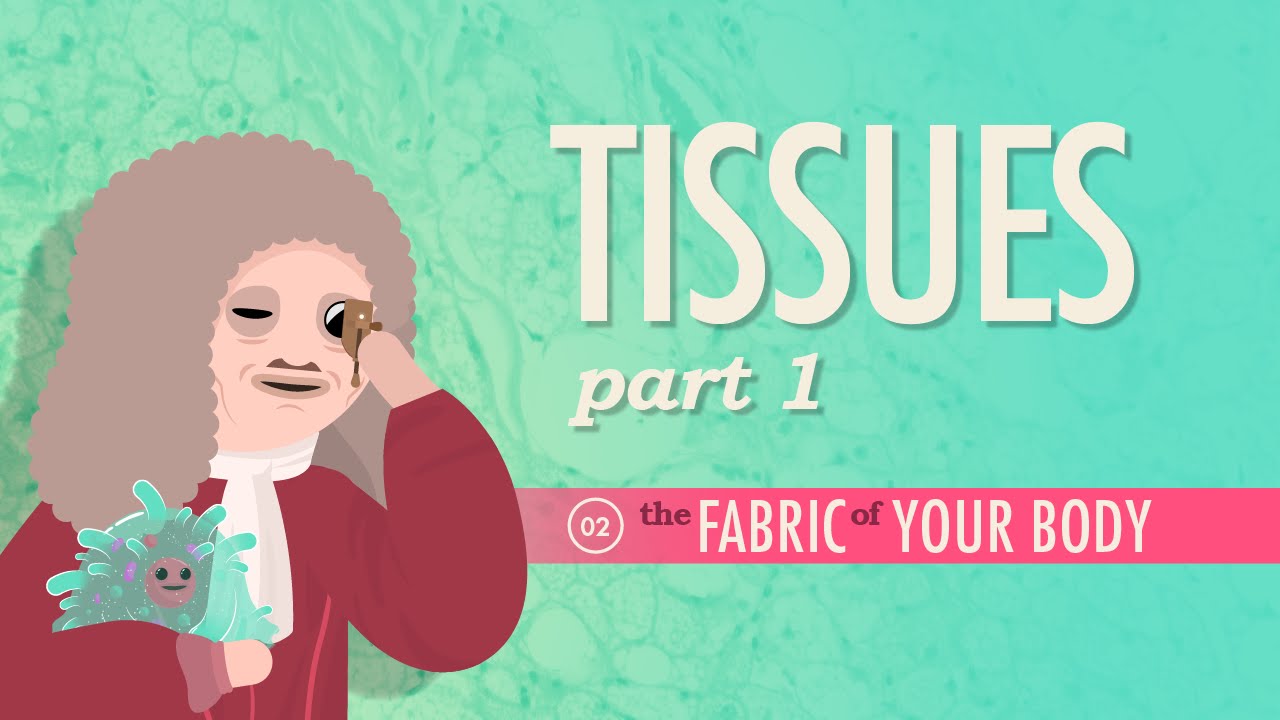
Tissues, Part 1: Crash Course A&P #2
video description
Date: 2022-04-04
Related videos






Comments and reviews: 10
victoria
In case anyone needs notes for this:
Homeostasis: Balance of materials and energy used to keep an individual alive
Maintained through cells
Organs: when two or more tissues combine
Tissue: the fabric of the body
Tissue means woven
Type of tissue will define the function of the tissue
Four primary tissue types
Nervous tissue: Control and communication
Muscle tissues: Allow movement
Epithelial tissues: Cover and protect the body
Connective tissues: Provide support to the body
Histology: The study of tissue
Carmine: A red dye derived from the scaled of crushed up insects used to stain tissue to find different types of cell structure
Nervous tissue: forms central nervous system and nerves for the peripheral nervous system, functions to sense stimuli and send electrical impulses through the body
Neurons: Specialized building blocks of the nervous system, function to generate and conduct the electrochemical nerve impulses (i. e. think, dreaming, eating, etc)
Glial cells: Provide support, insulation, protection, and fuses to blood vessels
Nervous tissue is composed of:
Cell bod/(soma): Neuron-s life support
Nucleus
Mitochondria
DNA
Dendrites: Collect signals from other cells and send signals back to the cell body/(soma)
Axon: carries messages to other neurons, muscles, and glands
Nervous system: Composed of the brain and spinal cord of the central nervous system, function to regulate and control the body-s functions
Peripheral nervous system: Nerves, function to regulate and control the body-s functions
Muscle tissues: Contract and move
Three types of muscle tissues:
Skeletal muscle tissue: long multinucleate parallel cells containing striations, attaches bone to muscle and supports body but functions to make the body move. Moves voluntary.
Location: Throughout the body
Multinucleate: Long, cylindrical cells
Striations: Fine black lines running perpendicular to the fibers
In short: long straight cells, striations, multiple nuclei
Cardiac muscle tissue: cells divide and converge, one nucleus per cell, striated, with intercalated disks, works involuntarily, functions to propel blood through the circulatory system
Location: In the heart
Unlike skeletal muscle their cells are uninucleate meaning there is only one nucleus
Intercalated disks: hold muscle cells together during contraction and contain pores for electrical and chemical signals to pass-through one cell to the next
In short: Striated, one nucleus, branching structure
Smooth muscle tissue: Short tapered cells, but no striations. Moves involuntary. Function to squeeze substances through a contraction.
Location: blood vessels and hollow organs in the digestive and urinary tracts as well as the uterus
The difference from the other two muscle tissues: No striations
In short: Uninucleate, packed together, no striations
reply
In case anyone needs notes for this:
Homeostasis: Balance of materials and energy used to keep an individual alive
Maintained through cells
Organs: when two or more tissues combine
Tissue: the fabric of the body
Tissue means woven
Type of tissue will define the function of the tissue
Four primary tissue types
Nervous tissue: Control and communication
Muscle tissues: Allow movement
Epithelial tissues: Cover and protect the body
Connective tissues: Provide support to the body
Histology: The study of tissue
Carmine: A red dye derived from the scaled of crushed up insects used to stain tissue to find different types of cell structure
Nervous tissue: forms central nervous system and nerves for the peripheral nervous system, functions to sense stimuli and send electrical impulses through the body
Neurons: Specialized building blocks of the nervous system, function to generate and conduct the electrochemical nerve impulses (i. e. think, dreaming, eating, etc)
Glial cells: Provide support, insulation, protection, and fuses to blood vessels
Nervous tissue is composed of:
Cell bod/(soma): Neuron-s life support
Nucleus
Mitochondria
DNA
Dendrites: Collect signals from other cells and send signals back to the cell body/(soma)
Axon: carries messages to other neurons, muscles, and glands
Nervous system: Composed of the brain and spinal cord of the central nervous system, function to regulate and control the body-s functions
Peripheral nervous system: Nerves, function to regulate and control the body-s functions
Muscle tissues: Contract and move
Three types of muscle tissues:
Skeletal muscle tissue: long multinucleate parallel cells containing striations, attaches bone to muscle and supports body but functions to make the body move. Moves voluntary.
Location: Throughout the body
Multinucleate: Long, cylindrical cells
Striations: Fine black lines running perpendicular to the fibers
In short: long straight cells, striations, multiple nuclei
Cardiac muscle tissue: cells divide and converge, one nucleus per cell, striated, with intercalated disks, works involuntarily, functions to propel blood through the circulatory system
Location: In the heart
Unlike skeletal muscle their cells are uninucleate meaning there is only one nucleus
Intercalated disks: hold muscle cells together during contraction and contain pores for electrical and chemical signals to pass-through one cell to the next
In short: Striated, one nucleus, branching structure
Smooth muscle tissue: Short tapered cells, but no striations. Moves involuntary. Function to squeeze substances through a contraction.
Location: blood vessels and hollow organs in the digestive and urinary tracts as well as the uterus
The difference from the other two muscle tissues: No striations
In short: Uninucleate, packed together, no striations
reply
Sudharsan
Here are some notes on this video
TYPES OF TISSUES: -
Nervous tissue (control and communication. -
Muscle tissue (movement. -
Epithelial tissue (cover and protect the body. -
Connective tissue (provide support. -
NERVOUS TISSUE: -
Functions: Sensing stimuli and sending electrical impulses throughout the body often in response to those stimuli. -
Made up of two different types of cells: NEURONS (cell body-soma, dendrites & axon) and GLIAL CELLS (provides support, insulation, protection & tethers the neurons to blood vessels. -
MUSCLE TISSUE: -
They can contract. -
They are well-vascularised (supplied with adequate blood. -
TYPES - Skeletal, Cardiac and Smooth. -
SKELETAL: -
Long multi-nucleate parallel cells, striations (fine black lines running perpendicular to the fibers. -
They pull on the bones they are attached to as they contract enabling movement. -
Their function is voluntary. -
CARDIAC: -
Cells divide and converge, one nucleus per cell, striated and have intercalated disks (which contain pores through which electrical and chemical signals pass from one cell to an other) at the ends of the cells. -
Their function is involuntary. -
SMOOTH: -
Lines the walls of most blood vessels and hollow organs like digestive organs, urinary tract and uterus. -
Their cells are short, tapered at the ends, uni-nucleate and tightly attached with each other forming a tightly netted sheet. -
Their function is involuntary.
reply
Here are some notes on this video
TYPES OF TISSUES: -
Nervous tissue (control and communication. -
Muscle tissue (movement. -
Epithelial tissue (cover and protect the body. -
Connective tissue (provide support. -
NERVOUS TISSUE: -
Functions: Sensing stimuli and sending electrical impulses throughout the body often in response to those stimuli. -
Made up of two different types of cells: NEURONS (cell body-soma, dendrites & axon) and GLIAL CELLS (provides support, insulation, protection & tethers the neurons to blood vessels. -
MUSCLE TISSUE: -
They can contract. -
They are well-vascularised (supplied with adequate blood. -
TYPES - Skeletal, Cardiac and Smooth. -
SKELETAL: -
Long multi-nucleate parallel cells, striations (fine black lines running perpendicular to the fibers. -
They pull on the bones they are attached to as they contract enabling movement. -
Their function is voluntary. -
CARDIAC: -
Cells divide and converge, one nucleus per cell, striated and have intercalated disks (which contain pores through which electrical and chemical signals pass from one cell to an other) at the ends of the cells. -
Their function is involuntary. -
SMOOTH: -
Lines the walls of most blood vessels and hollow organs like digestive organs, urinary tract and uterus. -
Their cells are short, tapered at the ends, uni-nucleate and tightly attached with each other forming a tightly netted sheet. -
Their function is involuntary.
reply
Howard
This episode should be updated to include the level above the human body, by which I mean the biome. Just as a modern discussion of genetics would be incomplete without consideration of epigenetics then this topic would be less than complete without consideration of the biome. This would be particularly relevant with regards to the body's physiology.
reply
This episode should be updated to include the level above the human body, by which I mean the biome. Just as a modern discussion of genetics would be incomplete without consideration of epigenetics then this topic would be less than complete without consideration of the biome. This would be particularly relevant with regards to the body's physiology.
reply
DigiExploration
Great series. I used to write about cryptocurrencies, but I know migrating into health and fitness and this series seems to be a great resource to get a very general scoop on all things human biology. Surely would recommend it to anyone learning this stuff at school.
reply
Great series. I used to write about cryptocurrencies, but I know migrating into health and fitness and this series seems to be a great resource to get a very general scoop on all things human biology. Surely would recommend it to anyone learning this stuff at school.
reply
Adel
I-ve left my trade of 10 years to start university again, I was a plumber. I-m 29 now.
I-m embarking on a 7 year journey to become a doctor of medicine. I will be starting my first trimester in 3 weeks, thanks for sharing the knowledge in such an easy way.
reply
I-ve left my trade of 10 years to start university again, I was a plumber. I-m 29 now.
I-m embarking on a 7 year journey to become a doctor of medicine. I will be starting my first trimester in 3 weeks, thanks for sharing the knowledge in such an easy way.
reply
Jos-
extremely complicated. It's true that it's not simple and your studies will not alter that. As for it being overwhelming, that can be eleviated if you take your study one step at a time. I discovered an article on Sebs Study Crammer very helpful for this.
reply
extremely complicated. It's true that it's not simple and your studies will not alter that. As for it being overwhelming, that can be eleviated if you take your study one step at a time. I discovered an article on Sebs Study Crammer very helpful for this.
reply
MC
I love the crash courses, I watch all of them. I just think they are too fast spoken, if they could slow down a bit that would be very helpful apart than that, all good, well done for the awesome work,
reply
I love the crash courses, I watch all of them. I just think they are too fast spoken, if they could slow down a bit that would be very helpful apart than that, all good, well done for the awesome work,
reply
Seebzters
I feel like the nerve cell is the easiest to identify by image with its soma, dendrite, and axon. The glial cell is like a mini nerve cell.
reply
I feel like the nerve cell is the easiest to identify by image with its soma, dendrite, and axon. The glial cell is like a mini nerve cell.
reply
Alpha
I just wanted to tell u that I passed with a B+ just by watching your vids, please keep up the good work and thank you for the video! :)
reply
I just wanted to tell u that I passed with a B+ just by watching your vids, please keep up the good work and thank you for the video! :)
reply
McJohn
I think I've got a Good and excellent lecturer for all my courses esp. anatomy and physiology. Thanks very much crash course.
reply
I think I've got a Good and excellent lecturer for all my courses esp. anatomy and physiology. Thanks very much crash course.
reply
Add a review, comment
Other channel videos