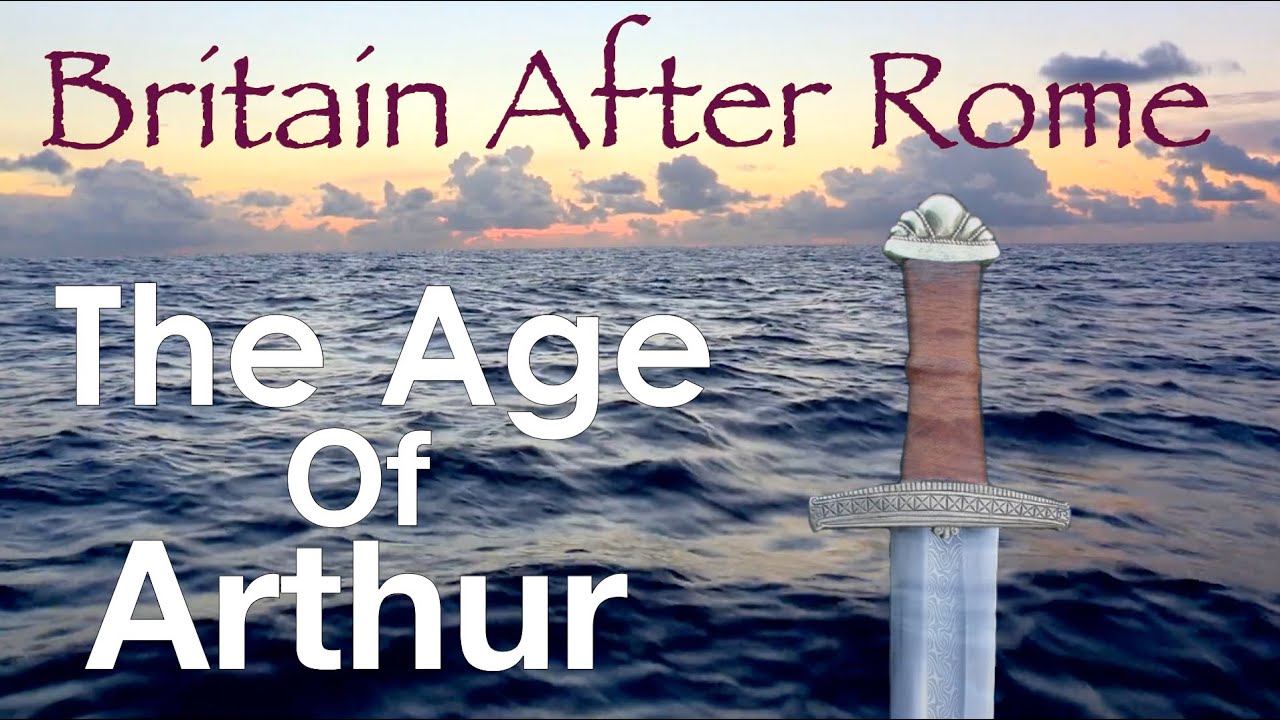
Britain After Rome The Age of Arthur - History Documentary
video description
One piece of evidence for this is that Nennius, writing in the 9th century A. D, gives the same list of victorious battles as victories of Arthur as the list of victories that the 5th century chroniclers attributed to Ambrosius Arelianus.
Britons, many of whom in the period could read or write or speak Latin, could hardly be expected to use a stuffy, long Roman name for their hero. Instead they called him by his British name. And that is the name that stuck to him in subsequent legend and story.
Date: 2022-09-10
Related videos






Comments and reviews: 19
Mark
I cannot imagine where you got the information for this documentary/ The first mention of Arthur was in the epic poem The Gododdin written by a monk around the year 600 in Edinburgh Scotland. I burst out laughing at the assertion that the conquered part of Britain still retained a military culture. That was of course not the case as the Romans did not allow warriors among conquered people. This was doubly true after Boudicca's famous rebellion. You also make it sound as if no real information about Arthur exists. The legend you know was written be Geoffrey of Monmouth in the 12th century about 600 years after Arthur's death. Sorry this started to be a history lesson but I suspect if you want to know the true story you are quite capable of finding it out. .
reply
I cannot imagine where you got the information for this documentary/ The first mention of Arthur was in the epic poem The Gododdin written by a monk around the year 600 in Edinburgh Scotland. I burst out laughing at the assertion that the conquered part of Britain still retained a military culture. That was of course not the case as the Romans did not allow warriors among conquered people. This was doubly true after Boudicca's famous rebellion. You also make it sound as if no real information about Arthur exists. The legend you know was written be Geoffrey of Monmouth in the 12th century about 600 years after Arthur's death. Sorry this started to be a history lesson but I suspect if you want to know the true story you are quite capable of finding it out. .
reply
C.
Latin (or Romance languages, respectively) always prevailed against the languages of the Germanic invaders, be it Spain, Gaul or Italy. It just took 100 years that the Normans were completely linguistically romanized, after they were given Normandy as a fief in 915 AD. If the Britons had been romanized before 410 AD, English would not have become the prevailing language in Britain. Angles and Saxons would rather have adopted the Vulgar Latin spoken in Britain in the 5th century. Also, the survival of the Welsh and the Cornish languages show that Britains had not adopted Latin. Instead, only a small upper class in the cities seems to have been romanized that soon disappeared after the arrival of the Anglo-Saxons.
reply
Latin (or Romance languages, respectively) always prevailed against the languages of the Germanic invaders, be it Spain, Gaul or Italy. It just took 100 years that the Normans were completely linguistically romanized, after they were given Normandy as a fief in 915 AD. If the Britons had been romanized before 410 AD, English would not have become the prevailing language in Britain. Angles and Saxons would rather have adopted the Vulgar Latin spoken in Britain in the 5th century. Also, the survival of the Welsh and the Cornish languages show that Britains had not adopted Latin. Instead, only a small upper class in the cities seems to have been romanized that soon disappeared after the arrival of the Anglo-Saxons.
reply
MaxSt.
1: 56 in the 5th and 6th centuries, the Roman Empire was strong and thriving in in its capital, on its eastern half of the empire, led by glittering Constantinople. Byzantium is NOT the name of the empire, it was merely the name of the ancient district, on which Constantinople was built on. The ONE, and ONLY, Roman Empire, was led by the jewel of Europe, Constantinople, for over a century before, the City of Rome fell. NO it was not cut into four or half, there was only ever ONE United Roman Empire.
reply
1: 56 in the 5th and 6th centuries, the Roman Empire was strong and thriving in in its capital, on its eastern half of the empire, led by glittering Constantinople. Byzantium is NOT the name of the empire, it was merely the name of the ancient district, on which Constantinople was built on. The ONE, and ONLY, Roman Empire, was led by the jewel of Europe, Constantinople, for over a century before, the City of Rome fell. NO it was not cut into four or half, there was only ever ONE United Roman Empire.
reply
education
I can tell withing 10 seconds of hearing the first narrative sentences whether I will continue watching or not.
Usually, I am dissapointed, even more so after looking at what is a promising thumbnail advertising the video
Again and again, History Time never fails to deliver an informative and engaging commentary with its video.
Thank you History Time, you really should have your own airtime on the digitial tv spectrum.
reply
I can tell withing 10 seconds of hearing the first narrative sentences whether I will continue watching or not.
Usually, I am dissapointed, even more so after looking at what is a promising thumbnail advertising the video
Again and again, History Time never fails to deliver an informative and engaging commentary with its video.
Thank you History Time, you really should have your own airtime on the digitial tv spectrum.
reply
Brian
If you enjoy historical fiction extrapolated from actual history, read Jack Whyte's Camloud series beginning with The Skystone. The series begins just before the Roman's left and the tumultuous period after. It's written so well it's like stepping into a time machine. No magic or fantasy stuff, just gritty realism.
reply
If you enjoy historical fiction extrapolated from actual history, read Jack Whyte's Camloud series beginning with The Skystone. The series begins just before the Roman's left and the tumultuous period after. It's written so well it's like stepping into a time machine. No magic or fantasy stuff, just gritty realism.
reply
Jim
Great job.
On a side note, it always amazes me that buildings, roads, forts built by the Roman's are still standing, thousands of years later. Whilst roads and buildings built by modern means barely last 50 100 years. And yes I realize that substandard materials are used because of cost and greed. But stil.
reply
Great job.
On a side note, it always amazes me that buildings, roads, forts built by the Roman's are still standing, thousands of years later. Whilst roads and buildings built by modern means barely last 50 100 years. And yes I realize that substandard materials are used because of cost and greed. But stil.
reply
Miss
Really incredible research, delivery indeed better than most history programming. Standing Ovation. Perhaps only 1 criticism burgers representing American influence and contribution? May I suggest Silicon valley instead with apple phones or Telsa? Other than that seriously incredible programing.
reply
Really incredible research, delivery indeed better than most history programming. Standing Ovation. Perhaps only 1 criticism burgers representing American influence and contribution? May I suggest Silicon valley instead with apple phones or Telsa? Other than that seriously incredible programing.
reply
Revolvermaster
Another World Class presentation! Well presented, obviously well researched and put together in an interesting coherent manner.
Even the background music is perfectly timed and fitting. Im a very critical A-hole and see no way to improve upon your productions.
reply
Another World Class presentation! Well presented, obviously well researched and put together in an interesting coherent manner.
Even the background music is perfectly timed and fitting. Im a very critical A-hole and see no way to improve upon your productions.
reply
education
Calling Gratian incompetent' was an unwarranted statement. He defeated several barbarian invasions and administered the state as well as anyone could in the late 4th century, including appointing Theodosius the Great as co-emperor instead of a relative.
reply
Calling Gratian incompetent' was an unwarranted statement. He defeated several barbarian invasions and administered the state as well as anyone could in the late 4th century, including appointing Theodosius the Great as co-emperor instead of a relative.
reply
Kevin
I know this is a late comment, but your documentaries are professional quality! I've watched many many docs in my time and many tend to patronize/insult the viewer's intellect or take a non-neutral standpoint. Yours are well done!
reply
I know this is a late comment, but your documentaries are professional quality! I've watched many many docs in my time and many tend to patronize/insult the viewer's intellect or take a non-neutral standpoint. Yours are well done!
reply
lasvegasloner
This was fantastic! Finally I see the hard work of somebody willing to stitch so much together, yet also refrain from making assumption. this is the best way for me to learn or find material to ponder. Thank you!
reply
This was fantastic! Finally I see the hard work of somebody willing to stitch so much together, yet also refrain from making assumption. this is the best way for me to learn or find material to ponder. Thank you!
reply
Liv
Signe Pike has written some interesting historical fiction based on research about a forgotten Scottish queen and her twin brother, about whom Merlin was likely based. I cant wait to read her third novel.
reply
Signe Pike has written some interesting historical fiction based on research about a forgotten Scottish queen and her twin brother, about whom Merlin was likely based. I cant wait to read her third novel.
reply
Mark
Constantine never embraced the Christian faith, he used Christianity for his own political purposes. He remained a bloodthirsty pagan to his dying day, getting baptized near the end to hedge his bets.
reply
Constantine never embraced the Christian faith, he used Christianity for his own political purposes. He remained a bloodthirsty pagan to his dying day, getting baptized near the end to hedge his bets.
reply
Daz
The age of Arthur was long before Rome. He was a king sure, but he was also a nephilim giant from before the flood. From the age of atlantis. Thats where the actual story comes from anyways.
reply
The age of Arthur was long before Rome. He was a king sure, but he was also a nephilim giant from before the flood. From the age of atlantis. Thats where the actual story comes from anyways.
reply
ABC
Citizen Rights superseded by.
Corporation Profits, superseded by.
Satan: Punishment for unbelievers, That's why!
Rapture/Escape, The Only Answer!
Really, Hope This Year!
reply
Citizen Rights superseded by.
Corporation Profits, superseded by.
Satan: Punishment for unbelievers, That's why!
Rapture/Escape, The Only Answer!
Really, Hope This Year!
reply
Cristina
These documentary are excellent. The voice, the speed, the vocabulary, the tone, and of course, the subject, are all very, very good. I always give preference for History Time.
reply
These documentary are excellent. The voice, the speed, the vocabulary, the tone, and of course, the subject, are all very, very good. I always give preference for History Time.
reply
King
Great video. Caracalla was black. I mean, look at his bust. Severus looks like an ancient Colin Kaepernick. There's some stuff about Roman history people aren't telling you.
reply
Great video. Caracalla was black. I mean, look at his bust. Severus looks like an ancient Colin Kaepernick. There's some stuff about Roman history people aren't telling you.
reply
Canuck
But why did a wall work against the Northern Celts but not for Trump against the Mexicans?
For that matter, why does a wall work in Israel, but not in America?
reply
But why did a wall work against the Northern Celts but not for Trump against the Mexicans?
For that matter, why does a wall work in Israel, but not in America?
reply
Gary
I can see why we're having climate change after a couple Thousand Years of people cutting down trees. can't believe how bare the land is I thought Australia was bad
reply
I can see why we're having climate change after a couple Thousand Years of people cutting down trees. can't believe how bare the land is I thought Australia was bad
reply
Add a review, comment
Other channel videos