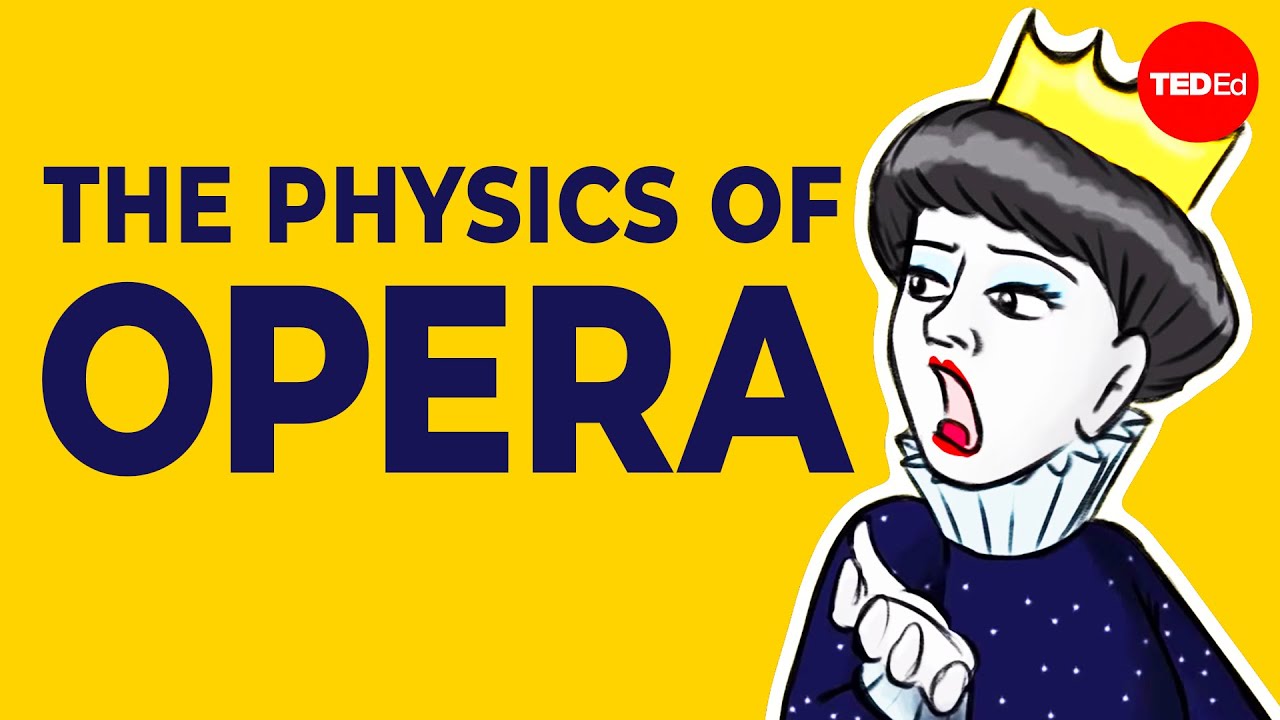
Whats a squillo, and why do opera singers need it? - Ming Luke
video description
Date: 2020-08-22
Related videos




Comments and reviews: 10
killerbunny123123
Sadly, things are not exactly like that, today. Indeed, put in an overly simple way, squillo in the voice is the production of those rich harmonics/overtones. And as the video says, much of them can be controlled through the oral tract (lips, tongue, jaw, pharynx, larynx.
Now, here comes the trouble: the fundamental pillar in a singer's voice that brings not only the squillo, which will make the voice loud, ringing and cutting through even the fullest orchestra, but also CLARITY in their vowels, is the actual development of the voice, or the correct set of muscles used to manipulate the vocal chords, which sadly today, is no longer done. Or rather, what is developped today, is the set of muscles that would make a singer produce a sound that is either very hollow (so, with no squillo at all, or with a minimal amount) or a sound that is white and squeezed, shrill (like the soprano you hear in this video.
A very simple test: hear this soprano in the video, or any of today's contemporary ones, and pay attention to their vowels; you can't hear a clear eh, ah, eeh, ooh, etc. in most of them. Try hearing a soprano of an older age, such as Claudia Muzio (one of Puccini's own sopranos) and pay attention to the vowels, then. There's simply no comparison. Not only the clarity, but the sheer volume and efficiency of their voice, today's opera is done with a studio approach, as if singing into a microphone. the sound might pass over the orchestra, but it never quite slaps you in the face, gripping you and capturing you like it did back then. at other times, it never even leaves the stage and were it not for supertitles the audience wouldn't even be able to understand.
reply
Sadly, things are not exactly like that, today. Indeed, put in an overly simple way, squillo in the voice is the production of those rich harmonics/overtones. And as the video says, much of them can be controlled through the oral tract (lips, tongue, jaw, pharynx, larynx.
Now, here comes the trouble: the fundamental pillar in a singer's voice that brings not only the squillo, which will make the voice loud, ringing and cutting through even the fullest orchestra, but also CLARITY in their vowels, is the actual development of the voice, or the correct set of muscles used to manipulate the vocal chords, which sadly today, is no longer done. Or rather, what is developped today, is the set of muscles that would make a singer produce a sound that is either very hollow (so, with no squillo at all, or with a minimal amount) or a sound that is white and squeezed, shrill (like the soprano you hear in this video.
A very simple test: hear this soprano in the video, or any of today's contemporary ones, and pay attention to their vowels; you can't hear a clear eh, ah, eeh, ooh, etc. in most of them. Try hearing a soprano of an older age, such as Claudia Muzio (one of Puccini's own sopranos) and pay attention to the vowels, then. There's simply no comparison. Not only the clarity, but the sheer volume and efficiency of their voice, today's opera is done with a studio approach, as if singing into a microphone. the sound might pass over the orchestra, but it never quite slaps you in the face, gripping you and capturing you like it did back then. at other times, it never even leaves the stage and were it not for supertitles the audience wouldn't even be able to understand.
reply
Elena
Nice but partially you got it wrong:
1) lo squillo is not something you reach through modifying lips and tongue (tongue shouldnt ever interfere, it really comes from the breathing technique which you quoted as the second step. On the contrary breathing is everything and its something we study all life long to perfect, a mistake in that makes no squillo at all.
2) the vibrato is not something we come up with. Its not like we make the voice go up and down, its a natural feature of a healthy voice. On the contrary, la voce ferma, still voice, is an artificial effect.
Also, during centuries the techniques developed as an answer to the different composing characteristics of the musics, but also theatre did. The introduction of the pit made a huge difference in the way a theatre would work.
Also! Another thing that changed through centuries is the frequency adopted for the A, which used to be lower and now is rising (way too much. This provokes an overall change in how the music is made and perceived by the audience.
reply
Nice but partially you got it wrong:
1) lo squillo is not something you reach through modifying lips and tongue (tongue shouldnt ever interfere, it really comes from the breathing technique which you quoted as the second step. On the contrary breathing is everything and its something we study all life long to perfect, a mistake in that makes no squillo at all.
2) the vibrato is not something we come up with. Its not like we make the voice go up and down, its a natural feature of a healthy voice. On the contrary, la voce ferma, still voice, is an artificial effect.
Also, during centuries the techniques developed as an answer to the different composing characteristics of the musics, but also theatre did. The introduction of the pit made a huge difference in the way a theatre would work.
Also! Another thing that changed through centuries is the frequency adopted for the A, which used to be lower and now is rising (way too much. This provokes an overall change in how the music is made and perceived by the audience.
reply
Tristan
Ok, just a little precision: vibrato is NOT a musical effect for singers. When you learn opera singing, you learn to breathe properly, relax your larynx and support your sound with enough air. A relaxed larynx, when exposed to a strong airflow, oscillates (just like a sheet of paper, lying flat on a table, does when you blow on it): vibrato is the direct consequence of a good and healthy vocal technique. Of course, it can be modified at will to create certain effects, but the only way to do so is to tense the larynx, which singers try to avoid most of all. Of course, it's a different matter entirely for string players and other musicians.
reply
Ok, just a little precision: vibrato is NOT a musical effect for singers. When you learn opera singing, you learn to breathe properly, relax your larynx and support your sound with enough air. A relaxed larynx, when exposed to a strong airflow, oscillates (just like a sheet of paper, lying flat on a table, does when you blow on it): vibrato is the direct consequence of a good and healthy vocal technique. Of course, it can be modified at will to create certain effects, but the only way to do so is to tense the larynx, which singers try to avoid most of all. Of course, it's a different matter entirely for string players and other musicians.
reply
Natalka
Great vid although I must say, sometimes bel canto and Wagner can cross over - the two are often described as separate today but even Wagner valued bel canto teachings to some extent and i believe he even got one or two of his singers to study with Manuel Garcia who was a vocal pedagogue of the Bel Canto technique (although the term bel canto also has problems, being described by many as having varied in meaning a lot)
reply
Great vid although I must say, sometimes bel canto and Wagner can cross over - the two are often described as separate today but even Wagner valued bel canto teachings to some extent and i believe he even got one or two of his singers to study with Manuel Garcia who was a vocal pedagogue of the Bel Canto technique (although the term bel canto also has problems, being described by many as having varied in meaning a lot)
reply
Atriya
Excuse me, but our brains don't use the fundamental to recognise the note, our brain uses the difference between the nearest two overtones (e. g. overtones 3 and 4, or 10 and 11. You can have a sound and alter it digitally, removing the fundamental, and leaving only the overtones, and you'll still hear the same note.
reply
Excuse me, but our brains don't use the fundamental to recognise the note, our brain uses the difference between the nearest two overtones (e. g. overtones 3 and 4, or 10 and 11. You can have a sound and alter it digitally, removing the fundamental, and leaving only the overtones, and you'll still hear the same note.
reply
margi
Squillo doesnt come from tongue movement.
It comes from opening up the higher resonators.
Using the space above the eye brows, behind the ears and lifting the soft palate.
Literally getting your skull to ring no matter where you are in the scale.
reply
Squillo doesnt come from tongue movement.
It comes from opening up the higher resonators.
Using the space above the eye brows, behind the ears and lifting the soft palate.
Literally getting your skull to ring no matter where you are in the scale.
reply
Marky
Thank you so much TED-Ed for videos like this specifically focusing on arts and music. Your videos are fun to watch all the while learning a lot about a topic. Very effective for kids. Hope to see more videos about music and arts. Keep it up!
reply
Thank you so much TED-Ed for videos like this specifically focusing on arts and music. Your videos are fun to watch all the while learning a lot about a topic. Very effective for kids. Hope to see more videos about music and arts. Keep it up!
reply
chosentenore
Funny that in this video all the voices used in this video HAD ABSOLUTELY NO SQUILLO and pretty much sucked really bad. You want to hear squillo? Listen to Maria Callas pre 1955 performances and tenor Mario Del Monaco!
reply
Funny that in this video all the voices used in this video HAD ABSOLUTELY NO SQUILLO and pretty much sucked really bad. You want to hear squillo? Listen to Maria Callas pre 1955 performances and tenor Mario Del Monaco!
reply
NJ
loving the theatre science! i'd love to see something on forced perspective in theatre or about how theatre lighting can change the colors of things on stage dramatically.
reply
loving the theatre science! i'd love to see something on forced perspective in theatre or about how theatre lighting can change the colors of things on stage dramatically.
reply
Youpiee
It's ironic: Mozart WROTE this Aria to be impossible and to embarrass his sister in law (which it did) and then some super talented opera singer comes and nails it.
reply
It's ironic: Mozart WROTE this Aria to be impossible and to embarrass his sister in law (which it did) and then some super talented opera singer comes and nails it.
reply
Add a review, comment
Other channel videos