
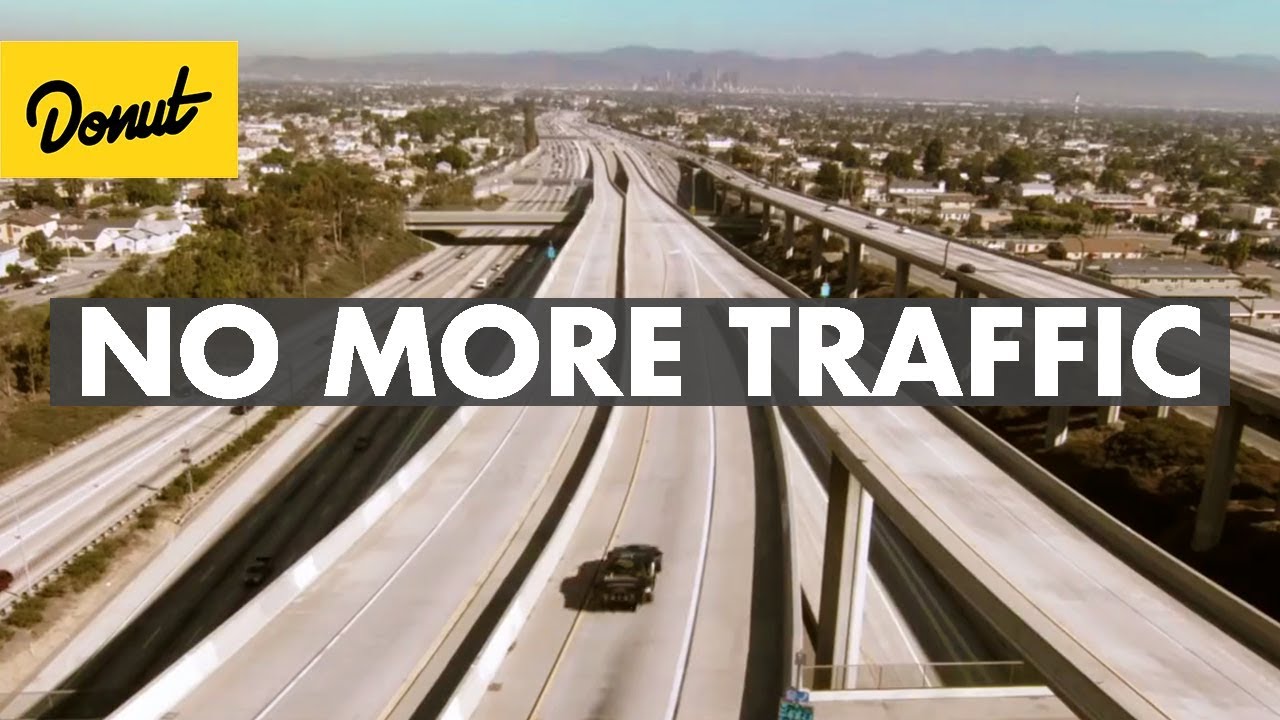
Traffic Is Your Fault. Here's Why. WheelHouse
video description
Date: 2019-10-24
Related videos


Comments and reviews: 9
Sasquatch
As an urban planner, there's lots of way traffic jams can happen that are definetely driver's fault. Highway traffic is usually caused by phantom traffic, toolbooths, lane merging assholes and people who don't know how to use acceleration lanes properly (which leads to more phantom traffic. City traffic is either traffic lights or intersections. Roundabouts don't eliminate this issue, but it helps massively not only in keeping the traffic moving, but also in reducing the number of accidents. The rest is just infrasctructure's fault due to lack of planning ahead. I live in Europe, so reorganizing a road grid (i. e replacing a tiny intersection with a roundabout) is really hard, and more than likely not possible, since some cities are older than the history of some countries. In the US, however, I feel like most of your traffic jams are just caused by bad driving and poorly designed infrastructures. Millions of people in a city needs either A LOT of ways to get in and out of the city or giant road grids when it comes to sheer size (i. e 6 traffic lanes or 3 with very select accesses and exits across the city, especially if population density is huge (main difference from european cities and american cities is the presence of skyscrapers, which MASSIVELY increase population density, especially if they come and go every day. If anybody asked us to build a city with as few traffic jams as possible from scratch, we could actually do it. Incremental road hierarchy with roundabouts on the main roads and intersections in residential areas is the way to go to avoid traffic. Traffic lights are a plague, stop using them. They shouldn't exist anywhere except on the lack of options (i. e NY city intersections. Sadly, we have to work around what's already there and with very little space, and that makes it impossible. As long as there's a high number of vehicles circulating around, traffic jams in cities built from 1980-90 downwards will exist whether you like it or not.
reply
King Katura
I've watched traffic in nyc when i go there and almost all jams are created by people who don't have any sense of patience, not only do they almost cause accidents each time but they also slow everything down. The funny thing is i have learned to stay in the same lane you watch everyone change lanes to the lane thats moving not realizing that once they get their that lane will stop and the one they were in will continue normally lol. I have told people driving with me this and every-time they listen to me we always get through faster than if they switched lanes. The same thing goes when their is a accident most of the time if you go the other route, you will also get their around the same times s people who stayed really i find it fascinating especially since people never seem to realize this no matter how many times they have to wait longer lmao. I guess that means people don't really pay attention. Although i do want a self driving car. If only to see how long it takes before someone runs me over.
reply
Richard Bennett
Back in the mid 80s, I drove a Ford Escort diesel. The fuel line had a water trap in it to catch any water in the fuel. When that filled up, the car would start missing and possibly stall. My engine started missing very badly one day on my way home from work on I-95 near Norwalk, CT. So I pulled over well off the shoulder, popped the hood, reached in to the water drain button and pressed it. It took about 10 minutes for the water to slowly drain. After it finished, I put the hood down and saw a travelling repair truck pulling up behind me. He asked if anything was wrong and I told him the situation and that I was leaving. He then said I was the cause of a 10-mile backup I thought he was exaggerating until about 10 miles down the road the traffic report on the radio said there was a 10-mile backup caused by a lone car with a breakdown. Yup That traffic WAS my faultSo really, some traffic jams are caused by lookie-loos that just want get a good look at a possible accident. Sheesh
reply
M. Low
To reduce traffic in California one thing that needs to be done driving schools and the DMV need to update their system to teach people how to drive in places like California where there's a lot of traffic, they need to teach people how to merge how to keep the left lane as the fast lane don't drive buy big trucks for a long. Of time if you don't have to because you don't know when they met have to get over because of a car merging on the freeway not paying attention so they won't hit the car. You got a bunch of people from other countries driving in LA where are the traffic laws are different some people just drive too slow and they need to stay in the right lane. If you can't keep up with traffic don't drive on the freeway it's as simple as that leave room for other car to get by you don't drive side by side with another car if you don't have to like you guys are all holding hand creating a wall so you can block all traffic.
reply
James B
From experience, the best way to avoid traffic is to travel during non rush hours. Simple. It means also you may have to discuss and agree with your boss that you will come earlier than the main pack and leave early. But it is worth it. You can easily save 30% or more time on your commute and your travel experience is a lot more comfortable giving you a good start to the day. The truth is that most of the time the roads are not congested, only during rush hours. So just plan your trip, if possible, during the non-busy periods. Using Google map or waze and plan ahead on any trip helps a lot too. On a trip coming back from vacation, I helped the driver navigate and detour based on the traffic data from those apps, I literally saved 30 mins in a 4 hour journey. Goes to show, humans are still way better than those fancy apps automatic navigation.
reply
Mohammad Tohidi
I found traffic occurring due to large trucks and minivans as well as trucks that are similar to UHAUL. The technology of the car also is important for making phone calls to reduce crashing. Sometimes it is a very careless driver who is just driving at the speed limits whereas in every nation, state and/or city there are booklets for knowing what speed levels they can go up to. Sometimes it is due to stoplights that are right at the exits or just curious people who want to know what happened. The most important part is about the one lane road as well as if theres a slow driver in front of you, including how slow other cars behind it are going including how long you must wait behind each stoplight. If you know what road to take without going to the highway, then that system could be your backup You forgot to mention these.
reply
Blockbuster2033
As someone living in Germany I cannot understand how mass transit is basically non existent in the US. We have trams, subways and trains on specific city-tracks that can move totally independent of street traffic. Basically everyone with a standard workplace in the city uses those mass transport options because its so much easier to just hop on, be on the phone the entire way there and hop off wherever you need to go. It might seem weird if you are not used to it, but its really not complicated or hard. I live in the city with Germany's worst traffic (Stuttgart) and we rarely have traffic jams. However we do have I think 10 city specific train lines with 10-30 minute spacing per line and direction, surely over 40 tram/subway lines with 4-20 minute spacing per line and direction and surely over 70 bus lines.
reply
tioz01
it's easy to blame phantom traffic jams on tailgaters, but in all honesty, if all cars are driving at a safe distance and a new one enters the road (because that's what happens in rush hour, then that new car will need to merge between two cars causing an unsafe distance. The new car needs to slow down to create a safe distance again. Reaction time is not instant on the car behind, so he also needs to slow down, but even more than the new car because of the reaction time, and so on until eventually one car hits a dead stop. I'd say real tailgaters actually make things better since their goal is to stay as close as possible to car ahead, the moment car ahead accelerates is the moment the tailgater accelerates too (unlike the video here, where the tailgater took forever to accelerate)
reply
Swarn Sharma
Whatever you suggest the problem is too many cars for the roads. Better ways are to allow people work from home a lot and have different working days for different set of offices in a neighborhood. It would help people stay where they are rather than moving closer to work and causing too many people in one area and it would reduce cars on the road. its important that offices do that because businesses like restaurants etc cant have work from home anyways. Also, Not having a well connected mass transit should be a big election talking point thats the only way you can beat the oil and car lobby but sadly its not especially in California.
reply
Add a review, comment
Other channel videos


