How Scientists Build Consensus: Crash Course Scientific Thinking #5
video description
Date: 2026-03-07
Related videos



Comments and reviews: 20
crash_course
Great video as always and we really do need this stuff right now. People need to learn how to look beyond the headlines and look at the studies and how they were done and that one study doesn't make something a fact. This video is great at explaining that it takes a lot of work and study before ethical scientists are willing to call something a fact. Also that some things are too complicated to come up with a definitive answer. Parenting is a big example of this since while we know spanking or any form of corporal punishment causes children harm and doesn't work. We know that time outs don't work either because small children don't have the brain development to understand what is going on. What we don't know is what types of consequences are going to work for every kid because there are too many factors involved.
reply
Great video as always and we really do need this stuff right now. People need to learn how to look beyond the headlines and look at the studies and how they were done and that one study doesn't make something a fact. This video is great at explaining that it takes a lot of work and study before ethical scientists are willing to call something a fact. Also that some things are too complicated to come up with a definitive answer. Parenting is a big example of this since while we know spanking or any form of corporal punishment causes children harm and doesn't work. We know that time outs don't work either because small children don't have the brain development to understand what is going on. What we don't know is what types of consequences are going to work for every kid because there are too many factors involved.
reply
gmsherry1953
FWIW, we've known since 1747, so 279 years, that citrus fruits prevent scurvy. So what happened less than a hundred years ago must have been that we identified Vitamin C as the substance within citrus fruits that produced the effect. Applied science can do a lot of good before theoretical science catches up. We had the telegraph, electric lighting, and lightning rods long before we knew that electrons existed. We bred plants and animals to produce desirable characteristics before we knew about genes. It's easier to figure out what than why, and humans never let not knowing why stop them from using what.
reply
FWIW, we've known since 1747, so 279 years, that citrus fruits prevent scurvy. So what happened less than a hundred years ago must have been that we identified Vitamin C as the substance within citrus fruits that produced the effect. Applied science can do a lot of good before theoretical science catches up. We had the telegraph, electric lighting, and lightning rods long before we knew that electrons existed. We bred plants and animals to produce desirable characteristics before we knew about genes. It's easier to figure out what than why, and humans never let not knowing why stop them from using what.
reply
johndoeing
Scurvy is such a beautiful example because it took scientist all the way to the discovery of vitamins and microscopic germs to prove vitamin C prevents scurvy. This took them so long that sailors were surprised they were even talking about it, since they at that point knew for at least 500 years that eating citrus fruits prevent scruvy! IRL proof and a scientific definitive proof are so different, even if they mean the same thing!
reply
Scurvy is such a beautiful example because it took scientist all the way to the discovery of vitamins and microscopic germs to prove vitamin C prevents scurvy. This took them so long that sailors were surprised they were even talking about it, since they at that point knew for at least 500 years that eating citrus fruits prevent scruvy! IRL proof and a scientific definitive proof are so different, even if they mean the same thing!
reply
dukelornek
i found the concept of less wrong interesting I have always took that stance that we have always been wrong. Sometimes we are outright wrong and we get better theories i. e. caloric theory was replaced with mechanical theory of heat. So my construction of human knowledge has been we are always wrong yet we always seem to improve it. Kinda tomayto, tomahto scenario I feel.
reply
i found the concept of less wrong interesting I have always took that stance that we have always been wrong. Sometimes we are outright wrong and we get better theories i. e. caloric theory was replaced with mechanical theory of heat. So my construction of human knowledge has been we are always wrong yet we always seem to improve it. Kinda tomayto, tomahto scenario I feel.
reply
thewonkyembouchure
The science is solid, but saying 99% of scientists agree climate change is caused by human activities invites the predictable climate has always changed response from deniers. A clearer statement might be: Around 99% of climate scientists agree that human activities are the primary driver of changes in Earth’s climate since the mid-20th century.
reply
The science is solid, but saying 99% of scientists agree climate change is caused by human activities invites the predictable climate has always changed response from deniers. A clearer statement might be: Around 99% of climate scientists agree that human activities are the primary driver of changes in Earth’s climate since the mid-20th century.
reply
johndoeing
Also a fun thought: weve KNOWN for nearly a hundred years. meanwhile sailor have known for close to a THOUSAND years that if you dont eat citrus fruit you will get scurvy. The scientific consensus and the real world proof can also be seperated by hundreds of years! Doesnt mean either is wrong, just something to keep in mind.
reply
Also a fun thought: weve KNOWN for nearly a hundred years. meanwhile sailor have known for close to a THOUSAND years that if you dont eat citrus fruit you will get scurvy. The scientific consensus and the real world proof can also be seperated by hundreds of years! Doesnt mean either is wrong, just something to keep in mind.
reply
ropro9817
As an engineer, I'm all in on the scientific method. It is the best tool that we have to understand the world around us. However, isn't it also true that academic fraud has been on the rise I'm guessing that it has something to do with the 'publish or perish' incentive. True or false
reply
As an engineer, I'm all in on the scientific method. It is the best tool that we have to understand the world around us. However, isn't it also true that academic fraud has been on the rise I'm guessing that it has something to do with the 'publish or perish' incentive. True or false
reply
sushiboy2000
I'm so glad you made this video and I hope that 99% of humanity watches and understands it. The only piece I see missing is how competitive science is (the fame of being able to disprove or through significant doubt on an accepted theory) and how that drives consensus.
reply
I'm so glad you made this video and I hope that 99% of humanity watches and understands it. The only piece I see missing is how competitive science is (the fame of being able to disprove or through significant doubt on an accepted theory) and how that drives consensus.
reply
Rayuti
I think theres a difference of what a study shows and what motivates people to change, like, I dont see many people going to the gym to stay healthy (even that it could be good) but to stay in shape or some goal like lifting x kg which is interesting.
reply
I think theres a difference of what a study shows and what motivates people to change, like, I dont see many people going to the gym to stay healthy (even that it could be good) but to stay in shape or some goal like lifting x kg which is interesting.
reply
bowiz2
Nutrition is also such a hot topic, with lots of ways to profit from it, which always makes the science way more confusing. It can be less about searching for the truth and more about trying to prove what you want to be true.
reply
Nutrition is also such a hot topic, with lots of ways to profit from it, which always makes the science way more confusing. It can be less about searching for the truth and more about trying to prove what you want to be true.
reply
MxSheep
If you ask me consensus in science is very messy. It's often not that scientists sit together and state they have a consensus. It's often through reviews, citations, etc. Where it's possible to cherry pick your sources.
reply
If you ask me consensus in science is very messy. It's often not that scientists sit together and state they have a consensus. It's often through reviews, citations, etc. Where it's possible to cherry pick your sources.
reply
alexeysaphonov232
- Rebbi, is there God
- Some rebbies think that there is, others that there isn't.
- and what so you think about it
- I think that some rebbies are right and others are misstaking.
reply
- Rebbi, is there God
- Some rebbies think that there is, others that there isn't.
- and what so you think about it
- I think that some rebbies are right and others are misstaking.
reply
Ampers3
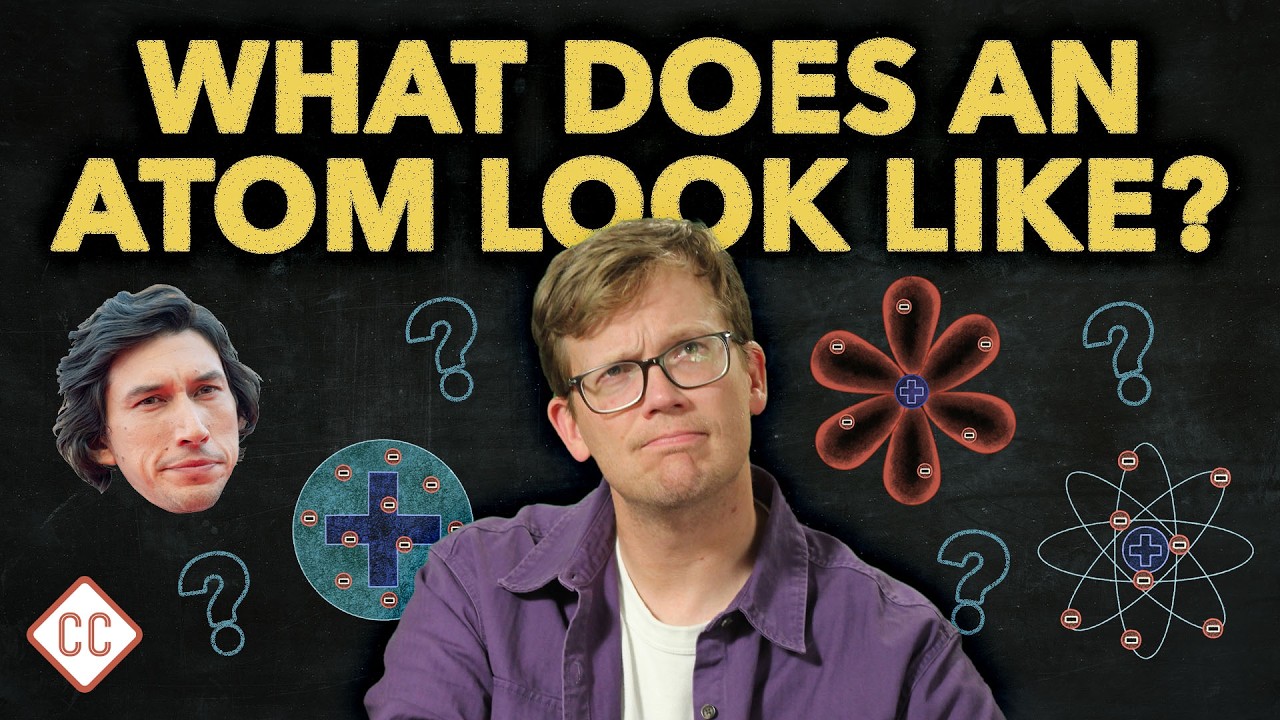
One day, we will have a theory of everything - we can explain one or the other, but not both continuously. Gravity can explain many of the big things, but barely eny of the quantum things.
reply
One day, we will have a theory of everything - we can explain one or the other, but not both continuously. Gravity can explain many of the big things, but barely eny of the quantum things.
reply
empmachine
I work with SPMs and regularly see atomically sharp scans, and even then,
you still don't see atoms, only the impact their location(etc) has on the control system
reply
I work with SPMs and regularly see atomically sharp scans, and even then,
you still don't see atoms, only the impact their location(etc) has on the control system
reply
hedonisticzen
Science needs a process similar to bug bounties where science can be rewarded for finding flaws. Critique of others work that many cite can be quite unpopular.
reply
Science needs a process similar to bug bounties where science can be rewarded for finding flaws. Critique of others work that many cite can be quite unpopular.
reply
blackisblack22
I don't blindly trust science mainly because behind every study there is an interest, both in helping us find the truth or in hiding it from us.
reply
I don't blindly trust science mainly because behind every study there is an interest, both in helping us find the truth or in hiding it from us.
reply
aslemos2009
Science is like walking on a maze: even as you occasionally move away from the exit, you keep getting better at it, and closer to solve it.
reply
Science is like walking on a maze: even as you occasionally move away from the exit, you keep getting better at it, and closer to solve it.
reply
hedonisticzen
Scientists are people, they are subject to peer pressure, even if the science isn't. Science reveals information scientists interpret it.
reply
Scientists are people, they are subject to peer pressure, even if the science isn't. Science reveals information scientists interpret it.
reply
jamesstock6158
Please remember that the actual Science and what the press and news media says what the science is saying usually completely different.
reply
Please remember that the actual Science and what the press and news media says what the science is saying usually completely different.
reply
natepetersen1508
2: 40 its really important to explain that the Greeks posited atoms and void. Empty space was a very controversial position
reply
2: 40 its really important to explain that the Greeks posited atoms and void. Empty space was a very controversial position
reply
Add a review, comment
Other channel videos