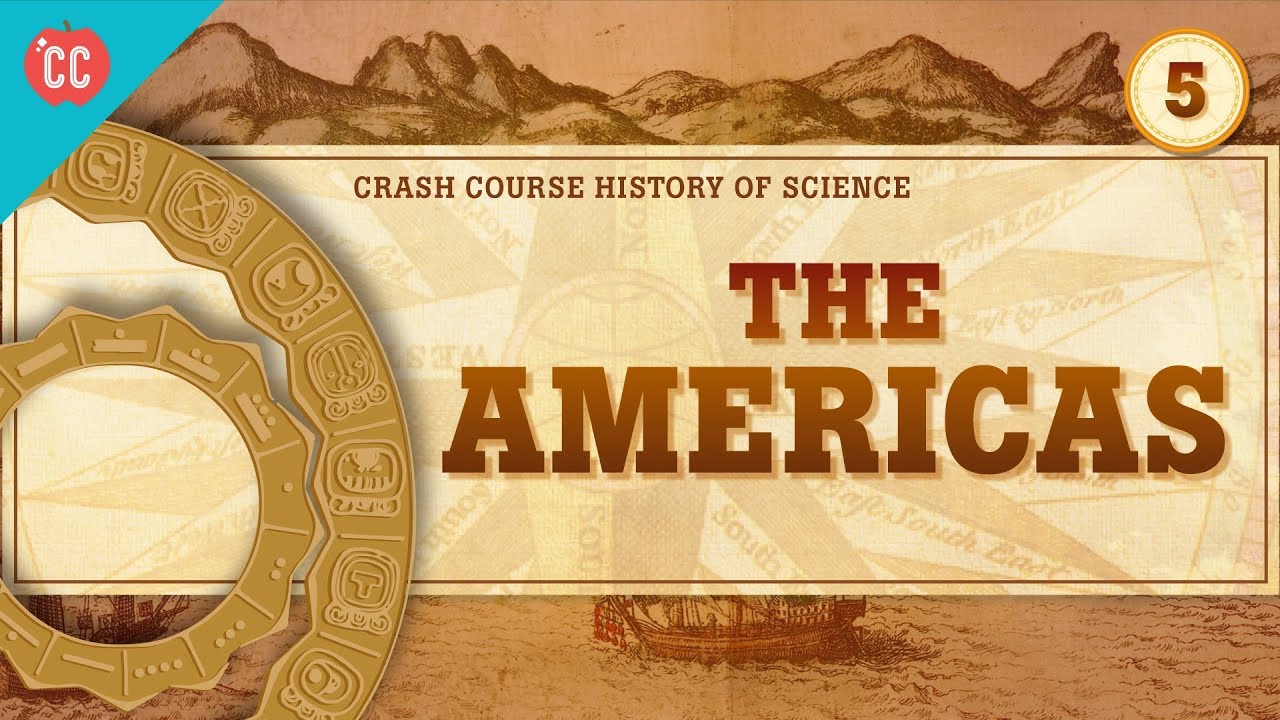
The Americas and Time Keeping: Crash Course History of Science #5
video description
Date: 2022-04-04
Related videos





Comments and reviews: 10
Lennert
Mesoamericanist here (yes, that actually exists: . A few points:
(I actually really liked the video by the way. Please don't see all these points as very negative. Most of them are just tiny things. On of the biggest problems indigenous peoples of the Americas face nowadays is that their history is being ignored. In schoolbooks, at universities, in Europe, but (more sad, in the Americas as well. So thank you for making this and keep up with the good work.
-Stone carvings mostly concern gods and wars- (1: 35. Not entirely true. There is indeed a lot about wars, that's right. But the 4 books actually talk a lot more about gods than the stones, who mostly talk about human (or supposed human) history. The idea that they were mostly about gods is a bit outdated (= pre- 1990s/1980s.
(2: 26): besides the -art style-, the others are not Olmec but (lookalike Maya, Maya, and Aztec (calendar system.
(3: 15): not only future dates, also for the past
(3: 29): we are very, very, very sure that didn't believe the world would end in our year 2012. They also didn't run out of anything and wrote about events that will happen in the far far future, well beyond our 2012 year.
(3: 48) again, the calendar shown here is NOT Mayan, but Aztec. And we see different calendars, they didn't. For them it was one system.
(5: 29) -symbolic- is a bit of a weird word. Pictographic, logographic & ideographic would be better.
(7: 31) ah, I was waiting for that one. the wheel and the horse. :. We don't really know if they used the wheel a lot or not. They surely had it (as was proven a long time ago. One of the fascinating lidar discoveries is that the roads (the so called -sac beho'ob-, white roads) were a lot longer, bigger & wider, connecting not only palaces, but also cities. The horse wasn't there, that's true. But obviously you don't need those to build big cities. The idea that they didn't have wheels is a misunderstanding of 19-century research about the lack of chariots (which, of course, makes sense when there are no horses.
(7: 31) A common mistake. There was no Maya empire, neither hydraulic, nor otherwise. There were a lot of city states, some bigger than others, some, indeed, almost empire-like. But there never was 1 big Maya empire. That says of course nothing about how big the civilization was.
(7: 49): -under stress-. Hot research topic and well discussed nowadays! 1st of all, there was no such thing as a civilization collapse (thank you, mister Jared Diamond. It transformed a lot: old cities fell in disuse, new ones grew and became very powerful (like Mayapan for example. What seems to have collapsed was the ruling system of the Classic Period. About the Long Count. Another misconception I'm afraid. It was still used at the time of the Spaniards, as in evident from the remaining books (all written in the Post Classic Period, and mostly at the end of that period, between the 13th and the 16th century.
(8: 20): -Nah WHO ahs? -. ooooww! That actually hurt my ears: ). It's pronounced something like (spelling for English language speakers): -Nah Wahs-. And the Lake, in there language Nahuatl is pronounced -Tesh-Co-Co-. The -x- was pronounced as -sh-. It later changed in Spain to represent the -ks--sound of today, but when the Spaniards arrived in the 16th century it was still a -sh--sound.
(9: 14): The Aztecs (or better: -Mexicah-, with a sh-sound) didn't use the MAYA-calendar Round, the thing was Mesoamerican, not just Mayan.
(10: 35, yep. Not only Mesoamericanist, altough I'm not sure if the word -Andeanist- also exists: ) Anyway, to answer a lot of the questions about the spelling: yes, Inka is as correct as Inca. Quechua (the language of the empire and still spoken in different forms from Colombia till Argentina) nowadays, has officially adopted the letter -k- in a lot of places although the -c- is also still wildly used. The same goes for the letter -w-, versus the more Spanish looking -hua- (kay/cay = to be. Wasi/Huasi = house. By the way, the Inka/Inca-empire didn't start at CE 1100. The people were there, for sure, but the empire only started in the 15th century.
reply
Mesoamericanist here (yes, that actually exists: . A few points:
(I actually really liked the video by the way. Please don't see all these points as very negative. Most of them are just tiny things. On of the biggest problems indigenous peoples of the Americas face nowadays is that their history is being ignored. In schoolbooks, at universities, in Europe, but (more sad, in the Americas as well. So thank you for making this and keep up with the good work.
-Stone carvings mostly concern gods and wars- (1: 35. Not entirely true. There is indeed a lot about wars, that's right. But the 4 books actually talk a lot more about gods than the stones, who mostly talk about human (or supposed human) history. The idea that they were mostly about gods is a bit outdated (= pre- 1990s/1980s.
(2: 26): besides the -art style-, the others are not Olmec but (lookalike Maya, Maya, and Aztec (calendar system.
(3: 15): not only future dates, also for the past
(3: 29): we are very, very, very sure that didn't believe the world would end in our year 2012. They also didn't run out of anything and wrote about events that will happen in the far far future, well beyond our 2012 year.
(3: 48) again, the calendar shown here is NOT Mayan, but Aztec. And we see different calendars, they didn't. For them it was one system.
(5: 29) -symbolic- is a bit of a weird word. Pictographic, logographic & ideographic would be better.
(7: 31) ah, I was waiting for that one. the wheel and the horse. :. We don't really know if they used the wheel a lot or not. They surely had it (as was proven a long time ago. One of the fascinating lidar discoveries is that the roads (the so called -sac beho'ob-, white roads) were a lot longer, bigger & wider, connecting not only palaces, but also cities. The horse wasn't there, that's true. But obviously you don't need those to build big cities. The idea that they didn't have wheels is a misunderstanding of 19-century research about the lack of chariots (which, of course, makes sense when there are no horses.
(7: 31) A common mistake. There was no Maya empire, neither hydraulic, nor otherwise. There were a lot of city states, some bigger than others, some, indeed, almost empire-like. But there never was 1 big Maya empire. That says of course nothing about how big the civilization was.
(7: 49): -under stress-. Hot research topic and well discussed nowadays! 1st of all, there was no such thing as a civilization collapse (thank you, mister Jared Diamond. It transformed a lot: old cities fell in disuse, new ones grew and became very powerful (like Mayapan for example. What seems to have collapsed was the ruling system of the Classic Period. About the Long Count. Another misconception I'm afraid. It was still used at the time of the Spaniards, as in evident from the remaining books (all written in the Post Classic Period, and mostly at the end of that period, between the 13th and the 16th century.
(8: 20): -Nah WHO ahs? -. ooooww! That actually hurt my ears: ). It's pronounced something like (spelling for English language speakers): -Nah Wahs-. And the Lake, in there language Nahuatl is pronounced -Tesh-Co-Co-. The -x- was pronounced as -sh-. It later changed in Spain to represent the -ks--sound of today, but when the Spaniards arrived in the 16th century it was still a -sh--sound.
(9: 14): The Aztecs (or better: -Mexicah-, with a sh-sound) didn't use the MAYA-calendar Round, the thing was Mesoamerican, not just Mayan.
(10: 35, yep. Not only Mesoamericanist, altough I'm not sure if the word -Andeanist- also exists: ) Anyway, to answer a lot of the questions about the spelling: yes, Inka is as correct as Inca. Quechua (the language of the empire and still spoken in different forms from Colombia till Argentina) nowadays, has officially adopted the letter -k- in a lot of places although the -c- is also still wildly used. The same goes for the letter -w-, versus the more Spanish looking -hua- (kay/cay = to be. Wasi/Huasi = house. By the way, the Inka/Inca-empire didn't start at CE 1100. The people were there, for sure, but the empire only started in the 15th century.
reply
The
Well very interesting, some figure and places are writing confusions between -Maya- VS -Aztecs- it's like they are similar like Greeks and Romans but two different cities and Empire. All of the Meso Americans, architecture, and math and so on. for someone who have learned more about the history and the trutg (not the education taught to us full of lies) well The native Americans are of Siberian blood, Tribes so it is no surprise that they have those knowledge just like the Original people of actual Europe Wich was once the land of the Siberian again -ASIA- part of the land of The Scythia, not Europe the real denomination of the Actual Europe shukd be Europe+Asia -Eurasia- anyway the point is The Suberians have introduced knowledge of stone carvings, architecture, astronomy to India yes only 8000years old civilization but still they introduced those knowledge and have built diverse architecture and palace in India, India (Persian+Black Asians. And The Scythians, Hittites/Turkics they have build those cities, architecture of The Greeks and Romans, and probably Egypt itself could have been built by the Scythians. Even in Arabia and North Africa palace built in stones that have stopped centuries, even Romans and Greeks cities ruins same. Clearly the Siberians were brilliant arechitect and genius mind in math, building those piramids
reply
Well very interesting, some figure and places are writing confusions between -Maya- VS -Aztecs- it's like they are similar like Greeks and Romans but two different cities and Empire. All of the Meso Americans, architecture, and math and so on. for someone who have learned more about the history and the trutg (not the education taught to us full of lies) well The native Americans are of Siberian blood, Tribes so it is no surprise that they have those knowledge just like the Original people of actual Europe Wich was once the land of the Siberian again -ASIA- part of the land of The Scythia, not Europe the real denomination of the Actual Europe shukd be Europe+Asia -Eurasia- anyway the point is The Suberians have introduced knowledge of stone carvings, architecture, astronomy to India yes only 8000years old civilization but still they introduced those knowledge and have built diverse architecture and palace in India, India (Persian+Black Asians. And The Scythians, Hittites/Turkics they have build those cities, architecture of The Greeks and Romans, and probably Egypt itself could have been built by the Scythians. Even in Arabia and North Africa palace built in stones that have stopped centuries, even Romans and Greeks cities ruins same. Clearly the Siberians were brilliant arechitect and genius mind in math, building those piramids
reply
Reysie
As we travel to the Americas, we still keep ask question. ' when are we? ' We believe that science can answer the question's. Curiousity build up in our mind that how this world works in? Yes, I know that everyone of us have question's how does earth/world work's. I scan simply answer this, animals, humans, plants and all of those living thing's are created by God. But in this video illustrated that what will happen to us after a year's. In ancient maya, they made of lot calculations about time for religious reasons. Aztecs created system of canal, floodgates and aqueducts, they use dikes to separate fresh and saltwater. Complexity of the system points to a priest scribe caste, it is symbolic and phonetic meaning.
reply
As we travel to the Americas, we still keep ask question. ' when are we? ' We believe that science can answer the question's. Curiousity build up in our mind that how this world works in? Yes, I know that everyone of us have question's how does earth/world work's. I scan simply answer this, animals, humans, plants and all of those living thing's are created by God. But in this video illustrated that what will happen to us after a year's. In ancient maya, they made of lot calculations about time for religious reasons. Aztecs created system of canal, floodgates and aqueducts, they use dikes to separate fresh and saltwater. Complexity of the system points to a priest scribe caste, it is symbolic and phonetic meaning.
reply
Augustus
I really have to point this out that you said around 8 minutes that they did not keep a calendar class to keep track. I would have to beg to differ insofar as if died out of 10 people are dead they did not have the resources of people or teachers to maintain all of their classical positions. The way you categorize it seems to make it by choice bank made. I think it was a situation they found themselves and that they had to deal with. In other words it was not by choice! I understand you try not to be hyperbolic but the outcome of the genocide does not fall into the definition of hyperbole, merely the definition of fact.
reply
I really have to point this out that you said around 8 minutes that they did not keep a calendar class to keep track. I would have to beg to differ insofar as if died out of 10 people are dead they did not have the resources of people or teachers to maintain all of their classical positions. The way you categorize it seems to make it by choice bank made. I think it was a situation they found themselves and that they had to deal with. In other words it was not by choice! I understand you try not to be hyperbolic but the outcome of the genocide does not fall into the definition of hyperbole, merely the definition of fact.
reply
Razvan
I doubt there as a Spanish genocide against native Americans: this is part of the Black Legend anti Spanish propaganda made by the English since 16th century. Look at the percentage of native Americans in all Latin countries today and at the percentage of native Americans in United States: the Spanish (and Portuguese) tried to convert and integrate them in the colonial society, whereas English colonist killed, expelled or deported the locals (and later Americans enclosed them in Indian reservations. Compare the degree of civilization from this point of view.
reply
I doubt there as a Spanish genocide against native Americans: this is part of the Black Legend anti Spanish propaganda made by the English since 16th century. Look at the percentage of native Americans in all Latin countries today and at the percentage of native Americans in United States: the Spanish (and Portuguese) tried to convert and integrate them in the colonial society, whereas English colonist killed, expelled or deported the locals (and later Americans enclosed them in Indian reservations. Compare the degree of civilization from this point of view.
reply
Norhaifah
Mayans and aztecs are so amazing because they discovered some medicine, science and astronomy. The progression of science in america answered a lot of questions about the progression of science. But it so sad that everything lost. Spanish empire is truly a destroyer because if i'm not mistaken even here in the Philippines we lost our ancient knowledge becuase of them.
reply
Mayans and aztecs are so amazing because they discovered some medicine, science and astronomy. The progression of science in america answered a lot of questions about the progression of science. But it so sad that everything lost. Spanish empire is truly a destroyer because if i'm not mistaken even here in the Philippines we lost our ancient knowledge becuase of them.
reply
androkguz
-The Spanish Genocide-
Wasn't it the plagues from Europe that killed 95% of the population of the Americas?
I mean, I'm sure that the spanish totally came to kill and plunder, but I was under the impression that the real killer had been the various diseases that the European had carried with them that they were already inmune to.
reply
-The Spanish Genocide-
Wasn't it the plagues from Europe that killed 95% of the population of the Americas?
I mean, I'm sure that the spanish totally came to kill and plunder, but I was under the impression that the real killer had been the various diseases that the European had carried with them that they were already inmune to.
reply
Vanessa
I always feel a little warm inside me when I read about Mayans because they were so smart and if you only knew how poorly their descendants are still treated you'd weep, anyways great video as always Hank you're a great guy
reply
I always feel a little warm inside me when I read about Mayans because they were so smart and if you only knew how poorly their descendants are still treated you'd weep, anyways great video as always Hank you're a great guy
reply
joe
you create the impression of some kind of pre-columbian utopia when the mesoamericans practiced slavery, human sacrifice and weren't more virtuous than their conquerors. For a scientist, you sure get preachy.
reply
you create the impression of some kind of pre-columbian utopia when the mesoamericans practiced slavery, human sacrifice and weren't more virtuous than their conquerors. For a scientist, you sure get preachy.
reply
Goghween
Could you imagine if the Spanish decided to integrate instead of conquer? Talk about much needed advancement and information lost over land grabs by barbarians oh sorry -conquistadors-
reply
Could you imagine if the Spanish decided to integrate instead of conquer? Talk about much needed advancement and information lost over land grabs by barbarians oh sorry -conquistadors-
reply
Add a review, comment
Other channel videos