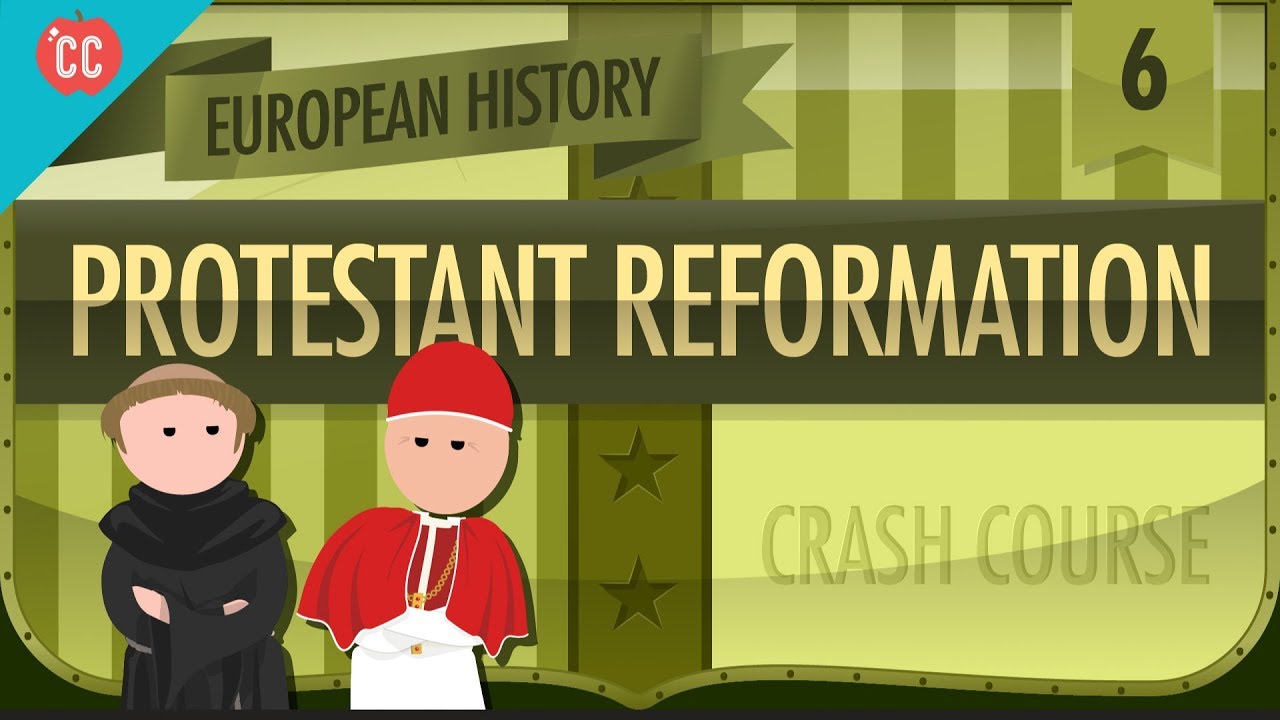
The Protestant Reformation: Crash Course European History #6
video description
Date: 2022-04-04
Related videos




Comments and reviews: 6
angel
Just to be real my dude for a little cultural context Martin Luther was not really referring to the equity of marital property but that a wife could conduct her husband's business well he was away as the wife and the husband should be of equal legal standing with the ability to make business contracts and conduct Commerce on behalf of the household. You have to remember first and foremost that Luther's father was a good Merchant. There for Luther's first concern after marrying would have been the economic equality and usefulness of His Brilliant Young wife. He had clearly chosen her from among his rabid followers very carefully selecting a woman of comparatively great intellect for the time. He didn't cut free from the allotment that was usually allowed a Catholic priest would have been chiefly concerned with ensuring a steady income for his wife and their children. Her additional labor being vital. Her additional wisdom and ability to conduct business in his name while he was away dealing with religious stuff absolutely necessary to the ability of their children to eat.
Remember marital property wasn't really a concept at this point because divorce was basically impossible and almost non-existent except in the most debauched circumstances of abuse or infidelity. So he would have been considering anything of the sort. But rather how best to arrange the marriage to maximize the health and safety of his children while pushing his theological ideas.
I really like most of your programs but you desperately need to get further into the context of a particular time and place to understand what would have been someone's priorities at a given time. Before you try to give a scholarly interpretation of what was going on when they said a particular thing or wrote it.
reply
Just to be real my dude for a little cultural context Martin Luther was not really referring to the equity of marital property but that a wife could conduct her husband's business well he was away as the wife and the husband should be of equal legal standing with the ability to make business contracts and conduct Commerce on behalf of the household. You have to remember first and foremost that Luther's father was a good Merchant. There for Luther's first concern after marrying would have been the economic equality and usefulness of His Brilliant Young wife. He had clearly chosen her from among his rabid followers very carefully selecting a woman of comparatively great intellect for the time. He didn't cut free from the allotment that was usually allowed a Catholic priest would have been chiefly concerned with ensuring a steady income for his wife and their children. Her additional labor being vital. Her additional wisdom and ability to conduct business in his name while he was away dealing with religious stuff absolutely necessary to the ability of their children to eat.
Remember marital property wasn't really a concept at this point because divorce was basically impossible and almost non-existent except in the most debauched circumstances of abuse or infidelity. So he would have been considering anything of the sort. But rather how best to arrange the marriage to maximize the health and safety of his children while pushing his theological ideas.
I really like most of your programs but you desperately need to get further into the context of a particular time and place to understand what would have been someone's priorities at a given time. Before you try to give a scholarly interpretation of what was going on when they said a particular thing or wrote it.
reply
Brian
Edward Wightman (Encyclopedia) was the last man burned at the stake in England, a radical Ana-Baptist. Reverend George Wightman & Reverend Valentine Wightman (Baptist Encyclopedia) fall under Edward Wightman. Rev. Valentine Wightman married Susannah Holmes, the great grand daughter of Roger Williams (Encyclopedia 1636) who was a Puritan that came to America in 1630. Puritans who came on The Mayflower in 1620 were also called -Separatists. - That term -Separatist- vs -Loyalist- during The American Revolution came from somewhere now didn't it. Of course, who was becoming more tyrannical in nature at that time? I'm a descendant of Rev. George Wightman who married Elizabeth Updyke, Rev. Valentine Wightman's brother. Susannah Holmes was also the grand daughter of Obediah Holmes (Encyclopedia) whom Abe Lincoln falls under except Abe fell under Sarah Bowne, Susannah's first cousin.
reply
Edward Wightman (Encyclopedia) was the last man burned at the stake in England, a radical Ana-Baptist. Reverend George Wightman & Reverend Valentine Wightman (Baptist Encyclopedia) fall under Edward Wightman. Rev. Valentine Wightman married Susannah Holmes, the great grand daughter of Roger Williams (Encyclopedia 1636) who was a Puritan that came to America in 1630. Puritans who came on The Mayflower in 1620 were also called -Separatists. - That term -Separatist- vs -Loyalist- during The American Revolution came from somewhere now didn't it. Of course, who was becoming more tyrannical in nature at that time? I'm a descendant of Rev. George Wightman who married Elizabeth Updyke, Rev. Valentine Wightman's brother. Susannah Holmes was also the grand daughter of Obediah Holmes (Encyclopedia) whom Abe Lincoln falls under except Abe fell under Sarah Bowne, Susannah's first cousin.
reply
david
Good to get a 'German' focus on the Reformation; although 'Germany' didn't exist, the German speakers of the Holy Roman Empire dominated and the Empire + Papal States in some ways WERE 'Europe' (or Western Europe) with Spain and the British Isles on the periphery. From Hapsburgs through to the World Wars and the EU, Europe has always been about 'Germany's role. (OUTSIDE Europe, of course, it was Britain, Spain, Portugal, France, Dutch/Belgians which built the colonial empires, leading to German's demand for a 'place in the sun' and devastating World Wars
reply
Good to get a 'German' focus on the Reformation; although 'Germany' didn't exist, the German speakers of the Holy Roman Empire dominated and the Empire + Papal States in some ways WERE 'Europe' (or Western Europe) with Spain and the British Isles on the periphery. From Hapsburgs through to the World Wars and the EU, Europe has always been about 'Germany's role. (OUTSIDE Europe, of course, it was Britain, Spain, Portugal, France, Dutch/Belgians which built the colonial empires, leading to German's demand for a 'place in the sun' and devastating World Wars
reply
Am2sedChortles
Everyone in my class seems to hate it when they put these videos on, but they really aren't bad? I mean, it's not like this is one of those educational rap parodies like Anderson put on last year. It's got good production quality, and aside from the face puppets, it's pleasing to the eye. Plus, Green is really well spoken and gets the information out in a comparatively easy to understand way.
reply
Everyone in my class seems to hate it when they put these videos on, but they really aren't bad? I mean, it's not like this is one of those educational rap parodies like Anderson put on last year. It's got good production quality, and aside from the face puppets, it's pleasing to the eye. Plus, Green is really well spoken and gets the information out in a comparatively easy to understand way.
reply
P.
-It all starts with Martin Luther---well no. Several reformers came before Martin Luther. These include John Wycliffe, Jan Hus, and Girolamo Savonarola. Martin Luther was, however, the first one of these not to be burned as a heretic due to royal backing.
reply
-It all starts with Martin Luther---well no. Several reformers came before Martin Luther. These include John Wycliffe, Jan Hus, and Girolamo Savonarola. Martin Luther was, however, the first one of these not to be burned as a heretic due to royal backing.
reply
Kitty
me realizing this as someone who was raised catholic: wait does that mean catholics were cool with cannibalism? if the bread and wine were literally the body and blood of christ: P AHHAAH
reply
me realizing this as someone who was raised catholic: wait does that mean catholics were cool with cannibalism? if the bread and wine were literally the body and blood of christ: P AHHAAH
reply
Add a review, comment
Other channel videos