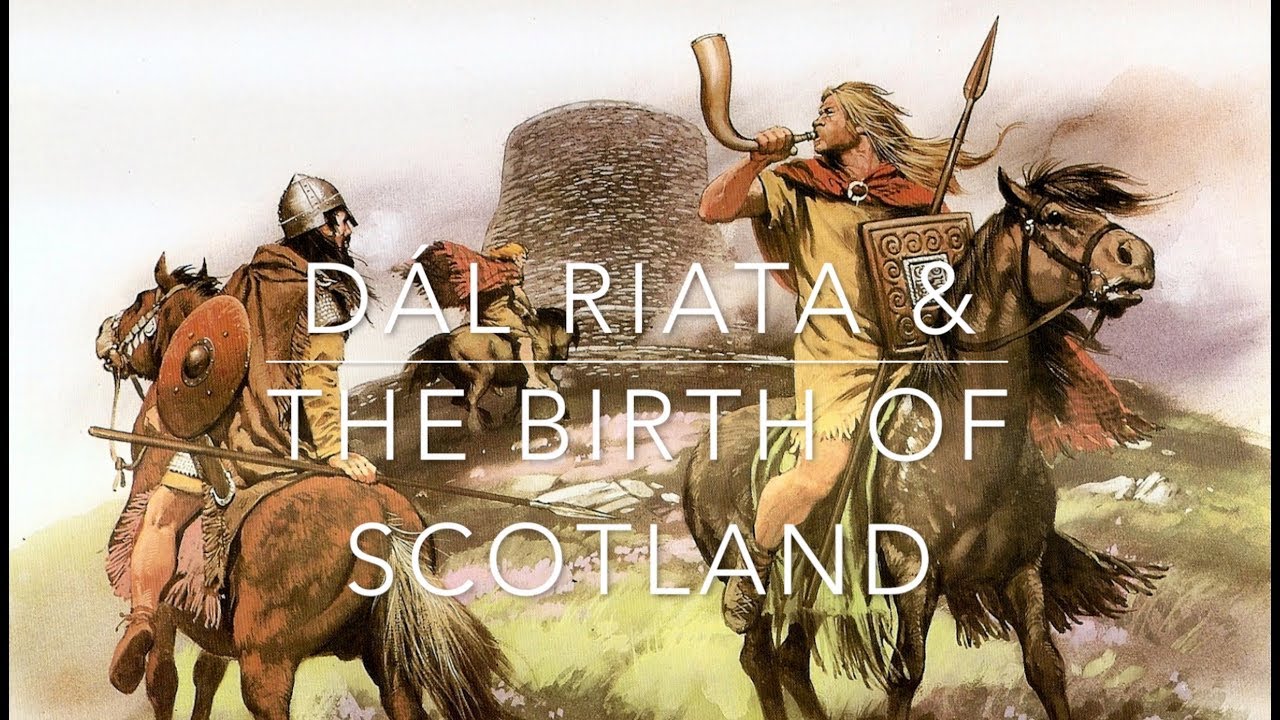
The Sea-Kingdom: Dl Riata & The Birth of Scotland
video description
I would be interested in a video on the earlier history of the maritime kingdom of Dal Riata. You list its capital as Kilmartin, on the Scottish mainland, but the people are often (wrongly) described as Irish, rather than just as Irish speaking. The problem is that they just appear in British history when your video starts. Some conjecture an invasion from Ireland at some point but as I understand it the archaeology suggests longer or more substantial roots on the Scottish side? But where and when did they arrive? Was it 1000+ years before, from Galicia, with the other proto-Irish speaking tribes? Or what? I wonder what Irish records may have to say.
Date: 2022-09-10
Related videos





Comments and reviews: 19
Tony
Always interested me that at about the same time cultures with a foreign language came from overseas as boating raiders, made a area their own, built kingdoms, spread those kingdom, taking lands of other people and those people taking on their culture and language, dlspreading further taking Brythonic lands and the old language and culture died out and was replaced by the new but not the people, then the land was eventually named after the Roman name for these invaders/raiders in about the 8th or 9th century. Scotti and Anglii.
Trouble is, i am describing England and Scotland, almost the same historical birth. But one spouts about belonging and the other being outsiders.
reply
Always interested me that at about the same time cultures with a foreign language came from overseas as boating raiders, made a area their own, built kingdoms, spread those kingdom, taking lands of other people and those people taking on their culture and language, dlspreading further taking Brythonic lands and the old language and culture died out and was replaced by the new but not the people, then the land was eventually named after the Roman name for these invaders/raiders in about the 8th or 9th century. Scotti and Anglii.
Trouble is, i am describing England and Scotland, almost the same historical birth. But one spouts about belonging and the other being outsiders.
reply
polomis27
This is the usual horseshit. Irish people brought the Irish language to western Britain in the same historical period that germanic people brought the English language to eastern Britain and for the same reasons, a power vacumn created by the disintegration of the western Roman empire. This Scottish desire for a native culture is pathetic. If you want to learn about Gaelic (Irish) culture and history then all of the relevant documents, and there are a huge amount, are available in Ireland. In fact if you want to learn old Irish and take part in translating the copious material still being examined and catalogued you would be more than welcome to lend your support.
reply
This is the usual horseshit. Irish people brought the Irish language to western Britain in the same historical period that germanic people brought the English language to eastern Britain and for the same reasons, a power vacumn created by the disintegration of the western Roman empire. This Scottish desire for a native culture is pathetic. If you want to learn about Gaelic (Irish) culture and history then all of the relevant documents, and there are a huge amount, are available in Ireland. In fact if you want to learn old Irish and take part in translating the copious material still being examined and catalogued you would be more than welcome to lend your support.
reply
Ci
You should do a video on the decline of Gaelic Scotland. It's an interesting topic to read about.
Outside of the islands, Hebrides and sparsely populated Highlands very few modern day Scots had the 'Irish' dna type of the Dal Riata. (Until the huge numbers of immigration from Ireland in the 19th century to places like Glasgow)
You could culminate it with the Highland clearances and explain how Scotland, years after banning all things related to Gaelic culture, adopted some of these same things as part of the nations heritage.
reply
You should do a video on the decline of Gaelic Scotland. It's an interesting topic to read about.
Outside of the islands, Hebrides and sparsely populated Highlands very few modern day Scots had the 'Irish' dna type of the Dal Riata. (Until the huge numbers of immigration from Ireland in the 19th century to places like Glasgow)
You could culminate it with the Highland clearances and explain how Scotland, years after banning all things related to Gaelic culture, adopted some of these same things as part of the nations heritage.
reply
VredesStall
So with Gaelic ethnonyms & place-names like Dal-Riada and Alba.
exactly how and when did the Irish Dal-Riadans (along with the Pictish tribes)
apparently disregard their former names and accept, assume and apply the
Latin-based term Scotti / Scots for themselves as a collective term & identity?
Put another way.
strange how the Latin toponym Caledonia did not remain as the permanent name
for the land of North Britain. but the other Latin term, Scotti, did for the people.
Hmmmmm?
reply
So with Gaelic ethnonyms & place-names like Dal-Riada and Alba.
exactly how and when did the Irish Dal-Riadans (along with the Pictish tribes)
apparently disregard their former names and accept, assume and apply the
Latin-based term Scotti / Scots for themselves as a collective term & identity?
Put another way.
strange how the Latin toponym Caledonia did not remain as the permanent name
for the land of North Britain. but the other Latin term, Scotti, did for the people.
Hmmmmm?
reply
Cornelia
i must click the dislike because i find this video hard to follow as someone who doesn t know very well the history and wanths to learn something out of passion. Your presentation seems in a hurry and doesn t give time to the viewer to watch the map as you talk, nor you highlight the areas refered to as you talk.
And also you can put up the sources you had. The voice i think is a bit altered by a computer program and i much prefer a natural, warm voice also because i m not a native English speaker.
reply
i must click the dislike because i find this video hard to follow as someone who doesn t know very well the history and wanths to learn something out of passion. Your presentation seems in a hurry and doesn t give time to the viewer to watch the map as you talk, nor you highlight the areas refered to as you talk.
And also you can put up the sources you had. The voice i think is a bit altered by a computer program and i much prefer a natural, warm voice also because i m not a native English speaker.
reply
pravoslavnik
Excellent presentation. thanks. But this is a huge amount of information, and a huge quantity of Gaelic-based words, coming at us quite quickly. WHEW! Were it not for the text-shown-on-screen, one could never keep up with the narration. Nonetheless, I want to go through all your videos. Thanks for the work you have invested. (My ancestors came from Aberdeenshire and from the Isle of Mull, which occasions my interest in this corner of history)
reply
Excellent presentation. thanks. But this is a huge amount of information, and a huge quantity of Gaelic-based words, coming at us quite quickly. WHEW! Were it not for the text-shown-on-screen, one could never keep up with the narration. Nonetheless, I want to go through all your videos. Thanks for the work you have invested. (My ancestors came from Aberdeenshire and from the Isle of Mull, which occasions my interest in this corner of history)
reply
Colin
Things move on all the time within history and archaeology. The map that appears c 0: 25 on this video is now obsolete as far as the Pictish kingdoms are concerned. There are very good reasons to believe that the powerful kingdom of Fortriu occupied the area around the Moray Firth given the name Fidach on the map in the video. I can give references if required. The location of Fidach isn't known.
reply
Things move on all the time within history and archaeology. The map that appears c 0: 25 on this video is now obsolete as far as the Pictish kingdoms are concerned. There are very good reasons to believe that the powerful kingdom of Fortriu occupied the area around the Moray Firth given the name Fidach on the map in the video. I can give references if required. The location of Fidach isn't known.
reply
jan
Nice video. how did it come about that the whole of Scotland was speaking Gaelic in such a short time after Colomba arrived. and why did the Northhumbrian Kings and Anglo Saxon nobility send their children to be educated at Clonmacneise in Ireland. i assume thdy were taught in Gaelic n Latin. there's a lot of Dalriata blood in the English Monarchy today
reply
Nice video. how did it come about that the whole of Scotland was speaking Gaelic in such a short time after Colomba arrived. and why did the Northhumbrian Kings and Anglo Saxon nobility send their children to be educated at Clonmacneise in Ireland. i assume thdy were taught in Gaelic n Latin. there's a lot of Dalriata blood in the English Monarchy today
reply
Hobson's
Awesome video. I study surnames and British history as a hobby. I have been thinking about bridei mac bili for some time but to no avail have come up with possible surnames for his descendants or if he has none his patriarchal decendants of a different branch. Anyone have any clues? If so please reply
reply
Awesome video. I study surnames and British history as a hobby. I have been thinking about bridei mac bili for some time but to no avail have come up with possible surnames for his descendants or if he has none his patriarchal decendants of a different branch. Anyone have any clues? If so please reply
reply
Mark
One thing I am interested to know is where the Norse Gaels of the Western Isles are originally from? Where they from Dublin, Ireland in general or Norway? Did the Norse Gaels on the Western Isles come to the Islands via Ireland or did they conquer the Gaels in that area?
reply
One thing I am interested to know is where the Norse Gaels of the Western Isles are originally from? Where they from Dublin, Ireland in general or Norway? Did the Norse Gaels on the Western Isles come to the Islands via Ireland or did they conquer the Gaels in that area?
reply
timber_beast
FUN FACT: Saint Columba fled to Dalriada because he had taken books from an Irish monastery without permission which triggered the first recorded copyright lawsuit, a small war (The Battle of Cul Dreimhne i 655 AD, and his forced expulsion from Ireland.
reply
FUN FACT: Saint Columba fled to Dalriada because he had taken books from an Irish monastery without permission which triggered the first recorded copyright lawsuit, a small war (The Battle of Cul Dreimhne i 655 AD, and his forced expulsion from Ireland.
reply
Rebka
Thank you! I'm somewhat new to actually picturing these histories. My ancestors seem to be involved with all kinds of events, yet I struggle to find much about the dark men of peace. I can't help but feel some sense of unresolved justice.
reply
Thank you! I'm somewhat new to actually picturing these histories. My ancestors seem to be involved with all kinds of events, yet I struggle to find much about the dark men of peace. I can't help but feel some sense of unresolved justice.
reply
Matthew
Reminds me to reread the brilliant book The Makers of Scotland: Picts, Romans, Gaels, and Vikings by Tim Clarkson. An insightful work that makes it quite clear that Scotland was the real Game of Thrones.
reply
Reminds me to reread the brilliant book The Makers of Scotland: Picts, Romans, Gaels, and Vikings by Tim Clarkson. An insightful work that makes it quite clear that Scotland was the real Game of Thrones.
reply
William
Overtaking Fortriu makes a ton of sense when you look at the Clan Ross lands (Wester Ross to Easter Ross. That stretch to Balnagown Castle never really added up until you mentioned that. Thank you.
reply
Overtaking Fortriu makes a ton of sense when you look at the Clan Ross lands (Wester Ross to Easter Ross. That stretch to Balnagown Castle never really added up until you mentioned that. Thank you.
reply
ULRICH
Your serie is superinteresting and I always see it. The only thing is, that there is so much information so quickly told. It is very hard to absorbe it all. But congratulation - it is a good work.
reply
Your serie is superinteresting and I always see it. The only thing is, that there is so much information so quickly told. It is very hard to absorbe it all. But congratulation - it is a good work.
reply
zakalon123
It was the vikings who split the link between the Irish and the Scottish Dalriada.
I often wonder how Scotch/Irish history would have turned out if this never happened.
reply
It was the vikings who split the link between the Irish and the Scottish Dalriada.
I often wonder how Scotch/Irish history would have turned out if this never happened.
reply
RTK
The Scots were an Irish tribe that took control of Northern Britain sometime during the 6th and 7th century, this part of history modern Scots prefer to ignor or white wash over.
reply
The Scots were an Irish tribe that took control of Northern Britain sometime during the 6th and 7th century, this part of history modern Scots prefer to ignor or white wash over.
reply
Divine
Thank you for this very powerful depiction our ancestors who were there since time inmemorial. We honour our ancestors and will raise their names and legacies left for us.
reply
Thank you for this very powerful depiction our ancestors who were there since time inmemorial. We honour our ancestors and will raise their names and legacies left for us.
reply
education
I'm going to be visiting Argyll soon. I'll be visiting Dunadd. It's one of my favourite places and I will be shooting a number of videos. Keep your eyes peeled.
reply
I'm going to be visiting Argyll soon. I'll be visiting Dunadd. It's one of my favourite places and I will be shooting a number of videos. Keep your eyes peeled.
reply
Add a review, comment
Other channel videos