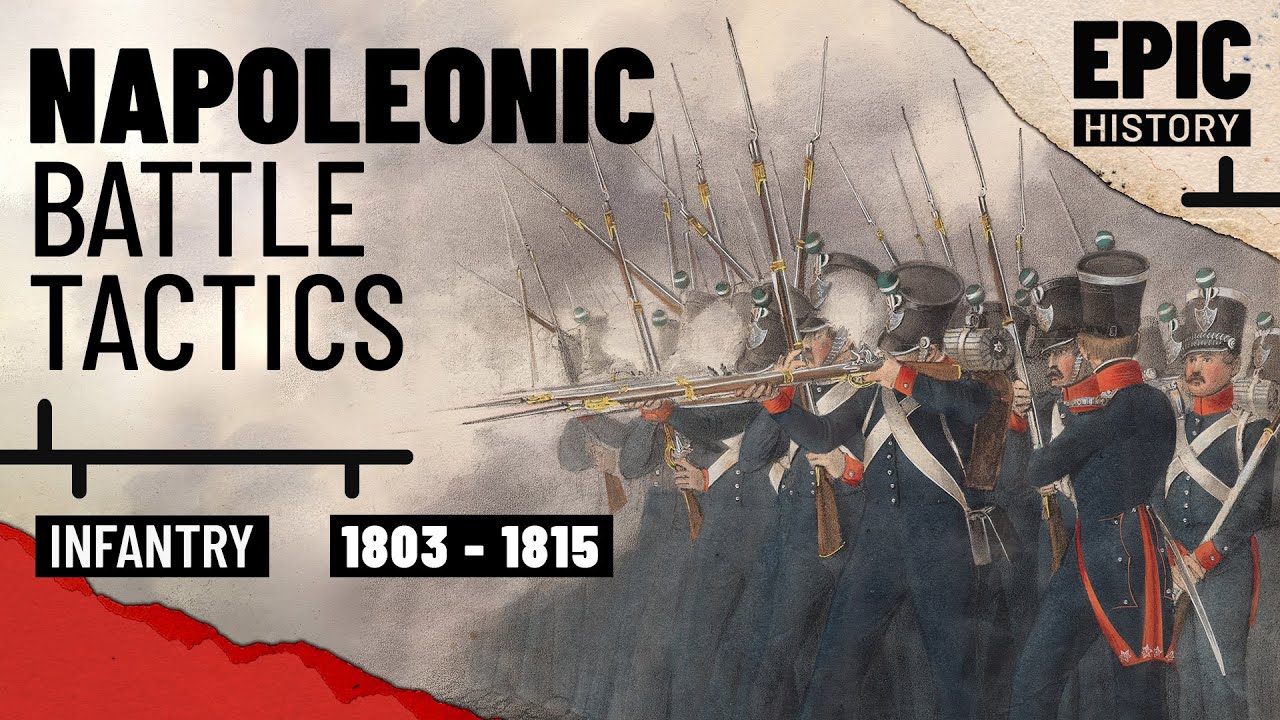
Napoleonic Infantry Tactics: A Quick Guide
video description
Date: 2022-09-12
Related videos





Comments and reviews: 19
john
The column he showed was aFrench attack column, not a column of division. The attack column is partly inverted, meaning the right hand companies are in reversed order, with the 2nd company in the front rank, the 1st in the second rank and the grenadier company in the rear rank.
A column of divisions looking at the column from behind the formation would have from right to left, the grenadier company, and the 1st company in the front rank, the second rank would be the 2nd company and the 3rd company while the third rank would be the 4th company and the voltagier company.
NOT the same thing at all, as the column of divisions could form line on any company, while the attack column can only form line on the center.
An attack column in theory could form line to its right flank in roughly half the time an open column of companies could perform the same maneuver, depending on the level of experience and drill of the men. Conversely an open column of companies could form line to the left flank in less than a quarter of the time an attack column could, again depending on the attack columns level of competency. Were the column of companies in close or closed column the speed of the attack column forming to either flank would be increased comparatively to the other.
reply
The column he showed was aFrench attack column, not a column of division. The attack column is partly inverted, meaning the right hand companies are in reversed order, with the 2nd company in the front rank, the 1st in the second rank and the grenadier company in the rear rank.
A column of divisions looking at the column from behind the formation would have from right to left, the grenadier company, and the 1st company in the front rank, the second rank would be the 2nd company and the 3rd company while the third rank would be the 4th company and the voltagier company.
NOT the same thing at all, as the column of divisions could form line on any company, while the attack column can only form line on the center.
An attack column in theory could form line to its right flank in roughly half the time an open column of companies could perform the same maneuver, depending on the level of experience and drill of the men. Conversely an open column of companies could form line to the left flank in less than a quarter of the time an attack column could, again depending on the attack columns level of competency. Were the column of companies in close or closed column the speed of the attack column forming to either flank would be increased comparatively to the other.
reply
Simon
While a bit of a tangent its worthy to note that as wars got more Lethal they became less common.
In Grecian Hoplite warfare the loosing phalanx thats right the guys who broke dropped their weapons and shields to run only had a roughly 15% casualty rate.
Its no wonder the Greeks always went to war with one another 15% is basically a sport.
Then you had the Napoleonic Wars that had battles that were fought to the man with retreating soldiers being run down and killed.
Finally you reach the twilight of linear warfare in WW1 of which war basically became industrialized slaughter
reply
While a bit of a tangent its worthy to note that as wars got more Lethal they became less common.
In Grecian Hoplite warfare the loosing phalanx thats right the guys who broke dropped their weapons and shields to run only had a roughly 15% casualty rate.
Its no wonder the Greeks always went to war with one another 15% is basically a sport.
Then you had the Napoleonic Wars that had battles that were fought to the man with retreating soldiers being run down and killed.
Finally you reach the twilight of linear warfare in WW1 of which war basically became industrialized slaughter
reply
Teemu
What a shitty way to die. Win by numbers. Oh and that stand in line and don't duck the bullets is ridiculous. And if you survive, then you get to slaughter other men by bayonnets in a bloodfest. This fighting style must be an egotrip of the general, who wants to prove that his power can kill his own men if he wants to
reply
What a shitty way to die. Win by numbers. Oh and that stand in line and don't duck the bullets is ridiculous. And if you survive, then you get to slaughter other men by bayonnets in a bloodfest. This fighting style must be an egotrip of the general, who wants to prove that his power can kill his own men if he wants to
reply
Attempted
European Army: I have battered your skull, crushed your chest, shattered your arms, and broken your legs.
Napoleon: Ah, yes, but in your fury you didn't break my hands; and with those I ripped out one of your testicles forever.
European Army: I. I don't feel like fighting, anymore.
reply
European Army: I have battered your skull, crushed your chest, shattered your arms, and broken your legs.
Napoleon: Ah, yes, but in your fury you didn't break my hands; and with those I ripped out one of your testicles forever.
European Army: I. I don't feel like fighting, anymore.
reply
T33K3SS3LCH3N
Calling smoothbore muskets inaccurate beyond 80 yards is at least missleading.
A serious firefight could begin anywhere between 350 and 150 yards depending on the conditions. Other than often mistakenly believed, longbows did not effectively outrange muskets.
reply
Calling smoothbore muskets inaccurate beyond 80 yards is at least missleading.
A serious firefight could begin anywhere between 350 and 150 yards depending on the conditions. Other than often mistakenly believed, longbows did not effectively outrange muskets.
reply
Ray
Napoleonic cannon, with a well trained crew, could fire, reload and fire again. faster then a Soldier with a musket. And the range was much greater. So Napoleon drilled his artillery to be very mobile, and not a static point of defense.
reply
Napoleonic cannon, with a well trained crew, could fire, reload and fire again. faster then a Soldier with a musket. And the range was much greater. So Napoleon drilled his artillery to be very mobile, and not a static point of defense.
reply
Jason
The British had the double line vs triple line of other armys of the time. It allowed them to cover more frontage with less troops. It was also said that the 3rd line was responsible for causing casualties on the first two lines.
reply
The British had the double line vs triple line of other armys of the time. It allowed them to cover more frontage with less troops. It was also said that the 3rd line was responsible for causing casualties on the first two lines.
reply
Jo
Napoleans idea of great infantry tactics. a frontal charge against the enemy center or fortified location. I'm surprised so many people think he was a great general. He was merely mediocre at time when incompetence was the norm.
reply
Napoleans idea of great infantry tactics. a frontal charge against the enemy center or fortified location. I'm surprised so many people think he was a great general. He was merely mediocre at time when incompetence was the norm.
reply
JohnJ469
I can't help but think the archers at Crecy would have made short work of a Napoleonic column. Even 600 of them firing from 400 yards at the advancing column at 6 shots a minute would do enormous damage.
reply
I can't help but think the archers at Crecy would have made short work of a Napoleonic column. Even 600 of them firing from 400 yards at the advancing column at 6 shots a minute would do enormous damage.
reply
Gregory
I cant imagine how terrifying it must have been fighting like this. One guy freaks out before the fight starts and starts screaming and shit. getting smashed by a horse and trampled would suck.
reply
I cant imagine how terrifying it must have been fighting like this. One guy freaks out before the fight starts and starts screaming and shit. getting smashed by a horse and trampled would suck.
reply
Dave
Very much a DUMMIES GUIDE. Where are the refused flanks? Where are the assaults with horse artillery alongside and protected with dragoons? A great waste of 5: 38 minutes of my life.
reply
Very much a DUMMIES GUIDE. Where are the refused flanks? Where are the assaults with horse artillery alongside and protected with dragoons? A great waste of 5: 38 minutes of my life.
reply
Iann
Im like 2 years late to this, but what is the song playing through this video? I played it in high school orchestra as second bassoon, but I cant remember the name to save my life
reply
Im like 2 years late to this, but what is the song playing through this video? I played it in high school orchestra as second bassoon, but I cant remember the name to save my life
reply
GradeY
pretty good video except the part where it was pointed out that the only experienced troops in europe at the time were english. i think every country had elite troops.
reply
pretty good video except the part where it was pointed out that the only experienced troops in europe at the time were english. i think every country had elite troops.
reply
Jordan
Its nuts this was nearly the same strategy used in the US civil war. Just with more advanced and deadly weaponry. No wonder it was the USs bloodiest war.
reply
Its nuts this was nearly the same strategy used in the US civil war. Just with more advanced and deadly weaponry. No wonder it was the USs bloodiest war.
reply
Viktor
So think about supplying this kind of army. There was no such wars in our history. This all is just historical fiction, totally)
reply
So think about supplying this kind of army. There was no such wars in our history. This all is just historical fiction, totally)
reply
Ash_Bear552
Currently writing a flintlock fantasy book where one of my characters is a soldier so this is gonna be really helpful
reply
Currently writing a flintlock fantasy book where one of my characters is a soldier so this is gonna be really helpful
reply
Nunya
Wow! Getting that down to six minutes and doing such a comprehensive and understandable job is amazing. Well done.
reply
Wow! Getting that down to six minutes and doing such a comprehensive and understandable job is amazing. Well done.
reply
Onochie
These manoeuvres are similar to some of the formations made on the parade ground during foot/arms/sword drills.
reply
These manoeuvres are similar to some of the formations made on the parade ground during foot/arms/sword drills.
reply
Tom
With the massive use of conscripts, Napoleon used massive cannons to make up for experience soldiers
reply
With the massive use of conscripts, Napoleon used massive cannons to make up for experience soldiers
reply
Add a review, comment
Other channel videos