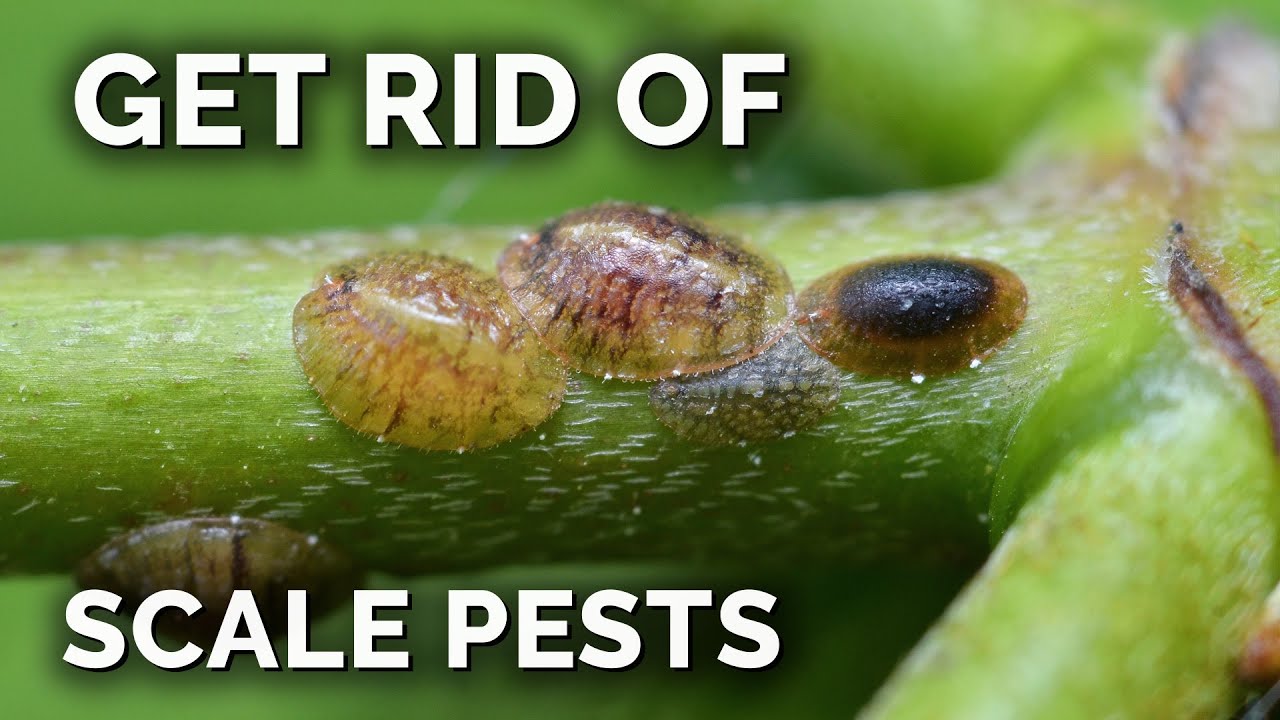
The COMPLETE Guide to Getting Rid of Scale Insects
video description
Date: 2022-07-18
Related videos




Comments and reviews: 14
FMNsocial
Great video! Would've helped me a few years ago when I discovered our indoor lemon trees were infested, but I did my research and sprayed with diluted dish soap which destroys the oily nature of the soft scales and suffocates them. Kept them in the shade and a couple days later, sprayed with water to remove residual soap (which I read can negatively affect leaves' ability to photosyntheze. They thrived outside all summer with only a casual re-spraying a few months later. I didn't have to treat them all winter (I could have but I'm lazy lol) and will do it right before taking them outside again this Spring. I'm sure insecticides could work too, but a simple solution of dish soap and water was convenient and seemed to work pretty well for me! I will say though, our trees were REALLY bad. so each tree took several hours to ensure everything was covered with soap and the ex-scales wiped off. So trust me when I say, if you see scale, try to take control ASAP!
reply
Great video! Would've helped me a few years ago when I discovered our indoor lemon trees were infested, but I did my research and sprayed with diluted dish soap which destroys the oily nature of the soft scales and suffocates them. Kept them in the shade and a couple days later, sprayed with water to remove residual soap (which I read can negatively affect leaves' ability to photosyntheze. They thrived outside all summer with only a casual re-spraying a few months later. I didn't have to treat them all winter (I could have but I'm lazy lol) and will do it right before taking them outside again this Spring. I'm sure insecticides could work too, but a simple solution of dish soap and water was convenient and seemed to work pretty well for me! I will say though, our trees were REALLY bad. so each tree took several hours to ensure everything was covered with soap and the ex-scales wiped off. So trust me when I say, if you see scale, try to take control ASAP!
reply
meikusje
I just noticed a bunch of these on one of my indoor plants a few days ago. Luckily, the weather is now warm enough that I could put the plant outside, and when I just checked, a bunch of spiders had set up camp on the plant. I still removed all the scales I could see, but I'm hoping the spiders will clean up the rest. So far, I've been able to get rid of all pests by simply cleaning leaves of affected plants once or twice a day, and doing so persistently until no critters could be seen for a few days in a row. So fingers crossed this will work for this scales-affected plant as well. Not that I have anything against other methods, this is just easier.
reply
I just noticed a bunch of these on one of my indoor plants a few days ago. Luckily, the weather is now warm enough that I could put the plant outside, and when I just checked, a bunch of spiders had set up camp on the plant. I still removed all the scales I could see, but I'm hoping the spiders will clean up the rest. So far, I've been able to get rid of all pests by simply cleaning leaves of affected plants once or twice a day, and doing so persistently until no critters could be seen for a few days in a row. So fingers crossed this will work for this scales-affected plant as well. Not that I have anything against other methods, this is just easier.
reply
Vighnesh
The timing is insane! This is exactly the video we needed thank you so much! Chris, your videos are so incredibly informative and so well made packed with such easy to consume info! We are struggling with soft waxy substance on our eggplants, Tomatos and mint which maybe probably soft scale bugs but we still have doubts on whether it's soft scale or leafhopper eggs or powdery mildew: ( is there a way to tell the difference? And would the treatment mostly the same for all of them?
reply
The timing is insane! This is exactly the video we needed thank you so much! Chris, your videos are so incredibly informative and so well made packed with such easy to consume info! We are struggling with soft waxy substance on our eggplants, Tomatos and mint which maybe probably soft scale bugs but we still have doubts on whether it's soft scale or leafhopper eggs or powdery mildew: ( is there a way to tell the difference? And would the treatment mostly the same for all of them?
reply
Jim
Hello Kevin, I've been watching your videos for over two years now and am extremely impressed on your knowledge especially here in San Diego of gardening and all aspects that deal in the gardening world. I wanted to ask if you gave tours of your new Homestead to locals here in San Diego? I've learned a hell of a lot from all your videos especially starting with your other house and how you set up that awesome garden in a very small footprint!
reply
Hello Kevin, I've been watching your videos for over two years now and am extremely impressed on your knowledge especially here in San Diego of gardening and all aspects that deal in the gardening world. I wanted to ask if you gave tours of your new Homestead to locals here in San Diego? I've learned a hell of a lot from all your videos especially starting with your other house and how you set up that awesome garden in a very small footprint!
reply
Joyce
I'd never had it before but my indoor lemon tree got it and I had no clue until the sticky goo on the leaves. I just spent a couple hours yesterday with warm soapy water in a tub, and a washcloth and wiped them off. I left it out since is not too cold and will check it every day or two for sneaky ones. Interesting bugs. I also have some neem oil spray but might not use it.
reply
I'd never had it before but my indoor lemon tree got it and I had no clue until the sticky goo on the leaves. I just spent a couple hours yesterday with warm soapy water in a tub, and a washcloth and wiped them off. I left it out since is not too cold and will check it every day or two for sneaky ones. Interesting bugs. I also have some neem oil spray but might not use it.
reply
theEumenides
I was gifted a lemon tree, and I saw rather late that it had a nasty cushion scale infection. I lost a whole branch. (It was my first citrus tree. I still inspect it regularly and find a few that I pick off with an cotton swab dipped in rubbing alcohol. So far, so good, but if it goes on for much longer, I might need to do a broader treatment like you've suggested.
reply
I was gifted a lemon tree, and I saw rather late that it had a nasty cushion scale infection. I lost a whole branch. (It was my first citrus tree. I still inspect it regularly and find a few that I pick off with an cotton swab dipped in rubbing alcohol. So far, so good, but if it goes on for much longer, I might need to do a broader treatment like you've suggested.
reply
Marie
We moved into a house with a huuuge pecan tree that shades the driveway and holy cow. in the summer those droppings we thought were sap are yea actually this bugs droppings and it covers our car and driveway from one end to another. Its so sticky like honey and after it rains its worse. If you walk to your car the rocks stick to the bottoms of your shoes
reply
We moved into a house with a huuuge pecan tree that shades the driveway and holy cow. in the summer those droppings we thought were sap are yea actually this bugs droppings and it covers our car and driveway from one end to another. Its so sticky like honey and after it rains its worse. If you walk to your car the rocks stick to the bottoms of your shoes
reply
Pandoras
Have a off topic question. I purchased two Pineapple pear trees, they were growing in a cloth sock inside a container. One is thriving the other one I had to cut back down to knee high. The reason I cut back down is it was rotting towards the top. Both trees are planted in same pots, same soil, same area. Please help thank you
reply
Have a off topic question. I purchased two Pineapple pear trees, they were growing in a cloth sock inside a container. One is thriving the other one I had to cut back down to knee high. The reason I cut back down is it was rotting towards the top. Both trees are planted in same pots, same soil, same area. Please help thank you
reply
Let
Great informative video. I'm currently dealing with a huge scale infestation on all my Mexican petunias that has started to spread to my tomato plant in my raised bed. I released a large number of ladybugs that have helped to slow the spread, but with ants farming them they have proven extremely difficult to eradicate.
reply
Great informative video. I'm currently dealing with a huge scale infestation on all my Mexican petunias that has started to spread to my tomato plant in my raised bed. I released a large number of ladybugs that have helped to slow the spread, but with ants farming them they have proven extremely difficult to eradicate.
reply
Claudia
I worked at my universitys greenhouse until my recent graduation and we had an outbreak of armoured scale while I had been gone on winter break. I was responsible for the massive cleaning operation. We used black soap and I gave most plants multiple baths for about a week which helped. I was persistent.
reply
I worked at my universitys greenhouse until my recent graduation and we had an outbreak of armoured scale while I had been gone on winter break. I was responsible for the massive cleaning operation. We used black soap and I gave most plants multiple baths for about a week which helped. I was persistent.
reply
Pa
I just literally got it on my plant. I didn't know what was wrong with my plant. I looked for pest and didn't see anything but the scales. At the time I didn't know what it was or that it was alive. I was lucky to notice one moving. I sprayed my plants very well for 2 days. Hope my plant recovers.
reply
I just literally got it on my plant. I didn't know what was wrong with my plant. I looked for pest and didn't see anything but the scales. At the time I didn't know what it was or that it was alive. I was lucky to notice one moving. I sprayed my plants very well for 2 days. Hope my plant recovers.
reply
Heike
i almost lost my Kumquat to those (armored scale. i realized the investation pretty late. I Cut it back and washed it pretty heavily in the shower. After that it took me a long time to pick the rest of them off. a year later i am still picking of some. but they are not enough to harm the plant
reply
i almost lost my Kumquat to those (armored scale. i realized the investation pretty late. I Cut it back and washed it pretty heavily in the shower. After that it took me a long time to pick the rest of them off. a year later i am still picking of some. but they are not enough to harm the plant
reply
Left
before I've finished the video:
I've only ever had hard Scale on orange trees, and I had a lot of success with just an isopropyl alcohol solution and a sponge. Now I'm ignorant and don't know how safe that is for most plants, but I know it worked wonders in my scenario at least
reply
before I've finished the video:
I've only ever had hard Scale on orange trees, and I had a lot of success with just an isopropyl alcohol solution and a sponge. Now I'm ignorant and don't know how safe that is for most plants, but I know it worked wonders in my scenario at least
reply
Sandra
Scales are so creepy! Glad I haven't had to deal with those. Can't wait for the video that will target white flies and thrips though! Seriously are those pests like best friends or something cause they are living their best lives at the expense of my little garden.
reply
Scales are so creepy! Glad I haven't had to deal with those. Can't wait for the video that will target white flies and thrips though! Seriously are those pests like best friends or something cause they are living their best lives at the expense of my little garden.
reply
Add a review, comment
Other channel videos