Can Los Angeles Be Sustainable?
video description
Date: 2019-09-12
Related videos



Comments and reviews: 10
chairmanofrussia
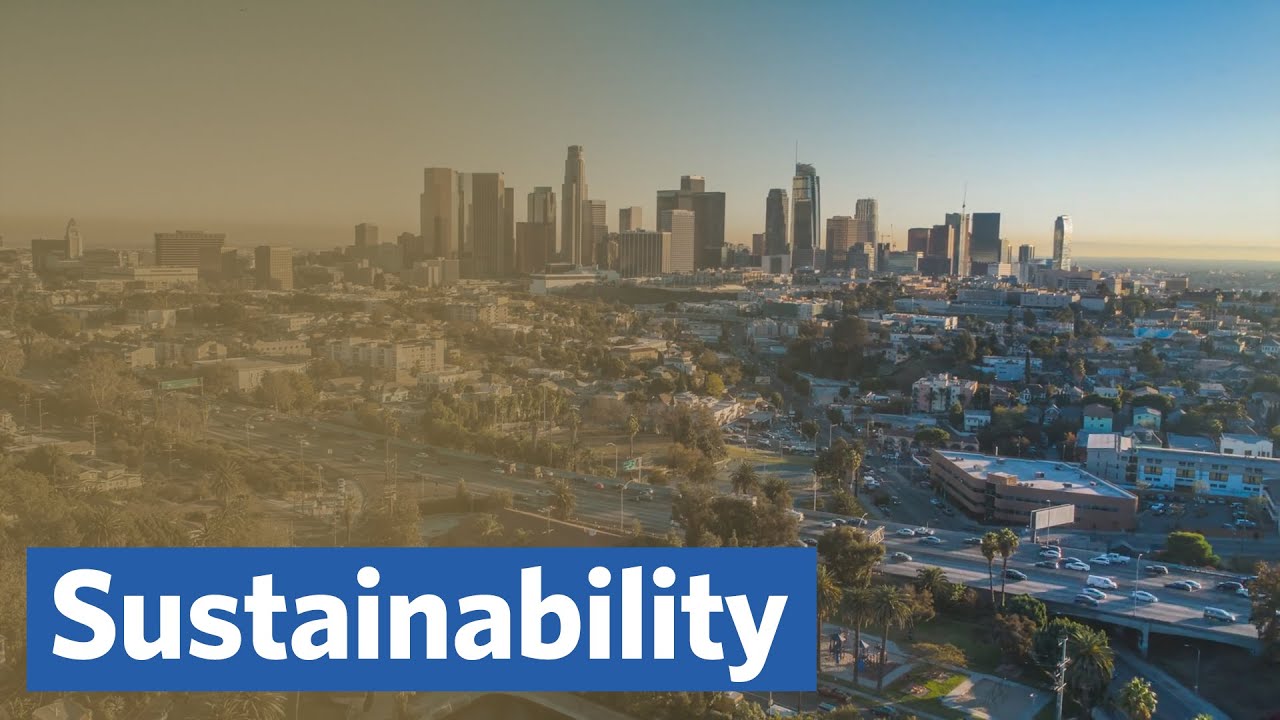
People need to throw away the concept that LA is some big suburb. Los Angeles because is the densest urban area in the country. Average densities in the urban area are 7, 000/sq mi. From the air, the city has multiple areas of super high densities that lead up to mini skylines that are not suburban office parks, but integrated into the fabric of the city itself. Densities in the Main city core (downtown to santa monica, North Hollywood to south-central. 15 miles east to west and 10 miles north to south) top 14, 000/sq. mi, which is the average density of Tokyo-Yokohama. Keep in mind, the suburbs are a whopping half that density, denser than the average density of most US cities, and its like that the entire 50 Miles or so from North Hollywood all the way to Southern Orange County. If youre still not convinced because muh skyline, know that the Downtown Skyline has expanded to 2 Miles across, half the length of Chicagos skyline, and is already a quarter the size of the Loop. This does not include all of the office parks LA DOES have. Add in the other skylines (mini-downtowns, integrated with the urban fabric, NOT suburban edge cities, such as Century City, Irvine, Hollywood, Long Beach, LAX, Santa Monica, Glendale, Burbank, Anaheim, Wilshire Blvd, Brentwood & Westwood and the scattered high rises in Culver City, Santa Ana, and the San Fernando Valley and you have an urban density that essentially spans the entire length of the sprawl. Also, most of those single family homes that arent in the san gabriel valley are actually duplexes and small multi unit houses, much like those you find in northeast asian countries like Japan (14, 000/sq. mi in central core remember. And dont get me started on the MASSIVE mid-rise buildings that are found all over the city, not just in some small, inner city ring. So yes, LA is a real city. Moreso than most US cities, because its structured in a way that more resembles the chaos of a Japanese city, and less like a US city that concentrates everything in the CBD and a few Edge cities, with everywhere else essentially being houses in the forest. Check this interactive map out to see how LA is a top density city, that gives it its rightful title as Americas Densest Urban Area. Also, thats old footage of downtown. The entire area around staples center is completely built up, and hollywood has even more large mid-rise and hi-rise buildings.
reply
People need to throw away the concept that LA is some big suburb. Los Angeles because is the densest urban area in the country. Average densities in the urban area are 7, 000/sq mi. From the air, the city has multiple areas of super high densities that lead up to mini skylines that are not suburban office parks, but integrated into the fabric of the city itself. Densities in the Main city core (downtown to santa monica, North Hollywood to south-central. 15 miles east to west and 10 miles north to south) top 14, 000/sq. mi, which is the average density of Tokyo-Yokohama. Keep in mind, the suburbs are a whopping half that density, denser than the average density of most US cities, and its like that the entire 50 Miles or so from North Hollywood all the way to Southern Orange County. If youre still not convinced because muh skyline, know that the Downtown Skyline has expanded to 2 Miles across, half the length of Chicagos skyline, and is already a quarter the size of the Loop. This does not include all of the office parks LA DOES have. Add in the other skylines (mini-downtowns, integrated with the urban fabric, NOT suburban edge cities, such as Century City, Irvine, Hollywood, Long Beach, LAX, Santa Monica, Glendale, Burbank, Anaheim, Wilshire Blvd, Brentwood & Westwood and the scattered high rises in Culver City, Santa Ana, and the San Fernando Valley and you have an urban density that essentially spans the entire length of the sprawl. Also, most of those single family homes that arent in the san gabriel valley are actually duplexes and small multi unit houses, much like those you find in northeast asian countries like Japan (14, 000/sq. mi in central core remember. And dont get me started on the MASSIVE mid-rise buildings that are found all over the city, not just in some small, inner city ring. So yes, LA is a real city. Moreso than most US cities, because its structured in a way that more resembles the chaos of a Japanese city, and less like a US city that concentrates everything in the CBD and a few Edge cities, with everywhere else essentially being houses in the forest. Check this interactive map out to see how LA is a top density city, that gives it its rightful title as Americas Densest Urban Area. Also, thats old footage of downtown. The entire area around staples center is completely built up, and hollywood has even more large mid-rise and hi-rise buildings.
reply
bartonfang
Embracing car is kind of a bad idea, because of the consumption and reliability of oil; however, you need high density development as well as good public transport to replace the existing system (which might cause a lot of front money and maintenance down the road, but also damages local car sells/repair. Net number-wise, you need either lower population or flat population increase, or you will never be sustainable within a finite system (given that per capita usage is the same, if input is higher than output. To me, right now, sustainable basically means having a crisis 200 years later than say 50 years later. Of course, the hope is during that 200 years, science or society can progress to a point where net input of energy roughly equals to output. I think a good way of doing this, is to calculate the estimated carbon flow in a system, if output is higher than input, then we should not say it is sustainable. To encourage sustainability, I think you really need to start with public education and raise awareness along with laws. Having people behaving on their own well-being is always a risk, especially if we are talking about future well being that is their offspring's, since the general public is rather short-sighted. But American culture really promotes the idea I work hard, I deserve this type of mentality that facilitates selfish thinking which is also supported by a system that encourages over consumption of all goods. So I would say it really needs to start from public education and change mentality on a really large scale for city sustainability to work (and of course make sure that rural area follows, so they don't just un-do the good.
reply
Embracing car is kind of a bad idea, because of the consumption and reliability of oil; however, you need high density development as well as good public transport to replace the existing system (which might cause a lot of front money and maintenance down the road, but also damages local car sells/repair. Net number-wise, you need either lower population or flat population increase, or you will never be sustainable within a finite system (given that per capita usage is the same, if input is higher than output. To me, right now, sustainable basically means having a crisis 200 years later than say 50 years later. Of course, the hope is during that 200 years, science or society can progress to a point where net input of energy roughly equals to output. I think a good way of doing this, is to calculate the estimated carbon flow in a system, if output is higher than input, then we should not say it is sustainable. To encourage sustainability, I think you really need to start with public education and raise awareness along with laws. Having people behaving on their own well-being is always a risk, especially if we are talking about future well being that is their offspring's, since the general public is rather short-sighted. But American culture really promotes the idea I work hard, I deserve this type of mentality that facilitates selfish thinking which is also supported by a system that encourages over consumption of all goods. So I would say it really needs to start from public education and change mentality on a really large scale for city sustainability to work (and of course make sure that rural area follows, so they don't just un-do the good.
reply
Quartknee K
I might believe this if I didn't already live in the LA area. The infrastructure here is so old with roads that are in the worst conditions I've ever experienced. The traffic is insufferable and rideshare companies keep more cars on the roads in certain areas as drivers cruise around or park/idle between rides. The mapping apps have clogged up secondary and side streets so what used to be a quiet residential road is now a major thoroughfare. So far the power has gone out on my street seven times since the start of 2019 and last year we had major blackouts that affected a huge area. The media doesn't report this and it's hard to get info about it. Even when they send traffic control officers out to work the major intersection near me, seeing the official response to these incidents leads me to believe that LA is teetering on the brink. The tap water tastes so gross that I tried double filtering and it still tastes weird. Great that Seimans is giving you data but I don't think they're monitoring the right things. Livability is a huge issue and the lack of green space and parks in many areas is a huge problem. The few spots we do have are already crowded. At some point, I think things will reach a critical mass and prove things, as they are, aren't sustainable for the generation already here, let alone future ones.
reply
I might believe this if I didn't already live in the LA area. The infrastructure here is so old with roads that are in the worst conditions I've ever experienced. The traffic is insufferable and rideshare companies keep more cars on the roads in certain areas as drivers cruise around or park/idle between rides. The mapping apps have clogged up secondary and side streets so what used to be a quiet residential road is now a major thoroughfare. So far the power has gone out on my street seven times since the start of 2019 and last year we had major blackouts that affected a huge area. The media doesn't report this and it's hard to get info about it. Even when they send traffic control officers out to work the major intersection near me, seeing the official response to these incidents leads me to believe that LA is teetering on the brink. The tap water tastes so gross that I tried double filtering and it still tastes weird. Great that Seimans is giving you data but I don't think they're monitoring the right things. Livability is a huge issue and the lack of green space and parks in many areas is a huge problem. The few spots we do have are already crowded. At some point, I think things will reach a critical mass and prove things, as they are, aren't sustainable for the generation already here, let alone future ones.
reply
spikedpsycho
Los Angeles is everything the city wants. dense urban lots, grid streets, etc. Cities are too complicated to plan, so anyone who tries to plan them ends up following fads. Meanwhile, planners are perfectly happy for people to live in single-family homes as long as they can afford to buy them. But the same planners see nothing wrong with using urban-growth boundaries and lengthy permitting processes in California to make such homes cost five times what they ought to cost. Ask any urban planner where they live, it AIN'T an Apartment or Condo. Los Angeles is the densest urban area -- its 25 percent denser than New York (urban area only includes a citys urbanized land and not rural land or parks. And every new LA metro rail line they plan is going thru the poor neighborhoods they aim to Gentrify.
reply
Los Angeles is everything the city wants. dense urban lots, grid streets, etc. Cities are too complicated to plan, so anyone who tries to plan them ends up following fads. Meanwhile, planners are perfectly happy for people to live in single-family homes as long as they can afford to buy them. But the same planners see nothing wrong with using urban-growth boundaries and lengthy permitting processes in California to make such homes cost five times what they ought to cost. Ask any urban planner where they live, it AIN'T an Apartment or Condo. Los Angeles is the densest urban area -- its 25 percent denser than New York (urban area only includes a citys urbanized land and not rural land or parks. And every new LA metro rail line they plan is going thru the poor neighborhoods they aim to Gentrify.
reply
Amara Jordan
I really like that the plan has so many measurable goals, and the website actually being updated and clear about these things is great. So many cities facing issues tend to try to hide the struggling parts behind a smokescreen (smogscreen, divert attention by forcing the narrative by only really being clear about wins theyve had in the past. So, to me, even the areas that are still causing significant problems are improved simply by being a little more honest about whats happening and showing where those problems lie. I also loved the bad clip art mention. The struggle is real And the editing where you visually displayed the 3Es being disproportional was pretty smooth Very cool little addition to the video. Kudos
reply
I really like that the plan has so many measurable goals, and the website actually being updated and clear about these things is great. So many cities facing issues tend to try to hide the struggling parts behind a smokescreen (smogscreen, divert attention by forcing the narrative by only really being clear about wins theyve had in the past. So, to me, even the areas that are still causing significant problems are improved simply by being a little more honest about whats happening and showing where those problems lie. I also loved the bad clip art mention. The struggle is real And the editing where you visually displayed the 3Es being disproportional was pretty smooth Very cool little addition to the video. Kudos
reply
Alex Jenkins
LA should have kept the yellow and red cars (Los Angeles Railway (Yellow) and Pacific Electric (Red, not forgetting keeping its trolleybus system, instituting an integrated ticketing system (20c for a ride from anywhere to anywhere in LA, 50's Angelenos) and building a decently sized Metro/Monorail in the 50's and 60's, instead of building huge motorways all over the place, and it should have also encouraged mixed-use zoning, rather than strict single-use. I wonder what LA would be like today if those things had been done all those years ago. The traffic and smog problems LA has, not forgetting all the other problems related to the local environment are deep-seated and will take a lot to put right.
reply
LA should have kept the yellow and red cars (Los Angeles Railway (Yellow) and Pacific Electric (Red, not forgetting keeping its trolleybus system, instituting an integrated ticketing system (20c for a ride from anywhere to anywhere in LA, 50's Angelenos) and building a decently sized Metro/Monorail in the 50's and 60's, instead of building huge motorways all over the place, and it should have also encouraged mixed-use zoning, rather than strict single-use. I wonder what LA would be like today if those things had been done all those years ago. The traffic and smog problems LA has, not forgetting all the other problems related to the local environment are deep-seated and will take a lot to put right.
reply
kailomonkey
You need to work on an outro format. Something to last about 10-15 seconds before the already existing 5-10 seconds of end cards on show. These numbers are mostly from thin air, but I like your videos and believe people enjoy your reporting and would appreciate having a tonal cue from yourself that the details of the video have ended. Maybe you have avoided this norm for your own reasons, but I hope I have convinced you that your voice and personality is worth it. That padding can really help people who find jarring changes difficult to deal with also, such as myself. Some people abuse this by doing the opposite and seamlessly rolling into an ad. Please don't do that. It's very frustrating.
reply
You need to work on an outro format. Something to last about 10-15 seconds before the already existing 5-10 seconds of end cards on show. These numbers are mostly from thin air, but I like your videos and believe people enjoy your reporting and would appreciate having a tonal cue from yourself that the details of the video have ended. Maybe you have avoided this norm for your own reasons, but I hope I have convinced you that your voice and personality is worth it. That padding can really help people who find jarring changes difficult to deal with also, such as myself. Some people abuse this by doing the opposite and seamlessly rolling into an ad. Please don't do that. It's very frustrating.
reply
Ride the Northern Line
Good Film If they want to get people to use public transport more why do the Metrolink commuter trains run so infequently. If the service ran every 15 mins on each of the branches it would be like having an extra 6 metro lines covering parts of the city without existing lines. It would also be easy to add extra stations for inner urban trains to operate in addition, this would allow for significant improvements as much less than the cost of building a new railway. Do you think that LA will ever have Car Free development like we have in London? - Now that is truly sustainable. Come to the UK to see how we do things on our side.
reply
Good Film If they want to get people to use public transport more why do the Metrolink commuter trains run so infequently. If the service ran every 15 mins on each of the branches it would be like having an extra 6 metro lines covering parts of the city without existing lines. It would also be easy to add extra stations for inner urban trains to operate in addition, this would allow for significant improvements as much less than the cost of building a new railway. Do you think that LA will ever have Car Free development like we have in London? - Now that is truly sustainable. Come to the UK to see how we do things on our side.
reply
Nick Chavez
LA is not sustainable and never has been. The only reason why it exists is because back in the 20th century it stole water from other places such as the Owens Valley and even from other States. Yet despite being mostly desert with little to no rain fall it acts like it gets regular rain and does little to nothing to control water usage; such as other desert cities like Vegas or even Pheonix. The drought and water crisis that so cal has been facing is because it pretended like water would always be there. It was only a matter of time before the water stopped flowing. there was no water left to take.
reply
LA is not sustainable and never has been. The only reason why it exists is because back in the 20th century it stole water from other places such as the Owens Valley and even from other States. Yet despite being mostly desert with little to no rain fall it acts like it gets regular rain and does little to nothing to control water usage; such as other desert cities like Vegas or even Pheonix. The drought and water crisis that so cal has been facing is because it pretended like water would always be there. It was only a matter of time before the water stopped flowing. there was no water left to take.
reply
HostilePancakes, the One and Only
This video about sustainability in LA is a microcosm for the changes I want to help implement, in cities across the US, as an Urban Planner. Obesity, air pollution, dependence on cars, income inequality, and wasteful subsidies are just a few of the many issues that we can have a positive impact on, by centering our cities around people, rather than cars. This opportunity to begin solving these issues is why I've already decided, as a senior in high school, to study urban planning.
reply
This video about sustainability in LA is a microcosm for the changes I want to help implement, in cities across the US, as an Urban Planner. Obesity, air pollution, dependence on cars, income inequality, and wasteful subsidies are just a few of the many issues that we can have a positive impact on, by centering our cities around people, rather than cars. This opportunity to begin solving these issues is why I've already decided, as a senior in high school, to study urban planning.
reply
Add a review, comment
Other channel videos