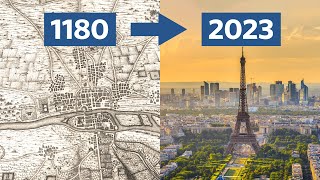
Can Infill Development Save Cities?
video description
Date: 2023-09-01
Related videos




Comments and reviews: 19
nacoran
I wish you'd do more talking about Land Value Tax. Sometimes it seems like a third rail on urban planning sites. I know lots of Americans store their wealth in the value of their home and it depresses the value of land. but that also means a lot more people can afford a home. It encourages density exactly where it's needed by making land expensive to own. If you own a big house (or a small house) on a small lot it is generally neutral towards your overall tax bill, but if you own a huge lot it raises your taxes. but if you combine it with up zoning you can offset that increase in taxes by putting more units on the lot, and unlike under the normal system you don't pay a big tax hit for having a better building on the lot. It's also much harder to cheat than other forms of property tax. I'm not saying we should switch entirely to an LVT, but we should definitely shift the balance in how we assess property tax more heavily towards LVT. You can even use it as a precision tool by, for instance, just using it along a mass transit corridor to encourage density.
Yes, it has to include upzoning, but it's a great tool to encourage density and it's budget neutral. Mostly it just makes it expensive to have vacant lots.
For people who don't know how it works. right now, most of how we assess property values for taxes is based on what sort of building you have on a lot. Say you have three lots, all the same size, right next to each other in the middle of a block. Lot 1 is vacant. maybe it's got a condemned house on it. Lot 2 has a nice tiny little house on it and Lot 3 has an apartment building that has 6 units in it. Other than that, the lots are identical. The way we tax things right now, Lot 1 will pay almost no taxes, Lot 2 will pay some taxes, and Lot 3 will pay lots of taxes, but really, Lot 3, from the perspective of what we actually want for density, is doing exactly what we want them to do- building some apartments. Because he is paying almost nothing in taxes the landlord for Lot 1 looks around and says. eh, maybe I'll just hold onto this land and see if there maybe is a property boom and I can sell it. he can wait for the perfect buyer or perfect opportunity to develop. but because, in practice, there are lots of people doing the same thing, the area doesn't get redeveloped.
Under an LVT we shift that balance. We look at the street. it's got a bus line, sewer, a police station nearby, a park nearby with a public pool, it's in a fairly good school district. so, instead of taxing mostly based on the value of the building, we say, 'We are providing these services here, and we are going to tax the lot. ' The landlord for Lot 1 suddenly gets a huge tax hike. If he sits on this land he is going to lose his shirt, so now he has to develop the land or sell the land to someone who will (or maybe lose it through tax forfeiture. The person who owns Lot 2. their taxes, if you set the rates right, maybe sees their taxes go up if it's a particularly big lot, or might see them go down if it's a small lot, but generally speaking, their taxes will stay about the same. The landlord for Lot 3. his taxes go down. Yes, he still is paying the taxes on the lot, but since the guy who owns Lot 1 is now paying his fair share we can give a small break to the landlord at Lot 3. What happens next? Well, first you have to do the upzoning thing so they have options, but now Lot 1 isn't worth waiting around for a 'good' time to build, so they stop waiting and build something, hopefully another apartment complex or at least a duplex or a shop with an apartment over it. Overall, the tax burden stays roughly the same. You can still do programs like STAR that helps elderly people stay in their homes, but overall, because it encourages more development, and because owning a huge lot compared to what you have on it creates more taxes for you you see denser construction. It doesn't encourage low or high income housing over each other. a landlord can build a 6 unit luxury apartment building or a 12 or 18 unit middle or low income building. what they can't do is just let the lot sit vacant. Because it encourages development it's very hard for the landlord to pass the cost off to the tenants- there are more places to live, so rents, in general, go down. Of course, it does cost people more in taxes who have underdeveloped property. If you have a house with a giant yard in the middle of the city your taxes will go up, but if you have a giant lawn in the middle of the city where you are getting all the benefits of density without helping with the density, maybe you should consider building a small apartment building on your lot and renting out some of the land. If you absolutely have to have a big lawn, move out to the country. Let people who actually want to live in the city live in the city.
It's just one tool, and it can be used with a lot of other tools. I know some people want to replace all taxes, and I'm not proposing that. just slowly shift the way we assess property values. (
-On the topic of property values, I also think we have problems with how we fund schools locally. we need to do a better job funding rural and urban schools at the state and federal level. Right now rich districts stay rich by pricing poor people out of their districts. Poor people get stuck going to poorly funded schools, which helps perpetuate the cycle of poverty. If we let rich areas fund their schools locally they fund their schools locally and then vote against funding schools at the state and federal level. Poor districts tend to stay poor because people with kids don't want to move there. Rich districts tend to stay rich because they are too expensive for poor people to live there. Short of a poverty based school bussing system the only real solution is shifting funding up the ladder. If rich people want to fund their schools well they'll have to shell out to fund all schools well. Someone will surely say 'that's communism' but if we can't at least agree to get kids to the starting line they can't participate in our wonderful capitalist society. There is a difference between advocating for sharing the wealth for everyone and arguing that we should at least share the wealth so all our kids get good educations so that the next generation is functional.
reply
I wish you'd do more talking about Land Value Tax. Sometimes it seems like a third rail on urban planning sites. I know lots of Americans store their wealth in the value of their home and it depresses the value of land. but that also means a lot more people can afford a home. It encourages density exactly where it's needed by making land expensive to own. If you own a big house (or a small house) on a small lot it is generally neutral towards your overall tax bill, but if you own a huge lot it raises your taxes. but if you combine it with up zoning you can offset that increase in taxes by putting more units on the lot, and unlike under the normal system you don't pay a big tax hit for having a better building on the lot. It's also much harder to cheat than other forms of property tax. I'm not saying we should switch entirely to an LVT, but we should definitely shift the balance in how we assess property tax more heavily towards LVT. You can even use it as a precision tool by, for instance, just using it along a mass transit corridor to encourage density.
Yes, it has to include upzoning, but it's a great tool to encourage density and it's budget neutral. Mostly it just makes it expensive to have vacant lots.
For people who don't know how it works. right now, most of how we assess property values for taxes is based on what sort of building you have on a lot. Say you have three lots, all the same size, right next to each other in the middle of a block. Lot 1 is vacant. maybe it's got a condemned house on it. Lot 2 has a nice tiny little house on it and Lot 3 has an apartment building that has 6 units in it. Other than that, the lots are identical. The way we tax things right now, Lot 1 will pay almost no taxes, Lot 2 will pay some taxes, and Lot 3 will pay lots of taxes, but really, Lot 3, from the perspective of what we actually want for density, is doing exactly what we want them to do- building some apartments. Because he is paying almost nothing in taxes the landlord for Lot 1 looks around and says. eh, maybe I'll just hold onto this land and see if there maybe is a property boom and I can sell it. he can wait for the perfect buyer or perfect opportunity to develop. but because, in practice, there are lots of people doing the same thing, the area doesn't get redeveloped.
Under an LVT we shift that balance. We look at the street. it's got a bus line, sewer, a police station nearby, a park nearby with a public pool, it's in a fairly good school district. so, instead of taxing mostly based on the value of the building, we say, 'We are providing these services here, and we are going to tax the lot. ' The landlord for Lot 1 suddenly gets a huge tax hike. If he sits on this land he is going to lose his shirt, so now he has to develop the land or sell the land to someone who will (or maybe lose it through tax forfeiture. The person who owns Lot 2. their taxes, if you set the rates right, maybe sees their taxes go up if it's a particularly big lot, or might see them go down if it's a small lot, but generally speaking, their taxes will stay about the same. The landlord for Lot 3. his taxes go down. Yes, he still is paying the taxes on the lot, but since the guy who owns Lot 1 is now paying his fair share we can give a small break to the landlord at Lot 3. What happens next? Well, first you have to do the upzoning thing so they have options, but now Lot 1 isn't worth waiting around for a 'good' time to build, so they stop waiting and build something, hopefully another apartment complex or at least a duplex or a shop with an apartment over it. Overall, the tax burden stays roughly the same. You can still do programs like STAR that helps elderly people stay in their homes, but overall, because it encourages more development, and because owning a huge lot compared to what you have on it creates more taxes for you you see denser construction. It doesn't encourage low or high income housing over each other. a landlord can build a 6 unit luxury apartment building or a 12 or 18 unit middle or low income building. what they can't do is just let the lot sit vacant. Because it encourages development it's very hard for the landlord to pass the cost off to the tenants- there are more places to live, so rents, in general, go down. Of course, it does cost people more in taxes who have underdeveloped property. If you have a house with a giant yard in the middle of the city your taxes will go up, but if you have a giant lawn in the middle of the city where you are getting all the benefits of density without helping with the density, maybe you should consider building a small apartment building on your lot and renting out some of the land. If you absolutely have to have a big lawn, move out to the country. Let people who actually want to live in the city live in the city.
It's just one tool, and it can be used with a lot of other tools. I know some people want to replace all taxes, and I'm not proposing that. just slowly shift the way we assess property values. (
-On the topic of property values, I also think we have problems with how we fund schools locally. we need to do a better job funding rural and urban schools at the state and federal level. Right now rich districts stay rich by pricing poor people out of their districts. Poor people get stuck going to poorly funded schools, which helps perpetuate the cycle of poverty. If we let rich areas fund their schools locally they fund their schools locally and then vote against funding schools at the state and federal level. Poor districts tend to stay poor because people with kids don't want to move there. Rich districts tend to stay rich because they are too expensive for poor people to live there. Short of a poverty based school bussing system the only real solution is shifting funding up the ladder. If rich people want to fund their schools well they'll have to shell out to fund all schools well. Someone will surely say 'that's communism' but if we can't at least agree to get kids to the starting line they can't participate in our wonderful capitalist society. There is a difference between advocating for sharing the wealth for everyone and arguing that we should at least share the wealth so all our kids get good educations so that the next generation is functional.
reply
Jim
Researching my family's genealogy, I've noticed that most lived in single family homes, or sometimes townhouses/rowhouses. The difference for the single family homes was the reduced setbacks, particularly on the sides. Even just this facilitates a much more walkable community. Many cities are dense enough for good transit even with this, and many people prefer single family, or maybe townhouse, at least once they have children. I think that urbanists would benefit from avoiding falling in the Borg cube around train station mentality, as the only solution. Mid rise around a transit stop can be popular with young adults without children yet, or with young children, and could be with retirees I think, but dense walkable single family neighborhoods can be more of interest for others. And still perfectly compatible with walkable neighborhoods and transit.
reply
Researching my family's genealogy, I've noticed that most lived in single family homes, or sometimes townhouses/rowhouses. The difference for the single family homes was the reduced setbacks, particularly on the sides. Even just this facilitates a much more walkable community. Many cities are dense enough for good transit even with this, and many people prefer single family, or maybe townhouse, at least once they have children. I think that urbanists would benefit from avoiding falling in the Borg cube around train station mentality, as the only solution. Mid rise around a transit stop can be popular with young adults without children yet, or with young children, and could be with retirees I think, but dense walkable single family neighborhoods can be more of interest for others. And still perfectly compatible with walkable neighborhoods and transit.
reply
Robert
I saw something pretty cool while traveling overseas that might help with the transportation issues that arise with increasing density: private busses.
No, they didn't eliminate public transportation. They just allowed private passenger vans to operate on already established public bus routes. These private vans were more comfortable, charged more than the city busses, and picked up the slack during rush hours. Since they were privately operated, they could quickly shift resources as needed. For example: concerts, sports games, and festivals. I found these private busses/vans easy to use because they followed known routes and made all the same stops as their city-operated counterparts. They also meant that passengers wouldn't have to wait as long for a ride to pick them up at their bus stop.
reply
I saw something pretty cool while traveling overseas that might help with the transportation issues that arise with increasing density: private busses.
No, they didn't eliminate public transportation. They just allowed private passenger vans to operate on already established public bus routes. These private vans were more comfortable, charged more than the city busses, and picked up the slack during rush hours. Since they were privately operated, they could quickly shift resources as needed. For example: concerts, sports games, and festivals. I found these private busses/vans easy to use because they followed known routes and made all the same stops as their city-operated counterparts. They also meant that passengers wouldn't have to wait as long for a ride to pick them up at their bus stop.
reply
David
I like innovative, dynamic ideas for better urban design. As somebody who s in private industry (and a former progressive) I must guiltily confess that I also rather enjoy watching many progressives break their noses on the obdurate wall of bureaucracies when they try to implement these wonderful ideas. Ain t a businessman out there who hasn t had his progressive friends pooh-pooh business complaints about just how obstructive and expensive and disincentivizing excessive regulation can be. Ah well. Some folks don t realize that big dogs can bite until it s THEIR leg in the damned thing s mouth. Hopefully the misery of shared experience can make moving forward together easier.
reply
I like innovative, dynamic ideas for better urban design. As somebody who s in private industry (and a former progressive) I must guiltily confess that I also rather enjoy watching many progressives break their noses on the obdurate wall of bureaucracies when they try to implement these wonderful ideas. Ain t a businessman out there who hasn t had his progressive friends pooh-pooh business complaints about just how obstructive and expensive and disincentivizing excessive regulation can be. Ah well. Some folks don t realize that big dogs can bite until it s THEIR leg in the damned thing s mouth. Hopefully the misery of shared experience can make moving forward together easier.
reply
StatelyElms
My small city's doing a lot of infill. A brand new provincial courthouse is already going up on, and a new Performing Arts centre is being planned to be built on, a large parking lot just adjacent to the downtown. They also took some parking away from the large surface parking lot to build a skatepark, and took some more from the smaller one to renovate the city square. and then several empty lots used as parking temporarily have actually been turned around and turned into office buildings, planned mixed-use buildings, large apartment buildings with ground floor uses etc. and this is a very small city, and only within the last few years! We're doing better!
reply
My small city's doing a lot of infill. A brand new provincial courthouse is already going up on, and a new Performing Arts centre is being planned to be built on, a large parking lot just adjacent to the downtown. They also took some parking away from the large surface parking lot to build a skatepark, and took some more from the smaller one to renovate the city square. and then several empty lots used as parking temporarily have actually been turned around and turned into office buildings, planned mixed-use buildings, large apartment buildings with ground floor uses etc. and this is a very small city, and only within the last few years! We're doing better!
reply
Alex
Could you do a video on induced demand but with Public Transport, at the bottom of my road is a bus stop but the bus only comes once every 2 hours so only the very oldest people and kids who are just messing about with their mates, so aren't in a rush, will use it. If it was once every hour I'd use it much more often, if the bus came once every 15 mins I don't think a lot of people would use their cars. If there was a bus as frequent as the underground in London, I don't think anyone would use a car, unless for holdiays. I was just thinking about it because since 2010 in the UK the number of Buses has halved and I have used them a lot less than I used to.
reply
Could you do a video on induced demand but with Public Transport, at the bottom of my road is a bus stop but the bus only comes once every 2 hours so only the very oldest people and kids who are just messing about with their mates, so aren't in a rush, will use it. If it was once every hour I'd use it much more often, if the bus came once every 15 mins I don't think a lot of people would use their cars. If there was a bus as frequent as the underground in London, I don't think anyone would use a car, unless for holdiays. I was just thinking about it because since 2010 in the UK the number of Buses has halved and I have used them a lot less than I used to.
reply
Joseph
I love the spirit of this video, but let's stop acting like developers will build anything affordable if given the opportunity to build up rather than out. Even your example of infill development at 1: 40 is a load of shit. I just looked up those apartments that you claim have 80 affordable units. The cheapest one is 2800/month for a 516 sqft studio (station16apartments for those that want to check. We NEED regulation to cap rent before we ever change zoning. We will never get affordable homes/apartments otherwise. Stop advocating for zoning reform until we get rent caps and force builders to stop these 'luxury' buildings that aren't needed.
reply
I love the spirit of this video, but let's stop acting like developers will build anything affordable if given the opportunity to build up rather than out. Even your example of infill development at 1: 40 is a load of shit. I just looked up those apartments that you claim have 80 affordable units. The cheapest one is 2800/month for a 516 sqft studio (station16apartments for those that want to check. We NEED regulation to cap rent before we ever change zoning. We will never get affordable homes/apartments otherwise. Stop advocating for zoning reform until we get rent caps and force builders to stop these 'luxury' buildings that aren't needed.
reply
Nelson
My city s doing lots of infill construction, granted that some of it was poorly done in the past (such as building skyscrapers with no street front stores and suburban style plazas with parking in what used to be a dense neighborhood) but they have reversed course and started to build more buildings with street facing storefronts. Now for transit, I think where I live could use more light rail to create a network that moves people faster while connecting with the existing line and the two major stops in the downtown (and also spurring more TOD development surrounding the stations but in massive ways that most of the state haven t done.
reply
My city s doing lots of infill construction, granted that some of it was poorly done in the past (such as building skyscrapers with no street front stores and suburban style plazas with parking in what used to be a dense neighborhood) but they have reversed course and started to build more buildings with street facing storefronts. Now for transit, I think where I live could use more light rail to create a network that moves people faster while connecting with the existing line and the two major stops in the downtown (and also spurring more TOD development surrounding the stations but in massive ways that most of the state haven t done.
reply
Toni
Infill development needs an expectation that people will actually move to and live in the city center. I don't feel it's a guaranteed trend in all cities, nor do I feel that in the way towards profitability, it will still be affordable, so no wonder we haven't seen such a push towards mixed-use middle rises in many cities - they have huge parking lots in the city center because that's the only way property owners can at least get some cash flow there. Building new apartment buildings don't guarantee people flowing in, which might be especailly true for those cities without colleges and are economically struggling
reply
Infill development needs an expectation that people will actually move to and live in the city center. I don't feel it's a guaranteed trend in all cities, nor do I feel that in the way towards profitability, it will still be affordable, so no wonder we haven't seen such a push towards mixed-use middle rises in many cities - they have huge parking lots in the city center because that's the only way property owners can at least get some cash flow there. Building new apartment buildings don't guarantee people flowing in, which might be especailly true for those cities without colleges and are economically struggling
reply
city_beautiful
American urbanists will often sing the praises of streetcar suburbs. So why must you reinvent the wheel with these weird urban village contraptions? Why not simply go back to building the houses that people want, in neighbourhoods where they want to live? I'm talking row houses. Forget expensive rental apartments next to the busiest of roads in town. Build row houses and rework the road network to ensure that these residential streets don't get too much through traffic. You know it works, you know people want to live there and it is cheaper to build than an urban village.
reply
American urbanists will often sing the praises of streetcar suburbs. So why must you reinvent the wheel with these weird urban village contraptions? Why not simply go back to building the houses that people want, in neighbourhoods where they want to live? I'm talking row houses. Forget expensive rental apartments next to the busiest of roads in town. Build row houses and rework the road network to ensure that these residential streets don't get too much through traffic. You know it works, you know people want to live there and it is cheaper to build than an urban village.
reply
Alex
One of the minor problems with Mixed Use developments is some of the areas don't need another shop on the ground floor or more office space as the area already has high vacancy rates. A more productive thing would be for this to be taken into account and if the area has a high vacancy rate already, possibly having the developers refurbish vacant shops/office spaces, either through buy-outs or profit sharing. This would reduce current vacany due to new residents, while improving the current crop of vacant shops/offices.
reply
One of the minor problems with Mixed Use developments is some of the areas don't need another shop on the ground floor or more office space as the area already has high vacancy rates. A more productive thing would be for this to be taken into account and if the area has a high vacancy rate already, possibly having the developers refurbish vacant shops/office spaces, either through buy-outs or profit sharing. This would reduce current vacany due to new residents, while improving the current crop of vacant shops/offices.
reply
Nelson
The Newport Section of Jersey City is an example of infill construction done wrong, but then changed course. There s some giant suburban style strip malls/big box stores plus a huge sprawling mall but there s also lots of dense housing that exist and under construction. There s plenty to be improved including removing the strip malls, big box stores, and the mall but it can be adapted for urban use (such as the shops at Hudson Yards or an multilevel Shop Rite) with the land being converted to housing.
reply
The Newport Section of Jersey City is an example of infill construction done wrong, but then changed course. There s some giant suburban style strip malls/big box stores plus a huge sprawling mall but there s also lots of dense housing that exist and under construction. There s plenty to be improved including removing the strip malls, big box stores, and the mall but it can be adapted for urban use (such as the shops at Hudson Yards or an multilevel Shop Rite) with the land being converted to housing.
reply
pbreedu
It is great when infills fill up vacant lots. However, here in Bowness a neighborhood of Calgary, Canada they often tear down old but still very functional single homes to build an other more expensive single family home. This reduces needed affordable housing because the infill homes cost much more than the homes they replaced. Also despite using scarce skilled trades people their is no net gain of housing because you destroy one to build one.
reply
It is great when infills fill up vacant lots. However, here in Bowness a neighborhood of Calgary, Canada they often tear down old but still very functional single homes to build an other more expensive single family home. This reduces needed affordable housing because the infill homes cost much more than the homes they replaced. Also despite using scarce skilled trades people their is no net gain of housing because you destroy one to build one.
reply
neubro
Even when you can't afford to live in the city regardless or don't want to live in the city, at least suburban development need to be accessible by transit and with everything being currently far away with the single family zoning and the lot sizes. Increase density even with single family homes using smaller lots. Smaller single family lot sizes like in 4: 00. Lower the lot minimums and loosen zoning regulations which Houston made it possible.
reply
Even when you can't afford to live in the city regardless or don't want to live in the city, at least suburban development need to be accessible by transit and with everything being currently far away with the single family zoning and the lot sizes. Increase density even with single family homes using smaller lots. Smaller single family lot sizes like in 4: 00. Lower the lot minimums and loosen zoning regulations which Houston made it possible.
reply
anubis2814
I feel like a downtown idea would be that housing can cut its required parking in half if they have the same number of sheltered bike spaces. Would fix a lot and free up space. Also tax all non-agriculture land, non-public spaces and replace that with most of the state and local taxes. You can have big yards but you have to make them public parks for everyone or get taxed like crazy. See urban sprawl die in a generation.
reply
I feel like a downtown idea would be that housing can cut its required parking in half if they have the same number of sheltered bike spaces. Would fix a lot and free up space. Also tax all non-agriculture land, non-public spaces and replace that with most of the state and local taxes. You can have big yards but you have to make them public parks for everyone or get taxed like crazy. See urban sprawl die in a generation.
reply
Prince
One challenge: in most cities, vacant land is located in places that are less desirable; meaning on the flip side, there is little vacant land in already desirable areas. Those are the areas in greatest need of increasing their land utility, but densifying land that is already making valuable contributions is much more challenging than building on one of many vacant lots or underutilized parking areas.
reply
One challenge: in most cities, vacant land is located in places that are less desirable; meaning on the flip side, there is little vacant land in already desirable areas. Those are the areas in greatest need of increasing their land utility, but densifying land that is already making valuable contributions is much more challenging than building on one of many vacant lots or underutilized parking areas.
reply
Zephyr
It s definitely worked for us here in Tucson. 15 years ago, our downtown was completely dead. Just a bunch of empty parking lots and disused buildings. Thanks to infill and a big investment push from the city, it s thriving again. Lots of new housing, hotels, restaurants, bars, clubs, etc. If you go there on a weekend especially, it s packed with people. Infill can be an amazing thing when done right.
reply
It s definitely worked for us here in Tucson. 15 years ago, our downtown was completely dead. Just a bunch of empty parking lots and disused buildings. Thanks to infill and a big investment push from the city, it s thriving again. Lots of new housing, hotels, restaurants, bars, clubs, etc. If you go there on a weekend especially, it s packed with people. Infill can be an amazing thing when done right.
reply
Douglas
Something that you didn t mention is that much of the upzoning and infill development is happening along noisy, polluted stroads. Several examples in the video are next to stroads and highways. I think that really factors in to where people want to live. Infill development needs to be spread throughout neighborhoods, not just the undesirable land next to car sewers.
reply
Something that you didn t mention is that much of the upzoning and infill development is happening along noisy, polluted stroads. Several examples in the video are next to stroads and highways. I think that really factors in to where people want to live. Infill development needs to be spread throughout neighborhoods, not just the undesirable land next to car sewers.
reply
Pieter
The high rise buildings make every city look the same though. Please make a video about how the fear of ornament has killed local character. Almost any unique characteristic of local architecture is in ornament. The ornaments of Amsterdam, Venice, Rome, Kyoto, Salvador, make those places unique. The dogmatic fear of ornament makes all cities sterile and uniform.
reply
The high rise buildings make every city look the same though. Please make a video about how the fear of ornament has killed local character. Almost any unique characteristic of local architecture is in ornament. The ornaments of Amsterdam, Venice, Rome, Kyoto, Salvador, make those places unique. The dogmatic fear of ornament makes all cities sterile and uniform.
reply
Add a review, comment
Other channel videos