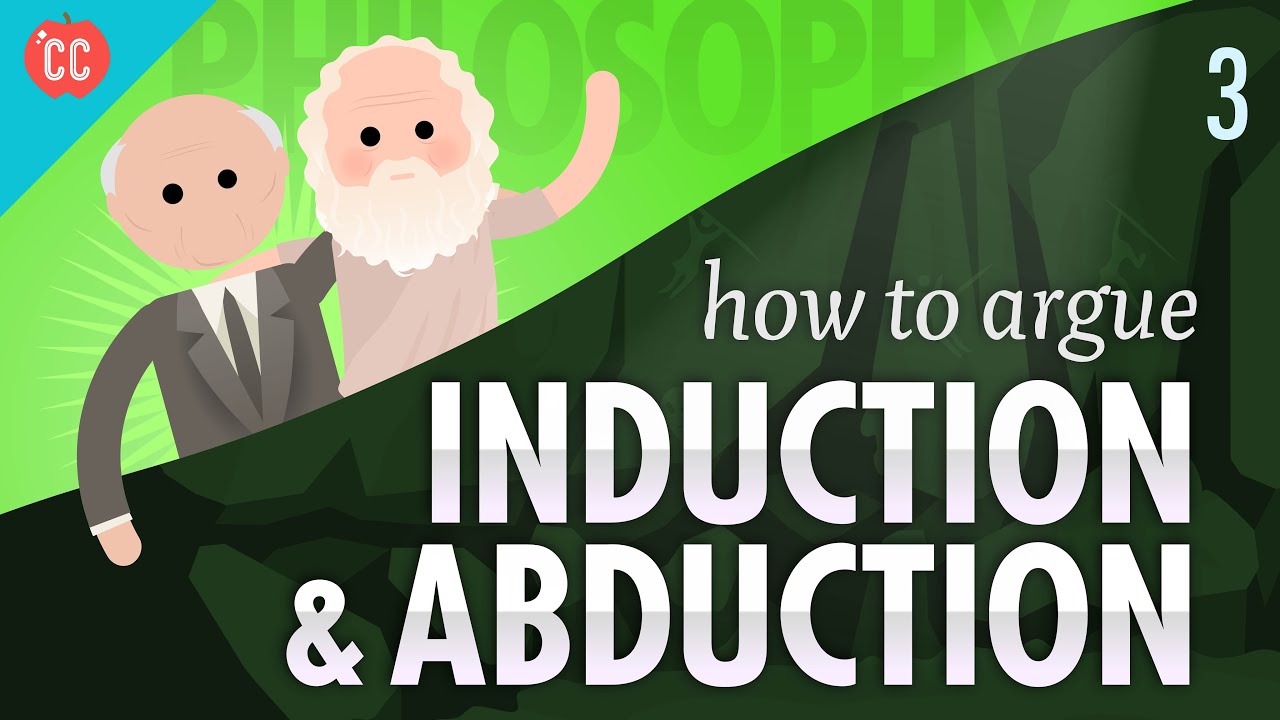
How to Argue - Induction & Abduction: Crash Course Philosophy #3
video description
Date: 2022-04-04
Related videos





Comments and reviews: 10
GaryChap
There IS no Grue before time 't' - since it's impossible for any substance to have the proper characteristics of Grue yet. Surely the proper inference is that, if Grue exists, then SOME items (emeralds for example) could be Grue- but equally, may not be.
Sure, the emerald meets SOME of the definitions of Grue - but that's like saying a wheelbarrow IS a car, because it has at least one wheel, and all cars have at least one wheel. And logistician would consider this a fundamental error in reasoning, and not worth pursuing any further.
Furthermore since no person has ever experienced Grue- ever! .it would be unreasonable and an inductive error to consider that emeralds are Grue even if Grue exists. There simply isn't any grounds for any such expectations. Only if Grue were cyclic could we make an inference based on prior experience (whether that be personal or anecdotal) - till then, we're taking it on faith that any green thing will change colour to blue in response to the time.
So, I fail to see the point about Grue: / Perhaps Nelson Goodmans argument was considerably more nuanced than is presented here.
reply
There IS no Grue before time 't' - since it's impossible for any substance to have the proper characteristics of Grue yet. Surely the proper inference is that, if Grue exists, then SOME items (emeralds for example) could be Grue- but equally, may not be.
Sure, the emerald meets SOME of the definitions of Grue - but that's like saying a wheelbarrow IS a car, because it has at least one wheel, and all cars have at least one wheel. And logistician would consider this a fundamental error in reasoning, and not worth pursuing any further.
Furthermore since no person has ever experienced Grue- ever! .it would be unreasonable and an inductive error to consider that emeralds are Grue even if Grue exists. There simply isn't any grounds for any such expectations. Only if Grue were cyclic could we make an inference based on prior experience (whether that be personal or anecdotal) - till then, we're taking it on faith that any green thing will change colour to blue in response to the time.
So, I fail to see the point about Grue: / Perhaps Nelson Goodmans argument was considerably more nuanced than is presented here.
reply
Prajwol
1. Deduction - one fact leading to another (prev video)
2. Induction - using past experience to make future predictions; works in probability unlike certainty in case of deduction; Nelson Goodman's Grue-3: 30
3. Abduction - drawing a conclusion based on the explanation that best explains a state of events, rather than evidence provided by the premises; unlike deduction and induction, the premises do not lead to conclusion, you eliminate premises to lead you to conclusion.
interlocutors - people participating in a dialogue, debate or conversation.
reply
1. Deduction - one fact leading to another (prev video)
2. Induction - using past experience to make future predictions; works in probability unlike certainty in case of deduction; Nelson Goodman's Grue-3: 30
3. Abduction - drawing a conclusion based on the explanation that best explains a state of events, rather than evidence provided by the premises; unlike deduction and induction, the premises do not lead to conclusion, you eliminate premises to lead you to conclusion.
interlocutors - people participating in a dialogue, debate or conversation.
reply
Ricardo
I don't see how Nelson Goodman showed inductive reasoning is flawed. It's still a possibility emeralds will one day turn blue. However, this is not your average inductive reasoning, because inductive reasoning is based in past experience and/or observation, and no one has ever seen a blue emerald. Therefore your induction has no basis and therefore it shouldn't even be considered a normal inductive argument, but something else in a different category.
Like a baseless inductive argument. Or better yet, a nonsense.
reply
I don't see how Nelson Goodman showed inductive reasoning is flawed. It's still a possibility emeralds will one day turn blue. However, this is not your average inductive reasoning, because inductive reasoning is based in past experience and/or observation, and no one has ever seen a blue emerald. Therefore your induction has no basis and therefore it shouldn't even be considered a normal inductive argument, but something else in a different category.
Like a baseless inductive argument. Or better yet, a nonsense.
reply
Cody
All of this was great, however i feel like it didnt give me what i was hoping. I learned all the words assigned to types of arguements. But it stopped right before it explains that most people arent philosophers. Anytime i come into contact with a philosopher theres learning. However anyone i tend to disagree with tend to think repeating the debunked counter argument and insisting i misunderstood or am incorrect regardless of evidence. How to i get them to be philosophers?
reply
All of this was great, however i feel like it didnt give me what i was hoping. I learned all the words assigned to types of arguements. But it stopped right before it explains that most people arent philosophers. Anytime i come into contact with a philosopher theres learning. However anyone i tend to disagree with tend to think repeating the debunked counter argument and insisting i misunderstood or am incorrect regardless of evidence. How to i get them to be philosophers?
reply
robyn
i thought i was crazy. but this is how i've thought, this is my thought process. i don't have an education, so philosophy wasn't an option for me. the opportunity wasn't on the table for me to learn. i'm 34 now and once coronavirus is over, if it ever is im going to attend UC and i'm going to going to get a degree, i understand everything these videos are teaching me and they are a god send. this is maybe the happiest i have ever been in my life.
reply
i thought i was crazy. but this is how i've thought, this is my thought process. i don't have an education, so philosophy wasn't an option for me. the opportunity wasn't on the table for me to learn. i'm 34 now and once coronavirus is over, if it ever is im going to attend UC and i'm going to going to get a degree, i understand everything these videos are teaching me and they are a god send. this is maybe the happiest i have ever been in my life.
reply
William
Somebody help me out, Im kind of confused as how induction would state we conclude grue as true
if induction is past reference to predict future unobserved events, how can inductive reasoning conclude that green isnt grue but is at the same time
Even though the argument is true due to its premises, how is agreeing with grue inductive reasoning?
reply
Somebody help me out, Im kind of confused as how induction would state we conclude grue as true
if induction is past reference to predict future unobserved events, how can inductive reasoning conclude that green isnt grue but is at the same time
Even though the argument is true due to its premises, how is agreeing with grue inductive reasoning?
reply
SnclrFitzgerald
i learned more from these 10mins crash course videos, than my whole semester studying on my logic subject,
maybe its just my professor's way of teaching is boring,
or my classmate were too noisy all the time,
or maybe i wasn't paying attention back then,
or maybe maybe i wasn't interested on the topic before,
who knows?
reply
i learned more from these 10mins crash course videos, than my whole semester studying on my logic subject,
maybe its just my professor's way of teaching is boring,
or my classmate were too noisy all the time,
or maybe i wasn't paying attention back then,
or maybe maybe i wasn't interested on the topic before,
who knows?
reply
Susan
The thing about Gru makes no sense.
If Gru is anything that is green before time T AND ALSO blue after time T, then emeralds are not Gru. They only meet part of the definition by being green before time T. To meet the definition of Gru, they'd have to also be known to be blue after time T. So Emeralds are not GRU as it was defined.
reply
The thing about Gru makes no sense.
If Gru is anything that is green before time T AND ALSO blue after time T, then emeralds are not Gru. They only meet part of the definition by being green before time T. To meet the definition of Gru, they'd have to also be known to be blue after time T. So Emeralds are not GRU as it was defined.
reply
Melz
If someone wears a wig every day of their life would you say that person was bald or has hair? I would say even if Socrates gathered clippings to fashion a beard to wear all the time, he still has a beard, even though he didn't grow it himself. Lol
reply
If someone wears a wig every day of their life would you say that person was bald or has hair? I would say even if Socrates gathered clippings to fashion a beard to wear all the time, he still has a beard, even though he didn't grow it himself. Lol
reply
thelittlegumnut
It seems to me that induction is a type of deduction, and that abduction implies an entire tree of subconscious inductions. In the end, it's all deduction imo. But. I haven't found many people to agree with me on that so.
reply
It seems to me that induction is a type of deduction, and that abduction implies an entire tree of subconscious inductions. In the end, it's all deduction imo. But. I haven't found many people to agree with me on that so.
reply
Add a review, comment
Other channel videos