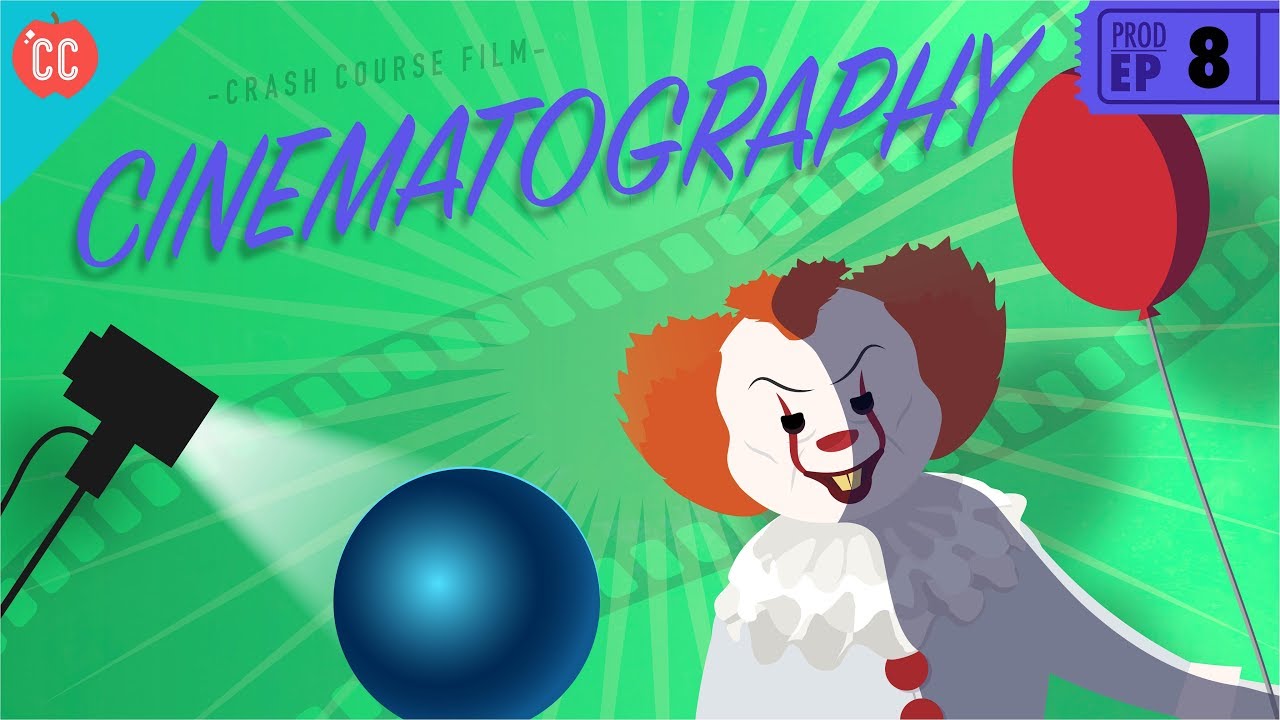
The Cinematographer: Crash Course Film Production #8
video description
Date: 2022-04-04
Related videos




Comments and reviews: 6
Shaun
Okay, it's late and I'm not asleep yet so I'm going to do this with my time.
A few corrections.
1: There are actually 3 separate but equal departments that operate under the DP. The camera dept. (Camera Operator / 1st AC, the electric dept. (Gaffer) and the always overlooked Grip dept. (Key Grip. In most of the Green Nether Regions of Non-America the electric dept. takes care of all of the lighting responsibilities whereas the grip dept. is exclusively in charge of the camera platforms and rigs (I. E. dollies, cranes/jibs, rigging the cameras on cars, etc. In the US however, the electric dept. is only in charge of the lights themselves and the means to power them (I. E. lights, ballasts and power supplies, the light stands, the power cords and power distribution, and generators) while closely working with the grip dept. who, in addition to all the camera platforms and rigs, is also in charge of shaping and bouncing the light as well as light rigging (I. E. diffusion, flags, nets, reflectors and bounces, condors etc. The Key Grip works as an equal alongside the gaffer under the DP.
2: There was also a lot of misinformation when you were talking about the different kinds of lights. I will go through all the different kinds of lights that are commonly used and explain the misconceptions.
A. INCANDESCENT lights 3200k (I. E. tungsten, quartz, etc) use a filament that is super heated by electricity until it glows a bright warm color. They are generally the less efficient light source and are somewhat being fazed out by modern more efficient technologies. They are not necessarily -smaller- lights as they can range in wattage from small 100 watt inkies to huge 20, 000 watt 220 volt beasts.
B. HMI lights 5600k pass an electrical arc through a special gas to create a bluer light that more closely matches sunlight than incandescents. They are not necessarily -massive- lights but are more efficient (brighter per watt) and they typically range in wattage from 200 watts to 24, 000 watts (which are massive. HMI's are not used to -simulate daylight- because of their brightness but because of their color temperature which more closely resembles daylight. They also typically do not give off as much heat as incandescents as they are more efficient.
C. Fluorescent lights 2800k-5600k put out very -soft- light using florescent tubes (magic cylinders) or CFL's which can come in many different colors to match both tungsten and daylight, as well as green and blue screens. They are not necessarily -more fragile- as the tubes typically come with a protective plastic cover. Fluorescents are much more efficient putting out a lot of light for relatively little power and even the biggest fluorescent light can still be plugged into a 15 amp circuit. Due to the size of the individual tubes however they comparatively don't put out as much light as the biggest tungsten or HMI lights as they would get too large and cumbersome.
D. LED lights 2800k-10, 000k use light emitting diodes (tiny magic boxes) to emit (typically) an adjustable, wide range of color. They are by far the most efficient light source used today, are fully dimmable and are on the cutting edge of lighting technology therefore they are very expensive. The newer Arri LED's are starting to take over on all kinds of film sets and they have resolved most of the color issues. Due to weight and overheating issues however, they are still not as bright as the largest HMI's.
E. -Fresnel lights? - are not a type of light but one of many types of lens which can be put in front of any of the aforementioned lights (except for Fluorescents. Along with fresnel lenses there are: spot, flood, and stipple lenses and some lights called -open face lights- don't use lenses at all.
Anyway, I doubt anyone read all the way down this far but it was therapeutic for me soooo. yeah.
reply
Okay, it's late and I'm not asleep yet so I'm going to do this with my time.
A few corrections.
1: There are actually 3 separate but equal departments that operate under the DP. The camera dept. (Camera Operator / 1st AC, the electric dept. (Gaffer) and the always overlooked Grip dept. (Key Grip. In most of the Green Nether Regions of Non-America the electric dept. takes care of all of the lighting responsibilities whereas the grip dept. is exclusively in charge of the camera platforms and rigs (I. E. dollies, cranes/jibs, rigging the cameras on cars, etc. In the US however, the electric dept. is only in charge of the lights themselves and the means to power them (I. E. lights, ballasts and power supplies, the light stands, the power cords and power distribution, and generators) while closely working with the grip dept. who, in addition to all the camera platforms and rigs, is also in charge of shaping and bouncing the light as well as light rigging (I. E. diffusion, flags, nets, reflectors and bounces, condors etc. The Key Grip works as an equal alongside the gaffer under the DP.
2: There was also a lot of misinformation when you were talking about the different kinds of lights. I will go through all the different kinds of lights that are commonly used and explain the misconceptions.
A. INCANDESCENT lights 3200k (I. E. tungsten, quartz, etc) use a filament that is super heated by electricity until it glows a bright warm color. They are generally the less efficient light source and are somewhat being fazed out by modern more efficient technologies. They are not necessarily -smaller- lights as they can range in wattage from small 100 watt inkies to huge 20, 000 watt 220 volt beasts.
B. HMI lights 5600k pass an electrical arc through a special gas to create a bluer light that more closely matches sunlight than incandescents. They are not necessarily -massive- lights but are more efficient (brighter per watt) and they typically range in wattage from 200 watts to 24, 000 watts (which are massive. HMI's are not used to -simulate daylight- because of their brightness but because of their color temperature which more closely resembles daylight. They also typically do not give off as much heat as incandescents as they are more efficient.
C. Fluorescent lights 2800k-5600k put out very -soft- light using florescent tubes (magic cylinders) or CFL's which can come in many different colors to match both tungsten and daylight, as well as green and blue screens. They are not necessarily -more fragile- as the tubes typically come with a protective plastic cover. Fluorescents are much more efficient putting out a lot of light for relatively little power and even the biggest fluorescent light can still be plugged into a 15 amp circuit. Due to the size of the individual tubes however they comparatively don't put out as much light as the biggest tungsten or HMI lights as they would get too large and cumbersome.
D. LED lights 2800k-10, 000k use light emitting diodes (tiny magic boxes) to emit (typically) an adjustable, wide range of color. They are by far the most efficient light source used today, are fully dimmable and are on the cutting edge of lighting technology therefore they are very expensive. The newer Arri LED's are starting to take over on all kinds of film sets and they have resolved most of the color issues. Due to weight and overheating issues however, they are still not as bright as the largest HMI's.
E. -Fresnel lights? - are not a type of light but one of many types of lens which can be put in front of any of the aforementioned lights (except for Fluorescents. Along with fresnel lenses there are: spot, flood, and stipple lenses and some lights called -open face lights- don't use lenses at all.
Anyway, I doubt anyone read all the way down this far but it was therapeutic for me soooo. yeah.
reply
MakeMeThinkAgain
You're doing SUCH a great job. but I want so much more. More clips of particularly striking scenes emphasizing lighting, color tone, etc. And it would be wonderful to contrast Japanese, Indian, and other national conventions in this regard.
And since you brought up -The Godfather, - how do you even talk about the spacial organization of a scene like the pivotal scene in the office where family dominance shifts from Sonny to Michael? Watch it with the sound off and just SEE how the dynamic shifts from Sonny, in change behind his dad's desk, to Michael, sprawled out in that chair. I have no idea who was driving that. Coppola I guess.
reply
You're doing SUCH a great job. but I want so much more. More clips of particularly striking scenes emphasizing lighting, color tone, etc. And it would be wonderful to contrast Japanese, Indian, and other national conventions in this regard.
And since you brought up -The Godfather, - how do you even talk about the spacial organization of a scene like the pivotal scene in the office where family dominance shifts from Sonny to Michael? Watch it with the sound off and just SEE how the dynamic shifts from Sonny, in change behind his dad's desk, to Michael, sprawled out in that chair. I have no idea who was driving that. Coppola I guess.
reply
Spring
Honestly, IT wasn't a good story in my eyes. Yet. Being that it was only the first chapter and everything took time to build up, but I can let that go. However, I do enjoy the film regardless. The panning and zooming was mesmerizing, especially the tilting while zooming effect was something I like the most about it - really adds to the already eerie sense and ominous feelings.
I wouldn't watch again for the story, but I would do it again for the cinematography. Very beautiful angles and lighting - show casing highlighted things that demands viewer's attention.
reply
Honestly, IT wasn't a good story in my eyes. Yet. Being that it was only the first chapter and everything took time to build up, but I can let that go. However, I do enjoy the film regardless. The panning and zooming was mesmerizing, especially the tilting while zooming effect was something I like the most about it - really adds to the already eerie sense and ominous feelings.
I wouldn't watch again for the story, but I would do it again for the cinematography. Very beautiful angles and lighting - show casing highlighted things that demands viewer's attention.
reply
Harmondale2
Having worked on TV sets a lot I earned huge respect for the DP, they are definitely the most important person after the director in my opinion, the director might make the decisions but the DP really makes things happen.
reply
Having worked on TV sets a lot I earned huge respect for the DP, they are definitely the most important person after the director in my opinion, the director might make the decisions but the DP really makes things happen.
reply
Zigalko
5: 43 Only now on the laptop screen did I notice The Wizard Of OZ change to color mid-shot. Gues the still-browned interior hid the change behind the door. Not so seamless.
reply
5: 43 Only now on the laptop screen did I notice The Wizard Of OZ change to color mid-shot. Gues the still-browned interior hid the change behind the door. Not so seamless.
reply
crash_course
Jan 23, 2018: Congrats to Rachel Morrison (Mudbound) for being the first woman ever nominated for an Academy Award for Best Cinematography.
reply
Jan 23, 2018: Congrats to Rachel Morrison (Mudbound) for being the first woman ever nominated for an Academy Award for Best Cinematography.
reply
Add a review, comment
Other channel videos