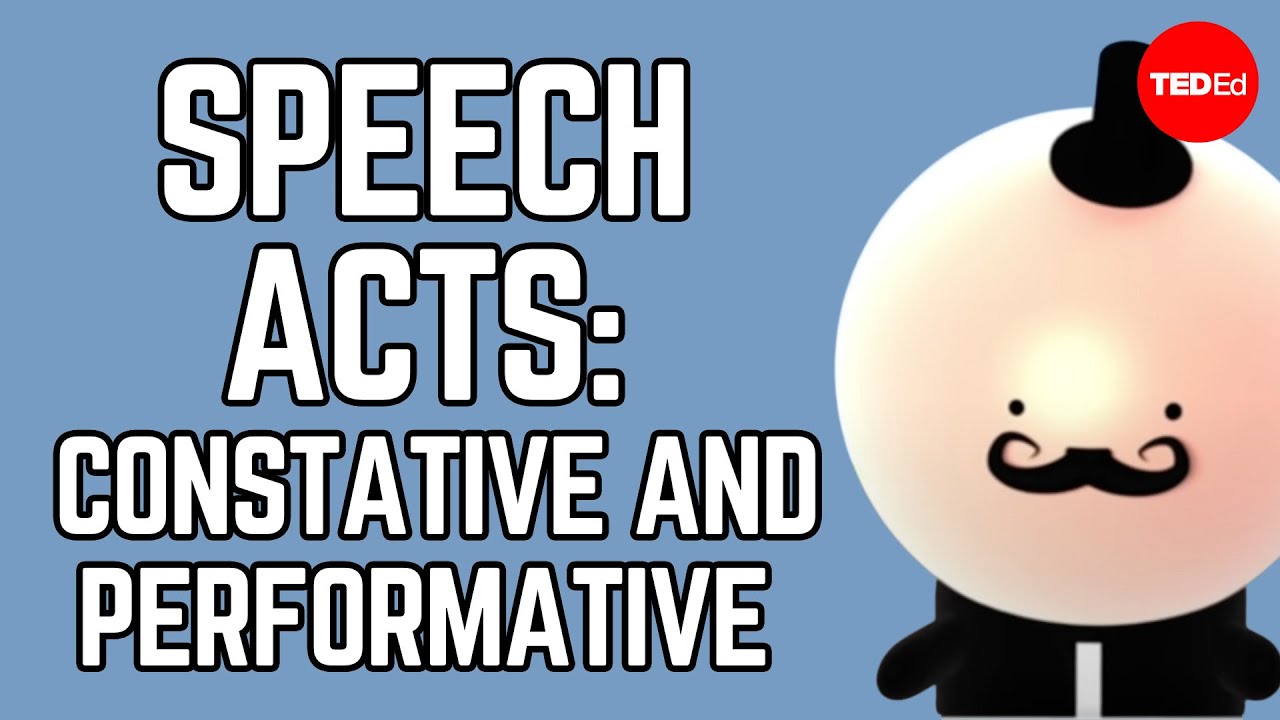
Speech acts: Constative and performative - Colleen Glenney Boggs
video description
Date: 2020-08-22
Related videos



Comments and reviews: 10
Hey
Just because you can do it doesn't mean that everyone can. Should you choose to ignore these rules, you should expect to face the consequences. Remember, you're on someone else's property, you should follow their rules. Yes, a life guard runs, but he is trained. The thing about restrictions is that they're there to keep us safe and keep them from being liable. The first thing that you should be concerned with when you own an area open to the public is what should the rules be.
reply
Just because you can do it doesn't mean that everyone can. Should you choose to ignore these rules, you should expect to face the consequences. Remember, you're on someone else's property, you should follow their rules. Yes, a life guard runs, but he is trained. The thing about restrictions is that they're there to keep us safe and keep them from being liable. The first thing that you should be concerned with when you own an area open to the public is what should the rules be.
reply
roidroid
Weird this is how it is, how dare you question me authoritarian tone to this video. I mean, if someone tried to insist that these rules were important - one would be more inclined to laugh in their face.
Arbitrary categorisations of a dynamic always-evolving language, counting angels on the head of a pin.
Im sure its useful for linguistics, but, just a weird absolutist tone to how its explained.
reply
Weird this is how it is, how dare you question me authoritarian tone to this video. I mean, if someone tried to insist that these rules were important - one would be more inclined to laugh in their face.
Arbitrary categorisations of a dynamic always-evolving language, counting angels on the head of a pin.
Im sure its useful for linguistics, but, just a weird absolutist tone to how its explained.
reply
TheaDragonSpirit
Meh if I walk fast I have more chance of falling than I do running and watching out for water. Trying to rush in an unnatural way is more dangerous than running. I think as long as you are aware and understand basic physics you can ignore rules. For example life guards would run. Sometimes authority restricts things rather than helps. And old rules and economies just hold use back.
reply
Meh if I walk fast I have more chance of falling than I do running and watching out for water. Trying to rush in an unnatural way is more dangerous than running. I think as long as you are aware and understand basic physics you can ignore rules. For example life guards would run. Sometimes authority restricts things rather than helps. And old rules and economies just hold use back.
reply
Alfonso
Austin's argument is in fact the contrary of what is being asserted here: there are not two distinct parts of speech. Constative, finally, are an abstraction of another speech act: asserting something regarding the world. That's the entire point of How to do things with words: it is not that sometimes words are actions, language is action and words are a part of it.
reply
Austin's argument is in fact the contrary of what is being asserted here: there are not two distinct parts of speech. Constative, finally, are an abstraction of another speech act: asserting something regarding the world. That's the entire point of How to do things with words: it is not that sometimes words are actions, language is action and words are a part of it.
reply
Hey
How can you do nothing? That seems like it would be a problem, but it's really not. It is usually understood, when someone says do nothing, that they actually mean be as still as possible, or don't move voluntarily. That act actually requires a bit of effort. So when a sign says do nothing, you should expect to do something.
reply
How can you do nothing? That seems like it would be a problem, but it's really not. It is usually understood, when someone says do nothing, that they actually mean be as still as possible, or don't move voluntarily. That act actually requires a bit of effort. So when a sign says do nothing, you should expect to do something.
reply
Kassidar
Yeah this is what happens when you use English.
in every other language the imperative (what this girl's calling a performative) is different to the constative.
saying 'you run' as a statement uses a different form of the verb 'run' than when telling someone 'to run'
reply
Yeah this is what happens when you use English.
in every other language the imperative (what this girl's calling a performative) is different to the constative.
saying 'you run' as a statement uses a different form of the verb 'run' than when telling someone 'to run'
reply
Hey
Some people just like useless knowledge. Sometimes this knowledge becomes useful, sometimes we just keep it in our knowledge back to save for an interesting conversation.
Then there are some people who think they already know everything they need to know.
reply
Some people just like useless knowledge. Sometimes this knowledge becomes useful, sometimes we just keep it in our knowledge back to save for an interesting conversation.
Then there are some people who think they already know everything they need to know.
reply
BallotBoxer
There's another term for action words. Verbs. I may have missed something, but this video seems to be about needless over-complication of existing labels. I guess this is great technical jargon for English majors, but useless to anyone else.
reply
There's another term for action words. Verbs. I may have missed something, but this video seems to be about needless over-complication of existing labels. I guess this is great technical jargon for English majors, but useless to anyone else.
reply
Hiphop101ize
Who is the taget audience for this and what are the implications of this informstion? Like is his a constative video pointing out the obvious to english speakers or a realy compicated video to explain to non native speakers
reply
Who is the taget audience for this and what are the implications of this informstion? Like is his a constative video pointing out the obvious to english speakers or a realy compicated video to explain to non native speakers
reply
Rensky
I guess, words can do actions only when our mouth is rapidly closing as we speak. Unless you can make a sound waves of word that enough to make things vibrate. that is! Nothing more, nothing less.
reply
I guess, words can do actions only when our mouth is rapidly closing as we speak. Unless you can make a sound waves of word that enough to make things vibrate. that is! Nothing more, nothing less.
reply
Add a review, comment
Other channel videos