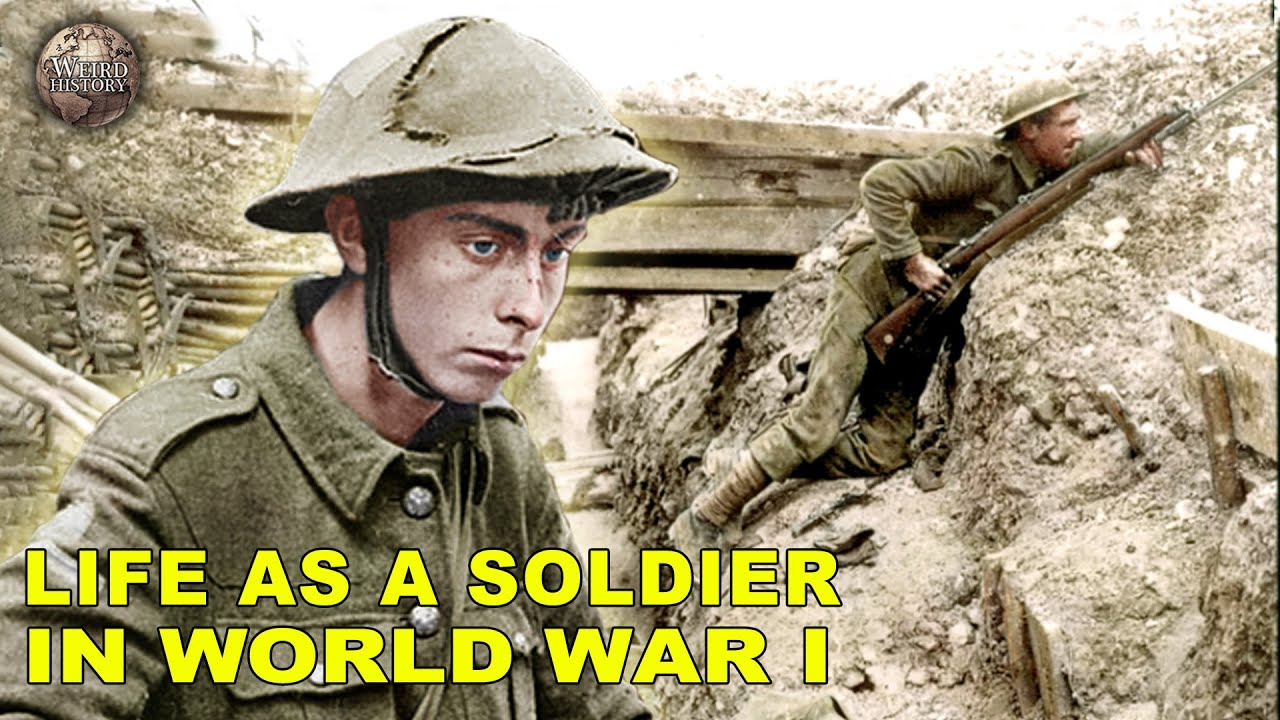
What It Was Like To Be a Trench Soldier in WWI
video description
Date: 2022-12-29
Related videos

• TED-Ed


Comments and reviews: 20
education
The problem of most PTSD survivors is the feeling of estrangement upon return to a non combative society.
In England and Britain it was easier for soldiers to transition back into society because they were basically on the same European continent and common civilization felt or knew the affects of war. There was more compassion for the returning soldiers.
An educated fight or flight response of the regimented soldier made their awareness an important key to their performance in battle.
Regular non military civilians in Europe still had an awareness of the horror of the events as it was in their own backyard. The devastation was visual and the compassion was common appreciation for the returning soldiers.
In The United States and our involvement in foreign wars was more a politically driven rally gathering up troops to go overseas to fight for human freedom! But other than the bombing of pearl harbor by Japan in Hawaii our civilian population had no real exposure to war other than newspapers and radio for information.
It was possible for many civilians to just ignore the war or at least keep it at a comfortable distance from their everyday life,
Life went on in the US without any affect.
Our Soldiers who fought overseas and lived to survive the horrors of war after living a heightened action fighting for survival became adapted to this everyday lifestyle. Then upon returning to the US civilian life felt alienated through lack of common understanding by the everyday people.
It would be similar to taking a football player off the field and placing him in a public library
Not only would he be odd and disruptive to the subdued environment of the library but he would also feel too ramped up to be there or try to conform to the environment after his involvement in the game.
True the soldiers go through debriefing and reentry programs but the public has to be made to be more understanding and informed.
reply
The problem of most PTSD survivors is the feeling of estrangement upon return to a non combative society.
In England and Britain it was easier for soldiers to transition back into society because they were basically on the same European continent and common civilization felt or knew the affects of war. There was more compassion for the returning soldiers.
An educated fight or flight response of the regimented soldier made their awareness an important key to their performance in battle.
Regular non military civilians in Europe still had an awareness of the horror of the events as it was in their own backyard. The devastation was visual and the compassion was common appreciation for the returning soldiers.
In The United States and our involvement in foreign wars was more a politically driven rally gathering up troops to go overseas to fight for human freedom! But other than the bombing of pearl harbor by Japan in Hawaii our civilian population had no real exposure to war other than newspapers and radio for information.
It was possible for many civilians to just ignore the war or at least keep it at a comfortable distance from their everyday life,
Life went on in the US without any affect.
Our Soldiers who fought overseas and lived to survive the horrors of war after living a heightened action fighting for survival became adapted to this everyday lifestyle. Then upon returning to the US civilian life felt alienated through lack of common understanding by the everyday people.
It would be similar to taking a football player off the field and placing him in a public library
Not only would he be odd and disruptive to the subdued environment of the library but he would also feel too ramped up to be there or try to conform to the environment after his involvement in the game.
True the soldiers go through debriefing and reentry programs but the public has to be made to be more understanding and informed.
reply
Smokey
My great grandpa fought in the German trenches (also known as Foxholes) during World War 1
He was forced to fight for Germany.
He was shot and ended up going to the hospital to be healed.
He was supposed to go back to the trenches after recovering from his injuries but chose to leave Germany to go live in Canada out of anger towards Germany that betrayed him due to the German soldiers murdering my great grandpa's family even though the German soldiers promised my great grandpa that they (the German soldiers and his nation's leader) would not kill my great grandpa's family if he (My great grandpa) goes to fight in the war.
My great grandpa left to fight in the war and what does the German soldiers do under the orders of the German government?
Those German soldiers and his nation's leader betrayed my great grandpa by those German soldiers and his nation's leader killing my great grandpa's whole family anyway even after promising my great grandpa that no harm would come to his (my great grandpa's family.
My great grandpa was smart to leave because he had a happy life even unto the moment he passed away in Sarnia, Ontario, Canada at the age of 97 years old.
War is hell on earth.
reply
My great grandpa fought in the German trenches (also known as Foxholes) during World War 1
He was forced to fight for Germany.
He was shot and ended up going to the hospital to be healed.
He was supposed to go back to the trenches after recovering from his injuries but chose to leave Germany to go live in Canada out of anger towards Germany that betrayed him due to the German soldiers murdering my great grandpa's family even though the German soldiers promised my great grandpa that they (the German soldiers and his nation's leader) would not kill my great grandpa's family if he (My great grandpa) goes to fight in the war.
My great grandpa left to fight in the war and what does the German soldiers do under the orders of the German government?
Those German soldiers and his nation's leader betrayed my great grandpa by those German soldiers and his nation's leader killing my great grandpa's whole family anyway even after promising my great grandpa that no harm would come to his (my great grandpa's family.
My great grandpa was smart to leave because he had a happy life even unto the moment he passed away in Sarnia, Ontario, Canada at the age of 97 years old.
War is hell on earth.
reply
Peter
My Irish granddad was a boy soldier in the Sudan campaign, both South African campaigns. Then he was at Mons as an Irish Guard he fought until 1918 just before the end of WW1 being gassed but recovering. I believe that he was used as British Army of the Rhine. He then returned to Ireland where he went back to being a fisherman. In 1922 he joined the Free State Army and fought through the Irish civil war. He died in 1955 at the age of 75. when I was a kid mum used to tell me all the stories he had told her. Seems to me that luck is as great a mystery as both love and death.
reply
My Irish granddad was a boy soldier in the Sudan campaign, both South African campaigns. Then he was at Mons as an Irish Guard he fought until 1918 just before the end of WW1 being gassed but recovering. I believe that he was used as British Army of the Rhine. He then returned to Ireland where he went back to being a fisherman. In 1922 he joined the Free State Army and fought through the Irish civil war. He died in 1955 at the age of 75. when I was a kid mum used to tell me all the stories he had told her. Seems to me that luck is as great a mystery as both love and death.
reply
Alastair
Another fact is that tragically the soldiers were often told to advance on the enemy lines at just walking pace. This was enforced by the officers. Of course the result was absolute carnage as the advancing soldiers were blown apart by artillery shells and machine guns. Naturally this all changed in teh Second World war as the military commanders realised that such World War 1 tactics did not work and simply resulted in wholesale slaughter.
reply
Another fact is that tragically the soldiers were often told to advance on the enemy lines at just walking pace. This was enforced by the officers. Of course the result was absolute carnage as the advancing soldiers were blown apart by artillery shells and machine guns. Naturally this all changed in teh Second World war as the military commanders realised that such World War 1 tactics did not work and simply resulted in wholesale slaughter.
reply
Alexa
as a german i only learned while living in the us that english speakers would call this 'the great war'. what's so great about it? millions died just because some effing royalty were killed? and the worst part is that so many young men went into it willingly not knowing what they've gotten themselves into it cause Europe was so ready for a war. keep in mind all parties were related through Queen Victoria. humans are weird!
reply
as a german i only learned while living in the us that english speakers would call this 'the great war'. what's so great about it? millions died just because some effing royalty were killed? and the worst part is that so many young men went into it willingly not knowing what they've gotten themselves into it cause Europe was so ready for a war. keep in mind all parties were related through Queen Victoria. humans are weird!
reply
William
Just in case some of you dont know the only reason why the influenza flu was called the Spanish flu is because the Spaniards were the only ones who were reporting the this disease that was running through both sides of the war and so because of that they named the Spanish flu because they were the main people like I said putting out the news and letting people know about this disease
reply
Just in case some of you dont know the only reason why the influenza flu was called the Spanish flu is because the Spaniards were the only ones who were reporting the this disease that was running through both sides of the war and so because of that they named the Spanish flu because they were the main people like I said putting out the news and letting people know about this disease
reply
education
Despite WW2 being an objectively more important and deadlier conflict, I still feel like WW1 is more interesting in many ways. I picture World war 1 as hell on earth with trench warfare, gas attacks, terrible weather conditions, constant artillery firing and wasteland apocalyptic terrain, it feels more brutal
reply
Despite WW2 being an objectively more important and deadlier conflict, I still feel like WW1 is more interesting in many ways. I picture World war 1 as hell on earth with trench warfare, gas attacks, terrible weather conditions, constant artillery firing and wasteland apocalyptic terrain, it feels more brutal
reply
Mike
We still find them still this day here in Ypres area, and there are still for more then 100 years of cleanup to do. Hope the poison stay inside all that time.
We have a special machine to dismantel them here in Belgium. My 10 year old son found one last year, just call DOVO and no big deal: p
reply
We still find them still this day here in Ypres area, and there are still for more then 100 years of cleanup to do. Hope the poison stay inside all that time.
We have a special machine to dismantel them here in Belgium. My 10 year old son found one last year, just call DOVO and no big deal: p
reply
Sean
The Australian troops had a particularly poor opinion of the British and French trenches due to their poor hygiene and became extremely reluctant to take them over. Eventually they had their own sectors on the Western Front where they were able to maintain better standards.
reply
The Australian troops had a particularly poor opinion of the British and French trenches due to their poor hygiene and became extremely reluctant to take them over. Eventually they had their own sectors on the Western Front where they were able to maintain better standards.
reply
IDC
Where did you get that figure of 40 million deaths in WW1? Just under 10 million soldiers died and around 7. 7 million civilians. If you add wounded and missing, then the figure comes close to 40 million for total casualties, not killed.
reply
Where did you get that figure of 40 million deaths in WW1? Just under 10 million soldiers died and around 7. 7 million civilians. If you add wounded and missing, then the figure comes close to 40 million for total casualties, not killed.
reply
Alexander
How can you go from peace to war so quick
Its like they flipped a literal switch
Also what kind of questions is would you like to be a soldier in the trenches of WW1? Who the heck in their right mind would want that?
reply
How can you go from peace to war so quick
Its like they flipped a literal switch
Also what kind of questions is would you like to be a soldier in the trenches of WW1? Who the heck in their right mind would want that?
reply
Mike
I saw a WWI soldier talking about putting corpses in the bottom of the trench so they wouldn't get their feet wet. They'd also stack them up on the leading edge of the trench instead of digging it deeper to protect from snipers.
reply
I saw a WWI soldier talking about putting corpses in the bottom of the trench so they wouldn't get their feet wet. They'd also stack them up on the leading edge of the trench instead of digging it deeper to protect from snipers.
reply
Tim
The insanity of mankind. Play football together one day and kill each other the next. I loathe the leaders who bring this hell upon the innocent while they sit comfortable and safe in their ivory towers. May they rot in hell!
reply
The insanity of mankind. Play football together one day and kill each other the next. I loathe the leaders who bring this hell upon the innocent while they sit comfortable and safe in their ivory towers. May they rot in hell!
reply
john
The legasy of ww1 was the catalyst, for communism, and later indirectly rise of Nazism, fall of most of the royal families in Europe, many millions slaughtered and maimed, it so sad that it all seems to happen over again
reply
The legasy of ww1 was the catalyst, for communism, and later indirectly rise of Nazism, fall of most of the royal families in Europe, many millions slaughtered and maimed, it so sad that it all seems to happen over again
reply
Alex
My great great grandfather fought in the first world war. He went off when he was 15 and all 5 of his brothers were taken. He was an indigenous Anzac and just to think about what he went through in those 3-4 years hurts.
reply
My great great grandfather fought in the first world war. He went off when he was 15 and all 5 of his brothers were taken. He was an indigenous Anzac and just to think about what he went through in those 3-4 years hurts.
reply
Davey
Some misinformation here. WW2 there was around 17 million deaths. Not 40 million. Also, the zig zags in the tranches were to make more people survive the artillery barrages because that would lower the kill radius.
reply
Some misinformation here. WW2 there was around 17 million deaths. Not 40 million. Also, the zig zags in the tranches were to make more people survive the artillery barrages because that would lower the kill radius.
reply
James
The 'flu' pandemic of 1918 was actually a pandemic of bacterial pneumonia caused by wearing dirty, bacteria collecting masks all the time.
Fauci did a study/paper on the subject in 2012.
Sound familiar?
reply
The 'flu' pandemic of 1918 was actually a pandemic of bacterial pneumonia caused by wearing dirty, bacteria collecting masks all the time.
Fauci did a study/paper on the subject in 2012.
Sound familiar?
reply
Chris
Incompetent aristocrat generals sending waves of useless attacks in suicide missions. Only bankers who gave credits to governments were the winners. History repeats himselves over and over again
reply
Incompetent aristocrat generals sending waves of useless attacks in suicide missions. Only bankers who gave credits to governments were the winners. History repeats himselves over and over again
reply
Imcool_iguesslol
On of my great times 20 grandfathers served in ww1 I dont remember much but I did get to try on his trench suit and it was heavy and I understood the hell that he went through
reply
On of my great times 20 grandfathers served in ww1 I dont remember much but I did get to try on his trench suit and it was heavy and I understood the hell that he went through
reply
Julen
Did they just say some British soldiers got the death penalty because they abandoned the war? That's insane. Shows how much value their government has for their lives. It's ridiculous.
reply
Did they just say some British soldiers got the death penalty because they abandoned the war? That's insane. Shows how much value their government has for their lives. It's ridiculous.
reply
Add a review, comment
Other channel videos