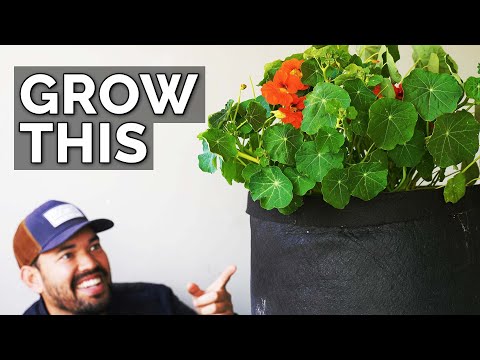
Nasturtiums: The Plant You're Not Growing (But Should Be)
video description
Date: 2022-07-18
Related videos


Comments and reviews: 15
Greg
Brilliant bigging up the worthy nasturtium. Love this video. Well done.
There are a few other areas that were not mentioned.
1. Plant under apple trees so you do not have to spray for coddling moth. You will never have to use those tacky copper bands around the trees again. Coddling moth grubs start off at ground level and climb the apple tree to get into the apples. Putting long climbing varieties of nasturtiums around your apples will stop the codding moth as they do not like them. The other benefit of doing that is the attractive nature of the flowers to bumble bees. Your apple crops will be heavier as more of the apple flowers will be pollinated by a greater variety of bees.
3. Plant around your other fruit trees to attract the bees so the pollinating is better. (Bumble bees are generally more thorough in pollinating than the beloved honey bee because they will work on the shady side of trees as well as the sunny. Honey bees tend to head for the sunny side only)
2. Plant amongst your climbing beans and tomatoes along with marigolds and basil (Basil improves the flavour of tomatoes and tomatoes improve the flavour of basil. This helps to trap the ever present aphids because the marigolds attract hoverflies. From grub to adult the hover fly will consume about 400 aphids each. There are other insects that like to feast on aphids so plant the flowers that attract them as well and your garden will end up looking more like a flower garden than a food garden with lots of tasty treats. CAUTION: make sure the flowers are all edible varieties
3. Plant amongst your cabbages. The cabbage white butter fly will lay their eggs on the nasturtium rather than the cabbages which take longer to develop than the nasturtium (won't stop all of them however they will prevent a lot of damage.
4. You can eat every part of the nasturtium except the roots. Make spicy guacamoles and pesto's from the leaves and stems. Put flowers in iced drinks such as Pimm's for that extra twist.
5. The worst the soil you plant nasturtium's in the more flowers you will get in general. So you got a very poor corner in your garden. Stick some nasturtium's in there to make it more attractive.
There are many other things you can do with the worthy nasturtium so do some experimenting and turn your garden into a paradise with them climbing through hedges and over walls, up trees and in hanging baskets.
reply
Brilliant bigging up the worthy nasturtium. Love this video. Well done.
There are a few other areas that were not mentioned.
1. Plant under apple trees so you do not have to spray for coddling moth. You will never have to use those tacky copper bands around the trees again. Coddling moth grubs start off at ground level and climb the apple tree to get into the apples. Putting long climbing varieties of nasturtiums around your apples will stop the codding moth as they do not like them. The other benefit of doing that is the attractive nature of the flowers to bumble bees. Your apple crops will be heavier as more of the apple flowers will be pollinated by a greater variety of bees.
3. Plant around your other fruit trees to attract the bees so the pollinating is better. (Bumble bees are generally more thorough in pollinating than the beloved honey bee because they will work on the shady side of trees as well as the sunny. Honey bees tend to head for the sunny side only)
2. Plant amongst your climbing beans and tomatoes along with marigolds and basil (Basil improves the flavour of tomatoes and tomatoes improve the flavour of basil. This helps to trap the ever present aphids because the marigolds attract hoverflies. From grub to adult the hover fly will consume about 400 aphids each. There are other insects that like to feast on aphids so plant the flowers that attract them as well and your garden will end up looking more like a flower garden than a food garden with lots of tasty treats. CAUTION: make sure the flowers are all edible varieties
3. Plant amongst your cabbages. The cabbage white butter fly will lay their eggs on the nasturtium rather than the cabbages which take longer to develop than the nasturtium (won't stop all of them however they will prevent a lot of damage.
4. You can eat every part of the nasturtium except the roots. Make spicy guacamoles and pesto's from the leaves and stems. Put flowers in iced drinks such as Pimm's for that extra twist.
5. The worst the soil you plant nasturtium's in the more flowers you will get in general. So you got a very poor corner in your garden. Stick some nasturtium's in there to make it more attractive.
There are many other things you can do with the worthy nasturtium so do some experimenting and turn your garden into a paradise with them climbing through hedges and over walls, up trees and in hanging baskets.
reply
Billy
As well as the capers angle, the dried seeds, ground, make either a good seasoning or an interesting alternative to coffee.
You call it a 'trap' plant.
We call it a 'companion' plant, as it also attracts not only aphids, but, here in the UK, the Cabbage White butterfly, whose caterpillars will utterly dessimate _all_ of the brassica family!
I grow both the dwarf and climbing varieties.
Food, drink, decoy, pollinator attractant, aesthetic beauty, a vastly underrated plant, taking a worthy joint first place with stinging nettles and dandelions, in my opinion.
Other companion plants are calendula, poached egg plant, basil, tansy, marigold, alyssum, thyme and I'm sure others know of many more.
No herbicides, pesticides or fungicides, so I'm not talking out of my ozone friendly aerosol.
reply
As well as the capers angle, the dried seeds, ground, make either a good seasoning or an interesting alternative to coffee.
You call it a 'trap' plant.
We call it a 'companion' plant, as it also attracts not only aphids, but, here in the UK, the Cabbage White butterfly, whose caterpillars will utterly dessimate _all_ of the brassica family!
I grow both the dwarf and climbing varieties.
Food, drink, decoy, pollinator attractant, aesthetic beauty, a vastly underrated plant, taking a worthy joint first place with stinging nettles and dandelions, in my opinion.
Other companion plants are calendula, poached egg plant, basil, tansy, marigold, alyssum, thyme and I'm sure others know of many more.
No herbicides, pesticides or fungicides, so I'm not talking out of my ozone friendly aerosol.
reply
1931Spanish
Nasturtium seed capers! Never heard of that. I planted red ones six years ago, and let them go to seed, collecting some seeds and letting the rest go where they wanted. Next year's rain, the gorgeous red flowers were all over a dappled shady area at the back of my garden, and have come back every year. I transplant some if they are in a walkway, but other than water and a bit of compost tea, I don't do anything to them. As long as they have water and shade on the roots, they will vine between pots, and look great. I'm also in San Diego, and remember the crazy huge ones that used to grow up the west side bank above Texas St, and down in the canyons around University Heights and Hillcrest, with leaves the size of your hand. A great tried and true plant!
reply
Nasturtium seed capers! Never heard of that. I planted red ones six years ago, and let them go to seed, collecting some seeds and letting the rest go where they wanted. Next year's rain, the gorgeous red flowers were all over a dappled shady area at the back of my garden, and have come back every year. I transplant some if they are in a walkway, but other than water and a bit of compost tea, I don't do anything to them. As long as they have water and shade on the roots, they will vine between pots, and look great. I'm also in San Diego, and remember the crazy huge ones that used to grow up the west side bank above Texas St, and down in the canyons around University Heights and Hillcrest, with leaves the size of your hand. A great tried and true plant!
reply
pmcatnip
While fertilizer is not required, you will get much larger leaves with rich fertile soil. My parents have a giant nasturtium bed that was filled with straight horse manure 30+ years ago and it has always grown the most humongous nasturtiums Ive ever seen anywhere. Morning sun/afternoon shade & only watered in the heat of summer droughts. We leave them in place at the end of the season to rot down and reseed and the soil has stayed rich. Several of the leaves easily get up to 6-8 inches diameter. Some varieties are larger than others but Ive taken seeds from moms place to grow and they dont get that big at my house, so I do believe the main difference is the soil.
reply
While fertilizer is not required, you will get much larger leaves with rich fertile soil. My parents have a giant nasturtium bed that was filled with straight horse manure 30+ years ago and it has always grown the most humongous nasturtiums Ive ever seen anywhere. Morning sun/afternoon shade & only watered in the heat of summer droughts. We leave them in place at the end of the season to rot down and reseed and the soil has stayed rich. Several of the leaves easily get up to 6-8 inches diameter. Some varieties are larger than others but Ive taken seeds from moms place to grow and they dont get that big at my house, so I do believe the main difference is the soil.
reply
Urban
I live in Maine and have found I can skip the starter pot step and plant nasturtium seeds right in a big pot. I choose a pot that's at least 12 in diameter and plant the seeds about 2 apart around the outer edge, and a few in the center. If night time temps are above 35, I put the pot outside, and I water it well and then anytime the soil appears dry. Within a couple of weeks, I see the first sprouts, and that's it. I grow nasturtiums every year, as they are one my favorites and so easy to grow. This method has never failed me.
reply
I live in Maine and have found I can skip the starter pot step and plant nasturtium seeds right in a big pot. I choose a pot that's at least 12 in diameter and plant the seeds about 2 apart around the outer edge, and a few in the center. If night time temps are above 35, I put the pot outside, and I water it well and then anytime the soil appears dry. Within a couple of weeks, I see the first sprouts, and that's it. I grow nasturtiums every year, as they are one my favorites and so easy to grow. This method has never failed me.
reply
Rebecca
Have you ever heard of Hostas? I just recently found out about Hostas plants and plan to try my luck at those. Poisonous for Dogs/cats to eat due to the Saponins, but Hostas have been reclassified as being in the Asparagus family & found to be completely edible for humans. Usually grown more in shady areas, but have found some heat/sun tolerant varieties for my region (H. Montana for one. Supposed to be tasty with stalks tasting similar to asparagus, leaves kinda like spinach, & fairly mild flowers for salads.
reply
Have you ever heard of Hostas? I just recently found out about Hostas plants and plan to try my luck at those. Poisonous for Dogs/cats to eat due to the Saponins, but Hostas have been reclassified as being in the Asparagus family & found to be completely edible for humans. Usually grown more in shady areas, but have found some heat/sun tolerant varieties for my region (H. Montana for one. Supposed to be tasty with stalks tasting similar to asparagus, leaves kinda like spinach, & fairly mild flowers for salads.
reply
Prashanti
They're an absolute favourite of mine They always make me laugh, because they remind me of my Mum. Dad prefers a VERY manicured, regimented garden. Mum prefers a free flowing, cottagey garden. The last home they built, Mum was too unwell to take the garden in hand, so it was all hedges and square edges. So she ran through, throwing nasturtium seeds through everything Dad was twitching, but couldn't say anything lol. Every time they reseeded Mum and I would be chuckling
reply
They're an absolute favourite of mine They always make me laugh, because they remind me of my Mum. Dad prefers a VERY manicured, regimented garden. Mum prefers a free flowing, cottagey garden. The last home they built, Mum was too unwell to take the garden in hand, so it was all hedges and square edges. So she ran through, throwing nasturtium seeds through everything Dad was twitching, but couldn't say anything lol. Every time they reseeded Mum and I would be chuckling
reply
Rebecca
This will be awesome for our S. Texas climate. Thanks for the demo & info. Marigolds are another wonderful edible flowering plant for the garden. They attract the good bugs that eat the bad ones. Another option would be to plant some potted Vicks plants near your garden to repel unwanted bugs. You just can't kill those plants & they're like Citronella to bugs. Vicks plants are not edible that I know of, though.
reply
This will be awesome for our S. Texas climate. Thanks for the demo & info. Marigolds are another wonderful edible flowering plant for the garden. They attract the good bugs that eat the bad ones. Another option would be to plant some potted Vicks plants near your garden to repel unwanted bugs. You just can't kill those plants & they're like Citronella to bugs. Vicks plants are not edible that I know of, though.
reply
Morgotha
what people also need to know is the medicinal benefit. they are: Antibacterial, Antifungal, Antiseptic, Disinfectant, Expectorant, Wound Healer, Antimicrobial, Natural Antibiotic. As a certified herbalist I strongly recommend people research this plant and grow it. But as always talk to your doctor when using such things medicinally. You never know when something may react to a medication you may be taking.
reply
what people also need to know is the medicinal benefit. they are: Antibacterial, Antifungal, Antiseptic, Disinfectant, Expectorant, Wound Healer, Antimicrobial, Natural Antibiotic. As a certified herbalist I strongly recommend people research this plant and grow it. But as always talk to your doctor when using such things medicinally. You never know when something may react to a medication you may be taking.
reply
pmcatnip
While fertilizer is not required, you will get much larger leaves with rich fertile soil. My parents have a giant nasturtium bed that was filled with horse manure 30+ years ago and it grows the most humongous nasturtiums Ive ever seen anywhere. Like some of them get up to 6-7 inches diameter. Ive taken seeds to grow at my house and they dont get that big, so its not a difference in varieties.
reply
While fertilizer is not required, you will get much larger leaves with rich fertile soil. My parents have a giant nasturtium bed that was filled with horse manure 30+ years ago and it grows the most humongous nasturtiums Ive ever seen anywhere. Like some of them get up to 6-7 inches diameter. Ive taken seeds to grow at my house and they dont get that big, so its not a difference in varieties.
reply
Rosemary
In Australia down south we have it growing like weeds. I pickle the peppers when young as they are similar to caper, but nicer. Great in salads, stews etc.
We use leaves for salads mostly. So it helps bring in bees and grows well as a cover for baby plants to get stronger and heat doesn't get them. Then we just trim back or rip out or transplant. Love em. We have 4 colours
reply
In Australia down south we have it growing like weeds. I pickle the peppers when young as they are similar to caper, but nicer. Great in salads, stews etc.
We use leaves for salads mostly. So it helps bring in bees and grows well as a cover for baby plants to get stronger and heat doesn't get them. Then we just trim back or rip out or transplant. Love em. We have 4 colours
reply
Haley
Omg this video is a year old I never heard anyone talk about nasturtium. .this plant is so so underrated I love love nasturtiums absolutely beautiful I plant it every year usually it doesn't come back but it did this time I planted seeds last year but they didn't do good so I'm trying seeds again but I was very excited that it has come back this summer.
reply
Omg this video is a year old I never heard anyone talk about nasturtium. .this plant is so so underrated I love love nasturtiums absolutely beautiful I plant it every year usually it doesn't come back but it did this time I planted seeds last year but they didn't do good so I'm trying seeds again but I was very excited that it has come back this summer.
reply
WildFireWoo
It took over my little back yard the first year I started planting, I didnt mind as I didnt have much else growing and the bumblebees just love the stuff. Self-seeded for a couple of years after too, but the yard was a bit too shaded for it in the end. It really can grow just about anywhere though.
reply
It took over my little back yard the first year I started planting, I didnt mind as I didnt have much else growing and the bumblebees just love the stuff. Self-seeded for a couple of years after too, but the yard was a bit too shaded for it in the end. It really can grow just about anywhere though.
reply
impunitythebagpuss
I grow them every year here in Newfoundland! I love them in salads and sandwiches. Here I've found I need to germinate the seeds inside because our growing season is short and it's not uncommon for late (June) frosts. Once in the ground, they take off!
reply
I grow them every year here in Newfoundland! I love them in salads and sandwiches. Here I've found I need to germinate the seeds inside because our growing season is short and it's not uncommon for late (June) frosts. Once in the ground, they take off!
reply
Intercat
The deer who chased me out of a vegetable garden will not eat nasturtiums. Nor mint, nor geraniums, nor succulents. They pretty much leave flowerpots alone too. So that's what I have, along with a small flock of cement rabbits. Viva nasturtiums! (Nasturtia)
reply
The deer who chased me out of a vegetable garden will not eat nasturtiums. Nor mint, nor geraniums, nor succulents. They pretty much leave flowerpots alone too. So that's what I have, along with a small flock of cement rabbits. Viva nasturtiums! (Nasturtia)
reply
Add a review, comment
Other channel videos