
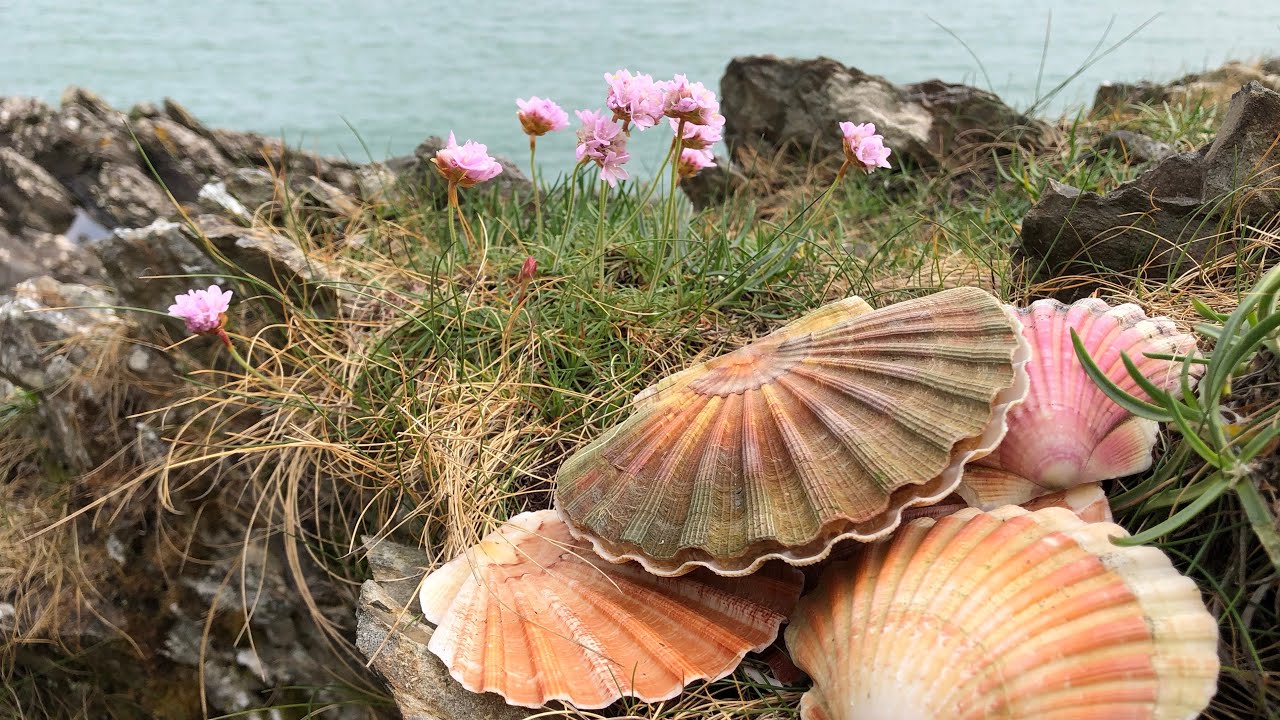
Coastal Foraging/Exploring - Scallops, Clams and Wild Edibles. - The Fish Locker
video description
Date: 2022-05-03
Related videos


Comments and reviews: 10
Haru
Have to say I've found watching your videos do help take the edge off when I'm in a panic/anxiety attack. I have agoraphobia and even prior to the pandemic lost my job because of it and again found myself unable to leave the house with tons of meds. Watching these videos and getting to see all the outdoors, even if only digital, is always a great watch. I really do love the sea and hope that someday I can enjoy it as much as you and your family day, and that my service dog likes it as much as I do. He, just doesn't know what to do with water. He'll dig in his kiddie pool and puts up a valiant effort in trying to sit so not sure how he'd react to the ocean. xD Hope y'all are staying safe. :3
reply
get
Your wrens are much neater than ours. The ones in my yard build in wren houses and the male just shoves any size stick he can shove through the hole and then the female comes along as he is singing away and tells him if she will nest in any of his stick nests. If she accepts, then she takes most all of the sticks back out of the house and rebuilds the nest much better. My male wren isn't a good carpenter AT ALL. It takes him most of the Spring to find a mate, if ever.
Ah, forget me not's, they are invasive here but beautiful. You're an encyclopedia of knowledge John, this is fun.
reply
J. A.
I thoroughly enjoyed this video. So peaceful.
We have been back in the U. S. for quite a while now, but for several years we lived in England. We used to love walking along the shore and trekking around, exploring. As much as I love Colorado, I miss England every single day. Thank you so much for sharing these with all of us total strangers out in Internet Land. You have been good for my mental health during the pandemic.
All the best to you and the entire Fish Locker family. xo
reply
Kevin
Another brilliant video learning a lot john, went to see my daughter she is at Bournemouth university we went for a walk on the beach, she was really impressed with my knowledge of all the shells and washed up sea life on the beach. She said how do you know all this, I replied I didn't get these grey hairs for nothing. thanks john -
reply
Patti
You should decorate the walls of the new Fish Locker office with unusual shells, a project for James, old picture frames and backs (no glass so one can touch them) with a cheap glue gun. When he is older he will forget (and be embarrassed) but he would have great fun now. Dinosaur shapes maybe. haha
reply
Smartie
Love your video's mate, especially during the lock down period. Would love to see a vid on sea weeds you can eat and maybe watch you cook a few of your catches on the beach on a camping stove. You know, walk us through it all from start to finish. Big up for the conservation mentality.
reply
Love your video's mate, especially during the lock down period. Would love to see a vid on sea weeds you can eat and maybe watch you cook a few of your catches on the beach on a camping stove. You know, walk us through it all from start to finish. Big up for the conservation mentality.
reply
Hard
19: 12 I keep giant African land snails, and they always have one of these in their terrarium. Helps their shells grow nice and big.
Edit: Were the beautiful bluebells around 24: 40 -Hyacinthoides non-scripta-? I've also seen them around where I live.
reply
19: 12 I keep giant African land snails, and they always have one of these in their terrarium. Helps their shells grow nice and big.
Edit: Were the beautiful bluebells around 24: 40 -Hyacinthoides non-scripta-? I've also seen them around where I live.
reply
William
Funny thing in reference to your invasive plant species, where I live in Texas Giant Hogweed is an invasive species. I ran into a virtual forest of it when I was younger, got covered with the sap, burned from head to toe for weeks. It was terrible
reply
Funny thing in reference to your invasive plant species, where I live in Texas Giant Hogweed is an invasive species. I ran into a virtual forest of it when I was younger, got covered with the sap, burned from head to toe for weeks. It was terrible
reply
gene
that japanese knotweed has taken over every creekbank in eastern kentucky, nothing kills it. i even tried plowing and tilling it, all i achieved was cutting the roots into smaller pieces and spreading it further. any one know of a way to kill it?
reply
that japanese knotweed has taken over every creekbank in eastern kentucky, nothing kills it. i even tried plowing and tilling it, all i achieved was cutting the roots into smaller pieces and spreading it further. any one know of a way to kill it?
reply
Jonathan
25: 35 I would like to make a correction, that insect is not a shield bug but rather a relative, in the family Coreidae (shield bugs are in the family Pentatomidae. Searching further I think its called a Dock bug (Coreus marginatus. Thanks.
reply
25: 35 I would like to make a correction, that insect is not a shield bug but rather a relative, in the family Coreidae (shield bugs are in the family Pentatomidae. Searching further I think its called a Dock bug (Coreus marginatus. Thanks.
reply
Add a review, comment
Other channel videos


