Why is Shibuya Crossing the Busiest in the World
video description
Date: 2024-08-24
Related videos



Comments and reviews: 20
hikosaemon
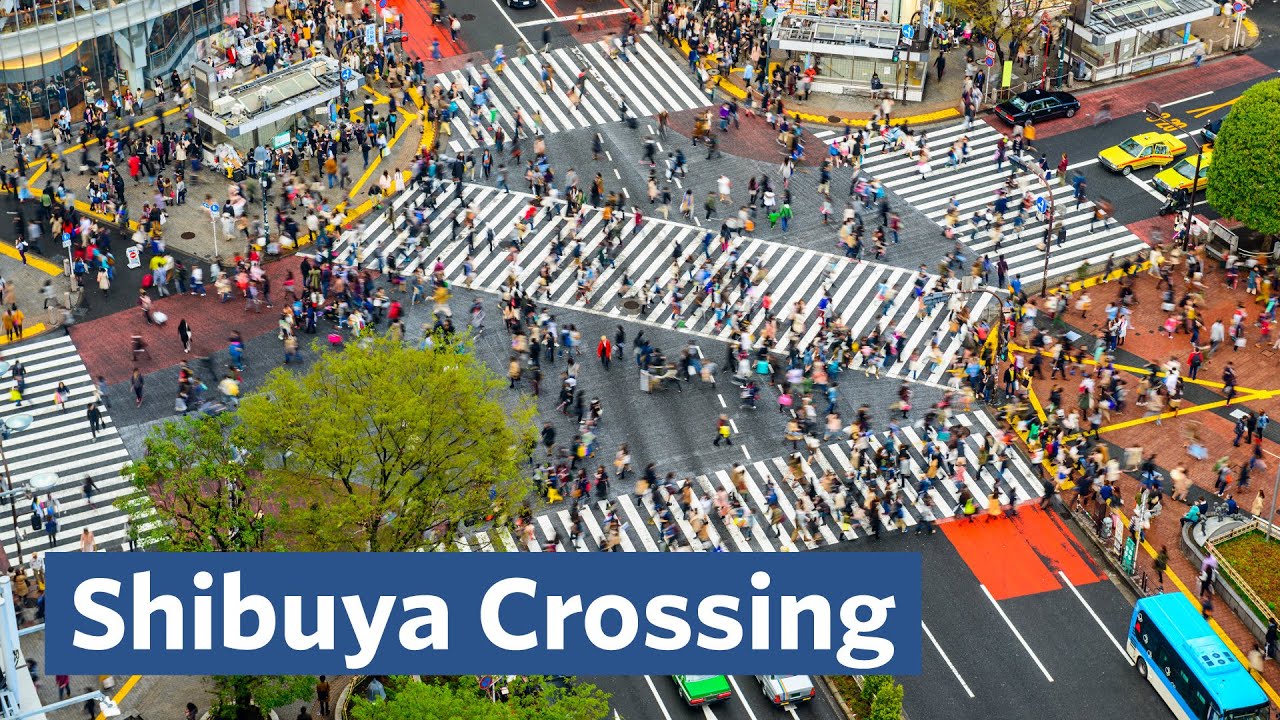
25 year Tokyo resident here - I only have anecdotes myself but let me try to help. YES the thesis that the intersection as a tourist attraction becomes a self fullfilling prophesy is part of it. But it was still the busiest intersection before mass international tourism took off in 2010. As a local, the main reason I end up crossing that intersection most times that I get to Shibuya is that multiple exits from subway and JR open into Hachiko Square, and to get across to the most popular shopping and restaurant districts young people meet up and go to, you need to cross over that intersection from there. Dogenzaka and Harajuku on the left, Sentagai right in front, and shops going out to Omotesendo. While you can cross the intersection underground, the above ground JR lines and Tokyo lines are so far from the entry to the undreground passageways most just cross overground - plus Sentagai shops are all above ground.
Add to that that Hachiko is one of the most popular meetup spots in Tokyo. People agree to meet friends there - and wherever you go from there, other than the station you NEED to cross at that intersection.
Shibuya has other exits in other directions as you point out, but most only have one or two streets with shops and things. That intersection opesn up to three major shop and restaurant areas. If you don't know what to do or just want to hang out in Shibuya and soak up the vibe (which young people and tourists do, that side across from the intersection is the main place to go. The current redevelopment of Shibuya is a bit of a mess, but the goal as I understand is to spread those crowds better around the station, and to new developments away from that intersection. But until now, EVERYTHING worth going to in Shibuya required you to cross there. AAAND yes, that creates a self-fulfilling tourist attraction. If you're a tourist, you have to go check it out, but also see all the cool stuff on the other side of the intersection which is why everyone crosses there.
reply
25 year Tokyo resident here - I only have anecdotes myself but let me try to help. YES the thesis that the intersection as a tourist attraction becomes a self fullfilling prophesy is part of it. But it was still the busiest intersection before mass international tourism took off in 2010. As a local, the main reason I end up crossing that intersection most times that I get to Shibuya is that multiple exits from subway and JR open into Hachiko Square, and to get across to the most popular shopping and restaurant districts young people meet up and go to, you need to cross over that intersection from there. Dogenzaka and Harajuku on the left, Sentagai right in front, and shops going out to Omotesendo. While you can cross the intersection underground, the above ground JR lines and Tokyo lines are so far from the entry to the undreground passageways most just cross overground - plus Sentagai shops are all above ground.
Add to that that Hachiko is one of the most popular meetup spots in Tokyo. People agree to meet friends there - and wherever you go from there, other than the station you NEED to cross at that intersection.
Shibuya has other exits in other directions as you point out, but most only have one or two streets with shops and things. That intersection opesn up to three major shop and restaurant areas. If you don't know what to do or just want to hang out in Shibuya and soak up the vibe (which young people and tourists do, that side across from the intersection is the main place to go. The current redevelopment of Shibuya is a bit of a mess, but the goal as I understand is to spread those crowds better around the station, and to new developments away from that intersection. But until now, EVERYTHING worth going to in Shibuya required you to cross there. AAAND yes, that creates a self-fulfilling tourist attraction. If you're a tourist, you have to go check it out, but also see all the cool stuff on the other side of the intersection which is why everyone crosses there.
reply
charleslee607
Great video. Some other reasons for the popularity of the crossing are:
1) The Hachiko Exit leads to Hachiko Square--a major public plaza--and is adjacent to Shibuya crossing. As mentioned in the video, this area is famous and a tourist destination of its own. Public plazas are relatively rare in Japan because they didn't exist in the feudal period, and the post-war growth mentality of planning did not emphasize leisure, public life or civil society. People are drawn to the general area as a relatively rare place in Tokyo to meet, hang out or shout weird politics to large crowd with a microphone.
2) Shibuya Ward is a major, Major, MAJOR fashion and entertainment district for East Asia (and the world) and has a few prominent pedestrianized retail corridors like (but not limited to) Cat Street and Center-Gai that connect in the vicinity of Shibuya Crossing. Thus, Shibuya in general is unique to Tokyo because it is a place for young and trendy people to see and be seen. Or just shop a lot, go clubbing and eat ramen--but you get the idea. Shinjuku etc. do not have nearly the same pop culture relevance.
3) Shibuya Station has several sides. A notable feature of Shibuya Crossing is the bus stops and taxi stand are other other side of the station. The result is a very pedestrian friendly shopping and entertainment district where people can enjoy window shopping and people watching without the fear of being run over.
reply
Great video. Some other reasons for the popularity of the crossing are:
1) The Hachiko Exit leads to Hachiko Square--a major public plaza--and is adjacent to Shibuya crossing. As mentioned in the video, this area is famous and a tourist destination of its own. Public plazas are relatively rare in Japan because they didn't exist in the feudal period, and the post-war growth mentality of planning did not emphasize leisure, public life or civil society. People are drawn to the general area as a relatively rare place in Tokyo to meet, hang out or shout weird politics to large crowd with a microphone.
2) Shibuya Ward is a major, Major, MAJOR fashion and entertainment district for East Asia (and the world) and has a few prominent pedestrianized retail corridors like (but not limited to) Cat Street and Center-Gai that connect in the vicinity of Shibuya Crossing. Thus, Shibuya in general is unique to Tokyo because it is a place for young and trendy people to see and be seen. Or just shop a lot, go clubbing and eat ramen--but you get the idea. Shinjuku etc. do not have nearly the same pop culture relevance.
3) Shibuya Station has several sides. A notable feature of Shibuya Crossing is the bus stops and taxi stand are other other side of the station. The result is a very pedestrian friendly shopping and entertainment district where people can enjoy window shopping and people watching without the fear of being run over.
reply
isaisotarriva8162
In my personal opinion I think the reason why I need to cross over the street level In Shibuya but not in Shinjuku is because I always arrive to Shinjuku via either JR, Toei or Tokyo metro. In all those cases the best way to change from one to another is via the vast tunnels underground. However on Shibuya I usually arrive via Tokyu (from the suburbs) and then change to JR to go somewhere on the city, since JR entrance is at ground level and you are forced to leave the stations anyway (to change from one company to another) you might very well just cross the street overground instead of crossing inside the Tokyu station.
Also Shibuya is easier to meet up since there are only 2 main entrances the 109 building(Tokyu lines) and the Hashiko square (both Tokyu and JR, in Shinjuku you have so many exits from the underground maze JR south, JR east, Jr west, kabukicho, Tokyo metropolitan, etc. And the worst is that they are kind of far apart from each other, and sometimes difficult to get from one another because the huge JR Shinjuku station is on the middle and you cannot cross from west to east unless you go either to the north of the station, south of the station or take the underground tunnel.
So in summary Shibuya Is more compact so it has more people in one place (the busiest crossing) but Shinjuku is bigger overall (handles more passengers per day.
reply
In my personal opinion I think the reason why I need to cross over the street level In Shibuya but not in Shinjuku is because I always arrive to Shinjuku via either JR, Toei or Tokyo metro. In all those cases the best way to change from one to another is via the vast tunnels underground. However on Shibuya I usually arrive via Tokyu (from the suburbs) and then change to JR to go somewhere on the city, since JR entrance is at ground level and you are forced to leave the stations anyway (to change from one company to another) you might very well just cross the street overground instead of crossing inside the Tokyu station.
Also Shibuya is easier to meet up since there are only 2 main entrances the 109 building(Tokyu lines) and the Hashiko square (both Tokyu and JR, in Shinjuku you have so many exits from the underground maze JR south, JR east, Jr west, kabukicho, Tokyo metropolitan, etc. And the worst is that they are kind of far apart from each other, and sometimes difficult to get from one another because the huge JR Shinjuku station is on the middle and you cannot cross from west to east unless you go either to the north of the station, south of the station or take the underground tunnel.
So in summary Shibuya Is more compact so it has more people in one place (the busiest crossing) but Shinjuku is bigger overall (handles more passengers per day.
reply
AlRoderick
Tokyu Corp seems to be another example of what I like to think of as Transit Feudalism. Transit can't be profitable as a general rule, the economics don't work out if you try to fund the whole system with just fares. So in some places transit gets tax money as a subsidy, but in other places they get a subsidy by the back door, the railroad company becomes a landlord for land it controls near its stations, or just straight up owns a profitable retail or service business operating there. This is why the Hong Kong Metro is considered profitable, it's the case for most of the private Japanese railroads, they don't make profit by running trains. They make profit to feed the trains by operating shopping centers and department stores and malls in and near the stations.
This was kind of the model of the transcontinental railroad in the United States, the government gave the railroads the right to claim land on either side of the track. Of course the United States federal government didn't really have the right to give that land away, and the railroads sold the land off rather than turning them into a perpetual revenue stream.
reply
Tokyu Corp seems to be another example of what I like to think of as Transit Feudalism. Transit can't be profitable as a general rule, the economics don't work out if you try to fund the whole system with just fares. So in some places transit gets tax money as a subsidy, but in other places they get a subsidy by the back door, the railroad company becomes a landlord for land it controls near its stations, or just straight up owns a profitable retail or service business operating there. This is why the Hong Kong Metro is considered profitable, it's the case for most of the private Japanese railroads, they don't make profit by running trains. They make profit to feed the trains by operating shopping centers and department stores and malls in and near the stations.
This was kind of the model of the transcontinental railroad in the United States, the government gave the railroads the right to claim land on either side of the track. Of course the United States federal government didn't really have the right to give that land away, and the railroads sold the land off rather than turning them into a perpetual revenue stream.
reply
keithmaxon9510
Wish I knew you were taking questions about Tokyo: ( The one that I would have liked to discuss is how train stations became shopping malls and centers of commerce. When I first went to Japan and someone recommended a restaurant in Kyoto Station I thought they were nuts and actually did not figure out he was right until I took the Shinkansen to Tokyo. Almost every other city uses them for utility with some conveniences whereas Japanese cities embrace them as city centers. I am sure it has something to do with the frequent use of trains, but even Europe, who is train centric, cannot compete with Japanese train stations.
Anywho, awesome video: ) Look forward to a Vietnam series at some point!
reply
Wish I knew you were taking questions about Tokyo: ( The one that I would have liked to discuss is how train stations became shopping malls and centers of commerce. When I first went to Japan and someone recommended a restaurant in Kyoto Station I thought they were nuts and actually did not figure out he was right until I took the Shinkansen to Tokyo. Almost every other city uses them for utility with some conveniences whereas Japanese cities embrace them as city centers. I am sure it has something to do with the frequent use of trains, but even Europe, who is train centric, cannot compete with Japanese train stations.
Anywho, awesome video: ) Look forward to a Vietnam series at some point!
reply
TheDanEdwards
Many aspects to consider, for example the role of corporations in Japan and the embedded cultures. Train companies are primarily real estate companies and the has shaped modern Japan. Here in the US the early railroad companies were also so real-estate dominant, and that got into politics and corruption, with all sorts of problems. I suspect that Japanese style rail-centric development will just not be possible in the US, because (1) Americans want more space, even those who claim to want to live in urban areas, than Japanese, and (2) the real-estate problem and the issue of monopolies if we let transportation companies also be the land owners of retail and residential areas.
reply
Many aspects to consider, for example the role of corporations in Japan and the embedded cultures. Train companies are primarily real estate companies and the has shaped modern Japan. Here in the US the early railroad companies were also so real-estate dominant, and that got into politics and corruption, with all sorts of problems. I suspect that Japanese style rail-centric development will just not be possible in the US, because (1) Americans want more space, even those who claim to want to live in urban areas, than Japanese, and (2) the real-estate problem and the issue of monopolies if we let transportation companies also be the land owners of retail and residential areas.
reply
tigpowerleck998
Shibuya station is downhill. I get off at the train stop closest to my destination and walk downhill to work, shopping or whatever then either I walk 5min uphill and get sweaty or stroll 5mins downhill and maybe see something new (there’s always something new) and end up at Shibuya station. All those streets lead to universities, schools, harajuku, omotesando, yoyogi park etc. think of people descending to the crossing from every direction like walking downhill from fingertips to the palm. Make sense
reply
Shibuya station is downhill. I get off at the train stop closest to my destination and walk downhill to work, shopping or whatever then either I walk 5min uphill and get sweaty or stroll 5mins downhill and maybe see something new (there’s always something new) and end up at Shibuya station. All those streets lead to universities, schools, harajuku, omotesando, yoyogi park etc. think of people descending to the crossing from every direction like walking downhill from fingertips to the palm. Make sense
reply
ulterior_web
You are right that Shinjuku is more geographically distributed than Shibuya - if you actually leave from any of the other exits they’re much quieter parts of the neighborhood. Aside from some office towers, the vast majority of stuff to do stems from the scramble intersection. As for why 10am on a random weekday is sleepy - Shibuya is primarily a leisure and entertainment district more than an office district. The traffic pattern follows.
reply
You are right that Shinjuku is more geographically distributed than Shibuya - if you actually leave from any of the other exits they’re much quieter parts of the neighborhood. Aside from some office towers, the vast majority of stuff to do stems from the scramble intersection. As for why 10am on a random weekday is sleepy - Shibuya is primarily a leisure and entertainment district more than an office district. The traffic pattern follows.
reply
stigthe1227
The crossing has become so iconic that 95% of them are tourists. I always take the underground passages rather than dodging all the tourists.
Also you mentioned Halloween there but the Shibuya Halloween wasn’t and still isn’t an official event. Hence the authorities have cracked down on it in recent years i. e) closing the Hachiko square and banning drinking on the streets.
reply
The crossing has become so iconic that 95% of them are tourists. I always take the underground passages rather than dodging all the tourists.
Also you mentioned Halloween there but the Shibuya Halloween wasn’t and still isn’t an official event. Hence the authorities have cracked down on it in recent years i. e) closing the Hachiko square and banning drinking on the streets.
reply
jeff__w
I wondered why there was only one diagonal (and not a corresponding one at the other two corners) across the intersection and I figured the reason is that that diagonal leads directly to the train station and probably there is not as much demand for people on the other two corners to go from one to the other.
reply
I wondered why there was only one diagonal (and not a corresponding one at the other two corners) across the intersection and I figured the reason is that that diagonal leads directly to the train station and probably there is not as much demand for people on the other two corners to go from one to the other.
reply
ShadowWolfTJC
With how the Shibuya crossing has garnered a reputation as such a busy pedestrian crossing, I do wonder how people would feel about turning it into a roundabout for pedestrian (and car) traffic, with a tiny island at the center that would likely be passed only by people travelling to the opposite corner
reply
With how the Shibuya crossing has garnered a reputation as such a busy pedestrian crossing, I do wonder how people would feel about turning it into a roundabout for pedestrian (and car) traffic, with a tiny island at the center that would likely be passed only by people travelling to the opposite corner
reply
faenethlorhalien
Shibuya station's signs that tell you what corridor to take to go to which line and which train are something out of a nightmare. It's basically a 3d map in 2d, really hard to understand unless you know already where to go. That's how messed up that transportation hub is.
reply
Shibuya station's signs that tell you what corridor to take to go to which line and which train are something out of a nightmare. It's basically a 3d map in 2d, really hard to understand unless you know already where to go. That's how messed up that transportation hub is.
reply
CaravelClerihew
Can you do an episode on the Melbourne Tram System It's the largest in the world partly because one guy refused to rip the tram lines out when every city in the world at the time was. In fact, Sydney has a bigger tram network til they ripped theirs out
reply
Can you do an episode on the Melbourne Tram System It's the largest in the world partly because one guy refused to rip the tram lines out when every city in the world at the time was. In fact, Sydney has a bigger tram network til they ripped theirs out
reply
JohnCroucherAU
That backs up what I have always thought, it's the busiest because people go there to see the busiest crossing. Every time I go there it feels like there are more people there to experience it and film it, than people actually just crossing.
reply
That backs up what I have always thought, it's the busiest because people go there to see the busiest crossing. Every time I go there it feels like there are more people there to experience it and film it, than people actually just crossing.
reply
Zeyev
Thanks for mentioning Washington Heights. I was 3 years old when we left it in 1950 - we were an American family in Japan during the Occupation because my father was in the US Air Force. I knew the name of the neighborhood but don't remember it.
reply
Thanks for mentioning Washington Heights. I was 3 years old when we left it in 1950 - we were an American family in Japan during the Occupation because my father was in the US Air Force. I knew the name of the neighborhood but don't remember it.
reply
thewackywabbit5080
Somewhat reminds me the crossings in London that appeared on one of the Beatles album (abbey Road crossing. Tourists are going there to cross the road in groups of fours, and watch others crossing the road in groups of fours.
reply
Somewhat reminds me the crossings in London that appeared on one of the Beatles album (abbey Road crossing. Tourists are going there to cross the road in groups of fours, and watch others crossing the road in groups of fours.
reply
gumerzambrano
I absolutely loved visiting Shibuya multiple times on my Japan trip. Especially at night. It's such a cool area to walk around.
As someone who's never been to Europe id much rather go back to Japan than any European country
reply
I absolutely loved visiting Shibuya multiple times on my Japan trip. Especially at night. It's such a cool area to walk around.
As someone who's never been to Europe id much rather go back to Japan than any European country
reply
shadowdragonv8256
I feel like people tend to love intersections where you can cross diagonally. I'm sure that in my home town Turku Finland the busiest intersection is such one. It's also at a transportation hub and I always see it crowded.
reply
I feel like people tend to love intersections where you can cross diagonally. I'm sure that in my home town Turku Finland the busiest intersection is such one. It's also at a transportation hub and I always see it crowded.
reply
crowmob-yo6ry
I recently visited this exact intersection and I loved how all different transport modes coexist. The traffic flow is also much better than in any car-centric North American city, even as pedestrians are prioritised over cars.
reply
I recently visited this exact intersection and I loved how all different transport modes coexist. The traffic flow is also much better than in any car-centric North American city, even as pedestrians are prioritised over cars.
reply
Xyronium
I have been at Shibuya crossing during Halloween and there was an army of cops directing the foot traffic with tapes a whistles. At Shibuya station it was illegal for people to stop so they wouldn't block the sidewalks.
reply
I have been at Shibuya crossing during Halloween and there was an army of cops directing the foot traffic with tapes a whistles. At Shibuya station it was illegal for people to stop so they wouldn't block the sidewalks.
reply
Add a review, comment
Other channel videos