How Can Cities Fix Big Box Stores
video description
Date: 2025-05-10
Related videos



Comments and reviews: 20
orunir
Municipalities, especially towns and smaller, need to be wary of big developer promises, the big box store as much as the Levitown. The elected official, who is only there between 4 and 16 years, will be dazzled by the 7 figures of up-front finances, be it economic impact or even taxes themselves. What isn't explained is that after a probationary period or the expiry of the structure itself, the municipality is then stuck with an infrastructure and real estate hog. Simply put, big boxes are predatory, first and foremost.
When the big box shows consistent benefit to the community, there is a bigger picture dynamic where enough consumption traffic meets the breakpoint of demand vs supply. Think of a big box as a monolithic block of retail volume. The community needs to have so many tens of millions of dollars in yearly retail for the Walmart to soak up the baseline consumer demand. It's similar to power generation, where a nuclear plant provides an extreme quantity of stable electricity where it only makes sense to service more than 100, 000 residences. The Walmart needs more than 20, 000 residences in proximity. When the Walmart is built for just 10, 000 residences, this is where you see local business strangle, empty parking lots, and the inevitable vacancy after 10 to 20 years. Walmart doesn't care what happens to the community, it always profits from building and operating the location within that juvenile time table.
Big Box retail won't die out entirely, but will evolve for the remote access 21st century. The real backbone of the big box is the warehouse distribution, it is its own logistics network. Automotive traffic declines, so you see more strategies for capturing foot traffic such as the urban examples given. What may happen in the near future is subletting the logistics. Walmart might allow piggypacking of its logistics, by another retail service. We already see the prototype for this with Starbucks and Target, and McDonalds and Walmart. A retail product category within the store proper may be a brand that used to be its own retail chain. For example, if Radioshack were still alive, you could see Radioshack as the electronics department of Walmart. That is to say, big box retailers adopt the key feature of the indoor shopping mall as an upgrade to what was the key feature of the anchor department store. This would cause the traffic demand of the big box to go up, but the big box store should only be built on the edge of the urban enviroment in the first place.
reply
Municipalities, especially towns and smaller, need to be wary of big developer promises, the big box store as much as the Levitown. The elected official, who is only there between 4 and 16 years, will be dazzled by the 7 figures of up-front finances, be it economic impact or even taxes themselves. What isn't explained is that after a probationary period or the expiry of the structure itself, the municipality is then stuck with an infrastructure and real estate hog. Simply put, big boxes are predatory, first and foremost.
When the big box shows consistent benefit to the community, there is a bigger picture dynamic where enough consumption traffic meets the breakpoint of demand vs supply. Think of a big box as a monolithic block of retail volume. The community needs to have so many tens of millions of dollars in yearly retail for the Walmart to soak up the baseline consumer demand. It's similar to power generation, where a nuclear plant provides an extreme quantity of stable electricity where it only makes sense to service more than 100, 000 residences. The Walmart needs more than 20, 000 residences in proximity. When the Walmart is built for just 10, 000 residences, this is where you see local business strangle, empty parking lots, and the inevitable vacancy after 10 to 20 years. Walmart doesn't care what happens to the community, it always profits from building and operating the location within that juvenile time table.
Big Box retail won't die out entirely, but will evolve for the remote access 21st century. The real backbone of the big box is the warehouse distribution, it is its own logistics network. Automotive traffic declines, so you see more strategies for capturing foot traffic such as the urban examples given. What may happen in the near future is subletting the logistics. Walmart might allow piggypacking of its logistics, by another retail service. We already see the prototype for this with Starbucks and Target, and McDonalds and Walmart. A retail product category within the store proper may be a brand that used to be its own retail chain. For example, if Radioshack were still alive, you could see Radioshack as the electronics department of Walmart. That is to say, big box retailers adopt the key feature of the indoor shopping mall as an upgrade to what was the key feature of the anchor department store. This would cause the traffic demand of the big box to go up, but the big box store should only be built on the edge of the urban enviroment in the first place.
reply
lensiax9276
I'm sorry, but your video is honestly poorly researched.
The simple answer as to what is wrong with big box stores is that the amount of revenue they generate in income tax and sales tax does not balance out the short and long term infrastructure costs that the city must shoulder to support the big box store development pattern. Cities give away tax breaks to stores in the hopes that this will stimulate some crazy economic growth, but in reality it will never pencil out.
Larger companies provide much greater benefits and greater stability. No mom and pop retailer is going to offer health insurance, 401k matching, and tuition reimbursement like Walmart or Chipotle do. The local shoe store in my town gets their shoes delivered from the same places and companies as the big box stores, they just can't match the logistical cost savings of Walmart. Ultimately the consumers get cheaper products with the same ethical concerns as before. That these stores are pivoting towards urban storefronts is much more notable. The staff will live nearby even if the owners don't. We see examples of this smaller scale attempt in Walgreens. The argument that these stores require cheaply made goods to be successful and thus deprive Americans of good paying manufacturing jobs is very silly. Those jobs are not that much better. What is so romantic about banging hub caps onto a car versus stocking shelves and flipping burgers They often only pay more because they are unionized. If anything, a unionized Walmart would be way more beneficial -- you cannot relocate service and logistics jobs the same way you can relocate manufacturing.
Costco is building housing on top of their store because it will get the whole thing permitted quicker due to California having tons of red tape and housing requirements. This is quite indicative of how ludicrous the zoning and permitting rules are in most cities, but particularly in all of California. Leaving out this detail obfuscates a big part of how these cities can fix these stores. Simply change the rules.
I hate big box stores as much as any urbanist. But do some research instead of just reiterating vague lefty and urbanist talking points.
reply
I'm sorry, but your video is honestly poorly researched.
The simple answer as to what is wrong with big box stores is that the amount of revenue they generate in income tax and sales tax does not balance out the short and long term infrastructure costs that the city must shoulder to support the big box store development pattern. Cities give away tax breaks to stores in the hopes that this will stimulate some crazy economic growth, but in reality it will never pencil out.
Larger companies provide much greater benefits and greater stability. No mom and pop retailer is going to offer health insurance, 401k matching, and tuition reimbursement like Walmart or Chipotle do. The local shoe store in my town gets their shoes delivered from the same places and companies as the big box stores, they just can't match the logistical cost savings of Walmart. Ultimately the consumers get cheaper products with the same ethical concerns as before. That these stores are pivoting towards urban storefronts is much more notable. The staff will live nearby even if the owners don't. We see examples of this smaller scale attempt in Walgreens. The argument that these stores require cheaply made goods to be successful and thus deprive Americans of good paying manufacturing jobs is very silly. Those jobs are not that much better. What is so romantic about banging hub caps onto a car versus stocking shelves and flipping burgers They often only pay more because they are unionized. If anything, a unionized Walmart would be way more beneficial -- you cannot relocate service and logistics jobs the same way you can relocate manufacturing.
Costco is building housing on top of their store because it will get the whole thing permitted quicker due to California having tons of red tape and housing requirements. This is quite indicative of how ludicrous the zoning and permitting rules are in most cities, but particularly in all of California. Leaving out this detail obfuscates a big part of how these cities can fix these stores. Simply change the rules.
I hate big box stores as much as any urbanist. But do some research instead of just reiterating vague lefty and urbanist talking points.
reply
JH-pe3ro
The ability of the big box to present economic benefit is tied to the issue of global trade - if the money circulating through the national system is favoring globalize the supply chain and build a huge consumer economy, it hands over a lot of capital to Wal-Mart to get the goods to shoppers, which exposes a local benefit in the form of low prices and complementary services. But that is a problem over the long run since emphasis on consumer goods and services turns the city into a consumption zone, funded in part by benefits payments to shoppers that are no longer able to find good work. When I think about everyone I know in my demographic, they tend to fall into the buckets of work for the government, chase after whatever bubble the capital markets are financing, and just barely scraping by.
Even putting aside the aspects of what to do with the built infrastructure, centralizing the agency over the supply chain into big boxes makes for a precarious gambler's economy. This is something I've seen a lot of noise about - before the late 80's, when the big boxes started to become dominant, distribution to smaller scale retail meant that goods would appear in retail in a more fragmented way, where it could be the case that nobody else in town had the same product. The products themselves were more expensive, but the narrative of how the product got to you was also more varied and enabled more participants. At the same time, we can't just reverse this trend abruptly and turn back the clock, as the US federal government seems to be bent on doing.
reply
The ability of the big box to present economic benefit is tied to the issue of global trade - if the money circulating through the national system is favoring globalize the supply chain and build a huge consumer economy, it hands over a lot of capital to Wal-Mart to get the goods to shoppers, which exposes a local benefit in the form of low prices and complementary services. But that is a problem over the long run since emphasis on consumer goods and services turns the city into a consumption zone, funded in part by benefits payments to shoppers that are no longer able to find good work. When I think about everyone I know in my demographic, they tend to fall into the buckets of work for the government, chase after whatever bubble the capital markets are financing, and just barely scraping by.
Even putting aside the aspects of what to do with the built infrastructure, centralizing the agency over the supply chain into big boxes makes for a precarious gambler's economy. This is something I've seen a lot of noise about - before the late 80's, when the big boxes started to become dominant, distribution to smaller scale retail meant that goods would appear in retail in a more fragmented way, where it could be the case that nobody else in town had the same product. The products themselves were more expensive, but the narrative of how the product got to you was also more varied and enabled more participants. At the same time, we can't just reverse this trend abruptly and turn back the clock, as the US federal government seems to be bent on doing.
reply
DiscoingGD1989
Just some thoughts:
1. It's my belief that large sedans were taxed into extinction, causing many people that drove them to get SUVs and trucks, much larger vehicles that they don't need, but they don't want the tiny cars. I'm the case and point. I still drive my 91 DeVille, but if forced to in the future, will look at an SUV.
2. You sort of mentioned it, but there are many environmental benefits to the big box store. One stop shopping for one. Things like Walmart making distributors lighten the packaging of items (which is why water bottles are thinner, for example. The delivery service probably helps (one truck doing a local route vs several vehicles making trips.
3. Not sure it would be implemented ideally, but I always thought malls and big stores would benefit from having housing on top, so the Costco thing is cool to see! If you had enough volume, then most people there could be carless, as most things would be downstairs and there would certainly be rail or decent bus access nearby.
4. I'm going back 25 years, but when the local walmart and target got replaced by their super counterparts, they subdivided them and had 2-3 smaller big box stores take their places. Maybe that's harder to do to a superstore. You'd probably need like 10 for each lol.
reply
Just some thoughts:
1. It's my belief that large sedans were taxed into extinction, causing many people that drove them to get SUVs and trucks, much larger vehicles that they don't need, but they don't want the tiny cars. I'm the case and point. I still drive my 91 DeVille, but if forced to in the future, will look at an SUV.
2. You sort of mentioned it, but there are many environmental benefits to the big box store. One stop shopping for one. Things like Walmart making distributors lighten the packaging of items (which is why water bottles are thinner, for example. The delivery service probably helps (one truck doing a local route vs several vehicles making trips.
3. Not sure it would be implemented ideally, but I always thought malls and big stores would benefit from having housing on top, so the Costco thing is cool to see! If you had enough volume, then most people there could be carless, as most things would be downstairs and there would certainly be rail or decent bus access nearby.
4. I'm going back 25 years, but when the local walmart and target got replaced by their super counterparts, they subdivided them and had 2-3 smaller big box stores take their places. Maybe that's harder to do to a superstore. You'd probably need like 10 for each lol.
reply
jasonriddell
for me I believe 2 things NEED to change
#1 parking minimums abolished - let the market decide
#2 land tax should be based ON THE MAX USE VALUE of the land and the improvements NOT COUNTED
someone buys land that COULD support a musti use project and decides to build a parking lot and a big box would pay the SAME tax as if it WAS a multi use retail experience
the taxable value on the parking spaces would be high enough the retailer would NEED to make them pay and likely would build JUST ENOUGH AND if to many exist they would be quick to take them over with satellite buildings offering MORE retail space and would also offset the up front parkade costs as building the parkade UNDER the big box and stretching the retail footprint into what was cheap land
I have for MANY years 20 dreamed of an OLD mall being replaced with mixed use modern town centre with high and LOW rise housing and retail / commercial spaces and they often come with great transit links and major road links
reply
for me I believe 2 things NEED to change
#1 parking minimums abolished - let the market decide
#2 land tax should be based ON THE MAX USE VALUE of the land and the improvements NOT COUNTED
someone buys land that COULD support a musti use project and decides to build a parking lot and a big box would pay the SAME tax as if it WAS a multi use retail experience
the taxable value on the parking spaces would be high enough the retailer would NEED to make them pay and likely would build JUST ENOUGH AND if to many exist they would be quick to take them over with satellite buildings offering MORE retail space and would also offset the up front parkade costs as building the parkade UNDER the big box and stretching the retail footprint into what was cheap land
I have for MANY years 20 dreamed of an OLD mall being replaced with mixed use modern town centre with high and LOW rise housing and retail / commercial spaces and they often come with great transit links and major road links
reply
ShortVersion1
I have these heated arguments over politics w my mom. She just got back from a trip, where a young guy and her bonded over their love of capitalism.
She asked how I'd think of someone my age telling me the were a capitalist and I said I'd think they were an idiot.
We aren't capitalists until you own the big box store. You're a consumer.
She goes off about taxes (they live middle of nowhere, I grew up there) and I pointed out how when Walmart came to town everyone fought and fought, now they all just shop at Walmart.
They care so much about property taxes, while spending probably 4x their taxes at Walmart each year. What, are they not your government because they haven't arrested you yet Lol because you can't vote
Buy shares in Walmart, and they're practically your government in most of America. They employ most people, and keep most communities poor more than elected officials ever could.
reply
I have these heated arguments over politics w my mom. She just got back from a trip, where a young guy and her bonded over their love of capitalism.
She asked how I'd think of someone my age telling me the were a capitalist and I said I'd think they were an idiot.
We aren't capitalists until you own the big box store. You're a consumer.
She goes off about taxes (they live middle of nowhere, I grew up there) and I pointed out how when Walmart came to town everyone fought and fought, now they all just shop at Walmart.
They care so much about property taxes, while spending probably 4x their taxes at Walmart each year. What, are they not your government because they haven't arrested you yet Lol because you can't vote
Buy shares in Walmart, and they're practically your government in most of America. They employ most people, and keep most communities poor more than elected officials ever could.
reply
jasonriddell
city vancouver bans big box retailers outright and there are NO WALMART in city vancouver BUT Richmond a neighbouring city all part of the METRO Vancouver region has and allows walmart so Vancouverites DRIVE across the bridge to Richmond to shop walmart then drive back to vancouver
walmart wanted to develop a closed down car dealership in an industrial corner of vancouver and was offering MASSIVE environmental concessions as the city cited environmental impact for there opposition at one point walmart offered to build a bus interchange in there parking lot AND pay for / fund dedicated bus routes servicing it and would make 1/2 its parking lot tree covered plus cover the building with solar panels
that was 15 years ago and as far as I know it never got any approval
reply
city vancouver bans big box retailers outright and there are NO WALMART in city vancouver BUT Richmond a neighbouring city all part of the METRO Vancouver region has and allows walmart so Vancouverites DRIVE across the bridge to Richmond to shop walmart then drive back to vancouver
walmart wanted to develop a closed down car dealership in an industrial corner of vancouver and was offering MASSIVE environmental concessions as the city cited environmental impact for there opposition at one point walmart offered to build a bus interchange in there parking lot AND pay for / fund dedicated bus routes servicing it and would make 1/2 its parking lot tree covered plus cover the building with solar panels
that was 15 years ago and as far as I know it never got any approval
reply
that. dugster
I remember attending a meeting regarding the former Lowe’s location in Aliso Viejo back in 2019. They wanted to develop the vacant space to that equivalent of Fashion Island or Irvine Spectrum with the addition of residential units. The addition of apartments was met with initial skepticism that it would increase traffic and rent prices. After 4-5 years since then, the Aliso Town Center is regaining attraction it was much losing out for many years. This new Aliso Viejo Commons Center seems to be doing well after the addition of Tesla, Philz Coffee, 99 Ranch, Daiso & Marugame Udon - bringing a taste of Irvine lifestyle to Aliso - no need to drive far having to deal with the horrid traffic conditions of Irvine and other areas. Personally I find it very convenient
reply
I remember attending a meeting regarding the former Lowe’s location in Aliso Viejo back in 2019. They wanted to develop the vacant space to that equivalent of Fashion Island or Irvine Spectrum with the addition of residential units. The addition of apartments was met with initial skepticism that it would increase traffic and rent prices. After 4-5 years since then, the Aliso Town Center is regaining attraction it was much losing out for many years. This new Aliso Viejo Commons Center seems to be doing well after the addition of Tesla, Philz Coffee, 99 Ranch, Daiso & Marugame Udon - bringing a taste of Irvine lifestyle to Aliso - no need to drive far having to deal with the horrid traffic conditions of Irvine and other areas. Personally I find it very convenient
reply
sblack53
There are multiple Toronto Walmarts that are built into shopping malls. One is in a streetcar suburb of sorts at Dufferin Mall, and the other is at Scarborough Town Centre. Both have atypical layouts, multi-floor spaces, and parking that is more compact and stacked. They even have connections to transit. A Costco here was even built into the husk of the former Coca-Cola Canada Headquarters on Overlea, near a future connection to the Ontario Line.
Meanwhile in the DC suburbs in NoVA, the Dulles Expo Center is a convention center built into a former Walmart. Any Magic Tournament Organizer who runs a large event in Washington DC (mostly Star City Games) almost exclusively uses the Dulles Expo to the point where it’s a meme in the community.
reply
There are multiple Toronto Walmarts that are built into shopping malls. One is in a streetcar suburb of sorts at Dufferin Mall, and the other is at Scarborough Town Centre. Both have atypical layouts, multi-floor spaces, and parking that is more compact and stacked. They even have connections to transit. A Costco here was even built into the husk of the former Coca-Cola Canada Headquarters on Overlea, near a future connection to the Ontario Line.
Meanwhile in the DC suburbs in NoVA, the Dulles Expo Center is a convention center built into a former Walmart. Any Magic Tournament Organizer who runs a large event in Washington DC (mostly Star City Games) almost exclusively uses the Dulles Expo to the point where it’s a meme in the community.
reply
AnotherDuck
Unless they're very different over the Atlantic, I doubt IKEAs are anti-union and plan for obsolescence. And since they're more specialised on furniture, they don't push away that many local stores.
The local one here was built outside the city in cheap, unused land, like many big box stores, but eventually other big box stores opened in the area and created a retail park, so now it's one of the biggest shopping centres in Sweden. There are plenty of ways to get to it without car, as there's a bus central and metro relatively close, plus a direct bus. The parking lots cover less area than the actual stores, and I don't think the heat-island effect is nearly as prominent here since the climate is milder than in most of America.
reply
Unless they're very different over the Atlantic, I doubt IKEAs are anti-union and plan for obsolescence. And since they're more specialised on furniture, they don't push away that many local stores.
The local one here was built outside the city in cheap, unused land, like many big box stores, but eventually other big box stores opened in the area and created a retail park, so now it's one of the biggest shopping centres in Sweden. There are plenty of ways to get to it without car, as there's a bus central and metro relatively close, plus a direct bus. The parking lots cover less area than the actual stores, and I don't think the heat-island effect is nearly as prominent here since the climate is milder than in most of America.
reply
dorkyangel
i absolutely loved this videoit really hit home for me. i moved from a big city in california to a small city across the country, and the difference is wild. in california, there were walkable areas, fun places to explore, sidewalks, actual life on the streets. but here in va, it’s just endless big box stores with massive, empty parking lots and barely any sidewalks. it’s like this place was made only for cars. sometimes when i’m walking around (if i even can, i imagine the empty lots as lively town centers, or the giant roads as shaded pedestrian paths with little shops or cafes. but nopejust car dominance and isolation. this video made me feel seen. thank you for putting it into words.
reply
i absolutely loved this videoit really hit home for me. i moved from a big city in california to a small city across the country, and the difference is wild. in california, there were walkable areas, fun places to explore, sidewalks, actual life on the streets. but here in va, it’s just endless big box stores with massive, empty parking lots and barely any sidewalks. it’s like this place was made only for cars. sometimes when i’m walking around (if i even can, i imagine the empty lots as lively town centers, or the giant roads as shaded pedestrian paths with little shops or cafes. but nopejust car dominance and isolation. this video made me feel seen. thank you for putting it into words.
reply
obliviousbeat7439
Roads, highways and freeways have been overfed to U. S. by design. They have become a better separator than any fence, wall, or border ever could.
The ultimate control management system. Flexible too.
So long as we benefit, and put our heads down (consumer and business owner, alike. Whoever pushed the product of freeways (actually it was Ford partnering with the government to blanket the U. S. with freeways and sell it like a hot commodity. But, applied it like the milkman places milk bottles in your front porch every day. Freeways allowed the legal displacement of thousands of POS communities. Including reallocating them away from key topological areas)
reply
Roads, highways and freeways have been overfed to U. S. by design. They have become a better separator than any fence, wall, or border ever could.
The ultimate control management system. Flexible too.
So long as we benefit, and put our heads down (consumer and business owner, alike. Whoever pushed the product of freeways (actually it was Ford partnering with the government to blanket the U. S. with freeways and sell it like a hot commodity. But, applied it like the milkman places milk bottles in your front porch every day. Freeways allowed the legal displacement of thousands of POS communities. Including reallocating them away from key topological areas)
reply
bel3133
I do shop at big box stores, but I don't buy any specialty items (books, records, toys, plants, etc. For those I consciously go to a book store, a library book sale, a record shop, a small toy store, a plant sale at the local park, etc.
I almost never bring my kid to the big box stores, but I almost always try to bring my kid with me to the small, specialty shops. It's an experience I want for them. The look and feel of the Walmart toy section, or some Hobby Lobby, can simply never compare to a small toy store. The merchandise at small, independent stores is also way more interesting, always better quality, and sometimes a better price, too.
reply
I do shop at big box stores, but I don't buy any specialty items (books, records, toys, plants, etc. For those I consciously go to a book store, a library book sale, a record shop, a small toy store, a plant sale at the local park, etc.
I almost never bring my kid to the big box stores, but I almost always try to bring my kid with me to the small, specialty shops. It's an experience I want for them. The look and feel of the Walmart toy section, or some Hobby Lobby, can simply never compare to a small toy store. The merchandise at small, independent stores is also way more interesting, always better quality, and sometimes a better price, too.
reply
youngchu1638
Will people (baby boomers) realize that single-family and suburbanization is not sustainable and hurt the economy (supply chain issues and more maintenance cost for those suburbs) For example, state of IN, OH, MI, and PA where there was automotive industry with workers during 50s, 60s, 70s, and 80s but it's all automated with machines and robots. Because of machines replaced workers, all the homes in that region is completely empty and left behind. What will happen to these homes and its communities will they (current generation) repeat the same mistake Or, change entire communties by creating different laws by eliminating zoning laws
reply
Will people (baby boomers) realize that single-family and suburbanization is not sustainable and hurt the economy (supply chain issues and more maintenance cost for those suburbs) For example, state of IN, OH, MI, and PA where there was automotive industry with workers during 50s, 60s, 70s, and 80s but it's all automated with machines and robots. Because of machines replaced workers, all the homes in that region is completely empty and left behind. What will happen to these homes and its communities will they (current generation) repeat the same mistake Or, change entire communties by creating different laws by eliminating zoning laws
reply
thenexthobby
I live in a town of about 5000, with a Walmart that is the only grocery store with wide variety. There is also one small chain grocer (it sucks) and one local grocer (nice, but poor selection) The regular regional grocery store disappeared when Walmart showed up 25 years ago but the family still owns a few Ace Hardware stores around here.
About a year ago Walmart wanted to move its location but could not secure the land. It would have created the town's largest abandoned facility if you don't count the ghost American Greeting Card factory. Walmart instead redesigned its existing store. as it should have to begin with.
reply
I live in a town of about 5000, with a Walmart that is the only grocery store with wide variety. There is also one small chain grocer (it sucks) and one local grocer (nice, but poor selection) The regular regional grocery store disappeared when Walmart showed up 25 years ago but the family still owns a few Ace Hardware stores around here.
About a year ago Walmart wanted to move its location but could not secure the land. It would have created the town's largest abandoned facility if you don't count the ghost American Greeting Card factory. Walmart instead redesigned its existing store. as it should have to begin with.
reply
stink1701
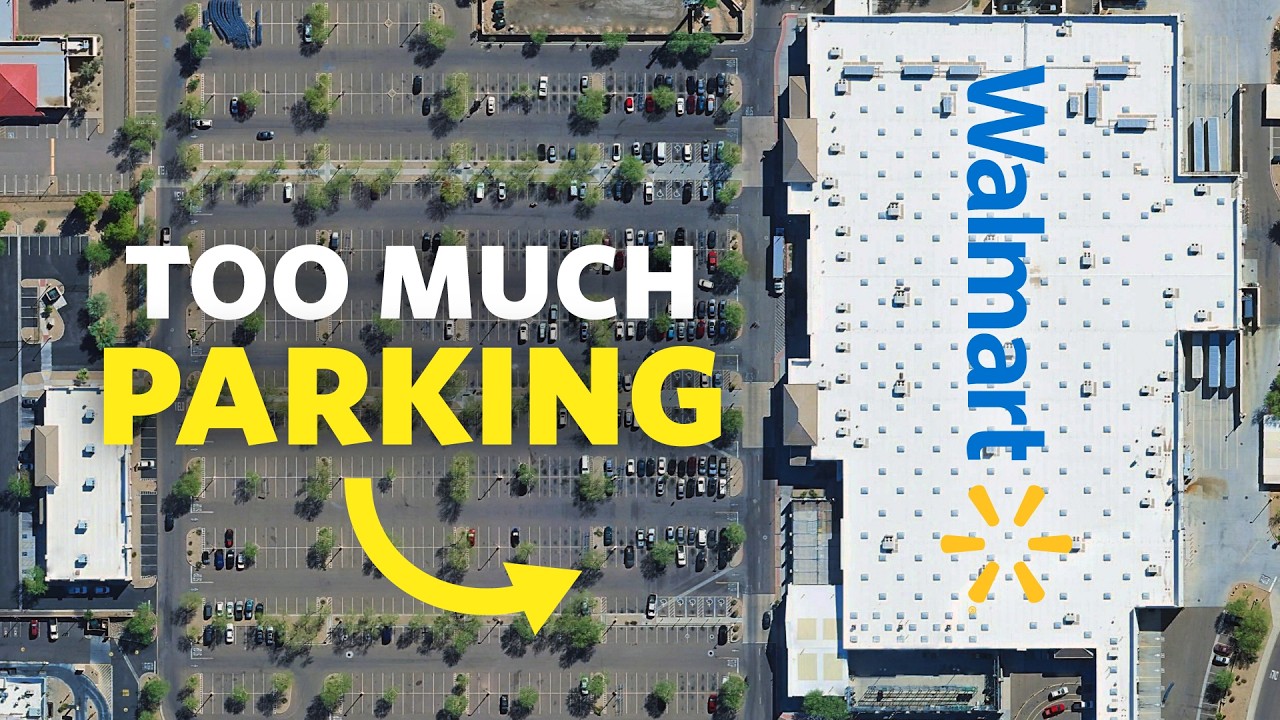
I am very fortunate that I live 1. 5 miles from a Costco and a home Depot and also a small strip mall with useful stores and I can bike there without too much trouble. With a cargo bike I rarely need to drive so I tend to combine trips for large items when I also need gas. My point is that of you put these things close to housing and make them safe to access by not car then they can be nice. Although the parking lot at the Costco is massive and never close to full. I wish they would put a target or a trader joes there. Really the parking lots at some of these are bigger than the CBD of my city. It's wild.
reply
I am very fortunate that I live 1. 5 miles from a Costco and a home Depot and also a small strip mall with useful stores and I can bike there without too much trouble. With a cargo bike I rarely need to drive so I tend to combine trips for large items when I also need gas. My point is that of you put these things close to housing and make them safe to access by not car then they can be nice. Although the parking lot at the Costco is massive and never close to full. I wish they would put a target or a trader joes there. Really the parking lots at some of these are bigger than the CBD of my city. It's wild.
reply
quitlife9279
mom and pop(GROSS term by the way) stores are worse than big box stores in every way, for consumers and for employees, it's no wonder the worst employee exploiters and downright abusers are always small business owners. The only good thing is that they are dying out from competition.
Big box stores are the future(well, maybe not but they are still the present, they just need to be regulated better, and they are already regulated magnitudes better than your local small scale capitalists, because by their nature it is much easier to regulate one big entity than a hundred small ones.
reply
mom and pop(GROSS term by the way) stores are worse than big box stores in every way, for consumers and for employees, it's no wonder the worst employee exploiters and downright abusers are always small business owners. The only good thing is that they are dying out from competition.
Big box stores are the future(well, maybe not but they are still the present, they just need to be regulated better, and they are already regulated magnitudes better than your local small scale capitalists, because by their nature it is much easier to regulate one big entity than a hundred small ones.
reply
mind-of-neo
Despite my bitter hatred of corporations, I also grew up in the world of the 2000s which was dominated by them, and so I have some nostalgia for the businesses that are no more and don't revel in their loss. I would much rather go back to having dozens of large retail companies ruling the roost than stay in today's status quo where it's like 2-4 gigantic ones. That being said, I would even more rather have a world with those dozens of large businesses as well as thousands of small ones, and not have shopping in my locality exclusively mean going to giant parking lot labyrinths.
reply
Despite my bitter hatred of corporations, I also grew up in the world of the 2000s which was dominated by them, and so I have some nostalgia for the businesses that are no more and don't revel in their loss. I would much rather go back to having dozens of large retail companies ruling the roost than stay in today's status quo where it's like 2-4 gigantic ones. That being said, I would even more rather have a world with those dozens of large businesses as well as thousands of small ones, and not have shopping in my locality exclusively mean going to giant parking lot labyrinths.
reply
jonathanstensberg
Big boxes win because they enable greater revenues at lower costs. In other words, it’s just economics. If big boxes are allowed, big boxes will win unless the rules are substantially changed to dis-incentivize them. For instance, if big boxes had cover infrastructure improvements and maintenance and had to pay a land use tax on parking, this would reduce the advantage of big boxes. Remember: every time urbanists say traditional development generates more tax revenue, what they’re really saying is traditional development is dis-incentivized by the tax code.
reply
Big boxes win because they enable greater revenues at lower costs. In other words, it’s just economics. If big boxes are allowed, big boxes will win unless the rules are substantially changed to dis-incentivize them. For instance, if big boxes had cover infrastructure improvements and maintenance and had to pay a land use tax on parking, this would reduce the advantage of big boxes. Remember: every time urbanists say traditional development generates more tax revenue, what they’re really saying is traditional development is dis-incentivized by the tax code.
reply
Gameatronic9000
11: 03. actualy facepalmed. just. that is such a dumb reason for a target being an 'enviromental choice'. yes, in that case people were driving out of town for groceries, and they werent after an in town concrete desert was built. great, but using this to make the point of 'it can be emviromentaly friendly' feels like stating a very strange exception rather than a more general rule. the fact that some people can point to that study, and ignore the circumstances and just wave around the conclusion to push for more big box stores is rather disheartening at times.
reply
11: 03. actualy facepalmed. just. that is such a dumb reason for a target being an 'enviromental choice'. yes, in that case people were driving out of town for groceries, and they werent after an in town concrete desert was built. great, but using this to make the point of 'it can be emviromentaly friendly' feels like stating a very strange exception rather than a more general rule. the fact that some people can point to that study, and ignore the circumstances and just wave around the conclusion to push for more big box stores is rather disheartening at times.
reply
Add a review, comment
Other channel videos