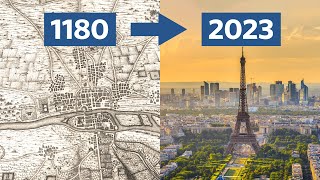
Why are there so few city-states?
video description
Date: 2019-12-21
Related videos



Comments and reviews: 8
shotelco
It's gonna happen, just a matter of time: CalExit The California Sovereign and Autonomous Nation Initiative (#17-0005): was a combined initiated constitutional amendment and state statute initiative in November 6, 2018. Although the measure didn't get enough signatures in time to get on the ballot, it would have added language to the state constitution calling for a sovereign and autonomous nation of California, whether through independence from the U. S. or through an association with the U. S. The measure would have also removed constitutional language stating that California is an inseparable part of the U. S. A declaration of Independence of the intent of California voters that California become a fully-functioning sovereign and autonomous nation, whether within continued association with the United States of America or as an independent country, peacefully through negotiation with the federal government of the United States. Modern City States should not be defined by the legacy metrics City Beautiful described, but by their autonomy. California has been making it's own laws that govern manufactures (think auto pollution standards) and International trade arrangements for decades. Consider this Very Recent event: Oct 23, 2019, The United States Files Lawsuit Against State of California for Unlawful Cap and Trade Agreement with the Canadian Province of Quebec The United States today filed a civil complaint against the state of California, several of its officers, the California Air Resources Board, and the Western Climate Initiative Inc, for unlawfully entering a cap and trade agreement with the Canadian Province of Quebec. Does it matter if a defacto City State like California is recognized as independent, when in fact it operates as an autonomous State?
reply
It's gonna happen, just a matter of time: CalExit The California Sovereign and Autonomous Nation Initiative (#17-0005): was a combined initiated constitutional amendment and state statute initiative in November 6, 2018. Although the measure didn't get enough signatures in time to get on the ballot, it would have added language to the state constitution calling for a sovereign and autonomous nation of California, whether through independence from the U. S. or through an association with the U. S. The measure would have also removed constitutional language stating that California is an inseparable part of the U. S. A declaration of Independence of the intent of California voters that California become a fully-functioning sovereign and autonomous nation, whether within continued association with the United States of America or as an independent country, peacefully through negotiation with the federal government of the United States. Modern City States should not be defined by the legacy metrics City Beautiful described, but by their autonomy. California has been making it's own laws that govern manufactures (think auto pollution standards) and International trade arrangements for decades. Consider this Very Recent event: Oct 23, 2019, The United States Files Lawsuit Against State of California for Unlawful Cap and Trade Agreement with the Canadian Province of Quebec The United States today filed a civil complaint against the state of California, several of its officers, the California Air Resources Board, and the Western Climate Initiative Inc, for unlawfully entering a cap and trade agreement with the Canadian Province of Quebec. Does it matter if a defacto City State like California is recognized as independent, when in fact it operates as an autonomous State?
reply
Campanellaa
I share your point of view, more autonomous city will be a thing in a relatively short future. In Europe, if it happen, it will be first London and/or Brussels. London due to Brexit, a potential Scotland scission, and after some political struggle, the city of London will acquire some kind of specific political status sharing more trade relation with europe than the reste of the UK. Not independant though. Since it's the capital on a very centralised state. Brussels would be more messy and clean at the same time. If the actual political crisis in belgium isnt resolve, or resolved by the creation of a confederation, Brussels will make a stand to be independant from Flanders. The problem is, Brussels is poor, and Flanders government will try to strangle Brussels either to push it to rejoin Flanders, or to favorise Antwerpen as an Attractive city. If properly manage though (and depending of the confederation new form, Brussels could be able to raise up, and become an Independant city state Power house. And If belgium take the next step of splitting the country, well, it will be messy again (because of course Flanders government will try to capt Brussels as part of the country, but Brussels will then become a Independant city State. After that, It will create a precedent in Europe, and I can see other city (and also region) trying to secede or gain more independance. I think it would be a good thing for Europe, since it would mean more power to Europe and less to nation state. But we are speaking really long term here, like 50 to more than 100 of years. And if you add climate struggle to the whole thing, it could complicate or accelerate a lot of things. Outside of Europe, I dont know.
reply
I share your point of view, more autonomous city will be a thing in a relatively short future. In Europe, if it happen, it will be first London and/or Brussels. London due to Brexit, a potential Scotland scission, and after some political struggle, the city of London will acquire some kind of specific political status sharing more trade relation with europe than the reste of the UK. Not independant though. Since it's the capital on a very centralised state. Brussels would be more messy and clean at the same time. If the actual political crisis in belgium isnt resolve, or resolved by the creation of a confederation, Brussels will make a stand to be independant from Flanders. The problem is, Brussels is poor, and Flanders government will try to strangle Brussels either to push it to rejoin Flanders, or to favorise Antwerpen as an Attractive city. If properly manage though (and depending of the confederation new form, Brussels could be able to raise up, and become an Independant city state Power house. And If belgium take the next step of splitting the country, well, it will be messy again (because of course Flanders government will try to capt Brussels as part of the country, but Brussels will then become a Independant city State. After that, It will create a precedent in Europe, and I can see other city (and also region) trying to secede or gain more independance. I think it would be a good thing for Europe, since it would mean more power to Europe and less to nation state. But we are speaking really long term here, like 50 to more than 100 of years. And if you add climate struggle to the whole thing, it could complicate or accelerate a lot of things. Outside of Europe, I dont know.
reply
Nothing to Watch
I think New York should become a city-state(not as a country, but a state. Gibraltar, Ceuta and Melila are cities detached from their mainland, so they have some potential of becoming city states. If Malta, Luxembourg, Liechtenstein, San Marino and Brunei continue urbanization, then they will become city-states. Right now Russia is too strong to let any cities go, but Kaliningrad is detached and is a growing city with history as a city state. There are also federal cities like St. Petersburg, Sevastopol and Moscow. I can't imagine Moscow leaving, but the other 2 are on coasts. There are also some huge cities in Asia, that I could imagine separating from their countries like Vladivostok, Shanghai, Saigon and Mumbai.
reply
I think New York should become a city-state(not as a country, but a state. Gibraltar, Ceuta and Melila are cities detached from their mainland, so they have some potential of becoming city states. If Malta, Luxembourg, Liechtenstein, San Marino and Brunei continue urbanization, then they will become city-states. Right now Russia is too strong to let any cities go, but Kaliningrad is detached and is a growing city with history as a city state. There are also federal cities like St. Petersburg, Sevastopol and Moscow. I can't imagine Moscow leaving, but the other 2 are on coasts. There are also some huge cities in Asia, that I could imagine separating from their countries like Vladivostok, Shanghai, Saigon and Mumbai.
reply
Richard Arpin
Cities obviously rely on resources and like Amway there are market saturation problems. Cities need enough trade partners and support partners. If all or most cities went independent then how would food, oil, minerals, energy or other needed resources be controlled? You'd have vast swaths of resources controlled by a miniscule portion of humankind. If farmers and fishers fought the control boards on prices they could set any price they wanted. They don't fight the control boards because cities could crush resource cartels easily. Cities need to have a symbiotic relationship with resource pools available from surrounding land, hence nations. Would be interesting to have a Fallout game in a post war Monaco.
reply
Cities obviously rely on resources and like Amway there are market saturation problems. Cities need enough trade partners and support partners. If all or most cities went independent then how would food, oil, minerals, energy or other needed resources be controlled? You'd have vast swaths of resources controlled by a miniscule portion of humankind. If farmers and fishers fought the control boards on prices they could set any price they wanted. They don't fight the control boards because cities could crush resource cartels easily. Cities need to have a symbiotic relationship with resource pools available from surrounding land, hence nations. Would be interesting to have a Fallout game in a post war Monaco.
reply
Linuxman777
I would say that High Speed Rail favors the Nation over the city, as it bonds cities together very strongly to form Nations, for example Japan and China are extremely Nationalistic, and have cities that could be like city states, but that doesn't really happen as they are very well connected and meet face to face often. In the US, where there is no hsr, the values of American Cities are diverging from one another as well as from their countryside, so it seems the nation is losing to the city, but on the world scale, especially in europe and asia, Nationalsm is still strong, and many groups are still forming Nationalist movements, not city independence movements.
reply
I would say that High Speed Rail favors the Nation over the city, as it bonds cities together very strongly to form Nations, for example Japan and China are extremely Nationalistic, and have cities that could be like city states, but that doesn't really happen as they are very well connected and meet face to face often. In the US, where there is no hsr, the values of American Cities are diverging from one another as well as from their countryside, so it seems the nation is losing to the city, but on the world scale, especially in europe and asia, Nationalsm is still strong, and many groups are still forming Nationalist movements, not city independence movements.
reply
jojohannes3
I don't think that a city state is a competitive model for every city. Looking closer at Singapore for example shows, that the infrastructure that is necessary for a nation (but not for a city) like military areas takes a huge amount of space. A city only survives by the supply of its hinterland. If you want to have full independence, then you have to make deals with your neighbours. Singapore for instance gets water from Malaysia, the massive amount of sand for the construction sector from other neighbour states and trains its troops in Australia. If every city would be organised like that, alliances would form which would then be similiar to nations again.
reply
I don't think that a city state is a competitive model for every city. Looking closer at Singapore for example shows, that the infrastructure that is necessary for a nation (but not for a city) like military areas takes a huge amount of space. A city only survives by the supply of its hinterland. If you want to have full independence, then you have to make deals with your neighbours. Singapore for instance gets water from Malaysia, the massive amount of sand for the construction sector from other neighbour states and trains its troops in Australia. If every city would be organised like that, alliances would form which would then be similiar to nations again.
reply
dtheman4J
No, we will not see city-states replace nations as the most prominent form of social organization. The nation has taken preeminence because people are more interconnected. Increased interconnection will strenthen rather than reduce this tendency to be connected beyond one's own community. This argues against civic identities increasing in prominence. It is likely that people will see themselves instead as members of a global community, rather than merely national, or regional. National and regional identities will still continue to be very important.
reply
No, we will not see city-states replace nations as the most prominent form of social organization. The nation has taken preeminence because people are more interconnected. Increased interconnection will strenthen rather than reduce this tendency to be connected beyond one's own community. This argues against civic identities increasing in prominence. It is likely that people will see themselves instead as members of a global community, rather than merely national, or regional. National and regional identities will still continue to be very important.
reply
TIGER MAFIA
My guess is that with the devastation caused by climate change combined with large scale implementation of technologies like lab grown meat and vertical farming, we will see more and more people moving to cities as traditional farming and agriculture gradually disappear. If you add what you said about globalization we could indeed start to see more and more cities wresting more and power from their national governments and the eventual rise of new city states. Interesting times.
reply
My guess is that with the devastation caused by climate change combined with large scale implementation of technologies like lab grown meat and vertical farming, we will see more and more people moving to cities as traditional farming and agriculture gradually disappear. If you add what you said about globalization we could indeed start to see more and more cities wresting more and power from their national governments and the eventual rise of new city states. Interesting times.
reply
Add a review, comment
Other channel videos