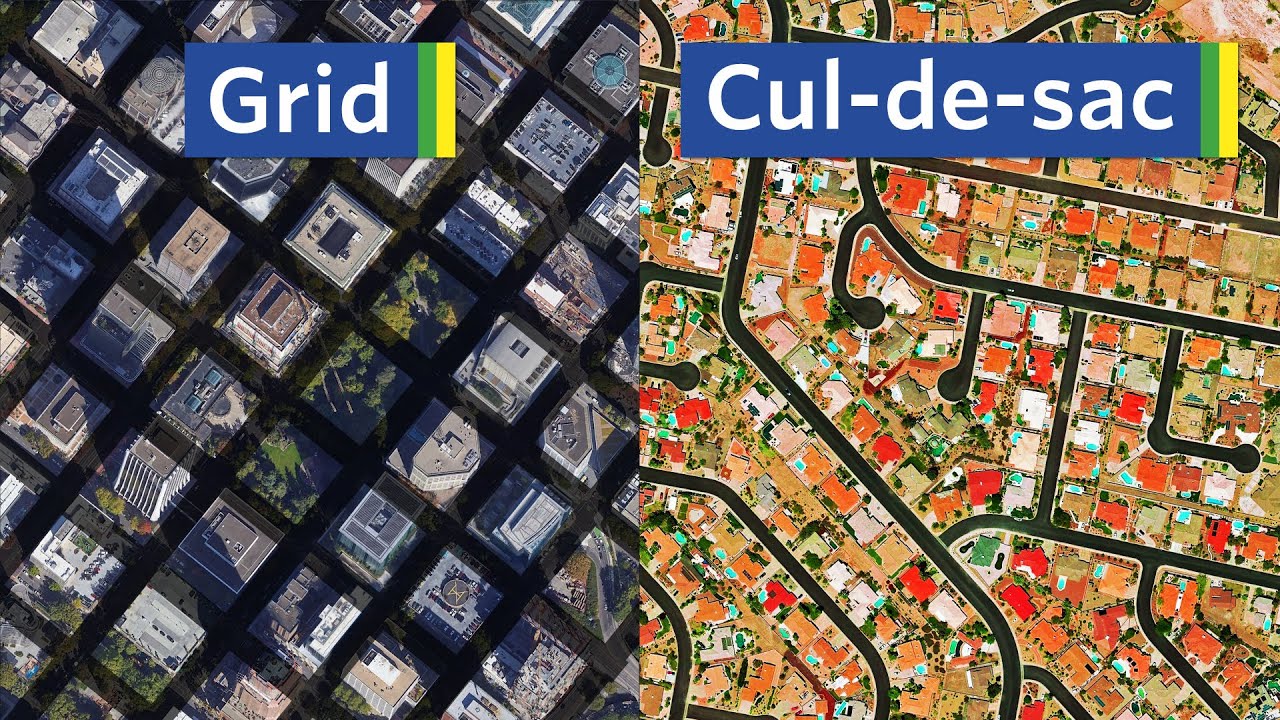
The Reason Our Streets Switched to Cul-De-Sacs
video description
Date: 2019-09-12
Related videos



Comments and reviews: 10
James Blackmore
Wow, I've never seen anyone who seems to have all the facts but comes to completely the wrong conclusion. I wanted to resist applying a stereotype to you, but after watching this video and doing a quick review of your others, my impression is that you're like typical urban planner that thinks highly efficient, urban environments purpose built for bicycles and public transit is somehow the ideal form of human habitation. Is this vision of the world propagated in urban planning departments at universities? Because it seems that every major metropolitan area has an army of experts with this vision, trying to get us out of our single family detached homes, out of our cars and into their utopian vision. Here's the deal: Grids are definitely appropriate for high-density urban areas, but most people do not want to live in a high density zone, on a grid, using public transit as their primary means of transportation. If they did, that's what developers would build, yet they keep building sprawling sub-divisions and gated communities instead. .. maybe it's not because of ITE standards, or the FHA, but instead because that's how people want to live? You admitted that once during the video, at the end when you said people like living on cul-de-sacs, but the whole video up to that point seemed to really drip with disdain for suburban sprawl and using cars for transportation. Most people want to get married, start a family and have space for them, their kids and their pets in a single house, with a front yard, a back yard and a picket fence on a quiet street that doesn't have thousands of cars, buses, pedestrians, transport trucks, street-cars, taxis, and emergency vehicles bounding up and down it every day. They want to exit the highway into their suburb, drive down a main arterial road, turn down into the main road of their subdivision, and then turn again onto a quiet crescent or cul-de-sac that is almost only ever going to be driven on by the limited number of people who actually live on that street. They want leafy green trees and winding roads in quiet, secluded areas because that actually looks and feels more human than grid streets near a city center. As someone who lived in downtown Toronto for 5 years and now lives 45-60 minutes outside the city center, with a family of five in an environment similar to the one described above, I can attest to a much higher quality of life here. I actually live on one of the main roads of my sub-division and would like to move to a similar sized house on a quieter crescent or cul-de-sac but can't afford to, because those houses cost 20% more due to higher demandAnd most people definitely do not want to rely on public transit. They want their own cars so they can come and go as they please without having to wait for anyone or mill about with lots of other strangers. And they don't want to have to fight through throngs of people to get where they're going, only to find out there's no parking because some young utopian urban planner decided cars were evil and that we should all ride our bicycles to Costco and somehow figure out how to pick up a mini-van sized load of consumer goods without a private vehicle. I really think most urban planners need to take a step back and realize that the Smart Growth they're pushing on us isn't actually what most people want.
reply
Wow, I've never seen anyone who seems to have all the facts but comes to completely the wrong conclusion. I wanted to resist applying a stereotype to you, but after watching this video and doing a quick review of your others, my impression is that you're like typical urban planner that thinks highly efficient, urban environments purpose built for bicycles and public transit is somehow the ideal form of human habitation. Is this vision of the world propagated in urban planning departments at universities? Because it seems that every major metropolitan area has an army of experts with this vision, trying to get us out of our single family detached homes, out of our cars and into their utopian vision. Here's the deal: Grids are definitely appropriate for high-density urban areas, but most people do not want to live in a high density zone, on a grid, using public transit as their primary means of transportation. If they did, that's what developers would build, yet they keep building sprawling sub-divisions and gated communities instead. .. maybe it's not because of ITE standards, or the FHA, but instead because that's how people want to live? You admitted that once during the video, at the end when you said people like living on cul-de-sacs, but the whole video up to that point seemed to really drip with disdain for suburban sprawl and using cars for transportation. Most people want to get married, start a family and have space for them, their kids and their pets in a single house, with a front yard, a back yard and a picket fence on a quiet street that doesn't have thousands of cars, buses, pedestrians, transport trucks, street-cars, taxis, and emergency vehicles bounding up and down it every day. They want to exit the highway into their suburb, drive down a main arterial road, turn down into the main road of their subdivision, and then turn again onto a quiet crescent or cul-de-sac that is almost only ever going to be driven on by the limited number of people who actually live on that street. They want leafy green trees and winding roads in quiet, secluded areas because that actually looks and feels more human than grid streets near a city center. As someone who lived in downtown Toronto for 5 years and now lives 45-60 minutes outside the city center, with a family of five in an environment similar to the one described above, I can attest to a much higher quality of life here. I actually live on one of the main roads of my sub-division and would like to move to a similar sized house on a quieter crescent or cul-de-sac but can't afford to, because those houses cost 20% more due to higher demandAnd most people definitely do not want to rely on public transit. They want their own cars so they can come and go as they please without having to wait for anyone or mill about with lots of other strangers. And they don't want to have to fight through throngs of people to get where they're going, only to find out there's no parking because some young utopian urban planner decided cars were evil and that we should all ride our bicycles to Costco and somehow figure out how to pick up a mini-van sized load of consumer goods without a private vehicle. I really think most urban planners need to take a step back and realize that the Smart Growth they're pushing on us isn't actually what most people want.
reply
Smith Dog
Hmmm, adults with children want places with less traffic from pedestrians, cyclists etc. etc. etc. Anything that creates more foot or bicycle traffic will hurt home values and reduce quality of living. One of the beautiful things about living in a cul-de-sac is the fact that it has far less people passing through and anyone who doesn't belong sticks out like a sore thumb. This equals less crime and more privacy. That's the main selling point for every young family. The Cul-de-sac adds a minute to their commute but assures more privacy and less crime. How many people do you think would actually be happier swapping their nice quite, private, no traffic, low crime neighborhood for one where all kinds of poor people walk and bike through it on a constant basis? How many of you guys have ever had to live with the crime and annoyance that comes from foot and bicycle traffic in your neighborhood vs being able to live without it? I have and there is simply no comparison, nobody who can choose will choose to have more strangers walking through scoping out their house, their children their wives, etc. It's also the difference between your kids being able to leave their bikes out while they run in for lunch and having to worry about locking them up every time they turn their back. I could go on and on, there are for bigger advantages to not having that traffic than there is from the ease of access for people who want to walk or bike. In fact not having the through traffic allows kids to literally play in the streets safely. Put bike path's through and now you kids won't even be safe playing outside anymore. Is that a selling point for anyone? Sorry but the idea of moving away from the safer more secure and private options will not appeal in the slightest to young families and that's really who they are built for in the first place.
reply
Hmmm, adults with children want places with less traffic from pedestrians, cyclists etc. etc. etc. Anything that creates more foot or bicycle traffic will hurt home values and reduce quality of living. One of the beautiful things about living in a cul-de-sac is the fact that it has far less people passing through and anyone who doesn't belong sticks out like a sore thumb. This equals less crime and more privacy. That's the main selling point for every young family. The Cul-de-sac adds a minute to their commute but assures more privacy and less crime. How many people do you think would actually be happier swapping their nice quite, private, no traffic, low crime neighborhood for one where all kinds of poor people walk and bike through it on a constant basis? How many of you guys have ever had to live with the crime and annoyance that comes from foot and bicycle traffic in your neighborhood vs being able to live without it? I have and there is simply no comparison, nobody who can choose will choose to have more strangers walking through scoping out their house, their children their wives, etc. It's also the difference between your kids being able to leave their bikes out while they run in for lunch and having to worry about locking them up every time they turn their back. I could go on and on, there are for bigger advantages to not having that traffic than there is from the ease of access for people who want to walk or bike. In fact not having the through traffic allows kids to literally play in the streets safely. Put bike path's through and now you kids won't even be safe playing outside anymore. Is that a selling point for anyone? Sorry but the idea of moving away from the safer more secure and private options will not appeal in the slightest to young families and that's really who they are built for in the first place.
reply
beeveebee
I am a huge proponent of gridded, wide streets. Like those of the original townsite of Salt Lake City. SLC took gridding to the next level by implementing it into their addressing, as well. It can be a bit confusing to learn, but those who live there swear by it. Wide streets are a huge plus to ALL users. As a utility worker, cul-de-sacs are a nightmare They are always undersized and should be outlawed in their current standard. Any calculation regarding turn around area MUST account for vehicles parked on the curb, because roadside parking is so limited. Fire engines, street sweepers, snow plows (don't get me started on where the snow is supposed to go, or any other CDL-required vehicle rarely can navigate these safely. Often, having to back onto the access street because of the limited space. Tell me what is safe about that? The new accepted design is called a hammerhead. It is has a 'T-shaped' termination. This design requires no curbside parking (right, that's a joke and never enforced. Wide streets and through access for non-vehicles at the end of all dead-end streets, regardless of their design.
reply
I am a huge proponent of gridded, wide streets. Like those of the original townsite of Salt Lake City. SLC took gridding to the next level by implementing it into their addressing, as well. It can be a bit confusing to learn, but those who live there swear by it. Wide streets are a huge plus to ALL users. As a utility worker, cul-de-sacs are a nightmare They are always undersized and should be outlawed in their current standard. Any calculation regarding turn around area MUST account for vehicles parked on the curb, because roadside parking is so limited. Fire engines, street sweepers, snow plows (don't get me started on where the snow is supposed to go, or any other CDL-required vehicle rarely can navigate these safely. Often, having to back onto the access street because of the limited space. Tell me what is safe about that? The new accepted design is called a hammerhead. It is has a 'T-shaped' termination. This design requires no curbside parking (right, that's a joke and never enforced. Wide streets and through access for non-vehicles at the end of all dead-end streets, regardless of their design.
reply
Wesley Bruce
There is a military aspect to the change. Grid cities if Europe were heavily fought for street by street so the suffered devastating damage, Particularly at the corners. The Germans and Italians did not generally try to hold dead end streets, cul-de-sacs, and lanes ending in a courtyard, etc. Those that did often were taken with much less damage; rearguard light infantry actions. Many city engineers were military engineers from the war and so favoured the city designs that survived the war over those that were in ruins. They were expecting a fight at the end of cold war. This is also why the favoured highways modelled on the German autobahn. Where the Autobahn passed a town, the town was often intact. Armies rolled past. Where the main road went though the town it was destroyed.
reply
There is a military aspect to the change. Grid cities if Europe were heavily fought for street by street so the suffered devastating damage, Particularly at the corners. The Germans and Italians did not generally try to hold dead end streets, cul-de-sacs, and lanes ending in a courtyard, etc. Those that did often were taken with much less damage; rearguard light infantry actions. Many city engineers were military engineers from the war and so favoured the city designs that survived the war over those that were in ruins. They were expecting a fight at the end of cold war. This is also why the favoured highways modelled on the German autobahn. Where the Autobahn passed a town, the town was often intact. Armies rolled past. Where the main road went though the town it was destroyed.
reply
Bart Price
My home is at the dead end of a cul de sac. Love it. Kids dogs own the street. No one drives on street unless they belong there. No crime, because every strange car or person is noticed by a neighbor, strangers feel watched, only a few ways out of subdivision. After 20 years, they put a stop sign at intersection. But no one obeys it, because only yield stop is required. And it wasn't here before us. Single family homes only, no short term rentals allowed. Over 90% of police responses are animal control related. Others are domestic related. A crime wave of 3 thefts happened years ago. Person was seen, caught, was actually a resident angry his noisy neighbors, so he stole their loud lawn equipment. So yeah, if you have to live in suburb, a cul de sac in a planned community is great.
reply
My home is at the dead end of a cul de sac. Love it. Kids dogs own the street. No one drives on street unless they belong there. No crime, because every strange car or person is noticed by a neighbor, strangers feel watched, only a few ways out of subdivision. After 20 years, they put a stop sign at intersection. But no one obeys it, because only yield stop is required. And it wasn't here before us. Single family homes only, no short term rentals allowed. Over 90% of police responses are animal control related. Others are domestic related. A crime wave of 3 thefts happened years ago. Person was seen, caught, was actually a resident angry his noisy neighbors, so he stole their loud lawn equipment. So yeah, if you have to live in suburb, a cul de sac in a planned community is great.
reply
Badgerrr Lattin
Was born & raised in a grid style town and had to move to a Cul-De-Sac type. So I can fully appreciate the difference. What a nightmare Cul-De-Sacs are All the traffic has to go thru grossly over used arterials where pedestrians are murdered at an outrageous rate. A 100 yard trip to the local hardware store is a 2 mile ordeal. Virtually NONE of our roads go anywhere. Pay most of my road taxes to keep up other peoples, essentially, private driveways called Cul-De-Sacs. If you never lived in a town with a real lay-out you might think this makes sense; but if you have, putting up with these bucket-of-worms arrangements is infuriating. (Notice how no one seems to care about all the wasted fuel to just get around? That would be inconvenient environmentalism)
reply
Was born & raised in a grid style town and had to move to a Cul-De-Sac type. So I can fully appreciate the difference. What a nightmare Cul-De-Sacs are All the traffic has to go thru grossly over used arterials where pedestrians are murdered at an outrageous rate. A 100 yard trip to the local hardware store is a 2 mile ordeal. Virtually NONE of our roads go anywhere. Pay most of my road taxes to keep up other peoples, essentially, private driveways called Cul-De-Sacs. If you never lived in a town with a real lay-out you might think this makes sense; but if you have, putting up with these bucket-of-worms arrangements is infuriating. (Notice how no one seems to care about all the wasted fuel to just get around? That would be inconvenient environmentalism)
reply
Schmidt54
Americans always had the luxury of actually planning development and infrastructure. looking at how it went down in European cities, damn. Cities gre for hundreds of years, then they were destroyed by a war or two, re-build, and then people came with cars. Damn. And whan I take a look at the development you showed us, I have to say, it somewhat looks, again, like a grown city, which ha at least the advantage that there are many shortest roads to a destination, but severly limits railroads, but enables busses to be used more. I guess there is never a perfect city. Besides ancient Rome of course. I'd be interested in how the Japanese and Chinese develop their cities, especially in comparison to historical developments.
reply
Americans always had the luxury of actually planning development and infrastructure. looking at how it went down in European cities, damn. Cities gre for hundreds of years, then they were destroyed by a war or two, re-build, and then people came with cars. Damn. And whan I take a look at the development you showed us, I have to say, it somewhat looks, again, like a grown city, which ha at least the advantage that there are many shortest roads to a destination, but severly limits railroads, but enables busses to be used more. I guess there is never a perfect city. Besides ancient Rome of course. I'd be interested in how the Japanese and Chinese develop their cities, especially in comparison to historical developments.
reply
Ignacio Ramirez
Yes the grid pattern is more intelligent to move from point A to point B, but I can see the advantage of using closed streets beacuse it results on more privacy and security. If you don't have any business with anyone living on that section you never will go trough that section of the city. This works well to lower crime since neighbors know each other better and can see any suspicious people who doesn't live on the neighborhood. And in some areas having this privacy-extra layer of security is worth giving up the grid system. After all the number 1 thing we all want to be our house is to be a safe place.
reply
Yes the grid pattern is more intelligent to move from point A to point B, but I can see the advantage of using closed streets beacuse it results on more privacy and security. If you don't have any business with anyone living on that section you never will go trough that section of the city. This works well to lower crime since neighbors know each other better and can see any suspicious people who doesn't live on the neighborhood. And in some areas having this privacy-extra layer of security is worth giving up the grid system. After all the number 1 thing we all want to be our house is to be a safe place.
reply
Inde tiger
In the DC area we are seeing a return to connected streets and loops. Part of this is because larger fire fighting equipment can't turn around in the cul de sacs anymore. With the growth of Metro, DC's subway, in Northern Virginia there are also mixed use developments being built. The Mosaic District where I work being one of the more well known examples. Next to a metro station, you can live, work, shop, and be entertained in Mosaic and walk to it all. Tysons, probably the most well known shopping mall in Virginia, is also planned to be redeveloped into a more walkable city.
reply
In the DC area we are seeing a return to connected streets and loops. Part of this is because larger fire fighting equipment can't turn around in the cul de sacs anymore. With the growth of Metro, DC's subway, in Northern Virginia there are also mixed use developments being built. The Mosaic District where I work being one of the more well known examples. Next to a metro station, you can live, work, shop, and be entertained in Mosaic and walk to it all. Tysons, probably the most well known shopping mall in Virginia, is also planned to be redeveloped into a more walkable city.
reply
ScooterFXRS
OK, great but something that seems to get forgotten when they narrow streets and put that wee turn around a car can barely turn around is that once a week, at least, a large truck has to navigate that cul de sac and narrow street not to mention the movers that come to remove or bring household items. Even putting schools now on major roads and with a huge number parents taking their child to school is a nightmare. I find the logistic infrastructure to be almost absurd.
reply
OK, great but something that seems to get forgotten when they narrow streets and put that wee turn around a car can barely turn around is that once a week, at least, a large truck has to navigate that cul de sac and narrow street not to mention the movers that come to remove or bring household items. Even putting schools now on major roads and with a huge number parents taking their child to school is a nightmare. I find the logistic infrastructure to be almost absurd.
reply
Add a review, comment
Other channel videos