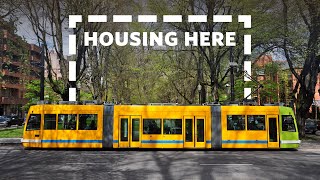
Can Public Transit Beat Uber?
video description
And it's not just for the sake of lazy convenience. One super important function is safe transportation at night. When it's like 4 AM and you're alone at some remote location, it's not safe to trek to the nearest bus spot and stay there for the long waits until a bus shows up, if there even are any. Most likely, you're stranded, forced to walk somewhere. Uber can be a life saver at that hour. But there are other important scenarios where it helps. You might be late to an appointment, or far from any stops, or maybe hurt. Heck, even taking someone to a hospital while avoiding the ambulance costs is a good fit for an uber.
So as a citizen, uber (and other similar services) fill a niche that's extremely important for many scenarios. Even taxis weren't able to do that, with how incovenient it was to get them to wherever you were, most people just walked around till they found one.
But of course, there are the caveats. A big one for me is the fact that they can just refuse to pick you up. I'm lucky to live in a region where I don't have to deal with that, but I know people that might have to wait half an hour, maybe more, until some driver decides to pick them up, since they don't want to go to their neighborhoods. Uber might as well not exist for them. The price also makes it unsustainable for the daily commute of many people. And there's all the mess around their legality, etc.
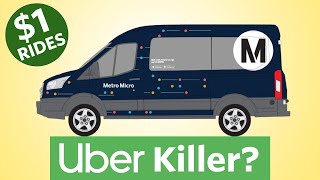
End of the day, I'm glad it exists. It's extremely helpful, one of those technologies that I don't know how we ever lived without. I don't think it'd be good for it to go away. But I'm also hoping that mass transit takes that competition and uses it to become even better. For all the other scenarios, where you don't absolutely need an uber. It needs to be the cheaper, all-encompassing alternative that can serve a broader audience and not be picky about what neighborhoods it goes to. That LA metro service in the video is super cool, I wish my city had something like that. There are times where I don't mind waiting a bit, if it means I'm saving that much money on the fares.
Date: 2022-08-16
Related videos





Comments and reviews: 13
Dariune
in east europe in the period between 1995-2010 we had a phenomenon of wild wild west of public transport called marshrutkas / mikrushkas, those were consumer grade used 10 year old vans that some dude bought a 10 of them, welded in some seats, started a company hired some drivers (who were literally mad) and let them out into the streets running routes alongside buses and trolleybuses, many people then and frankly to this day either cant afford a car or dont have a place to park it or dont have a licence or cant do the maintenance themselves and garage mechanics rip you off, mostly women and seniors and teenagers and beta males, whatever, people need to move they dont have cars buses are full so they launch this auxiliary service, not regulated whatsoever, drivers may be barely awake or under influence, always multitasking giving coins for change while speeding 80km/h weaving in and out of lanes beeping and swearing trying to beat all other rush hour traffic, its hot and humid inside in the summer, youre rubbing not just shoulders but whole bodies with strangers, falling over when braking, the suspension is crashing over bumps cause these things were never intended to carry so much weight. what an experience, glad I dont have to live through that anymore as soon as i turned 18 got my licence and a car so I never have to deal with it again, although this winter i tried commuting to work and back on public transport and I can report it got only marginaly better, marshrutkas are gone, the city just bought more buses and lowered prices relative to private businessmen and they all went bankrupt but the experience still involves taking 4 diferent modes of transport with layovers just to get to work and back, 20 min drive in a car turns into 1 hour 30min travel on public transport and you are still crammed together with stinky lowlifes in a noisy, rattly and crashy tin boxes
reply
in east europe in the period between 1995-2010 we had a phenomenon of wild wild west of public transport called marshrutkas / mikrushkas, those were consumer grade used 10 year old vans that some dude bought a 10 of them, welded in some seats, started a company hired some drivers (who were literally mad) and let them out into the streets running routes alongside buses and trolleybuses, many people then and frankly to this day either cant afford a car or dont have a place to park it or dont have a licence or cant do the maintenance themselves and garage mechanics rip you off, mostly women and seniors and teenagers and beta males, whatever, people need to move they dont have cars buses are full so they launch this auxiliary service, not regulated whatsoever, drivers may be barely awake or under influence, always multitasking giving coins for change while speeding 80km/h weaving in and out of lanes beeping and swearing trying to beat all other rush hour traffic, its hot and humid inside in the summer, youre rubbing not just shoulders but whole bodies with strangers, falling over when braking, the suspension is crashing over bumps cause these things were never intended to carry so much weight. what an experience, glad I dont have to live through that anymore as soon as i turned 18 got my licence and a car so I never have to deal with it again, although this winter i tried commuting to work and back on public transport and I can report it got only marginaly better, marshrutkas are gone, the city just bought more buses and lowered prices relative to private businessmen and they all went bankrupt but the experience still involves taking 4 diferent modes of transport with layovers just to get to work and back, 20 min drive in a car turns into 1 hour 30min travel on public transport and you are still crammed together with stinky lowlifes in a noisy, rattly and crashy tin boxes
reply
stevieinselby
In the UK, the government is pumping huge sums of money into these app-based demand-responsive buses usually serving very rural areas, rarely are they used in urban areas (a few have been tried commercially and have flopped) while at the same time cutting the funding available to support traditional timetabled buses.
While they are better than Uber for the same reasons as Metro Micro, they are definitely not a replacement for traditional buses:
Requires the passenger to have a smartphone and be comfortable using apps (and to have a signal. The majority of passengers on these services are elderly and may struggle with the technology.
Requires extra effort compared with just turning up at the bus stop, especially for regular passengers who know the timetable and the route.
Less user-friendly for visitors to the area, as each small area has its own separate app, and has its own unique policies that are not standardised (eg some require you to book ahead, some allow you to book ahead or on the day, some only allow you to book at the time of travel, and no centralised database.
Likely to be more expensive to run, particularly as a result of low ridership.
When the majority of journeys are with at most two groups of passengers, it's hard to say that these are actually transit/public transport in any meaningful sense, and in reality are nothing more than heavily subsidised taxis. It's very likely that when the current funding spree runs out in 2 or 3 years time, most of the schemes that have been set up at great expense will collapse, having destroyed the traditional bus network in the meantime, leaving people in rural areas worse off than they are now but having funnelled large amounts of our money into the pockets of the techbros pushing the apps.
reply
In the UK, the government is pumping huge sums of money into these app-based demand-responsive buses usually serving very rural areas, rarely are they used in urban areas (a few have been tried commercially and have flopped) while at the same time cutting the funding available to support traditional timetabled buses.
While they are better than Uber for the same reasons as Metro Micro, they are definitely not a replacement for traditional buses:
Requires the passenger to have a smartphone and be comfortable using apps (and to have a signal. The majority of passengers on these services are elderly and may struggle with the technology.
Requires extra effort compared with just turning up at the bus stop, especially for regular passengers who know the timetable and the route.
Less user-friendly for visitors to the area, as each small area has its own separate app, and has its own unique policies that are not standardised (eg some require you to book ahead, some allow you to book ahead or on the day, some only allow you to book at the time of travel, and no centralised database.
Likely to be more expensive to run, particularly as a result of low ridership.
When the majority of journeys are with at most two groups of passengers, it's hard to say that these are actually transit/public transport in any meaningful sense, and in reality are nothing more than heavily subsidised taxis. It's very likely that when the current funding spree runs out in 2 or 3 years time, most of the schemes that have been set up at great expense will collapse, having destroyed the traditional bus network in the meantime, leaving people in rural areas worse off than they are now but having funnelled large amounts of our money into the pockets of the techbros pushing the apps.
reply
AL5520
Another great video but a I have a few remaeks:
1. Uber and Lyft are in no way rideshare. This was a ploy to make it sound like something else but in reality it's a taxi service.
2. Uber, Lyft and taxis add traffic and contaminate more than a regular car. Of course both you and those service contribute the same to contamination and traffic but you do it only when you actually go from point A to point B and they keeps circling around when they have no rides thus adding to congestion and contamination.
3. A service like Uber, Lyft or a taxi is as inefficient as a regular car and not good for the environment but as some might need it in some cases it should be a regulated and limited service, or in short a taxi. I know that you hate taxis but, like with other things, if you'll learn from other places how to manage them and regulate them well they can be an excellent service for special occasions. For the rest, just start building a normal and decent public transport systems and, like with taxis, try learning from others how to do it well.
4. Uber's illegal practices is part of their business and they do it all over the world. In France the Uber Fance CEO and Uber Europe GM were arrested for running an illegal taxi service. In France, where I live, they kept breaking the law and ignored the court's decision so the judge issued a warrant to block their domain so no one could reach their webpage or connect to their app. After a few years they decided to comply with the laws, that obligated them to use professional drivers with a car transport service (a private service - not a taxi) and proper insurance and other restrictions that depends on local laws. They are only available only a handful of cities (including Madrid but not Barcelona.
reply
Another great video but a I have a few remaeks:
1. Uber and Lyft are in no way rideshare. This was a ploy to make it sound like something else but in reality it's a taxi service.
2. Uber, Lyft and taxis add traffic and contaminate more than a regular car. Of course both you and those service contribute the same to contamination and traffic but you do it only when you actually go from point A to point B and they keeps circling around when they have no rides thus adding to congestion and contamination.
3. A service like Uber, Lyft or a taxi is as inefficient as a regular car and not good for the environment but as some might need it in some cases it should be a regulated and limited service, or in short a taxi. I know that you hate taxis but, like with other things, if you'll learn from other places how to manage them and regulate them well they can be an excellent service for special occasions. For the rest, just start building a normal and decent public transport systems and, like with taxis, try learning from others how to do it well.
4. Uber's illegal practices is part of their business and they do it all over the world. In France the Uber Fance CEO and Uber Europe GM were arrested for running an illegal taxi service. In France, where I live, they kept breaking the law and ignored the court's decision so the judge issued a warrant to block their domain so no one could reach their webpage or connect to their app. After a few years they decided to comply with the laws, that obligated them to use professional drivers with a car transport service (a private service - not a taxi) and proper insurance and other restrictions that depends on local laws. They are only available only a handful of cities (including Madrid but not Barcelona.
reply
Christopher
This was a great topic! I feel that all of these solutions are just attempts to continue to pretend that we don't have a massive foundational problem, which is the dumb thinking from generations ago that we will all live here and work there. I live in Seattle, and I'm watching years and gazillions of dollars disappear into things like light rail lines that don't run anywhere almost all of us live, work, shop or eat. It would have been cheaper and more effective to just set up a ride sharing service of some kind. All the while our roads are literally crumbling, bridges collapsing, and parking vanishing. You can't take a bus here because to replace a 15 minute one-way car ride is 65 minutes one way via two busses, and 95 back via three busses (that includes about 1/2 of that time standing in the rain waiting for the next bus which is always late. Not even remotely feasible. All the roads are getting slowed down because high volume building tenants, like schools, are built right off the roads, and very few real arterials exist. And then you want me to buy an electric car? The flakey power grid won't handle that, and two or three charging spots at a workplace is not going to service the 500 people inside. So? Something VERY different needs to happen as a solution, and it needs to be based on what people really need, not how to I get this aging crumbling system we inherited from the horse and buggy days to last long enough for me to retire?
reply
This was a great topic! I feel that all of these solutions are just attempts to continue to pretend that we don't have a massive foundational problem, which is the dumb thinking from generations ago that we will all live here and work there. I live in Seattle, and I'm watching years and gazillions of dollars disappear into things like light rail lines that don't run anywhere almost all of us live, work, shop or eat. It would have been cheaper and more effective to just set up a ride sharing service of some kind. All the while our roads are literally crumbling, bridges collapsing, and parking vanishing. You can't take a bus here because to replace a 15 minute one-way car ride is 65 minutes one way via two busses, and 95 back via three busses (that includes about 1/2 of that time standing in the rain waiting for the next bus which is always late. Not even remotely feasible. All the roads are getting slowed down because high volume building tenants, like schools, are built right off the roads, and very few real arterials exist. And then you want me to buy an electric car? The flakey power grid won't handle that, and two or three charging spots at a workplace is not going to service the 500 people inside. So? Something VERY different needs to happen as a solution, and it needs to be based on what people really need, not how to I get this aging crumbling system we inherited from the horse and buggy days to last long enough for me to retire?
reply
Maxime
I love this! Ever since taking one of these small busses/vans somewhere in the Italian Alps, I have never been able to stop thinking of how they could fit into more urban transportation. Big busses are good because they only require one driver and have a huge capacity but I often find that there are less than 13 passengers in a bus outside of peak hours and especially on longer routes through less dense areas. Using software to bridge the gap between user demand and rigid schedules is a great idea. Especially in a sprawling city like Los Angeles.
In hindsight, this is basically a more sophisticated version of the Belbus (literally call-bus ) that exists here in equally sprawling Flanders. It's also a sort of bus/taxi service run by the local transit agency but you have to book your trip at least one day in advance (this used to be done exclusively by phone, hence the name) and you can only travel between specially designated Belbus stops. Because of these limitations, it's mostly used for semi-regular and pre-planned trips, like going to the Sunday market, visiting a friend or going into town. I've never used it myself though, I should try it out someday!
reply
I love this! Ever since taking one of these small busses/vans somewhere in the Italian Alps, I have never been able to stop thinking of how they could fit into more urban transportation. Big busses are good because they only require one driver and have a huge capacity but I often find that there are less than 13 passengers in a bus outside of peak hours and especially on longer routes through less dense areas. Using software to bridge the gap between user demand and rigid schedules is a great idea. Especially in a sprawling city like Los Angeles.
In hindsight, this is basically a more sophisticated version of the Belbus (literally call-bus ) that exists here in equally sprawling Flanders. It's also a sort of bus/taxi service run by the local transit agency but you have to book your trip at least one day in advance (this used to be done exclusively by phone, hence the name) and you can only travel between specially designated Belbus stops. Because of these limitations, it's mostly used for semi-regular and pre-planned trips, like going to the Sunday market, visiting a friend or going into town. I've never used it myself though, I should try it out someday!
reply
Akash
These videos that compare public to private services easily forget that nothing is cheap/free. Uber is in a free market, and prices its services accordingly. Many people choose to not use uber on a daily basis if they can figure out a cheaper daily alternative (like biking/carpool/transit. The point is that Uber is a service that you pay for once.
But in contrast, a direct Uber competitor like metro-micro is being run by tax dollars. Yes, it costs a measly 1 for a ride to anywhere, but the costs of gas, driver salary and vehicle purchase and maintenance are all paid by the tax payers. That money which would be going to improve something else, is now being directly spent to compete with Uber. Given LA is already congested, this is not good news at all (at least an expensive Uber prevents a few riders from using it too much. If the city instead spent money on adding more Buses, enlarging bus routes and maybe get started on an actually halfway decent subway system, they would be doing a much better service to people.
reply
These videos that compare public to private services easily forget that nothing is cheap/free. Uber is in a free market, and prices its services accordingly. Many people choose to not use uber on a daily basis if they can figure out a cheaper daily alternative (like biking/carpool/transit. The point is that Uber is a service that you pay for once.
But in contrast, a direct Uber competitor like metro-micro is being run by tax dollars. Yes, it costs a measly 1 for a ride to anywhere, but the costs of gas, driver salary and vehicle purchase and maintenance are all paid by the tax payers. That money which would be going to improve something else, is now being directly spent to compete with Uber. Given LA is already congested, this is not good news at all (at least an expensive Uber prevents a few riders from using it too much. If the city instead spent money on adding more Buses, enlarging bus routes and maybe get started on an actually halfway decent subway system, they would be doing a much better service to people.
reply
DrDewott
Meanwhile Uber is illegal in my home country of Denmark.
Also we have our own little Metro Micro equivalent in the form of Plustur and Flextur. Both of which are ridesharing options to compliment transit across almost all of Denmark. Both need to be booked at least 2 hours in advance though and can only be booked via the Journeyplanner app if no existing transit options shows up for that leg of the trip or that trip entirely. Plustur shows up if there's no convenient link from your address to the nearest bus stop or train station which may be too far to walk, when you have put in your time to travel, serving exclusively as a first and last mile option. Flextur however works on address to address routes, whole point A to B where existing transit may not be viable, but otherwise work the same way as Plustur.
The names Flextur and Plustur also literally mean Flex ride, and Plus ride
reply
Meanwhile Uber is illegal in my home country of Denmark.
Also we have our own little Metro Micro equivalent in the form of Plustur and Flextur. Both of which are ridesharing options to compliment transit across almost all of Denmark. Both need to be booked at least 2 hours in advance though and can only be booked via the Journeyplanner app if no existing transit options shows up for that leg of the trip or that trip entirely. Plustur shows up if there's no convenient link from your address to the nearest bus stop or train station which may be too far to walk, when you have put in your time to travel, serving exclusively as a first and last mile option. Flextur however works on address to address routes, whole point A to B where existing transit may not be viable, but otherwise work the same way as Plustur.
The names Flextur and Plustur also literally mean Flex ride, and Plus ride
reply
Thom
It's funny though how the example in the beginning of the video takes a ride of about 2. 5 km or 1. 6 miles (if I'm not mistaken. I mean, I don't see how anyone would even consider a car ride for this kind of distance. 2. 5 km is literally a 8 min bike ride, so cycling is a better option in any metric (ease and time for sure. Price might be a little more than 1 if you would use a bike sharing system.
Even going to your destination on foot would take maybe 30 minutes (compared to 6min waiting + 11 min ride of Uber = 17 min total. So walking to your destination would be superior both on price and ease metric and only slightly slower than Uber but still much faster than MetroMicro. Probably the time and energy you spent walking around downtown waiting on your MM ride could have already got you at your destination.
reply
It's funny though how the example in the beginning of the video takes a ride of about 2. 5 km or 1. 6 miles (if I'm not mistaken. I mean, I don't see how anyone would even consider a car ride for this kind of distance. 2. 5 km is literally a 8 min bike ride, so cycling is a better option in any metric (ease and time for sure. Price might be a little more than 1 if you would use a bike sharing system.
Even going to your destination on foot would take maybe 30 minutes (compared to 6min waiting + 11 min ride of Uber = 17 min total. So walking to your destination would be superior both on price and ease metric and only slightly slower than Uber but still much faster than MetroMicro. Probably the time and energy you spent walking around downtown waiting on your MM ride could have already got you at your destination.
reply
Enzo
It would have been cool if you had touched on the cost for operators to run municipal ridesharing. In Sacramento, for example, SacRT's microtransit service (smart ride) requires a 42 agency subsidy each time a passenger boards, compared to an 8- 16 subsidy on fixed bus routes, depending on route productivity.
Another thing to keep in mind is that some agencies (like SacRT) have used microtransit to strip any fixed service to communities underserved by transit. Route 24 in Sacramento used to serve communities like Orangevale and Fair Oaks, but now many of those neighborhoods have no feasible transit stop in walking distance with regular service. With the variable timeliness of these services, it makes it really difficult for people using transit to make it on time to school or work.
reply
It would have been cool if you had touched on the cost for operators to run municipal ridesharing. In Sacramento, for example, SacRT's microtransit service (smart ride) requires a 42 agency subsidy each time a passenger boards, compared to an 8- 16 subsidy on fixed bus routes, depending on route productivity.
Another thing to keep in mind is that some agencies (like SacRT) have used microtransit to strip any fixed service to communities underserved by transit. Route 24 in Sacramento used to serve communities like Orangevale and Fair Oaks, but now many of those neighborhoods have no feasible transit stop in walking distance with regular service. With the variable timeliness of these services, it makes it really difficult for people using transit to make it on time to school or work.
reply
Lucas
I've tried to use Metro Micro exactly one time. I was running a bit late and realized I would miss my bus connection from the Orange Line (BRT with dedicated right-of-way, for those unfamiliar) to my destination (roughly 2 miles away) so I tried to call a Metro Micro from a few stops away so that it would arrive at roughly the same time as I did. It ended up arriving on the earlier side of its arrival window and I arrived later than expected because the Orange Line still doesn't have signal priority so I missed it. I ended up walking. This isn't really an indictment of Metro Micro in concept or in execution but I think it's telling that the same service improvements that would make Metro Micro more attractive to me would likely reduce the need for it in the first place.
reply
I've tried to use Metro Micro exactly one time. I was running a bit late and realized I would miss my bus connection from the Orange Line (BRT with dedicated right-of-way, for those unfamiliar) to my destination (roughly 2 miles away) so I tried to call a Metro Micro from a few stops away so that it would arrive at roughly the same time as I did. It ended up arriving on the earlier side of its arrival window and I arrived later than expected because the Orange Line still doesn't have signal priority so I missed it. I ended up walking. This isn't really an indictment of Metro Micro in concept or in execution but I think it's telling that the same service improvements that would make Metro Micro more attractive to me would likely reduce the need for it in the first place.
reply
CarEnthusiast
I don't know why you are defending taxis. They are often a monopoly set up by municipal governments that artificially restrict supply and artificially raise the financial barrier to entry. Uber would have a much harder time entering the market if taxi supply were not restricted. Those NYC taxi drivers who were delusional enough to buy taxi licenses for exorbitant sums of money for what is essentially a job that anyone can do only have themselves to blame. As for Uber, you could have gone more into why their business model is flawed. It's not just gas and maintenance. If depreciation is factored in, it's possible that Uber drivers are making less than minimum wage. And then there's local governments that want to impose their own regulations and taxes.
reply
I don't know why you are defending taxis. They are often a monopoly set up by municipal governments that artificially restrict supply and artificially raise the financial barrier to entry. Uber would have a much harder time entering the market if taxi supply were not restricted. Those NYC taxi drivers who were delusional enough to buy taxi licenses for exorbitant sums of money for what is essentially a job that anyone can do only have themselves to blame. As for Uber, you could have gone more into why their business model is flawed. It's not just gas and maintenance. If depreciation is factored in, it's possible that Uber drivers are making less than minimum wage. And then there's local governments that want to impose their own regulations and taxes.
reply
Hasturoth
Even if Metro Micro wins out slightly it's still a massively subsidized program so you really have to compare how much it's costing the city with the alternatives that are available to the city. Ubers and cabs are effectively the same thing from a user perspective (at least now that most cabs have caught up in the technology gap) and for me their existence are the reason i've lived this long without a car. With that said tho public transportation forms the bulk of my trips and I'm not very keen in having funding these services competing for funding with something that is otherwise well served by the current uber/cab services. Seems to me that if 10 uber rides are eating into public transport ridership then 1 trips will do so dramatically more.
reply
Even if Metro Micro wins out slightly it's still a massively subsidized program so you really have to compare how much it's costing the city with the alternatives that are available to the city. Ubers and cabs are effectively the same thing from a user perspective (at least now that most cabs have caught up in the technology gap) and for me their existence are the reason i've lived this long without a car. With that said tho public transportation forms the bulk of my trips and I'm not very keen in having funding these services competing for funding with something that is otherwise well served by the current uber/cab services. Seems to me that if 10 uber rides are eating into public transport ridership then 1 trips will do so dramatically more.
reply
Juan
As someone who lives in LA, I have a love/hate relationship with Metro Micro. When it works, it really is a great option. But there have been many times when my ride doesn't show or comes so late that I can't make it to my destination on time or connect with the bus/train that I need, forcing me to either take an Uber or drive. It doesn't matter if I book my ride an hour out or 3 days out too.
LA Metro does have a significant driver shortage, and I think they do overbook the Micros. It's a great idea, but the execution hasn't been great. I'm jealous that you were able to get something within 30 minutes of when you booked it, as often I have to book it hours in advance just to have a chance.
reply
As someone who lives in LA, I have a love/hate relationship with Metro Micro. When it works, it really is a great option. But there have been many times when my ride doesn't show or comes so late that I can't make it to my destination on time or connect with the bus/train that I need, forcing me to either take an Uber or drive. It doesn't matter if I book my ride an hour out or 3 days out too.
LA Metro does have a significant driver shortage, and I think they do overbook the Micros. It's a great idea, but the execution hasn't been great. I'm jealous that you were able to get something within 30 minutes of when you booked it, as often I have to book it hours in advance just to have a chance.
reply
Add a review, comment
Other channel videos