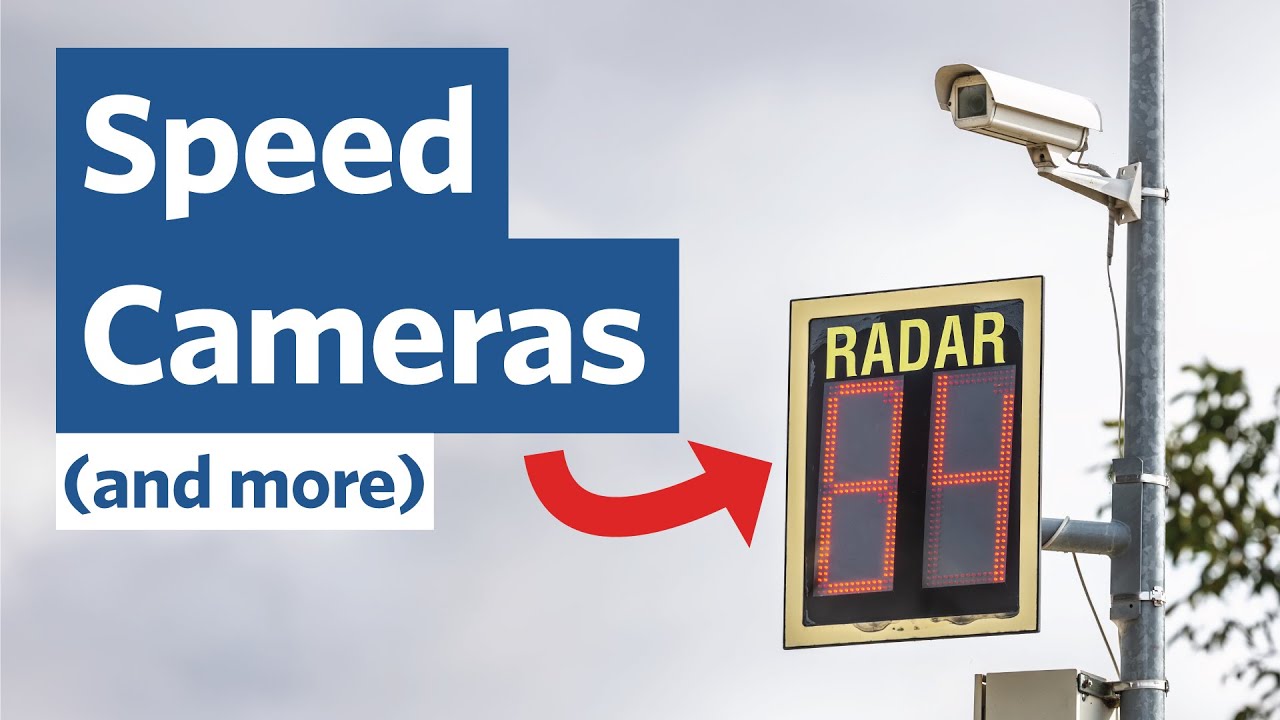
The Lifesaving Tech Drivers Hate
video description
I wholeheartedly believe that moving society away from cars to other forms of group (buses, trains, light-rail, &c) or even individualized transportation (Like the e-bikes you mentioned, will be the most effective strategy at increasing pedestrian safety.
In areas where cars are simply the only reliable and economic form of transportation (ie rural & mountainous regions like parts of the Rockies, Sierra Nevada, and Smokies, we should ensure safety with the technologies you mentioned, and by using designing roads that prohibit needlessly high speeds.
Date: 2022-12-23
Related videos



Comments and reviews: 13
Andrew
I prefer the idea of speed governors in vehicles over cameras for one simple reason:
'What else is the camera recording? '
'Oh but you're not doing anything wrong so you shouldn't have anything to worry about, right? '
This kinda loops to the ElonJet thing on twitter. I'm fine with VEHICLES being tracked. that's the multi ton death machine that is a bomb on wheels if the fuel component (eitherfossil or lithium ion) goes Pop. Plus that thing being tracked means 'oh shit someone stole my very expensive thing I need to get around. Ooh GPS says it's in a warehouse somewhere. '
Make the tracker portion public and allow private indaviduals to be able to explitiely ping thier own vehicles. Keep this system SEPERATE from any system that drives or starts the vehicle. I would have a preference for that since Iwould rgue this is the one that will be gone after most often by theoretical attackers.
More to the point if someone turns it Off. I want it OFF, not 'teehee its actually tattling on your location but we arne't telling you that. ' Until it isa mandated thing. It needs to be O F F at user request.
Even include perks for leaving it on. Little things like better insurance rates. Stuff that's non-disruptive to everyone around that user but would be materially nice.
Now. Yes that means your car can be tracked, but I prefer that to cameras that for all we the people out and about know, will be able to track YOU. Plug recognition software in that goes off of face, posture, walking cadence, etc and i na wide enough net of these things you can be tracked wherever you go.
'But you have nothing ot hide, right? '
my response: 'Give me six words and i can make anyone a criminal'
I can always swap cars, take a train/bus, or bike. I can't not be me.
reply
I prefer the idea of speed governors in vehicles over cameras for one simple reason:
'What else is the camera recording? '
'Oh but you're not doing anything wrong so you shouldn't have anything to worry about, right? '
This kinda loops to the ElonJet thing on twitter. I'm fine with VEHICLES being tracked. that's the multi ton death machine that is a bomb on wheels if the fuel component (eitherfossil or lithium ion) goes Pop. Plus that thing being tracked means 'oh shit someone stole my very expensive thing I need to get around. Ooh GPS says it's in a warehouse somewhere. '
Make the tracker portion public and allow private indaviduals to be able to explitiely ping thier own vehicles. Keep this system SEPERATE from any system that drives or starts the vehicle. I would have a preference for that since Iwould rgue this is the one that will be gone after most often by theoretical attackers.
More to the point if someone turns it Off. I want it OFF, not 'teehee its actually tattling on your location but we arne't telling you that. ' Until it isa mandated thing. It needs to be O F F at user request.
Even include perks for leaving it on. Little things like better insurance rates. Stuff that's non-disruptive to everyone around that user but would be materially nice.
Now. Yes that means your car can be tracked, but I prefer that to cameras that for all we the people out and about know, will be able to track YOU. Plug recognition software in that goes off of face, posture, walking cadence, etc and i na wide enough net of these things you can be tracked wherever you go.
'But you have nothing ot hide, right? '
my response: 'Give me six words and i can make anyone a criminal'
I can always swap cars, take a train/bus, or bike. I can't not be me.
reply
nmpls
So here is my issue with in car breath sensors, at least assuming that we do not create a 0. 02 DUI limited (this is effectively 0 alcohol, which I think should be considered.
Sensors for people with DUIs are a strict pass/no pass. If you are over 0. 02, you cannot drive your car. This is fine for people with DUIs, but creates an issue if people are legal to drive above that otherwise. As far as I know, the only devices tested at 0. 02 devices.
If you set the sensor to 0. 08, you have two other issues. One, it could create a false sense of security. You can be too impaired to drive but under 0. 08. People who question their ability to drive safety, instead of just calling an uber, will test it out. If the car starts, they will assume they are safe. This leads to the second, if you do a shot at a bar and test right after, you will test at 0. 00 (assuming no prior alcohol and mouth alcohol is dealt with. So if someone at. 07 has one for the road, they may test under. 07 and then rise over 0. 08 while driving. Again, this could create a false confidence and lead people who would not have driven to drive.
Third is margin of error. A strict pass/no pass is pretty easy. Determining if you have a 0. 07 or a 0. 08 is hard, evidential machines that can do that cost thousands of dollars and require strict calibration. Given that, unfortunately, most Americans won't accept a device that won't let them drive when legal you will essentially have to have a device that lets you drive at. 09 or even. 10 depending on the technology used. And if it goes out of calibration, you have extra issues.
Now, I basically support a 0. 02 BAC level, but I don't think without a ban on drinking and driving, period, there is a reasonable way to do that.
reply
So here is my issue with in car breath sensors, at least assuming that we do not create a 0. 02 DUI limited (this is effectively 0 alcohol, which I think should be considered.
Sensors for people with DUIs are a strict pass/no pass. If you are over 0. 02, you cannot drive your car. This is fine for people with DUIs, but creates an issue if people are legal to drive above that otherwise. As far as I know, the only devices tested at 0. 02 devices.
If you set the sensor to 0. 08, you have two other issues. One, it could create a false sense of security. You can be too impaired to drive but under 0. 08. People who question their ability to drive safety, instead of just calling an uber, will test it out. If the car starts, they will assume they are safe. This leads to the second, if you do a shot at a bar and test right after, you will test at 0. 00 (assuming no prior alcohol and mouth alcohol is dealt with. So if someone at. 07 has one for the road, they may test under. 07 and then rise over 0. 08 while driving. Again, this could create a false confidence and lead people who would not have driven to drive.
Third is margin of error. A strict pass/no pass is pretty easy. Determining if you have a 0. 07 or a 0. 08 is hard, evidential machines that can do that cost thousands of dollars and require strict calibration. Given that, unfortunately, most Americans won't accept a device that won't let them drive when legal you will essentially have to have a device that lets you drive at. 09 or even. 10 depending on the technology used. And if it goes out of calibration, you have extra issues.
Now, I basically support a 0. 02 BAC level, but I don't think without a ban on drinking and driving, period, there is a reasonable way to do that.
reply
TheElectricGhost
Personally, I have no issue with the use of speed cameras, but road design is what allows the government to just dot one on the map, and yell to the public, Enjoy! , while the issue of why the speeding is occurring doesn't get fixed. It also doesn't help that cars are only getting faster and more isolated which in turn means the average speed people feel comfortable at is also rising.
For instance, I got into a 2018 Lexus RC350 and drove it for the first time coming from my 2017 Mazda 3. My car has wind buffeting, loud engine noise, tire noise and more at just 60 mph (100 km/h. The Lexus? I didn't even know I was approaching 90 mph (140 km/h) until I looked down at the speedo. There was minimal wind noise, the tires only being heard going over bridges, and the engine barely climbed up into the revs to create any noise to give me audio that I was going fast.
But going back to the speed cameras. My biggest issue with them is when they try to hide them behind poles, trees, or signs because seeing one makes you instinctively glance at your speedo to make sure that your doing the correct speed. Instead I see five cars in a row get flashed because the road feels like it's for 45 mph (70 km/h) instead of 25 mph (40 km/h) while the camera is hidden by the foliage of the tree.
reply
Personally, I have no issue with the use of speed cameras, but road design is what allows the government to just dot one on the map, and yell to the public, Enjoy! , while the issue of why the speeding is occurring doesn't get fixed. It also doesn't help that cars are only getting faster and more isolated which in turn means the average speed people feel comfortable at is also rising.
For instance, I got into a 2018 Lexus RC350 and drove it for the first time coming from my 2017 Mazda 3. My car has wind buffeting, loud engine noise, tire noise and more at just 60 mph (100 km/h. The Lexus? I didn't even know I was approaching 90 mph (140 km/h) until I looked down at the speedo. There was minimal wind noise, the tires only being heard going over bridges, and the engine barely climbed up into the revs to create any noise to give me audio that I was going fast.
But going back to the speed cameras. My biggest issue with them is when they try to hide them behind poles, trees, or signs because seeing one makes you instinctively glance at your speedo to make sure that your doing the correct speed. Instead I see five cars in a row get flashed because the road feels like it's for 45 mph (70 km/h) instead of 25 mph (40 km/h) while the camera is hidden by the foliage of the tree.
reply
Vasya
As the great AvE says: Every time you make something idiot proof, the universe creates a better, more advanced idiot!
Insted, focus on driver education and improvement programs, including advanced driving techniques as mandatory training. There should also be a provisioning system that prevents unexperienced people form driving high performance vehicles (which today will include most minivans and SUVs. It is absurd that there is nothing stopping a 16 y/o form driving a 650hp car on the day of receiving the drivers license and that 300hp is now a norm. And that comes form a devoted gearhead with multiple sports cars and motorcycles. Cars are far too powerfull and all the ellectronic nannies make going fast a no-brainer task on a road that is designed to easily accomodate the speed.
Speeding is NOT the problem and is far from the only or even the most contributing factor. Innatentive and irresponsible dirving is. 25mph is slower than most will drive out of their own culdesac, yet fast enough to kill in some cases.
We need to go back to the days when people respected vehicles and approached diving responsibly. Untill then, there is nothing short of full automation for the entire planet, that will achieve what you preach in this video. But that is a whole another utopian tale.
reply
As the great AvE says: Every time you make something idiot proof, the universe creates a better, more advanced idiot!
Insted, focus on driver education and improvement programs, including advanced driving techniques as mandatory training. There should also be a provisioning system that prevents unexperienced people form driving high performance vehicles (which today will include most minivans and SUVs. It is absurd that there is nothing stopping a 16 y/o form driving a 650hp car on the day of receiving the drivers license and that 300hp is now a norm. And that comes form a devoted gearhead with multiple sports cars and motorcycles. Cars are far too powerfull and all the ellectronic nannies make going fast a no-brainer task on a road that is designed to easily accomodate the speed.
Speeding is NOT the problem and is far from the only or even the most contributing factor. Innatentive and irresponsible dirving is. 25mph is slower than most will drive out of their own culdesac, yet fast enough to kill in some cases.
We need to go back to the days when people respected vehicles and approached diving responsibly. Untill then, there is nothing short of full automation for the entire planet, that will achieve what you preach in this video. But that is a whole another utopian tale.
reply
HonestlyThough
Many e-bike retrofit kits allow one to effectively disable any speed limiter (my 900 watt Bafang is set at 99mph, but if you think it goes that fast, I have a bridge to sell you) which allows speed parity with cars, but can be irresponsible for mixed use paths. E-bikes and e-scooters contribute to the new transportation paradigm--along with rideshare and the oncoming self-driving vehicles--in which many pedestrians do feel threatened.
I live near San Francisco's Embarcadero mixed use pathway, and some of my neighbors now feel much less secure with e-bikes and scooters zipping around them; I'm not sure if there is actually increased danger, but the sentiment is real. The Port of SF and SFMTA are taking measures to remake the Embarrcadero for this new paradigm; after all it used to be a major freight rail corridor, then elevated freeway, now it's time to rethink again. But there needs to be a shift in education and awareness also.
To the speed camera point: As a lifelong cyclist and recent motorcyclist, I can get behind speed cameras in urban, residential, and commercial areas, but I need me some freedom on twisty roads. It seems like roundabouts and other traffic calming features increase road safety without the big brother effect.
reply
Many e-bike retrofit kits allow one to effectively disable any speed limiter (my 900 watt Bafang is set at 99mph, but if you think it goes that fast, I have a bridge to sell you) which allows speed parity with cars, but can be irresponsible for mixed use paths. E-bikes and e-scooters contribute to the new transportation paradigm--along with rideshare and the oncoming self-driving vehicles--in which many pedestrians do feel threatened.
I live near San Francisco's Embarcadero mixed use pathway, and some of my neighbors now feel much less secure with e-bikes and scooters zipping around them; I'm not sure if there is actually increased danger, but the sentiment is real. The Port of SF and SFMTA are taking measures to remake the Embarrcadero for this new paradigm; after all it used to be a major freight rail corridor, then elevated freeway, now it's time to rethink again. But there needs to be a shift in education and awareness also.
To the speed camera point: As a lifelong cyclist and recent motorcyclist, I can get behind speed cameras in urban, residential, and commercial areas, but I need me some freedom on twisty roads. It seems like roundabouts and other traffic calming features increase road safety without the big brother effect.
reply
Andrew
These sorts of technologies are not a good idea. Driving is just an inherently unsafe activity, and putting funds towards surveillance and automated enforcement only mitigates the issue. If we want to make transit safer, the best way to do is to reduce driving. If these funds were out towards public transportation infrastructure, they would not only reduce driving fatalities, but reap economic and sustainability benefits as well.
Additionally, no surveillance or enforcement technology can be free of bias or error. Every machine can fail, and even if injuries caused by malfunctioning speed limiters are outweighed by the injuries they prevent, those injuries must be weighed against investment in another mode of transport. Additionally, speed and red light cameras are absolutely vulnerable to racial bias. The machine obviously can t discriminate itself, but the planners who decide where they go and what standards they enforce absolutely can.
If we want a safer transit, we need to build better infrastructure, not further restrict and double down on the already dangerous and inefficient systems we have.
reply
These sorts of technologies are not a good idea. Driving is just an inherently unsafe activity, and putting funds towards surveillance and automated enforcement only mitigates the issue. If we want to make transit safer, the best way to do is to reduce driving. If these funds were out towards public transportation infrastructure, they would not only reduce driving fatalities, but reap economic and sustainability benefits as well.
Additionally, no surveillance or enforcement technology can be free of bias or error. Every machine can fail, and even if injuries caused by malfunctioning speed limiters are outweighed by the injuries they prevent, those injuries must be weighed against investment in another mode of transport. Additionally, speed and red light cameras are absolutely vulnerable to racial bias. The machine obviously can t discriminate itself, but the planners who decide where they go and what standards they enforce absolutely can.
If we want a safer transit, we need to build better infrastructure, not further restrict and double down on the already dangerous and inefficient systems we have.
reply
Ketsu
I don t like your use of the statistic over 400 unarmed people per year are killed in traffic stops. This wording is manipulative and completely absolves the person who was shot of any wrongdoing and it s simply the police wanting to murder people, which just further drives this divide and distrust of police which makes more people act out against police which just ends up with more people being shot. There are many, many cases where police reasonably fear that the person has or is reaching for a weapon. I ve watched so, so many body cams of so called unarmed people being shot and I want to say 99 times out of 100, the police are in the right. Either the person is acting erratically, not obeying instruction, being overly aggressive, acts like they have a weapon, were reported to have a weapon, are a previous felon or uses something that resembles a weapon. Very rarely is there ever a case of an unarmed person being shot for literally no good reason. So in future, when you want to call out the media for using manipulative statistics about pedestrian deaths caused by cyclists, you should be more self-aware.
reply
I don t like your use of the statistic over 400 unarmed people per year are killed in traffic stops. This wording is manipulative and completely absolves the person who was shot of any wrongdoing and it s simply the police wanting to murder people, which just further drives this divide and distrust of police which makes more people act out against police which just ends up with more people being shot. There are many, many cases where police reasonably fear that the person has or is reaching for a weapon. I ve watched so, so many body cams of so called unarmed people being shot and I want to say 99 times out of 100, the police are in the right. Either the person is acting erratically, not obeying instruction, being overly aggressive, acts like they have a weapon, were reported to have a weapon, are a previous felon or uses something that resembles a weapon. Very rarely is there ever a case of an unarmed person being shot for literally no good reason. So in future, when you want to call out the media for using manipulative statistics about pedestrian deaths caused by cyclists, you should be more self-aware.
reply
Connor
I think another huge issue that needs attention here is road infrastructure. Highways and roads with open sight lines encourage drivers to speed, and makes them angry toward things like speed limiters in cars because they feel safe driving over the speed limit on those roads, and view limiters as an annoying and unnecessary added step in protecting safety. If we had roads that were better designed to reduce speed, I believe we would see less speeding and would make roadways safer.
Similarly, reducing sight lines and adding safety features to city streets, like bump-outs, protected bike lanes, elevated crosswalks, etc, can be used to increase the safety of bikers and pedestrians. These simple changes both reduce the likelihood of a collision with a person (by increasing their visibility and protection from the street, and reduce the severity of collisions that do occur by reducing the average speed with which drivers opt to travel.
Infrastructure is hard, and expensive, but ultimately I think it s the most important piece.
reply
I think another huge issue that needs attention here is road infrastructure. Highways and roads with open sight lines encourage drivers to speed, and makes them angry toward things like speed limiters in cars because they feel safe driving over the speed limit on those roads, and view limiters as an annoying and unnecessary added step in protecting safety. If we had roads that were better designed to reduce speed, I believe we would see less speeding and would make roadways safer.
Similarly, reducing sight lines and adding safety features to city streets, like bump-outs, protected bike lanes, elevated crosswalks, etc, can be used to increase the safety of bikers and pedestrians. These simple changes both reduce the likelihood of a collision with a person (by increasing their visibility and protection from the street, and reduce the severity of collisions that do occur by reducing the average speed with which drivers opt to travel.
Infrastructure is hard, and expensive, but ultimately I think it s the most important piece.
reply
Droidman1231
Here in Tennessee, speed cameras aren't illegal, but are unenforceable. So if you're mailed a ticket, and ignore it, nothing can be done.
The unpopularity of these things is real; I suggested in my city's subreddit that automated enforcement of traffic laws, like speeding and running red lights, is more comprehensive and more safe than having officers do it. I was down voted and told I was wrong with people saying it's ripe for abuse (and police aren't) and the 4th amendment prohibits it. I don't think they actually believe what they say but know they like the status quo where they can get away with breaking little laws and come up with whatever they can to justify it so they can continue their bad behavior that endangers others, especially people like me that walk and bike a lot.
And reddit skews left/progressive, so if I were to say the same thing in a more conservative space full of people with excessive trucks.
reply
Here in Tennessee, speed cameras aren't illegal, but are unenforceable. So if you're mailed a ticket, and ignore it, nothing can be done.
The unpopularity of these things is real; I suggested in my city's subreddit that automated enforcement of traffic laws, like speeding and running red lights, is more comprehensive and more safe than having officers do it. I was down voted and told I was wrong with people saying it's ripe for abuse (and police aren't) and the 4th amendment prohibits it. I don't think they actually believe what they say but know they like the status quo where they can get away with breaking little laws and come up with whatever they can to justify it so they can continue their bad behavior that endangers others, especially people like me that walk and bike a lot.
And reddit skews left/progressive, so if I were to say the same thing in a more conservative space full of people with excessive trucks.
reply
Knosis
How about massively funding public transportation and intercity/state highspeed rail plus narrowing roads/eliminating lanes and widening sidewalks? Doing that alone would get a lot of people out of cars, thus reducing injuries on the road. While we are at it, eliminate R1 zoning, parking minimums and allow for mixed use zoning like they do in places like Japan. This needs to come from the federal level. Doing it city by city, state by state is very inefficient. For example, I live in Nashville and they have been trying to improve the bike lane on a 1/2 mile stretch of road for the past 7 years! They are still in the design phase. It is so frustrating. We need a push from the federal side to divert money from highways and airlines and put that into public transportation, highspeed rail, pedestrian and bicycle networks. This is just a pipe dream, I guess. The only things this country fund are war and tax breaks for the rich.
reply
How about massively funding public transportation and intercity/state highspeed rail plus narrowing roads/eliminating lanes and widening sidewalks? Doing that alone would get a lot of people out of cars, thus reducing injuries on the road. While we are at it, eliminate R1 zoning, parking minimums and allow for mixed use zoning like they do in places like Japan. This needs to come from the federal level. Doing it city by city, state by state is very inefficient. For example, I live in Nashville and they have been trying to improve the bike lane on a 1/2 mile stretch of road for the past 7 years! They are still in the design phase. It is so frustrating. We need a push from the federal side to divert money from highways and airlines and put that into public transportation, highspeed rail, pedestrian and bicycle networks. This is just a pipe dream, I guess. The only things this country fund are war and tax breaks for the rich.
reply
Gogo
You've gotta be really careful with those invasive measures. Have a system to limit everyone's speed, you're adding a LOT more points of failure. The system could glitch out, the speed limits might not have been set properly, etc, and this could result in cars doing dangerous maneuvers. If this causes an accident, would the government assume the blame?
What about situations when the driver has to speed up, like a medical emergency, or for security reasons? Imagine a young woman trying to get away from a dangerous situation but her car is locked to 5mph inside a parking lot, or whatever? You take that control away from the driver, you override their judgement - be it bad or be it lifesaving.
I'm all for more safety regulation, but it HAS to be well designed. Really, really thought out, not only with the goal of reducing statistics by any means necessary, but one that balances out ALL aspects - and the consequences.
reply
You've gotta be really careful with those invasive measures. Have a system to limit everyone's speed, you're adding a LOT more points of failure. The system could glitch out, the speed limits might not have been set properly, etc, and this could result in cars doing dangerous maneuvers. If this causes an accident, would the government assume the blame?
What about situations when the driver has to speed up, like a medical emergency, or for security reasons? Imagine a young woman trying to get away from a dangerous situation but her car is locked to 5mph inside a parking lot, or whatever? You take that control away from the driver, you override their judgement - be it bad or be it lifesaving.
I'm all for more safety regulation, but it HAS to be well designed. Really, really thought out, not only with the goal of reducing statistics by any means necessary, but one that balances out ALL aspects - and the consequences.
reply
Amanda
Red light cameras also do not work as well in locations where snow is a yearly occurrence. The snow covers the painted white lines rendering the red light cameras unusable.
Breathalyzers for every body instead of only for those drivers convicted of drunk driving have another issue. I cannot see how the US federal government could constitutionally require all cars or all new cars to have breathalyzers installed if the driver is not convicted of impaired driving. That requirement would most certainly be fought in the court system if it should be passed into law.
I would really like to see all new cars limited in their speeds. There are no jurisdictions in the US that I know of where it is legal to drive over 100 miles an hour. The speedometers in my family's vehicles all say that the vehicles can go over 100, and one even says over 120 MPH. That is crazy! All non-race vehicles should be limited to no more 100 MPH.
reply
Red light cameras also do not work as well in locations where snow is a yearly occurrence. The snow covers the painted white lines rendering the red light cameras unusable.
Breathalyzers for every body instead of only for those drivers convicted of drunk driving have another issue. I cannot see how the US federal government could constitutionally require all cars or all new cars to have breathalyzers installed if the driver is not convicted of impaired driving. That requirement would most certainly be fought in the court system if it should be passed into law.
I would really like to see all new cars limited in their speeds. There are no jurisdictions in the US that I know of where it is legal to drive over 100 miles an hour. The speedometers in my family's vehicles all say that the vehicles can go over 100, and one even says over 120 MPH. That is crazy! All non-race vehicles should be limited to no more 100 MPH.
reply
Snowshowslow
It never made sense to me that we keep designing cars that can go faster and faster while in almost all of the world, you aren't allowed to go that fast anywhere. Speed limiters seem like a good idea, although there is some use to being able to overtake another car more quickly (so going over the speed limit for a few seconds or so.
What you haven't mentioned are things like mandatory safety features for people outside of the vehicle like crumple zones. And Especially for the US: outlawing cars where you can't see the road right in front of your car. All those crazy new SUVs where you can miss an adult standing in front of you - what chance does a child or person in a wheelchair have then? And you can't tell me that's in the best interest of the driver either. I think most people prefer not to be traumatized, even if they're physically fine and their car doesn't have a scratch.
reply
It never made sense to me that we keep designing cars that can go faster and faster while in almost all of the world, you aren't allowed to go that fast anywhere. Speed limiters seem like a good idea, although there is some use to being able to overtake another car more quickly (so going over the speed limit for a few seconds or so.
What you haven't mentioned are things like mandatory safety features for people outside of the vehicle like crumple zones. And Especially for the US: outlawing cars where you can't see the road right in front of your car. All those crazy new SUVs where you can miss an adult standing in front of you - what chance does a child or person in a wheelchair have then? And you can't tell me that's in the best interest of the driver either. I think most people prefer not to be traumatized, even if they're physically fine and their car doesn't have a scratch.
reply
Add a review, comment
Other channel videos