
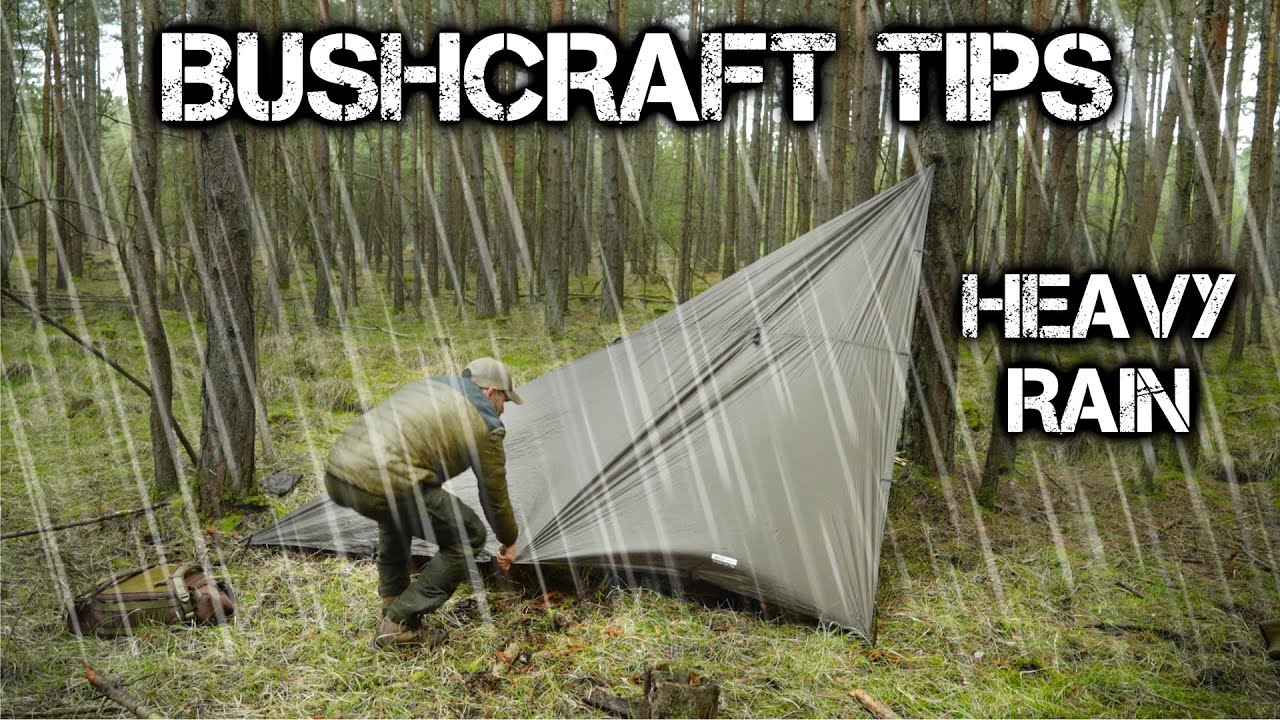
20 Bushcraft Tips: Heavy Rain & Wet Weather Conditions
video description
A really good video full of good tips thank you.
Date: 2023-04-26
Related videos



Comments and reviews: 14
Bob
Well done. I really liked the quick shelter setup. Very efficient, and comfortable. I live in a temperate rainforest n coastal SW Washington, USA (where the Columbia River enters the Pacific. Over my years I m well familiar with the challenges of lighting a fire under damp, wet, sometimes snowy conditions. I ve found getting a beach warming fire going with beachcombed wood and a cold wind blowing some of the most challenging. As you so capably demonstrated, success lies in the preparations. Thanks for another great clip. Be well. Safe journeys. Happy trails!
reply
Well done. I really liked the quick shelter setup. Very efficient, and comfortable. I live in a temperate rainforest n coastal SW Washington, USA (where the Columbia River enters the Pacific. Over my years I m well familiar with the challenges of lighting a fire under damp, wet, sometimes snowy conditions. I ve found getting a beach warming fire going with beachcombed wood and a cold wind blowing some of the most challenging. As you so capably demonstrated, success lies in the preparations. Thanks for another great clip. Be well. Safe journeys. Happy trails!
reply
Paul
Mike, another video of usable skills. I live in the center of rain county here in the Pacific Northwest Washington. It rains even more here than in Seattle our largest city. We don t have a lot of birch bark here, but I have a large pine tree out front that sheds little bits of bark all the time. I collect that bark and keep it in my fire starting kit. It is very resinous and if scraped will create dust like birch. That dust starts quite nicely.
reply
Mike, another video of usable skills. I live in the center of rain county here in the Pacific Northwest Washington. It rains even more here than in Seattle our largest city. We don t have a lot of birch bark here, but I have a large pine tree out front that sheds little bits of bark all the time. I collect that bark and keep it in my fire starting kit. It is very resinous and if scraped will create dust like birch. That dust starts quite nicely.
reply
Tor
Great vid! Couple of things I learned the other day. 1. If you allow some gaps at the bottom of the tarp you can have the fire under the tarp (depending on the height of the tarp of course) the gap makes sure the smoke from the fire doesn't go everywhere into the space understanding the tarp. 2. A big industry plastic bag will do the tiny waxed tarp job as well and much cheaper.
reply
Great vid! Couple of things I learned the other day. 1. If you allow some gaps at the bottom of the tarp you can have the fire under the tarp (depending on the height of the tarp of course) the gap makes sure the smoke from the fire doesn't go everywhere into the space understanding the tarp. 2. A big industry plastic bag will do the tiny waxed tarp job as well and much cheaper.
reply
Survivalnerd
Feather sticks are funny to me. In books, they will have diagrams of what's a good featherstick, and what's poor, because the shavings are too large. When I say that on reddit in very polite words, everyone gets upset. No wonder redditors are the worst survivalists, they get offended when you paraphrase one of the most famous bushcraft books of all time.
reply
Feather sticks are funny to me. In books, they will have diagrams of what's a good featherstick, and what's poor, because the shavings are too large. When I say that on reddit in very polite words, everyone gets upset. No wonder redditors are the worst survivalists, they get offended when you paraphrase one of the most famous bushcraft books of all time.
reply
Jason
TAOutdoors curious because I don t like the size is tarps come in do your oiled canvas tarps you make work as a ground sheet or will water eventually seep through them? I d like to make one just the size of my bed roll rather than carrying a large ground sheet I like making my own stuff also like you do just curious about the oiled canvas.
reply
TAOutdoors curious because I don t like the size is tarps come in do your oiled canvas tarps you make work as a ground sheet or will water eventually seep through them? I d like to make one just the size of my bed roll rather than carrying a large ground sheet I like making my own stuff also like you do just curious about the oiled canvas.
reply
GEOS
Hi Mike I m a tree surgeon here in the uk. I m always felling or dismantling sliver birches and alway take the Bark off them I have dry bags full of the stuff even if I m out in the car I pull over to collect it haha. I m based in Staffordshire near to Brian trubshaw from journeyman handcrafts. Keep up the great videos love your content
reply
Hi Mike I m a tree surgeon here in the uk. I m always felling or dismantling sliver birches and alway take the Bark off them I have dry bags full of the stuff even if I m out in the car I pull over to collect it haha. I m based in Staffordshire near to Brian trubshaw from journeyman handcrafts. Keep up the great videos love your content
reply
Matt
In our dry season in the southeast United States, I gather pine needles and pinecones. Where I am is heavily populated with conifer trees with yield the needles, cones and fat wood (resin heavy dead wood. One needs to learn their geography and what resources are available and when. This is still very good information, however.
reply
In our dry season in the southeast United States, I gather pine needles and pinecones. Where I am is heavily populated with conifer trees with yield the needles, cones and fat wood (resin heavy dead wood. One needs to learn their geography and what resources are available and when. This is still very good information, however.
reply
James
One trick I was taught to better direct your blow to get the fire going is to piinch your thumb and forefinger on both hands together. Then bring the tips together to form a diamond shaped hole. Hold against your mouth and blow towards the heart of the fire. You get a far stronger, and better directed, jet of air.
reply
One trick I was taught to better direct your blow to get the fire going is to piinch your thumb and forefinger on both hands together. Then bring the tips together to form a diamond shaped hole. Hold against your mouth and blow towards the heart of the fire. You get a far stronger, and better directed, jet of air.
reply
English
I reckon it's going to be another dry summer. Perhaps an informative video on fire safety in a bone dry woodland could be good? I'd appreciate it for sure as I've seen a lot of damage caused by folk, even put out a ground fire I found in a pine plantation. Always worries me.
reply
I reckon it's going to be another dry summer. Perhaps an informative video on fire safety in a bone dry woodland could be good? I'd appreciate it for sure as I've seen a lot of damage caused by folk, even put out a ground fire I found in a pine plantation. Always worries me.
reply
Bryce
Great Video! Especially useful as I sometimes struggle building a fire when it's dry out sometimes. Although from the Thumbnail it looked like you're building a Bushcraft Hang Glider. I'm not too proud to say I clicked on that first without looking at the title of the video.
reply
Great Video! Especially useful as I sometimes struggle building a fire when it's dry out sometimes. Although from the Thumbnail it looked like you're building a Bushcraft Hang Glider. I'm not too proud to say I clicked on that first without looking at the title of the video.
reply
Theresia
where you are now it is really easy, because it is pine, could you also show this in leaf forests most videos that show you how easy bushcraft is, are almost always done in pine forests, with nice resonous and dead straight wood, now try to do the same in an oak forest
reply
where you are now it is really easy, because it is pine, could you also show this in leaf forests most videos that show you how easy bushcraft is, are almost always done in pine forests, with nice resonous and dead straight wood, now try to do the same in an oak forest
reply
RobertJLessard
When I was young I had the patience for fiddling with fire materials. Now I'm in a hurry and instead of a lighter I carry a propane torch which will get things burning fast even if the wood is less than ideal. Not light or practical but I camp out of a vehicle.
reply
When I was young I had the patience for fiddling with fire materials. Now I'm in a hurry and instead of a lighter I carry a propane torch which will get things burning fast even if the wood is less than ideal. Not light or practical but I camp out of a vehicle.
reply
Connie
I'd add that it's good to angle the tarp against the prevailing wind, so the smoke and rain won't blow in on you, and also to check the trees around you for big deadish branches because if the wind is going to blow hard, that's when they're most likely to come down.
reply
I'd add that it's good to angle the tarp against the prevailing wind, so the smoke and rain won't blow in on you, and also to check the trees around you for big deadish branches because if the wind is going to blow hard, that's when they're most likely to come down.
reply
Gi rgi
quick question: is it safe to light a fire under the tarp or will the tarp burn/melt? I'm thinking that you could benefit from the dry ground under the tarp and avoid getting rain on your fire if you put it right at the entrance of the tarp
reply
quick question: is it safe to light a fire under the tarp or will the tarp burn/melt? I'm thinking that you could benefit from the dry ground under the tarp and avoid getting rain on your fire if you put it right at the entrance of the tarp
reply
Add a review, comment
Other channel videos


