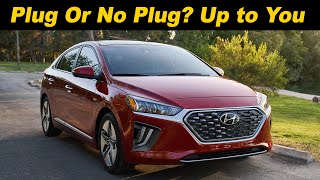
Plug In Hybrid Or Electric? Which Is Right For You EV6 vs Sportage PHEV
video description
Date: 2023-02-23
Related videos


Comments and reviews: 15
Upd
FYI. In 2022 81 million new vehicles were produced. 10. 6 million were BEVs + PHEVs, limited by battery cell production capacity. Had all PHEV battery cells been used to only produce longer range BEVs (80 kWh, then the world would have only produced 8. 2 million BEVs and zero PHEVs. If instead we used all of the BEV cells to produce 16 kWh PHEVs and 1. 5 kWh HEVs (hybrids, the world could have produced 36. 5 million PHEVs + 45 million HEVs. without any need to produce full ICEVs. This is what the BEV industry and the political representatives that keep over-subsidizing the inferior BEV technology (in terms of emissions reduction. for now) don't want you to know.
Now say we double battery production capacity. We could either produce 16. 4 million long range BEVs per year. or 81 million PHEVs replacing every vehicle on the planet with one that plugs in to charge.
Say we double it again. then we could produce 16. 4 million BEVs and about 65 million PHEVs.
See how proper technological transitions work? Instead, our government lead by California/Nevada/New York politicians, have insisted through subsidies that we must attempt to jam a technological square peg into a round hole. It's no wonder, given that California/Nevada is one of the largest producers of long range BEVs in the world, and New York one of the largest customers. Ironically long range BEVs do work better than PHEVs for a large swath of the California residents. because California's residential situation with their lack of high density affordable housing and public transit is so terrible right now that people are forced to move huge distances away from their work places, where they commute well over the nation's 32 mile average commute distance, potentially over 100 miles per day. Yes, BEVs work for them, but only because California put themselves into a terrible situation.
What works best for California is not what works best for the rest of the world! This is about as clear a case of a corrupt government designed money grab as I've ever seen. California, Nevada, and New York politicians (all states that are home to Tesla factories) have FAR too much political influence and it shows at this massive blunder. Just look at Nancy Pelosi. previous speaker of the house and still one of the most powerful politicians we've ever seen. Last I checked she and her husband loved to trade Tesla stock.
reply
FYI. In 2022 81 million new vehicles were produced. 10. 6 million were BEVs + PHEVs, limited by battery cell production capacity. Had all PHEV battery cells been used to only produce longer range BEVs (80 kWh, then the world would have only produced 8. 2 million BEVs and zero PHEVs. If instead we used all of the BEV cells to produce 16 kWh PHEVs and 1. 5 kWh HEVs (hybrids, the world could have produced 36. 5 million PHEVs + 45 million HEVs. without any need to produce full ICEVs. This is what the BEV industry and the political representatives that keep over-subsidizing the inferior BEV technology (in terms of emissions reduction. for now) don't want you to know.
Now say we double battery production capacity. We could either produce 16. 4 million long range BEVs per year. or 81 million PHEVs replacing every vehicle on the planet with one that plugs in to charge.
Say we double it again. then we could produce 16. 4 million BEVs and about 65 million PHEVs.
See how proper technological transitions work? Instead, our government lead by California/Nevada/New York politicians, have insisted through subsidies that we must attempt to jam a technological square peg into a round hole. It's no wonder, given that California/Nevada is one of the largest producers of long range BEVs in the world, and New York one of the largest customers. Ironically long range BEVs do work better than PHEVs for a large swath of the California residents. because California's residential situation with their lack of high density affordable housing and public transit is so terrible right now that people are forced to move huge distances away from their work places, where they commute well over the nation's 32 mile average commute distance, potentially over 100 miles per day. Yes, BEVs work for them, but only because California put themselves into a terrible situation.
What works best for California is not what works best for the rest of the world! This is about as clear a case of a corrupt government designed money grab as I've ever seen. California, Nevada, and New York politicians (all states that are home to Tesla factories) have FAR too much political influence and it shows at this massive blunder. Just look at Nancy Pelosi. previous speaker of the house and still one of the most powerful politicians we've ever seen. Last I checked she and her husband loved to trade Tesla stock.
reply
Mike
I have a Ford Escape Plug-In, which seems to be fairly similar to the Sportage PHEV. Over 40mpg on gas (11. 2gal tank) and over 30mi of electric range in ideal conditions. No need for any charger installations, as the charge cable included with car charges it overnight plugged into a regular household outlet. If I ever drive more than 30 miles in a day (rare, I just use gas. Never bothered with charging stations with such a small battery and electricity at home is cheaper for me anyway. Still have a spare tire. The only lifestyle alteration is plugging my car in when I get home, which only takes a second, and now I use at least 90% less gas which means less time at the gas station. Even if I drove 60 miles daily, that would still halve my gas usage (first 30 miles electric, then 30 miles gas.
Unless you're extraordinarily concerned about gas efficiency, can't charge your vehicle at home, and/or drive significant distance daily, the plug-in hybrid seems to be the way to go, assuming you can find one that isn't marked up terribly. I got lucky both on that and the tax credit front.
reply
I have a Ford Escape Plug-In, which seems to be fairly similar to the Sportage PHEV. Over 40mpg on gas (11. 2gal tank) and over 30mi of electric range in ideal conditions. No need for any charger installations, as the charge cable included with car charges it overnight plugged into a regular household outlet. If I ever drive more than 30 miles in a day (rare, I just use gas. Never bothered with charging stations with such a small battery and electricity at home is cheaper for me anyway. Still have a spare tire. The only lifestyle alteration is plugging my car in when I get home, which only takes a second, and now I use at least 90% less gas which means less time at the gas station. Even if I drove 60 miles daily, that would still halve my gas usage (first 30 miles electric, then 30 miles gas.
Unless you're extraordinarily concerned about gas efficiency, can't charge your vehicle at home, and/or drive significant distance daily, the plug-in hybrid seems to be the way to go, assuming you can find one that isn't marked up terribly. I got lucky both on that and the tax credit front.
reply
Kevin
Not sure if people have realized vehicle longevity has shortened with this transition from pure gas to hybridization to electric. These batteries in the hybrid vehicles are only warrantied for 10 years/100k sometimes 150k miles. People are paying almost 45- 50k for a PHEV on a loan sometimes which negates potential fuel savings depending on the cost of fuel. I get it if gas is more than 5/gallon or there s inadequate electric charging infrastructure depending on your area, but these cars are so expensive and now have potentially shorter operating lifespans compared to just ordinary 4-cylinder gas powered cars. The pure electric cars at least looking at Teslas electric motors and battery durability can supposedly last half a million to a million miles but insurance repairs are a current issue. I enjoy the technology but I can t justify the cost.
reply
Not sure if people have realized vehicle longevity has shortened with this transition from pure gas to hybridization to electric. These batteries in the hybrid vehicles are only warrantied for 10 years/100k sometimes 150k miles. People are paying almost 45- 50k for a PHEV on a loan sometimes which negates potential fuel savings depending on the cost of fuel. I get it if gas is more than 5/gallon or there s inadequate electric charging infrastructure depending on your area, but these cars are so expensive and now have potentially shorter operating lifespans compared to just ordinary 4-cylinder gas powered cars. The pure electric cars at least looking at Teslas electric motors and battery durability can supposedly last half a million to a million miles but insurance repairs are a current issue. I enjoy the technology but I can t justify the cost.
reply
John
Excellent job Mr. D But I wouldn't buy either. My pick would a pure hybrid Sportage, not the plugin. And I like the styling on the Sportage. The Sportage is far from perfect but in terms of value for money, it is a good deal. EVs are still not a mature tech and I don't think they will be the decisive non gasoline alternative in the long run; Hydrogen will be. the refill time is still waaaay too long on battery powered vehicles; hydrogen is about the same as a gas fill up or just slightly longer. Once the hydrogen infrastructure is in place I think HVs will rapidly overtake EVs and Hybrids as the fuel of choice.
reply
Excellent job Mr. D But I wouldn't buy either. My pick would a pure hybrid Sportage, not the plugin. And I like the styling on the Sportage. The Sportage is far from perfect but in terms of value for money, it is a good deal. EVs are still not a mature tech and I don't think they will be the decisive non gasoline alternative in the long run; Hydrogen will be. the refill time is still waaaay too long on battery powered vehicles; hydrogen is about the same as a gas fill up or just slightly longer. Once the hydrogen infrastructure is in place I think HVs will rapidly overtake EVs and Hybrids as the fuel of choice.
reply
Ska
We had a Niro PHEV, I think the Sportage PHEV has the same problem. In the winter it has to run the gas motor for the heater to work, some PHEVs do have PTC or heat pumps but seems like the most affordable PHEVs only use engine coolant for heating. Great in the summer or warm climates but in the winter you can't actually drive it as a PHEV, it turns into a normal hybrid. Also it was pretty underpowered in EV mode and it still needed the gas motor if you had to get moving quickly. It just didn't deliver deliver on the EV driving it promised so we ended up trading it in on a Ioniq 5 and gave up gas altogether.
reply
We had a Niro PHEV, I think the Sportage PHEV has the same problem. In the winter it has to run the gas motor for the heater to work, some PHEVs do have PTC or heat pumps but seems like the most affordable PHEVs only use engine coolant for heating. Great in the summer or warm climates but in the winter you can't actually drive it as a PHEV, it turns into a normal hybrid. Also it was pretty underpowered in EV mode and it still needed the gas motor if you had to get moving quickly. It just didn't deliver deliver on the EV driving it promised so we ended up trading it in on a Ioniq 5 and gave up gas altogether.
reply
Be
Wish we can address the issue why not enough plugin hybrids (EVs and hybrids in general) were on the roads 10 years ago, making their way to the majority of people who buy second hand. ie; compliance vehicles.
The choice of plugin hybrids now is too slim, and predominantly crossovers, they're more profitable.
The original Hyundai Ioniq was the closest to offering the Goldilocks car. The Ioniq 5, 6, Niro and Kona EV etc are very much different beasts and less accessible which was the whole point of electric mobility.
reply
Wish we can address the issue why not enough plugin hybrids (EVs and hybrids in general) were on the roads 10 years ago, making their way to the majority of people who buy second hand. ie; compliance vehicles.
The choice of plugin hybrids now is too slim, and predominantly crossovers, they're more profitable.
The original Hyundai Ioniq was the closest to offering the Goldilocks car. The Ioniq 5, 6, Niro and Kona EV etc are very much different beasts and less accessible which was the whole point of electric mobility.
reply
ElijahRock92
For my case working in heavy civil construction, living in a flood prone area, and having family that live 150 to 800 miles away, I would go PHEV over electric right now. It would calm my anxiety especially if needing to either temporarily drive to a distance work site or quickly need to evacuate due to a hurricane. Quite honestly, I'm hoping to see more hybrids of mid-sized SUVs and trucks. As of today 02/22/2023, they only one I see of interest is the Hyundai Santa Fe hybrid.
reply
For my case working in heavy civil construction, living in a flood prone area, and having family that live 150 to 800 miles away, I would go PHEV over electric right now. It would calm my anxiety especially if needing to either temporarily drive to a distance work site or quickly need to evacuate due to a hurricane. Quite honestly, I'm hoping to see more hybrids of mid-sized SUVs and trucks. As of today 02/22/2023, they only one I see of interest is the Hyundai Santa Fe hybrid.
reply
CW
Plug in hybrid makes the most sense right now I think. A year ago I bought a 2022 F150 Powerboost hybrid truck. It's been a fantastic vehicle giving me the best of both worlds. I can hypermile it and get insane truck fuel mileage or drive it like I stole it with it's 430HP and 570 lb/ft of torque. We love the Powerboost and feel the only way it could be improved is to make it a plug in hybrid. In the meantime, this is the best vehicle I've owned in my 45 years of buying new vehicles.
reply
Plug in hybrid makes the most sense right now I think. A year ago I bought a 2022 F150 Powerboost hybrid truck. It's been a fantastic vehicle giving me the best of both worlds. I can hypermile it and get insane truck fuel mileage or drive it like I stole it with it's 430HP and 570 lb/ft of torque. We love the Powerboost and feel the only way it could be improved is to make it a plug in hybrid. In the meantime, this is the best vehicle I've owned in my 45 years of buying new vehicles.
reply
mrgold35
I have a 18 RLX Sport Hybrid and 19 MDX Sport Hybrid (no plug-in option. Both vehicles can run on 87-93 octane and have the same mpg rating for city/combined/hwy (26/27 MDX and 28/29 RLX. Both are performance hybrids instead of being mpg hybrids with 7DCT, sh-awd, sporty suspension, and Sport+ modes. Both vehicles work for me in the southwest with very limited EV infrastructure, temp range of below 0 to +115 degrees F, and 2-6 hours in-between major cities by hwy at +75 mph.
reply
I have a 18 RLX Sport Hybrid and 19 MDX Sport Hybrid (no plug-in option. Both vehicles can run on 87-93 octane and have the same mpg rating for city/combined/hwy (26/27 MDX and 28/29 RLX. Both are performance hybrids instead of being mpg hybrids with 7DCT, sh-awd, sporty suspension, and Sport+ modes. Both vehicles work for me in the southwest with very limited EV infrastructure, temp range of below 0 to +115 degrees F, and 2-6 hours in-between major cities by hwy at +75 mph.
reply
Bald
insurance
this made me laugh
i have a 22 tuscon hybrid.
the EV6 was 308 more per 6 months
the model 3 was 1028 for 6 months. (i did ask about tesla insurance, which was more reasonable than this, but still higher but i do not have an exact amount but i would suspect in range of the EV6.
i want to add the one factor about insurance, supply chain issues for parts for the accident repairs could be a reason why its crazy high
reply
insurance
this made me laugh
i have a 22 tuscon hybrid.
the EV6 was 308 more per 6 months
the model 3 was 1028 for 6 months. (i did ask about tesla insurance, which was more reasonable than this, but still higher but i do not have an exact amount but i would suspect in range of the EV6.
i want to add the one factor about insurance, supply chain issues for parts for the accident repairs could be a reason why its crazy high
reply
Don
Real-life example for us:
(2017 i3 REx driving 24, 000 miles last year)
- 700 residential electricity (at. 10 per kWh suburban Seattle area.
- 106 gasoline (25 gallons 4. 25 per.
The gasoline engine onboard a PHEV or range extender is a godsend when on a trip (public chargers often occupied, broken ICED, vandalized.
Not having to schedule your life around your car's battery is a huge plus to PHEVs.
reply
Real-life example for us:
(2017 i3 REx driving 24, 000 miles last year)
- 700 residential electricity (at. 10 per kWh suburban Seattle area.
- 106 gasoline (25 gallons 4. 25 per.
The gasoline engine onboard a PHEV or range extender is a godsend when on a trip (public chargers often occupied, broken ICED, vandalized.
Not having to schedule your life around your car's battery is a huge plus to PHEVs.
reply
Dan
I drive a Niro PHEV and if in the market today I would again opt for another PHEV. Regarding engine maintenance, my ICE runs only about 20% of the time. So my 6000, miles / yr on the car is only 1, 200 on the ICE. I've opted to live dangerously with the warranty and only change my oil every 2 years. Even that is probably overkill in terms of engine maintenance since synthetic oil is required.
reply
I drive a Niro PHEV and if in the market today I would again opt for another PHEV. Regarding engine maintenance, my ICE runs only about 20% of the time. So my 6000, miles / yr on the car is only 1, 200 on the ICE. I've opted to live dangerously with the warranty and only change my oil every 2 years. Even that is probably overkill in terms of engine maintenance since synthetic oil is required.
reply
Wacoo
Just for environmental reasons EVs are actually the worst possible choice. It takes a lot of rare earth metals to build them and then at the end of life the batteries cannot be recycled which cause massive toxic waste build up. The used car market will be another big factor, how many people will be willing to accept a 20K battery replacement cost on a used car?
reply
Just for environmental reasons EVs are actually the worst possible choice. It takes a lot of rare earth metals to build them and then at the end of life the batteries cannot be recycled which cause massive toxic waste build up. The used car market will be another big factor, how many people will be willing to accept a 20K battery replacement cost on a used car?
reply
ALMX5DP
I thought the Volt was a near perfect balance for what a PHEV should be. I feel there is a sweet spot for size and weight that is most advantageous in this respect and think our ever growing need for larger S/CUVs hurts the viability of PHEV in that way. I d love to see smaller and sleeker cars return but that just won t happen (at least anytime soon.
reply
I thought the Volt was a near perfect balance for what a PHEV should be. I feel there is a sweet spot for size and weight that is most advantageous in this respect and think our ever growing need for larger S/CUVs hurts the viability of PHEV in that way. I d love to see smaller and sleeker cars return but that just won t happen (at least anytime soon.
reply
Pasa335d
The important thing is that you could build SIX Sportages with the same battery materials as ONE EV6. With the present state of battery technology and how they are manufactured, that environmental impact cannot be overlooked. If you are buying a plug-in to reduce your carbon emissions, you may be way better off with the PHEV.
reply
The important thing is that you could build SIX Sportages with the same battery materials as ONE EV6. With the present state of battery technology and how they are manufactured, that environmental impact cannot be overlooked. If you are buying a plug-in to reduce your carbon emissions, you may be way better off with the PHEV.
reply
Add a review, comment
Other channel videos