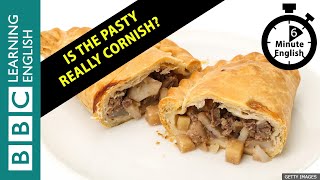
Is the pasty really Cornish? 6 Minute English
video description
Date: 2020-09-18
Related videos


Comments and reviews: 9
Mosab
Neil
Hello. This is 6 Minute English from BBC Learning English. Im Neil.
Rob
And Im Rob.
Neil
Fancy a game of food connections, Rob? Ill name a place and you say the first food that comes to mind. Ready?
Rob
Yeah, sure, lets go!
Neil
Italy.
Rob
Ermpizza or lasagne.
Rob
New York?
Neil
Hot dogs, of course. Or maybe bagels. How about Cornwall from the UK?
Rob
If its Cornwall, it must be the famous Cornish pasty, right?
Neil
Thats right! Cornwall, the region which forms the south-western tip of Britain, is as famous for its pasties as New York is for hot dogs. In this programme well be finding out all about Cornish pasties. Well hear how its gone from humble beginnings to become a symbol of Cornish identity and spread around the world to Jamaica, Argentina and Brazil.
Rob
But what exactly is a pasty, Neil? Somewhere between a pie and a sandwich, right? A piece of pastry which is turned over and crimped along the side to make two corners
Neil
and filled with different ingredients - which brings me to my quiz question for today, Rob. What is the traditional filling in an authentic Cornish pasty? Is it:
a) Chicken, avocado and brie
b) Beef, potato and turnip
c) Pork, onion and chorizo
Rob
Well, chorizo is Spanish isnt it? And avocado with brie doesnt sound traditionally Cornish, so Ill say b) beef, potato and turnip.
Neil
OK, Rob. Well find out later if you were right. Whats for sure is that the Cornish pasty has had a long history as BBC Radio 4s The Food Programme discovered. They spoke to Dr Polly Russell, a public life curator at the British Library. Here she is reading from one of the earliest mentions of pasties from the late 17th century:
Polly Russell, Public Life Curator, British Library
Theres a lovely bit here where hes describing what a housewife in Hertfordshire does and hes talking about her way to make pork pies and pork pasties: pies may be made and baked either raised in paste earthen pans or in pewter dishes or in the shape of a turnover, two-cornered pasties. So thats a very early reference to a pasty in the shape, I think, that we know it but also being made specifically for labourers - to be feeding labourers on a farm at harvest time.
Rob
The earliest pasties were made in pewter dishes a traditional cooking plate made of a silver-coloured metal called pewter.
Neil
And they were eaten by agricultural labourers workers doing physical farm work during harvest time the weeks in autumn when crops like wheat are cut and collected from the fields.
Rob
But it wasnt only farmers and labourers who ate pasties. As well as its farms and fishing, Cornwall was famous for tin mines, as Ruth Huxley of the Cornish Pasty Association explains:
Ruth Huxley, Cornish Pasty Association
Pasties would have been eaten by lots of people who went to work but it just worked perfectly down mines, and Cornwall became the world capital of mining. And so lots of pasties were made, lots of pasties were eaten and then that mining community went all over the world and took the pasty with them.
Neil
Pasties were eaten by hungry workers involved in the mining industry - digging up materials such as coal or metals like gold, or in Cornwall tin, from the ground.
Rob
So far weve been talking about Cornwall. But you said the Cornish pasty has spread around the world, Neil. How did that happen?
Neil
Well, thats connected to the tin miners we just talked about. Heres Polly Russell again:
Polly Russell, Public Life Curator, British Library
This is replicated, not just in Mexico but with migrants moving to America, to Minnesota, to Canada, to Australia. So anyone who travels to many of those places now will see foods which are incredibly reminiscent and familiar and just like Cornish pasties.
Neil
In the 19th century, many Cornish tin miners emigrated, moving abroad to start a better life. Their pasty recipes were replicated or copied exactly, in the new places where they landed, from America to Australia.
Rob
And thats why in many places around the world you can find food which is reminiscent of pasties meaning it reminds you of something similar, in this case the original Cornish pasty with its traditional filling of whats was your quiz question again, Neil?
Neil
Ah, yes. I asked you what the traditional Cornish pasty filling was? You said
Rob
I said b) beef, potato and turnip.
Neil
And you were right! Keslowena, Rob thats Cornish for congratulations!
Rob
Heb grev, Neil thats no problem!
Neil
In fact those other fillings chorizo, avocado and brie - really did feature in pasties entered for this years Annual World Pasty Championships, held in Cornwall every spring. Other pasty-inspired ideas include Argentinian chimichurri empanadas and spicy Jamaican patties.
Rob
So the pasty is still going strong, both in Cornwall and around the world.
Neil
Today weve been discussing Cornish pasties a kind of filled pastry from the south-west of England, originally made in pewter dishes a silver-coloured metal dish.
Rob
Pasties were eaten by agricultural labourers farm workers bringing in the autumn harvest the time when crops are cut and collected from the fields, and also by workers in the tin mining industry digging up metals like tin from underground.
Neil
Later, when these miners emigrated to new lands, pasties were replicated cooked again in the same way.
Rob
In fact Cornish miners moved to so many new countries that today, almost every corner of the world has food reminiscent of or reminding you of, the original Cornish pasty.
Neil
Thats all for today. Join us again soon for more topical discussion and vocabulary on 6 Minute English. Bye for now!
Rob
Bye.
reply
Neil
Hello. This is 6 Minute English from BBC Learning English. Im Neil.
Rob
And Im Rob.
Neil
Fancy a game of food connections, Rob? Ill name a place and you say the first food that comes to mind. Ready?
Rob
Yeah, sure, lets go!
Neil
Italy.
Rob
Ermpizza or lasagne.
Rob
New York?
Neil
Hot dogs, of course. Or maybe bagels. How about Cornwall from the UK?
Rob
If its Cornwall, it must be the famous Cornish pasty, right?
Neil
Thats right! Cornwall, the region which forms the south-western tip of Britain, is as famous for its pasties as New York is for hot dogs. In this programme well be finding out all about Cornish pasties. Well hear how its gone from humble beginnings to become a symbol of Cornish identity and spread around the world to Jamaica, Argentina and Brazil.
Rob
But what exactly is a pasty, Neil? Somewhere between a pie and a sandwich, right? A piece of pastry which is turned over and crimped along the side to make two corners
Neil
and filled with different ingredients - which brings me to my quiz question for today, Rob. What is the traditional filling in an authentic Cornish pasty? Is it:
a) Chicken, avocado and brie
b) Beef, potato and turnip
c) Pork, onion and chorizo
Rob
Well, chorizo is Spanish isnt it? And avocado with brie doesnt sound traditionally Cornish, so Ill say b) beef, potato and turnip.
Neil
OK, Rob. Well find out later if you were right. Whats for sure is that the Cornish pasty has had a long history as BBC Radio 4s The Food Programme discovered. They spoke to Dr Polly Russell, a public life curator at the British Library. Here she is reading from one of the earliest mentions of pasties from the late 17th century:
Polly Russell, Public Life Curator, British Library
Theres a lovely bit here where hes describing what a housewife in Hertfordshire does and hes talking about her way to make pork pies and pork pasties: pies may be made and baked either raised in paste earthen pans or in pewter dishes or in the shape of a turnover, two-cornered pasties. So thats a very early reference to a pasty in the shape, I think, that we know it but also being made specifically for labourers - to be feeding labourers on a farm at harvest time.
Rob
The earliest pasties were made in pewter dishes a traditional cooking plate made of a silver-coloured metal called pewter.
Neil
And they were eaten by agricultural labourers workers doing physical farm work during harvest time the weeks in autumn when crops like wheat are cut and collected from the fields.
Rob
But it wasnt only farmers and labourers who ate pasties. As well as its farms and fishing, Cornwall was famous for tin mines, as Ruth Huxley of the Cornish Pasty Association explains:
Ruth Huxley, Cornish Pasty Association
Pasties would have been eaten by lots of people who went to work but it just worked perfectly down mines, and Cornwall became the world capital of mining. And so lots of pasties were made, lots of pasties were eaten and then that mining community went all over the world and took the pasty with them.
Neil
Pasties were eaten by hungry workers involved in the mining industry - digging up materials such as coal or metals like gold, or in Cornwall tin, from the ground.
Rob
So far weve been talking about Cornwall. But you said the Cornish pasty has spread around the world, Neil. How did that happen?
Neil
Well, thats connected to the tin miners we just talked about. Heres Polly Russell again:
Polly Russell, Public Life Curator, British Library
This is replicated, not just in Mexico but with migrants moving to America, to Minnesota, to Canada, to Australia. So anyone who travels to many of those places now will see foods which are incredibly reminiscent and familiar and just like Cornish pasties.
Neil
In the 19th century, many Cornish tin miners emigrated, moving abroad to start a better life. Their pasty recipes were replicated or copied exactly, in the new places where they landed, from America to Australia.
Rob
And thats why in many places around the world you can find food which is reminiscent of pasties meaning it reminds you of something similar, in this case the original Cornish pasty with its traditional filling of whats was your quiz question again, Neil?
Neil
Ah, yes. I asked you what the traditional Cornish pasty filling was? You said
Rob
I said b) beef, potato and turnip.
Neil
And you were right! Keslowena, Rob thats Cornish for congratulations!
Rob
Heb grev, Neil thats no problem!
Neil
In fact those other fillings chorizo, avocado and brie - really did feature in pasties entered for this years Annual World Pasty Championships, held in Cornwall every spring. Other pasty-inspired ideas include Argentinian chimichurri empanadas and spicy Jamaican patties.
Rob
So the pasty is still going strong, both in Cornwall and around the world.
Neil
Today weve been discussing Cornish pasties a kind of filled pastry from the south-west of England, originally made in pewter dishes a silver-coloured metal dish.
Rob
Pasties were eaten by agricultural labourers farm workers bringing in the autumn harvest the time when crops are cut and collected from the fields, and also by workers in the tin mining industry digging up metals like tin from underground.
Neil
Later, when these miners emigrated to new lands, pasties were replicated cooked again in the same way.
Rob
In fact Cornish miners moved to so many new countries that today, almost every corner of the world has food reminiscent of or reminding you of, the original Cornish pasty.
Neil
Thats all for today. Join us again soon for more topical discussion and vocabulary on 6 Minute English. Bye for now!
Rob
Bye.
reply
Erica
I have done some research, and no, the pasty was not born in Cornwall. It dates back to the Persian times. And from there it spread all over the eastern world. The Muslins invaded Spain in 711 AD. Among the food they introduced was the empanadilla o empanada (name given in Argentina). The Empanada was brought to Argentina when the Spanish invaded and looted the American continent in the 15th Century.
reply
I have done some research, and no, the pasty was not born in Cornwall. It dates back to the Persian times. And from there it spread all over the eastern world. The Muslins invaded Spain in 711 AD. Among the food they introduced was the empanadilla o empanada (name given in Argentina). The Empanada was brought to Argentina when the Spanish invaded and looted the American continent in the 15th Century.
reply
Debashish
This lesson is so useful for its vocabulary such as pewter dishes, replicated and reminiscent, as pewter refers one kinds of metal that are used for generating some traditional dishes. In addition, reminiscent describes about something popular that people remind, as well as replicated is the past form of replicate that means rewrite or review something.
reply
This lesson is so useful for its vocabulary such as pewter dishes, replicated and reminiscent, as pewter refers one kinds of metal that are used for generating some traditional dishes. In addition, reminiscent describes about something popular that people remind, as well as replicated is the past form of replicate that means rewrite or review something.
reply
Aylah5
Here in Galicia (Spain) we are experts making empanada and empanadillas, as we called them. In fact the first book of recipes it was written in 1520 in Catalonian, and some historians think that this kind of food it was bringing to Spain from Muslims, so many years before that. So that is a delicious food with a lot of history.
reply
Here in Galicia (Spain) we are experts making empanada and empanadillas, as we called them. In fact the first book of recipes it was written in 1520 in Catalonian, and some historians think that this kind of food it was bringing to Spain from Muslims, so many years before that. So that is a delicious food with a lot of history.
reply
Guillermo
Hi, in Mexico in the magic village of Real del Monte, the pasty is the most representative meal.
This village in Mexico has its origins with the arrival back on XVII century with people from England, now I know for sure the true origins of pasty we call it paste
reply
Hi, in Mexico in the magic village of Real del Monte, the pasty is the most representative meal.
This village in Mexico has its origins with the arrival back on XVII century with people from England, now I know for sure the true origins of pasty we call it paste
reply
Benvenuto
Wonderful lesson because I spent my last summer holidays in London and Cornwall.
I've eaten a lot of pasty in Saint'Ives, Truro, Land's End, Tintagel and Penzance.
So tasty
reply
Wonderful lesson because I spent my last summer holidays in London and Cornwall.
I've eaten a lot of pasty in Saint'Ives, Truro, Land's End, Tintagel and Penzance.
So tasty
reply
Have
Same thing is quite popular in South Asia. It is known as samosa. Fillings of samosa vary from region to region. Some people fill it with minced meat, some with vegetables.
reply
Same thing is quite popular in South Asia. It is known as samosa. Fillings of samosa vary from region to region. Some people fill it with minced meat, some with vegetables.
reply
Language
Could you please move this video to the 6 min English playlist? Why this is in the lingohack playlist? It is very annoying haha
reply
Could you please move this video to the 6 min English playlist? Why this is in the lingohack playlist? It is very annoying haha
reply
Bharti
In India, we call it samosa or gunjiya(sweet version). It's mostly vegetarian. The filling is made up of potatoes and peas.
reply
In India, we call it samosa or gunjiya(sweet version). It's mostly vegetarian. The filling is made up of potatoes and peas.
reply
Add a review, comment
Other channel videos