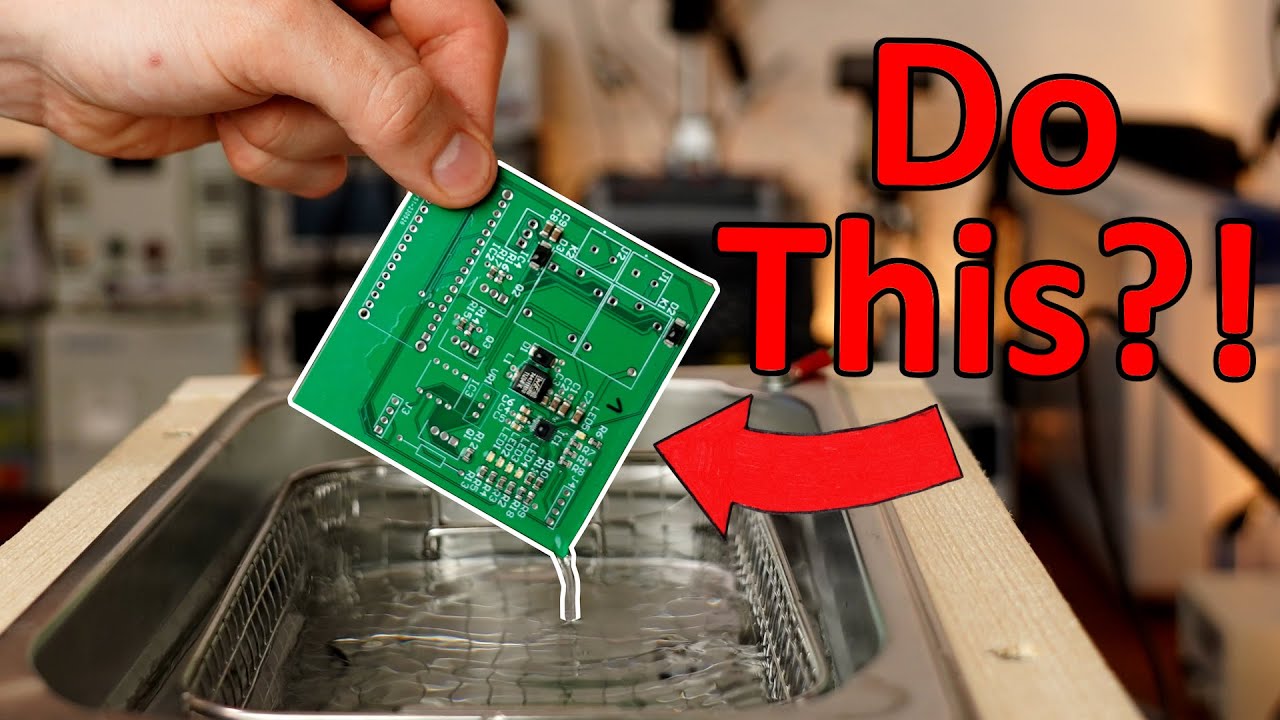
The Most Underrated Tool? (DIY or Buy) Ultrasonic Cleaner!
video description
Date: 2023-06-25
Related videos


Comments and reviews: 20
John
I use some pretty big ultrasonic cleaners at my job, I personally use a 50 gallon one and a smaller 5 gallon one, but we have some that are the size of an RV for a more automated process. Something that helps a LOT is to have a flushing action in the tank. I really wanted to get one for home use, but even our small one costs around 4k. Been thinking about DIY'ing it but don't want to start another project, I'm just keeping an eye on ebay for a used one. Our two ultrasonic cleaners used a solution of sodium hydroxide, but that is application specific for what we are using them to clean.
Our big one has an ultrasonic side panel, which is immersed in the solution. Basically a stainless steel box, with a ton of huge transducers on one side, that is immersed in the solution.
reply
I use some pretty big ultrasonic cleaners at my job, I personally use a 50 gallon one and a smaller 5 gallon one, but we have some that are the size of an RV for a more automated process. Something that helps a LOT is to have a flushing action in the tank. I really wanted to get one for home use, but even our small one costs around 4k. Been thinking about DIY'ing it but don't want to start another project, I'm just keeping an eye on ebay for a used one. Our two ultrasonic cleaners used a solution of sodium hydroxide, but that is application specific for what we are using them to clean.
Our big one has an ultrasonic side panel, which is immersed in the solution. Basically a stainless steel box, with a ton of huge transducers on one side, that is immersed in the solution.
reply
Mr.
If you need a very large bath for large items you are way better off building it yourself. The price goes way up the bigger they are but the cost to build them does not. You can add extra transducers if you build it yourself and a much better heating system. I found a garage sale counter top water dispenser with hot and cold water. I got a large tub with 6 transducers and adapted the heating and cooling elements from the water dispenser to the tub by brazing stainless brake line to it. I can heat to 130C or cool to 2C. The cooling unit causes things to be brittle instead of gooey like flux does. Don't really know which is better they seam give similar results. I used thermal adhesive to attach the transducers.
reply
If you need a very large bath for large items you are way better off building it yourself. The price goes way up the bigger they are but the cost to build them does not. You can add extra transducers if you build it yourself and a much better heating system. I found a garage sale counter top water dispenser with hot and cold water. I got a large tub with 6 transducers and adapted the heating and cooling elements from the water dispenser to the tub by brazing stainless brake line to it. I can heat to 130C or cool to 2C. The cooling unit causes things to be brittle instead of gooey like flux does. Don't really know which is better they seam give similar results. I used thermal adhesive to attach the transducers.
reply
Steve
I've been using ultrasonic cleaners to clean PCBs for years. I run distilled water and Branson EC (Electronics Cleaner) in a 5% solution. I run it at 60 C and only need to clean the boards for a couple of minutes. After removing from the cleaner, you will want to dip it in a bath of IPA in order to displace any water remaining in small voids, then I dry it in a 120 C oven for an hour to remove any traces of moisture. For PCBs like yours, you probably don't need to go to these lengths, but many of the PCBs that I use this method on have switches and pushbuttons. The IP and dry cycle ensure that there is no water or other moisture left behind anywhere.
reply
I've been using ultrasonic cleaners to clean PCBs for years. I run distilled water and Branson EC (Electronics Cleaner) in a 5% solution. I run it at 60 C and only need to clean the boards for a couple of minutes. After removing from the cleaner, you will want to dip it in a bath of IPA in order to displace any water remaining in small voids, then I dry it in a 120 C oven for an hour to remove any traces of moisture. For PCBs like yours, you probably don't need to go to these lengths, but many of the PCBs that I use this method on have switches and pushbuttons. The IP and dry cycle ensure that there is no water or other moisture left behind anywhere.
reply
rfmerrill
One thing to look out for: You don't want to clean your board too well! In particular, if your board has mechanical components like switches, potentiometers etc, the ultrasonic cleaner can remove all of the lubricant from them! This may not be a problem if you are able to simply re-lubricate them, but some of them do not make that easy.
Also things like MEMS accelerometers, gyros, compasses, or even just regular old quartz crystals may end up being damaged by ultrasonic cleaners. This is a may of course, they may also be totally fine. This is in addition to some components that really don't like being wet (pressure sensors, LCDs maybe.
reply
One thing to look out for: You don't want to clean your board too well! In particular, if your board has mechanical components like switches, potentiometers etc, the ultrasonic cleaner can remove all of the lubricant from them! This may not be a problem if you are able to simply re-lubricate them, but some of them do not make that easy.
Also things like MEMS accelerometers, gyros, compasses, or even just regular old quartz crystals may end up being damaged by ultrasonic cleaners. This is a may of course, they may also be totally fine. This is in addition to some components that really don't like being wet (pressure sensors, LCDs maybe.
reply
ThatGuy
One important thing to note: transducers should not be powered on unless mounted and the container filled to the proper volume. Testing them on the bench like that can actually damage them, with an end result that they run hotter, work less efficiently (or not at all, and also require more power from to driving circuit (which creates more heat.
Even if they work perfectly fine though, i haven't seen any that didn't create enough heat to need active cooling for the circuitry.
(Another note on safety: having touched an active transducer bare-handed before I can say it's definitely not recommended)
reply
One important thing to note: transducers should not be powered on unless mounted and the container filled to the proper volume. Testing them on the bench like that can actually damage them, with an end result that they run hotter, work less efficiently (or not at all, and also require more power from to driving circuit (which creates more heat.
Even if they work perfectly fine though, i haven't seen any that didn't create enough heat to need active cooling for the circuitry.
(Another note on safety: having touched an active transducer bare-handed before I can say it's definitely not recommended)
reply
ten
I wish I could peek inside the ultrasonic watch cleaner my father had in the early 60's.
It had a unique sound that modern ultrasonic cleaners lack and cleaned faster too. The bubbles were more abundant too.
It had 4 round compartments with different solutions in each and round mesh baskets to fit each compartment.
Considering how new transistors were in that era I'm curious if it maybe used some other type of electrical components to generate the pulses? That may partly explain it's strange sound.
It would clean any dirt under your finger nails in a minute!
reply
I wish I could peek inside the ultrasonic watch cleaner my father had in the early 60's.
It had a unique sound that modern ultrasonic cleaners lack and cleaned faster too. The bubbles were more abundant too.
It had 4 round compartments with different solutions in each and round mesh baskets to fit each compartment.
Considering how new transistors were in that era I'm curious if it maybe used some other type of electrical components to generate the pulses? That may partly explain it's strange sound.
It would clean any dirt under your finger nails in a minute!
reply
SlierFox
Not a good idea for cleaning electronics it's commonly known that forcing crystals & resonators to vibrate at the wrong frequency will break them and you are physically vibrating them at a different frequency also the small ceramic capacitors can break and so on with the tiny wire bonds inside other components, that's why there are proper procedures/ machines for cleaning PCBs in industry which are just glorified washing machines using two stage filters with pure water, and further drying stages depending on customer requirements to residue on the boards.
reply
Not a good idea for cleaning electronics it's commonly known that forcing crystals & resonators to vibrate at the wrong frequency will break them and you are physically vibrating them at a different frequency also the small ceramic capacitors can break and so on with the tiny wire bonds inside other components, that's why there are proper procedures/ machines for cleaning PCBs in industry which are just glorified washing machines using two stage filters with pure water, and further drying stages depending on customer requirements to residue on the boards.
reply
xConundrumx
Start using the proper fluid, you have special products for flux and pcb's like Termopasty's TermoSonic PCB. Occasionally using flux-off (a spray can you can get from specialized stores) although rarely needed if you use the right ultrasonic fluid.
The result is 100 times better. Afterwards you just let it leak out and blast it with the hot air gun at 200 degrees to remove fluid from under components. The result is a spotless pcb (no white discoloration like with IPA.
reply
Start using the proper fluid, you have special products for flux and pcb's like Termopasty's TermoSonic PCB. Occasionally using flux-off (a spray can you can get from specialized stores) although rarely needed if you use the right ultrasonic fluid.
The result is 100 times better. Afterwards you just let it leak out and blast it with the hot air gun at 200 degrees to remove fluid from under components. The result is a spotless pcb (no white discoloration like with IPA.
reply
Eh
Heated water and nearly any detergent works well. I use a product here in Australia called simple green. But I think any basic dishwashing liquid works well.
The main benefit with these is when you're cleaning fiddly things, with small internal ports or cavities, like a carburetor or brake parts. The Ultrasonic/heat/cleaner will get into the smaller areas that are just too fiddly otherwise and importantly do no damage. Plus you can get on with other tasks as the cleaner works.
reply
Heated water and nearly any detergent works well. I use a product here in Australia called simple green. But I think any basic dishwashing liquid works well.
The main benefit with these is when you're cleaning fiddly things, with small internal ports or cavities, like a carburetor or brake parts. The Ultrasonic/heat/cleaner will get into the smaller areas that are just too fiddly otherwise and importantly do no damage. Plus you can get on with other tasks as the cleaner works.
reply
Jonah
You do have to try cleaners specifically designed for flux removing. I use SRA TruePower Cleaning Solution 35 for circuit boards (I also bought my Ultrasound cleaner from SRA while I was at it. Got perfectly clean PCBs every single time on hand soldered heavily flux'd SMD boards. I also soak (and swish) the PCBs after ultrasonic cleaning in IPA to dissolve remaining water into IPA so I can dry it fast (optional. Air brush/gun and it's immediately usable, no wait!
reply
You do have to try cleaners specifically designed for flux removing. I use SRA TruePower Cleaning Solution 35 for circuit boards (I also bought my Ultrasound cleaner from SRA while I was at it. Got perfectly clean PCBs every single time on hand soldered heavily flux'd SMD boards. I also soak (and swish) the PCBs after ultrasonic cleaning in IPA to dissolve remaining water into IPA so I can dry it fast (optional. Air brush/gun and it's immediately usable, no wait!
reply
Dmytro
Try cleaning in pure ethanol, acetone, gasoline. But use a tightly closed jar for flamable liquid and part, then put the jar into supersonized water tank.
I also very satisfied with cleaning bicycle chain in distilled water, then in kerosene.
Also kerosene is easy to filter for another cleaning cycle.
Great to clean out oxide layers from metals with light solution of acid.
DIYed a 150w 2. 3l cleaner and very satisfied with it.
reply
Try cleaning in pure ethanol, acetone, gasoline. But use a tightly closed jar for flamable liquid and part, then put the jar into supersonized water tank.
I also very satisfied with cleaning bicycle chain in distilled water, then in kerosene.
Also kerosene is easy to filter for another cleaning cycle.
Great to clean out oxide layers from metals with light solution of acid.
DIYed a 150w 2. 3l cleaner and very satisfied with it.
reply
education
I looked into this in the past. Research said some higher frequency transducers left less pitting. I forget the megahurts range. Yes I think it was megahurts. I did buy some transducers in the range the scientific papers recommended and purchased a driver for that range, but never finished the job. :(
Love the way you complete your projects!
Also, I'm guessing my system may also need an amplifier as well to increase cleaning effect.
reply
I looked into this in the past. Research said some higher frequency transducers left less pitting. I forget the megahurts range. Yes I think it was megahurts. I did buy some transducers in the range the scientific papers recommended and purchased a driver for that range, but never finished the job. :(
Love the way you complete your projects!
Also, I'm guessing my system may also need an amplifier as well to increase cleaning effect.
reply
Yugaindiran
i use ipa to clean my circuit boards. I pre heat the pcbs, do some scrubbing to losen up those solder balls, and then just clean them for like 2 minutes, I then store the used ipa in a different container to be reused, you can see the dirt/flux settling down after a while after stroring the ipa. ipa is somewhat flammable depending on the purity so do monitor the temperature and do it in a well ventilated area.
reply
i use ipa to clean my circuit boards. I pre heat the pcbs, do some scrubbing to losen up those solder balls, and then just clean them for like 2 minutes, I then store the used ipa in a different container to be reused, you can see the dirt/flux settling down after a while after stroring the ipa. ipa is somewhat flammable depending on the purity so do monitor the temperature and do it in a well ventilated area.
reply
Thomas
I bought a set of technical drawing pens recently, and one of the nibs was so badly clogged, it looked irretrievable.
I used a small tub, filled with a diluted natural soap solution, placed in the main water bath. The clogged material cleaned off nicely, and took a total of 20 minutes, in four minute runs.
These nibs have a thin wire in the nib, so mechanical cleaning is a no go.
reply
I bought a set of technical drawing pens recently, and one of the nibs was so badly clogged, it looked irretrievable.
I used a small tub, filled with a diluted natural soap solution, placed in the main water bath. The clogged material cleaned off nicely, and took a total of 20 minutes, in four minute runs.
These nibs have a thin wire in the nib, so mechanical cleaning is a no go.
reply
DrFiero
I'm sure you already know, but for anyone else. never stick your fingers in the liquid when it's on! They make a very effective meat tenderizer. And remember that your fingers are just little meat sticks. ;)
Also, always use the basket or something similar. If you put your object right on the bottom of the tank, it doesn't give the wave time to propagate.
reply
I'm sure you already know, but for anyone else. never stick your fingers in the liquid when it's on! They make a very effective meat tenderizer. And remember that your fingers are just little meat sticks. ;)
Also, always use the basket or something similar. If you put your object right on the bottom of the tank, it doesn't give the wave time to propagate.
reply
Tom
I got one but the liquid capacity is 2 US gallons of whatever. It can clean parts and is big enough to ultrasonic clean vinyl records, too. The issue is that you are not supposed to operate the cleaner with a partially full tank, you are supposed to fill to capacity. Thus alot of whatever you clean with gets used up. Maybe own a small one and a large one.
reply
I got one but the liquid capacity is 2 US gallons of whatever. It can clean parts and is big enough to ultrasonic clean vinyl records, too. The issue is that you are not supposed to operate the cleaner with a partially full tank, you are supposed to fill to capacity. Thus alot of whatever you clean with gets used up. Maybe own a small one and a large one.
reply
brandishwar
I've considered an ultrasonic cleaner for cleaning ammunition brass and firearm parts. It's loud, but the tumblers that you fill with nut shell media are far, far worse. But with how compact an ultrasonic cleaner is, you can probably build a sound damping cabinet or cover for it - with some ventilation as well so you're not trapping in heat.
reply
I've considered an ultrasonic cleaner for cleaning ammunition brass and firearm parts. It's loud, but the tumblers that you fill with nut shell media are far, far worse. But with how compact an ultrasonic cleaner is, you can probably build a sound damping cabinet or cover for it - with some ventilation as well so you're not trapping in heat.
reply
Pawe
I'm working in a company which uses ultrasonic baths a lot.
Funny thing is, that the Aluminium Foil Tests are officially performed regularly to make sure every ultrasonic bath is working properly. It apparently is the best way to make sure everything is all right without the need of disassembling the machines all the time.
reply
I'm working in a company which uses ultrasonic baths a lot.
Funny thing is, that the Aluminium Foil Tests are officially performed regularly to make sure every ultrasonic bath is working properly. It apparently is the best way to make sure everything is all right without the need of disassembling the machines all the time.
reply
Mr.
I'm searching for someone that I can pay to repair my Ebike. 78V motor in the wheel. Needs new lead acid batteries. Or if it can fit my budget modify to lithium batteries. Even if they are half the capacity of the lead acid. Also needs lights and signals functioning. Also a rear tire fix. I'm in B. C. Canada.
reply
I'm searching for someone that I can pay to repair my Ebike. 78V motor in the wheel. Needs new lead acid batteries. Or if it can fit my budget modify to lithium batteries. Even if they are half the capacity of the lead acid. Also needs lights and signals functioning. Also a rear tire fix. I'm in B. C. Canada.
reply
olePigeon
I'd love it if a company sold a shallow but very wide sonic cleaner specifically so I can clean an ATX sized motherboard. All the cleaners currently sold appear to be narrow and deep. The only way to clean a motherboard is to clean 1/2 the board at a time, wasting time and cleaning solution.
reply
I'd love it if a company sold a shallow but very wide sonic cleaner specifically so I can clean an ATX sized motherboard. All the cleaners currently sold appear to be narrow and deep. The only way to clean a motherboard is to clean 1/2 the board at a time, wasting time and cleaning solution.
reply
Add a review, comment
Other channel videos