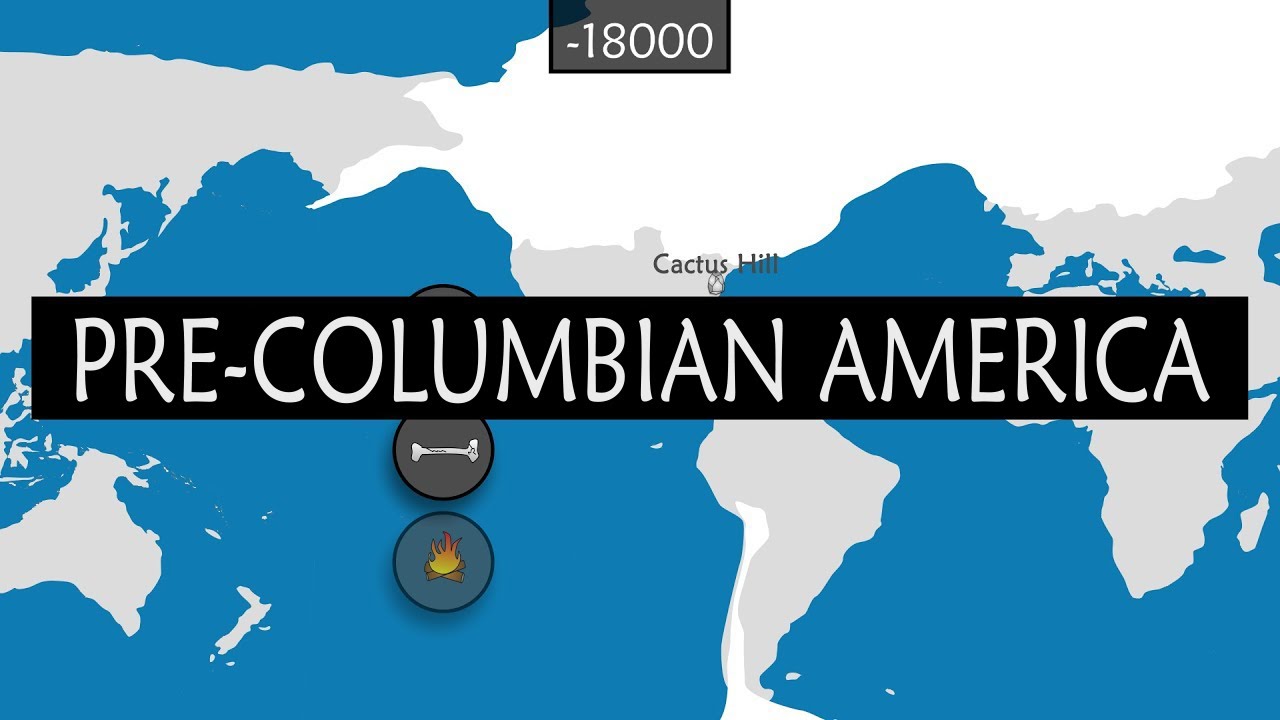
Pre-Columbian America - Summary on a Map
video description
There were anatomically modern humans near to 16. 000 years BC inhabiting the south of Chile. Even before than the theories of the Beringia immigration.
Many scholars have tried to qualify it as antiyanki, but time had benefited this theory, and could probably lead to an overwhelming revealing that there could be a second origin of South-American people. Maybe from Antarctica? Who knows!
Only a few clues of what lies below that tick and ancient ice are available.
We definitely should put an eye on the Selknam, who were banished from the Patagonia by Julius Popper for a reason. Same outrage that had Columbus to the Mapuche/Araucanian.
Your video is great, but I would put some more effort into the Mapuche culture, one of the few remaining in the world that has been fighting for more than 500 years to the overcome of Freemasonry/Sionist/Capitalist intervention, and stands out as one of the finest example of authentic cosmology.
Reading The Araucaniad by Alonso de Ercilla, many things that even surprised the Hispanic visitors are revealed, like light-skinned and incredibly tall natives, advanced weapon usage, incredible war formations, powerful ethnic-religion attachement, etc.
Date: 2022-09-10
Related videos





Comments and reviews: 19
Dolphin
To the people saying that south America was populated from Antarctica
At this time, Antarctica was probably far more hostile than it is now, due to even colder temps. Moreover, Antarctica's ONLY close connection to another continent is South America- across 500 miles of earth's stormiest sea. To get there with their primitive boats would require starting IN SOUTH AMERICA And Island-hopping along the south sandwich chain and given how much further the ice would extend at this time, that would be as far as you'd get.
reply
To the people saying that south America was populated from Antarctica
At this time, Antarctica was probably far more hostile than it is now, due to even colder temps. Moreover, Antarctica's ONLY close connection to another continent is South America- across 500 miles of earth's stormiest sea. To get there with their primitive boats would require starting IN SOUTH AMERICA And Island-hopping along the south sandwich chain and given how much further the ice would extend at this time, that would be as far as you'd get.
reply
Dirty
They also discovered traces of indigenous South American DNA, (Colombia) among South Pacific Islanders. The theory is that the islanders sailed to South America, had kids with the locals and brought their new families back home to the islands bringing indigenous American DNA. This may also explain how the sweet potato, native to South America, has been growing in the Pacific islands for thousands of years.
reply
They also discovered traces of indigenous South American DNA, (Colombia) among South Pacific Islanders. The theory is that the islanders sailed to South America, had kids with the locals and brought their new families back home to the islands bringing indigenous American DNA. This may also explain how the sweet potato, native to South America, has been growing in the Pacific islands for thousands of years.
reply
Ruben
Wow not one person settles I what is now known Florida California Texas New Mexico Arizona Georgia Baja California Brazil Argentina El Salvador Cuba and Colorado not even one person in Canada. Or could it be this guy is trying to white was history? Maybe he is going to claim that the genocide committed by the Europeans didnt happened?
reply
Wow not one person settles I what is now known Florida California Texas New Mexico Arizona Georgia Baja California Brazil Argentina El Salvador Cuba and Colorado not even one person in Canada. Or could it be this guy is trying to white was history? Maybe he is going to claim that the genocide committed by the Europeans didnt happened?
reply
Swagmund_Freud666
I really like how the presentation of this shows how cyclical in a lot of ways the historical progression is. One civilization collapses, and it would certainly to that civilization seem like a great tragedy, but quickly another nearby one takes power and rebuilds from their ashes. Humanity is nothing if not resilient.
reply
I really like how the presentation of this shows how cyclical in a lot of ways the historical progression is. One civilization collapses, and it would certainly to that civilization seem like a great tragedy, but quickly another nearby one takes power and rebuilds from their ashes. Humanity is nothing if not resilient.
reply
Atanas
You can hate me, but for 4500 years, the continent didn't moved much in terms of spirituality and governing. Well, in many other areas they didn't. Their art was very alike and poor. Yes, they were isolated. But maaan, with those temps of development, humanity would have been in the same age to this day. Dark empires.
reply
You can hate me, but for 4500 years, the continent didn't moved much in terms of spirituality and governing. Well, in many other areas they didn't. Their art was very alike and poor. Yes, they were isolated. But maaan, with those temps of development, humanity would have been in the same age to this day. Dark empires.
reply
timmy
I like the mysterious ended is like the most well known part, but to the Natives it was world changing. Its like the end of Apactolypto when they see a mysterious ship in the ocean. And before that they allude to the Spanish arriving when they pass a decimated village with a mysterious new disease.
reply
I like the mysterious ended is like the most well known part, but to the Natives it was world changing. Its like the end of Apactolypto when they see a mysterious ship in the ocean. And before that they allude to the Spanish arriving when they pass a decimated village with a mysterious new disease.
reply
education
One error people forgot to mention, the Wari and Tiwanaku Empires weren't allies but rivals, but due to their roughly equal power they left each other alone, somewhat like the USA and USSR in the Cold War but without influencing countries to fight each other.
reply
One error people forgot to mention, the Wari and Tiwanaku Empires weren't allies but rivals, but due to their roughly equal power they left each other alone, somewhat like the USA and USSR in the Cold War but without influencing countries to fight each other.
reply
Cpt.
I think its videos like this that kinda show how important population density is to advancement. In europe and central america you get more advanced and interconnected civilizations vs isolated thinly populated areas seem to stay closer to subsistence farmers.
reply
I think its videos like this that kinda show how important population density is to advancement. In europe and central america you get more advanced and interconnected civilizations vs isolated thinly populated areas seem to stay closer to subsistence farmers.
reply
wizkid915
I was most surprised by the absolute lack of any mention of the east coast of South America. Curious to think that there was nothing noteworthy going on in present day Brazil and Argentina throughout all of human history until the Europeans arrived.
reply
I was most surprised by the absolute lack of any mention of the east coast of South America. Curious to think that there was nothing noteworthy going on in present day Brazil and Argentina throughout all of human history until the Europeans arrived.
reply
Tsewe
Very nice, but a lot about North America is missing especially about the Wendat and Haudenasaunee rapid developments and extensive commercial network in the XIVth, XVth and XVIth centuries. Also, no mentions of the Toltecs.
Thank you very much!
reply
Very nice, but a lot about North America is missing especially about the Wendat and Haudenasaunee rapid developments and extensive commercial network in the XIVth, XVth and XVIth centuries. Also, no mentions of the Toltecs.
Thank you very much!
reply
Qarl
A rather generic amateur presentation.
Not worth most educated adults time as it is a very basic introduction for total novices to pre Colombian civilizations.
It really misses most of the action in North America, whether SW, PNW, etc.
reply
A rather generic amateur presentation.
Not worth most educated adults time as it is a very basic introduction for total novices to pre Colombian civilizations.
It really misses most of the action in North America, whether SW, PNW, etc.
reply
ArizonaGroyper
So there was mass conquering, imperial expansion, and deadly disease long before Europeans were introduced? Consensus paradigm takes the L yet again. Its almost like this is human nature and not uniquely a European development
reply
So there was mass conquering, imperial expansion, and deadly disease long before Europeans were introduced? Consensus paradigm takes the L yet again. Its almost like this is human nature and not uniquely a European development
reply
Jaimie
So you're telling me that the first pyramids and writing systems show up in the Americas thousands of years after Egypt and the Fertile Crescent, and no one is suggesting that the technology/wisdom was brought over somehow?
reply
So you're telling me that the first pyramids and writing systems show up in the Americas thousands of years after Egypt and the Fertile Crescent, and no one is suggesting that the technology/wisdom was brought over somehow?
reply
SanExpreso
It is incredible the number of cultures and civilizations in the Andes before the Incas, the Incas were only the end of all of them, from Caral, Chavin, Nazca, Moche who were the first surfer in history, Wari and more
reply
It is incredible the number of cultures and civilizations in the Andes before the Incas, the Incas were only the end of all of them, from Caral, Chavin, Nazca, Moche who were the first surfer in history, Wari and more
reply
education
You expect me to believe this shit? That yall found evidence of fires from 18, 000 years ago? Amazes me how far atheist go to defy God where they will believe this crap but not the fact that someone created them.
reply
You expect me to believe this shit? That yall found evidence of fires from 18, 000 years ago? Amazes me how far atheist go to defy God where they will believe this crap but not the fact that someone created them.
reply
manuel
Teotihuacan had a bigger population. This metropolis covered between 80-120 sq miles. Housing over 800, 000 in 400 ce. Declining in 600 ce lingering for another 150-200 years. And finally, a few decades later. Gone.
reply
Teotihuacan had a bigger population. This metropolis covered between 80-120 sq miles. Housing over 800, 000 in 400 ce. Declining in 600 ce lingering for another 150-200 years. And finally, a few decades later. Gone.
reply
TA
Lovely novel description of ancient and pre-ancient history. I wonder if Graham Hancock works influenced it, as narrative match lots of his research put together in this beautiful graphic work. Thanks for this.
reply
Lovely novel description of ancient and pre-ancient history. I wonder if Graham Hancock works influenced it, as narrative match lots of his research put together in this beautiful graphic work. Thanks for this.
reply
Dennis
pretty shitty bringing up the argument of genetics and still presenting the Beringia strait thesis as most plausable. while genetics in south america are the biggest argument against this beringi theory
reply
pretty shitty bringing up the argument of genetics and still presenting the Beringia strait thesis as most plausable. while genetics in south america are the biggest argument against this beringi theory
reply
Suhail
Interesting, how schools in Europe, Asia, Africa USA etc have ignored this history. lets not get silly with narrow minded comments in the below. This is all educational and I am still learning at 59
reply
Interesting, how schools in Europe, Asia, Africa USA etc have ignored this history. lets not get silly with narrow minded comments in the below. This is all educational and I am still learning at 59
reply
Add a review, comment
Other channel videos