Order from Chaos - Numberphile
video description
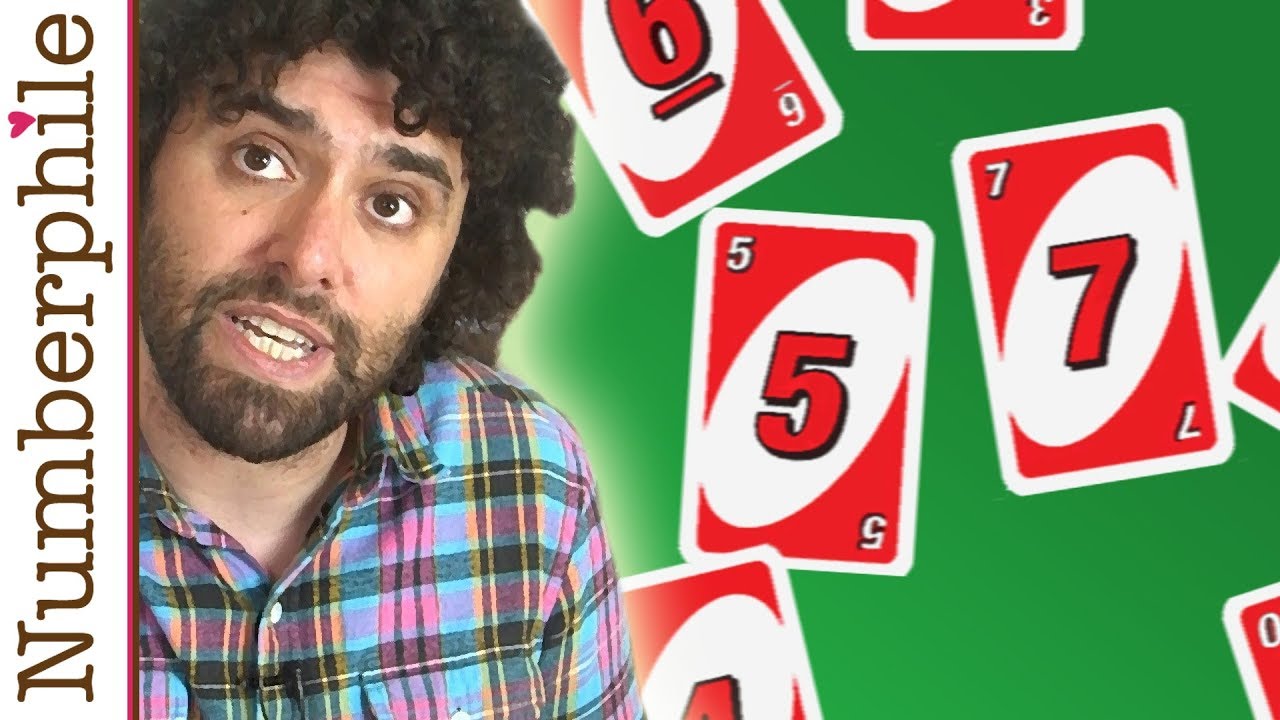
Things I realized early on: You want the middling numbers 4-5-6 on the left side. Those are terrible numbers to start with, and it kind of takes them out of the running. Then, there is only 6 numbers left. (1 2 3 7 8 9)
Next, I realized you want the -most dangerous numbers- in the middle of the sequence. So, 1, 2, 8, 9. Because, if you have those numbers on the ends, this gives them a great starting point, with LOTS of numbers to choose from remaining. For example, if I start my sequence with a 9, they'll have eight remaining selections to find 3 numbers which are ascending/descending. Impossible to prevent both this way.
After that, couple mins of trial and error, boom. GG.
But, I'm a mathematical genius: P
Date: 2022-04-08
Related videos


Comments and reviews: 9
Fernando
It's not the zero. If you use 9 cards from 0 to 9 but you miss another (e. g. 5, it could be 210643987, and problem solved.
And I think this problem could be inducted for 3 or less ordered cards (with less than 9 cards) or 5 or more ordered cards (with more than 9 cards.
Like:
2143, one more card makes 3 in in/decreasing order.
1, one more card makes 2 in in/decreasing order.
43218765CBA9GFED (assuming A for 10, B for 11, etc, one more card makes 5 in in/decreasing order.
It is always a squared number for maximum number of cards.
If you want at most -n- cards in in/decreasing order, you need at most -n--2 cards.
reply
It's not the zero. If you use 9 cards from 0 to 9 but you miss another (e. g. 5, it could be 210643987, and problem solved.
And I think this problem could be inducted for 3 or less ordered cards (with less than 9 cards) or 5 or more ordered cards (with more than 9 cards.
Like:
2143, one more card makes 3 in in/decreasing order.
1, one more card makes 2 in in/decreasing order.
43218765CBA9GFED (assuming A for 10, B for 11, etc, one more card makes 5 in in/decreasing order.
It is always a squared number for maximum number of cards.
If you want at most -n- cards in in/decreasing order, you need at most -n--2 cards.
reply
Mao
I paused at 3: 25 when it says -a short time later- to see if I could do it myself. I thought following a specific pattern would work and after a minute or two I came up with this
1 2 3 4 5 6 7 8 9
Divide into two groups of four with a digit in the middle
(1234) (5) (6789)
Reverse the groups
(4321) (5) (9876)
Swap the first and last card (i. e. the 4 and 6) and swap the third and seventh (i. e. the 2 and 8)
(6381) (5) (9274)
And this is one of the 1700-ish patterns
6 3 8 1 5 9 2 7 4
reply
I paused at 3: 25 when it says -a short time later- to see if I could do it myself. I thought following a specific pattern would work and after a minute or two I came up with this
1 2 3 4 5 6 7 8 9
Divide into two groups of four with a digit in the middle
(1234) (5) (6789)
Reverse the groups
(4321) (5) (9876)
Swap the first and last card (i. e. the 4 and 6) and swap the third and seventh (i. e. the 2 and 8)
(6381) (5) (9274)
And this is one of the 1700-ish patterns
6 3 8 1 5 9 2 7 4
reply
Bonzomi
This guy is way different than the other guys who explain mathematical concepts. Most others would explain their applications, the history behind those things, but this guy; this guy simply wraps you in mysteries that will make you struggle in understanding them. Most, if not all of the stuffs he explains aren't for the sake of 'reality' or actual application, much rather, he does it for the sake of the love of math itself.
reply
This guy is way different than the other guys who explain mathematical concepts. Most others would explain their applications, the history behind those things, but this guy; this guy simply wraps you in mysteries that will make you struggle in understanding them. Most, if not all of the stuffs he explains aren't for the sake of 'reality' or actual application, much rather, he does it for the sake of the love of math itself.
reply
Radditz770
I mean isn't it just because 9 is divisible by 3 and as such you can make groupings less in size than the limit given (This time 4?
I mean true there are no ways to do that with 10, but I'm willing to bet 20 pounds that you can avoid putting down 6 cards in ascending or descending order, if you use 10 cards, for the same reason. You can divide each group into a size of 5 (since that divides evenly into 10): P
reply
I mean isn't it just because 9 is divisible by 3 and as such you can make groupings less in size than the limit given (This time 4?
I mean true there are no ways to do that with 10, but I'm willing to bet 20 pounds that you can avoid putting down 6 cards in ascending or descending order, if you use 10 cards, for the same reason. You can divide each group into a size of 5 (since that divides evenly into 10): P
reply
Dan
I think he cheated, even if unintentionally.
By putting money on the table, he effectively put blinders on Brady, making it that much harder for him to open his mind to the possibilities, and find a solution to the complex problem. For problems like these that require a bit of thought, carrots and sticks actually do more harm than good.
reply
I think he cheated, even if unintentionally.
By putting money on the table, he effectively put blinders on Brady, making it that much harder for him to open his mind to the possibilities, and find a solution to the complex problem. For problems like these that require a bit of thought, carrots and sticks actually do more harm than good.
reply
Nicholas
Order and disorder: 2 useless subjective terms invented by humans to interpret lack of correlation and the effects of what makes us see shapes in Rorschach tests in irregular shapes like clouds; also smth Creationnists use to discredit natural causes of DNA > (
reply
Order and disorder: 2 useless subjective terms invented by humans to interpret lack of correlation and the effects of what makes us see shapes in Rorschach tests in irregular shapes like clouds; also smth Creationnists use to discredit natural causes of DNA > (
reply
stringbeanpc
Numberphile
Is there any way of doing this same idea with either 1) less numbers or 2) the numbers repeat
example 1) 123456
example 2) 534 854 819 in this case 5, 4 & 8 have repeated and have
missed numbers 2, 6 & 7
reply
Numberphile
Is there any way of doing this same idea with either 1) less numbers or 2) the numbers repeat
example 1) 123456
example 2) 534 854 819 in this case 5, 4 & 8 have repeated and have
missed numbers 2, 6 & 7
reply
Ersen
I started with putting a 5 in the middle, 9 and 1 to the sides and alternated ascending and descending numbers on each end, got a solution.
5
-9- 5 -1-
-2- 9 5 1 -8-
-7- 2 9 5 1 8 -3-
-4- 7 9 2 5 1 8 3 -6-
reply
I started with putting a 5 in the middle, 9 and 1 to the sides and alternated ascending and descending numbers on each end, got a solution.
5
-9- 5 -1-
-2- 9 5 1 -8-
-7- 2 9 5 1 8 -3-
-4- 7 9 2 5 1 8 3 -6-
reply
Leif
At 5: 35 does he mean four not consecutive numbers in ascending or descending order. he must otherwise whst he says is, WRONG. example 1 3 7 5 2 6 4 9 8 0. no four consecutive ascending or descending.
reply
At 5: 35 does he mean four not consecutive numbers in ascending or descending order. he must otherwise whst he says is, WRONG. example 1 3 7 5 2 6 4 9 8 0. no four consecutive ascending or descending.
reply
Add a review, comment
Other channel videos