Lucas Numbers - Numberphile
video description
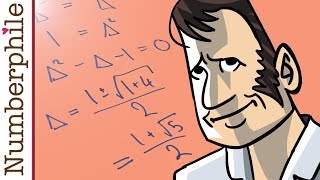
If you take the roots of the quadratic equation
x-2=x+1
and call them a and b.
Then,
-nth Lucas number = a-n + b-n-
For example,
0th Lucas number = a-0+b-0 = 1+1=2
1st Lucas number = a-1+b-1 = 1
2nd Lucas number = a-2+b-2 = 3 and so on.
Also, one of the roots of that equation is infact the golden ratio.
EDIT:
I just realised that I accidentally proved why each Lucas number rounds off to phi-n
As one of the roots is phi, let a=phi.
So, b= 1-phi which is approx -0. 6
So, if we want to find each Lucas number,
say 4th Lucas number = phi-4 + (-0. 6)-4
So, phi-4 = 4th Lucas number - (-0. 6)-4
But, as (-0. 6)-4 is definitely less than 0. 5 and as the 4th Lucas number is definitely a natural number, removing (-0. 6)-4 from the 4th Lucas number is not going to decrease it below 0. 5 less than the number itself. Meaning, that if we happen to round up this difference, we will end up with the 4th Lucas Number.
This means that phi-4 rounded up gives the 4th Lucas Number.
Infact, phi-n will round off to the nth Lucas Number on one condition: (-0. 6)-n must be less than 0. 5, which will be true for all n>1.
So, phi-n will have to round off to the nth Lucas Number.
Also, the proof of nth Lucas Number = a-n + b-n is pretty easy, using Induction.
All you have to do is find a+b=1 and a-2+b-2=3, then,
show that as x-2=x+1,
x-(n+2) = x-(n+1) + x-n [Multiplying by n]
As a and b satisfy this equation, we get:
a-(n+2) + b-(n+2) = a-(n+1)+b-(n+1) + a-n+b-n
This is the exact way how we generate Lucas numbers; by adding consecutive terms to get the next term. So, this sequence is clearly the Lucas numbers.
Date: 2022-04-08
Related videos




Comments and reviews: 9
Alex
I have discovered a cool explanation of why the Lucas series begins 2, 1, it will sound slightly strange to begin but I'm sure it makes sense. The 2 means that in this series each number is the sum of the 2 previous numbers, And the 1 is 1 less than 2 to the power of 1. I have discovered some other Ratios associated with series' where each number is the sum of its 3, 4, 5 or 6 predecessors, when we take the powers of these ratios which extend towards 2, we have an equivalent Lucas series for each ratio. So the powers of the third ratio (1. 839286755) round towards the 3, 1, 3 series, the 3 means each number is the sum of its 3 predecessors and the 1 and 3 are 1 less than 2 to the 1 and 2 squared. The 4th Ratio rounds to the 4, 1, 3, 7, series then 5, 1, 3, 7, 15 and 6, 1, 3, 7, 15, 31. My spreadsheet wont allow me any further so my progress has slowed somewhat, I'm not sure if the tenth powers rounds to the series beginning 1 or 10. This is another reason why the Lucas series is King as it ties these other ratios together with phi.
reply
I have discovered a cool explanation of why the Lucas series begins 2, 1, it will sound slightly strange to begin but I'm sure it makes sense. The 2 means that in this series each number is the sum of the 2 previous numbers, And the 1 is 1 less than 2 to the power of 1. I have discovered some other Ratios associated with series' where each number is the sum of its 3, 4, 5 or 6 predecessors, when we take the powers of these ratios which extend towards 2, we have an equivalent Lucas series for each ratio. So the powers of the third ratio (1. 839286755) round towards the 3, 1, 3 series, the 3 means each number is the sum of its 3 predecessors and the 1 and 3 are 1 less than 2 to the 1 and 2 squared. The 4th Ratio rounds to the 4, 1, 3, 7, series then 5, 1, 3, 7, 15 and 6, 1, 3, 7, 15, 31. My spreadsheet wont allow me any further so my progress has slowed somewhat, I'm not sure if the tenth powers rounds to the series beginning 1 or 10. This is another reason why the Lucas series is King as it ties these other ratios together with phi.
reply
Michael
Lucas Numbers
2, 1, 3, 4, 7, 11, 18, .
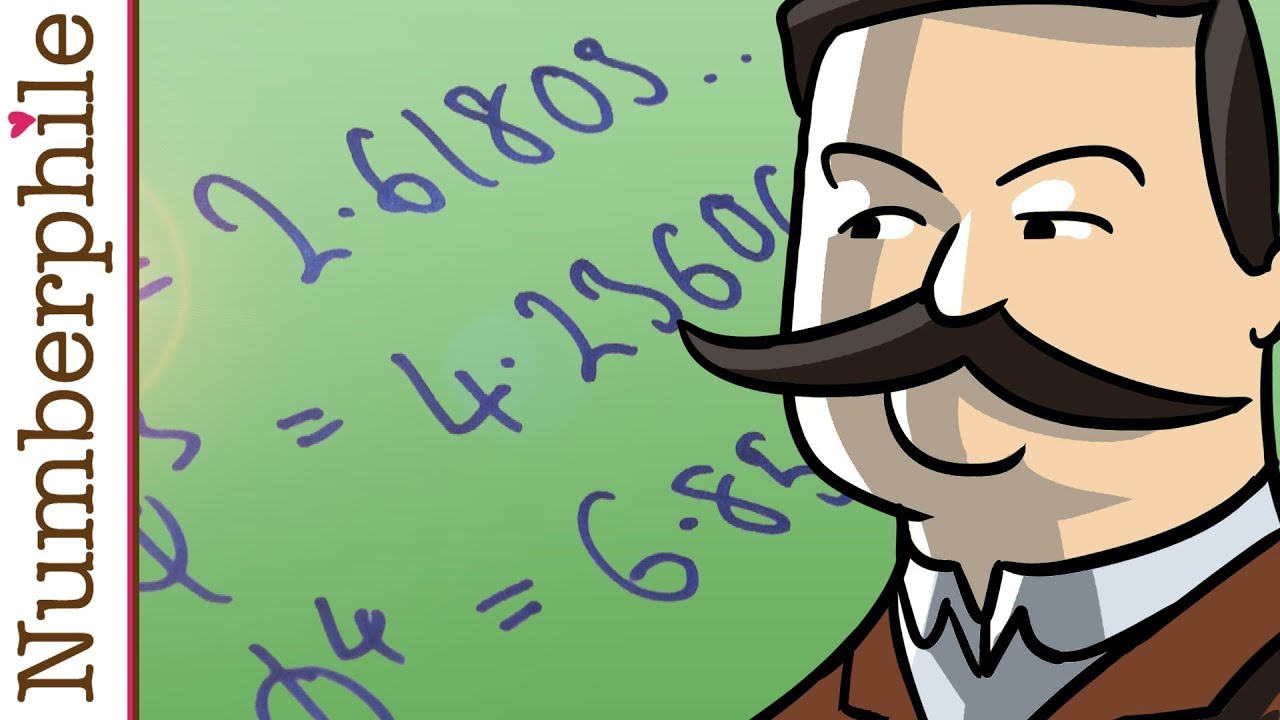
phi = 1. 6180339874.
phi-2 = 2. 6180339874. approx. 3
phi-3 = 4. 236067977. approx. 4
phi-4 = 6. 854101966. approx. 7
phi-5 = 11. 09016994. approx. 11
which are all numbers in the lucas numbers. In other words, every power of phi is generated in this sequence.
Lucas numbers ( L_n ) can be calculated by the following formula:
L_n = [ ( 1 + sqrt 5 ) / 2 ]-n + [ ( 1 - sqrt 5 ) / 2 ]-n
phi-n = ( L_n + F_n - sqrt 5 ) / 2
Fibonacci numbers ( F_n ) are of the following sequence:
1, 1, 2, 3, 5, 8, 13, 21, 34, 55, 89, 144, 233, 377, 610.
so phi-6 = [ 18 + 8 sqrt 5 ] / 2 = 17. 94427190999.
reply
Lucas Numbers
2, 1, 3, 4, 7, 11, 18, .
phi = 1. 6180339874.
phi-2 = 2. 6180339874. approx. 3
phi-3 = 4. 236067977. approx. 4
phi-4 = 6. 854101966. approx. 7
phi-5 = 11. 09016994. approx. 11
which are all numbers in the lucas numbers. In other words, every power of phi is generated in this sequence.
Lucas numbers ( L_n ) can be calculated by the following formula:
L_n = [ ( 1 + sqrt 5 ) / 2 ]-n + [ ( 1 - sqrt 5 ) / 2 ]-n
phi-n = ( L_n + F_n - sqrt 5 ) / 2
Fibonacci numbers ( F_n ) are of the following sequence:
1, 1, 2, 3, 5, 8, 13, 21, 34, 55, 89, 144, 233, 377, 610.
so phi-6 = [ 18 + 8 sqrt 5 ] / 2 = 17. 94427190999.
reply
Carl
A thought about the -rounding- issue.
Couldn't you say that phi-n and the lucas sequence are each the 'limit' of the other?
As phi-n continues, the rounding adjustment gets smaller and smaller approaching 0,
The ratio of the lucas sequence, as it continues, aproaches phi with increasing accuracy. (adjustment approaches 0)
I don't have time to calculate it right now, but it would be intersting to compare the degree of accuracy for each process at each step.
A) is the adjustment the same at each step?
B) if not, is there a formula that generalizes the difference?
heading off to work. please have answer by 5: 30pm EST
; -)
reply
A thought about the -rounding- issue.
Couldn't you say that phi-n and the lucas sequence are each the 'limit' of the other?
As phi-n continues, the rounding adjustment gets smaller and smaller approaching 0,
The ratio of the lucas sequence, as it continues, aproaches phi with increasing accuracy. (adjustment approaches 0)
I don't have time to calculate it right now, but it would be intersting to compare the degree of accuracy for each process at each step.
A) is the adjustment the same at each step?
B) if not, is there a formula that generalizes the difference?
heading off to work. please have answer by 5: 30pm EST
; -)
reply
Timothy
In defense of rounding:
At the low end of these sequences (whether Lucas or Fibonacci numbers, their relationships are NEAR the golden ratio. You have to round to get TO the golden ratio. (Because they APPROACH the golden ratio over time, not straight away) So to go backwards FROM the golden ratio TO whole numbers, it will OF COURSE require rounding at the lowest numbers. But the rounding will be less and less necessary as the numbers get larger. I find the Lucas numbers to be a fascinating alternative. Not at all a Parker Square of a video.
reply
In defense of rounding:
At the low end of these sequences (whether Lucas or Fibonacci numbers, their relationships are NEAR the golden ratio. You have to round to get TO the golden ratio. (Because they APPROACH the golden ratio over time, not straight away) So to go backwards FROM the golden ratio TO whole numbers, it will OF COURSE require rounding at the lowest numbers. But the rounding will be less and less necessary as the numbers get larger. I find the Lucas numbers to be a fascinating alternative. Not at all a Parker Square of a video.
reply
Mevludin
lucas = zeros (100, 1);
lucas (1) = 2;
lucas (2) = 1;
for i=3: 100
lucas (i) = lucas (i-1) + lucas (i-2);
end
phi = (1+sqrt(5)/2;
t = zeros (100, 1);
for i=1: 100
t(i)=round(phi-(i-1);
end
v==t
I executed this MatLab code and the result is that from a point the rounding terms are not same as the Lucas numbers( except for the first two terms, Is that from the MatLab error in rounding on decimals?
Is there any proof that rounding powers of phi gets you Lucas Numbers?
reply
lucas = zeros (100, 1);
lucas (1) = 2;
lucas (2) = 1;
for i=3: 100
lucas (i) = lucas (i-1) + lucas (i-2);
end
phi = (1+sqrt(5)/2;
t = zeros (100, 1);
for i=1: 100
t(i)=round(phi-(i-1);
end
v==t
I executed this MatLab code and the result is that from a point the rounding terms are not same as the Lucas numbers( except for the first two terms, Is that from the MatLab error in rounding on decimals?
Is there any proof that rounding powers of phi gets you Lucas Numbers?
reply
Carlos
There is a little mistake in the video, as it shouldn't say that Lucas numbers are an approximation to ( ( 1 + SQRT( 5 ) ) / 2 )-n. Instead, it should have said that there is an equivalent way to build them which is, exactly:
Ln = ( ( 1 + SQRT( 5 ) ) / 2 )-n + ( ( 1 - SQRT( 5 ) ) / 2 )-n.
The second term, by the way, is the second solution to the golden equation: phi + 1 = phi - 2. I guess that solves the discussion about the unnecessary rounding.
reply
There is a little mistake in the video, as it shouldn't say that Lucas numbers are an approximation to ( ( 1 + SQRT( 5 ) ) / 2 )-n. Instead, it should have said that there is an equivalent way to build them which is, exactly:
Ln = ( ( 1 + SQRT( 5 ) ) / 2 )-n + ( ( 1 - SQRT( 5 ) ) / 2 )-n.
The second term, by the way, is the second solution to the golden equation: phi + 1 = phi - 2. I guess that solves the discussion about the unnecessary rounding.
reply
RedVel
Actually, I have found some rather interesting connection between the Fibonacci numbers and Phi. I am too lazy to write out how I got to this, so I'll just write the general form:
(Phi-n = Fn-Phi + F(n-1
For any positive integer n, where Fn represents the nth Fibonacci number, and F(n-1) represents the Fibonacci number before the nth.
And, well, I mean, someone most likelyfound that a long ago, but whatever.
reply
Actually, I have found some rather interesting connection between the Fibonacci numbers and Phi. I am too lazy to write out how I got to this, so I'll just write the general form:
(Phi-n = Fn-Phi + F(n-1
For any positive integer n, where Fn represents the nth Fibonacci number, and F(n-1) represents the Fibonacci number before the nth.
And, well, I mean, someone most likelyfound that a long ago, but whatever.
reply
jon
yeah, I guess -rounding- = -fishing-: )
so the decimal part's of all those powers on the Golden Ratio power's are their own reciprocal
so alternatively adding and subtracting their reciprocal's gives the integers of the lucas numbers
i. e. the powers of the golden ratio have the same decimal digit sequence as their reciprocal's
oh! hooked I think
reply
yeah, I guess -rounding- = -fishing-: )
so the decimal part's of all those powers on the Golden Ratio power's are their own reciprocal
so alternatively adding and subtracting their reciprocal's gives the integers of the lucas numbers
i. e. the powers of the golden ratio have the same decimal digit sequence as their reciprocal's
oh! hooked I think
reply
He
I'd like to know: if instead of taking \phi, \phi-2, \phi-3 and so on and round and get the Lucas numbers, you take a constant c and then consider c \phi, c \phi-2, c \phi-3 and so on and then round. Depending on a, you get different sequences. Can you find and a such that the sequence is the Fibonacci sequence? If yes, what is that number?
reply
I'd like to know: if instead of taking \phi, \phi-2, \phi-3 and so on and round and get the Lucas numbers, you take a constant c and then consider c \phi, c \phi-2, c \phi-3 and so on and then round. Depending on a, you get different sequences. Can you find and a such that the sequence is the Fibonacci sequence? If yes, what is that number?
reply
Add a review, comment
Other channel videos