A Fascinating Thing about Fractions - Numberphile
video description
First, the standard -mathematics as a form of art- answer (as proposed famously by Hardy in his little book -A Mathematician's Apology-. When someone paints a picture or composes a symphony or makes a film, nobody asks if it's useful. Why ask that question about this? Can't we just appreciate its beauty?
And then the second answer (which would have been a great disappointment to Hardy, which is that this sort of mathematics lies at the heart of the cryptography that protects all our digital communications. Without mathematicians exploring these sorts of questions, following their curiosity, modern cryptography would not have been possible, and all your electronic banking and other secure communication would have been impossible.
When I was a postdoc in mathematics, working (not very successfully) in an area of mathematics where you could draw a clear link to physics and chemistry and materials science, and therefore at least somewhat possible to justify as -useful-, we used to mock the number theorists for being -really- useless and irrelevant. And now their work is inside every phone and computer on the planet, billions of them.
Ideas that seemed totally useless for decades or even centuries turned out to be extremely useful in the right real-world context. And this keeps on happening. There's a whole body of thought on why that might be, the unreasonable, surprising ability of mathematics to be useful in modelling, describing and understanding the universe. Which is a long way of saying that the real answer to the question, -Is it useful? -, for -any- new mathematics, is very likely to be, -We don't know yet, wait and see-.
Date: 2022-04-09
Related videos






Comments and reviews: 9
Yoni
Obviously we restricted to the reals at some point (cause n=4 or higher is pretty trivial to do with complex numbers. plus you've done videos about this that loop (or close to loop) with complex numbers. However I don't recall during this video that you ever -said- we're restricting to the reals.
For anyone curious, this is relatively simple to do with complex numbers to have loops of any positive integer length N. Starting with N=4 (the first impossible one one if you restrict to reals)
Let C=0
I'm using polar coordinates here just cause it makes it easier to read/explain.
Start with z= (1, 2Pi/15)
(1, 2Pi/15) => (1, 4Pi/15) => (1, 8Pi/15) => (1, 16 Pi/15) => (1, 32 Pi/15)
2Pi = 30Pi/15
so 32Pi/15 == 2Pi + (2Pi/15) so we're back to the beginning.
If you want N numbers in the loop, choose as starting point (polar coordinates)
(1, 2Pi / (2-N-1)
Since that's on the unit circle, it just doubles the angle each time you square it.
So after N doublings it becomes (1, 2-N - 2Pi / (2-N-1) or equiv (1, (1 + 1/(2-N-1) - 2Pi) and you can throw away the 2Pi so you're back to the beginning.
I -expect- that there are an infinite number of solutions (ignoring duplicates caused by redundancy of polar coordinates. e. g. infinite number even if you specify in cartesian coordinates) but I don't have any intuition as to where to look next.
reply
Obviously we restricted to the reals at some point (cause n=4 or higher is pretty trivial to do with complex numbers. plus you've done videos about this that loop (or close to loop) with complex numbers. However I don't recall during this video that you ever -said- we're restricting to the reals.
For anyone curious, this is relatively simple to do with complex numbers to have loops of any positive integer length N. Starting with N=4 (the first impossible one one if you restrict to reals)
Let C=0
I'm using polar coordinates here just cause it makes it easier to read/explain.
Start with z= (1, 2Pi/15)
(1, 2Pi/15) => (1, 4Pi/15) => (1, 8Pi/15) => (1, 16 Pi/15) => (1, 32 Pi/15)
2Pi = 30Pi/15
so 32Pi/15 == 2Pi + (2Pi/15) so we're back to the beginning.
If you want N numbers in the loop, choose as starting point (polar coordinates)
(1, 2Pi / (2-N-1)
Since that's on the unit circle, it just doubles the angle each time you square it.
So after N doublings it becomes (1, 2-N - 2Pi / (2-N-1) or equiv (1, (1 + 1/(2-N-1) - 2Pi) and you can throw away the 2Pi so you're back to the beginning.
I -expect- that there are an infinite number of solutions (ignoring duplicates caused by redundancy of polar coordinates. e. g. infinite number even if you specify in cartesian coordinates) but I don't have any intuition as to where to look next.
reply
NeoLS
I found a strange case regarding iteration with values of z and c. What Dr Holly Krieger has shown is certain z and c values that after a few steps, the values come back to the -exact starting z values- (i. e, z = 0, 1/2, or -7/4. Here are some examples to provides details about the strange case I found:
1) Let z = 0 and c = -2. When iterating under z-2 + c, the values are -2, 2, 2.
2) Let z = 0. 5 and c = -0. 75. When iterating, the values are -0. 5, -0. 5.
The case I have shown is slightly different than Dr Holly Krieger's. The values I provided for z and c, notice how the values are repeating at different values where none of them are z? For 1, the values do not repeat at z = 0; for 2, the values does not repeat at z = 0. 5? Can we use this case to prove/determine if 6 or more steps is possible?
reply
I found a strange case regarding iteration with values of z and c. What Dr Holly Krieger has shown is certain z and c values that after a few steps, the values come back to the -exact starting z values- (i. e, z = 0, 1/2, or -7/4. Here are some examples to provides details about the strange case I found:
1) Let z = 0 and c = -2. When iterating under z-2 + c, the values are -2, 2, 2.
2) Let z = 0. 5 and c = -0. 75. When iterating, the values are -0. 5, -0. 5.
The case I have shown is slightly different than Dr Holly Krieger's. The values I provided for z and c, notice how the values are repeating at different values where none of them are z? For 1, the values do not repeat at z = 0; for 2, the values does not repeat at z = 0. 5? Can we use this case to prove/determine if 6 or more steps is possible?
reply
medexamtoolsdotcom
What if you just use C=0 and start with a point on the complex plane that's of magnitude 1 but not on the real or imaginary axes? Like 1 at an angle of 2-pi/15, in other words cos(2-pi/15)+i-sin(2-pi/15. Square it and the angle doubles to 4-pi/15, then 8-pi/15, then 16-pi/15, then 32-pi/15, but since you can subtract multiples of 2-pi from the angle, that's actually 2-pi/15 again. You SAY 4 can't be done and that it has been proved impossible, but it seems to me that I just did it.
reply
What if you just use C=0 and start with a point on the complex plane that's of magnitude 1 but not on the real or imaginary axes? Like 1 at an angle of 2-pi/15, in other words cos(2-pi/15)+i-sin(2-pi/15. Square it and the angle doubles to 4-pi/15, then 8-pi/15, then 16-pi/15, then 32-pi/15, but since you can subtract multiples of 2-pi from the angle, that's actually 2-pi/15 again. You SAY 4 can't be done and that it has been proved impossible, but it seems to me that I just did it.
reply
viennapalace
As someone who is mildly dyslexic, numbers have always held a special fear for me. To be honest, the only maths I feel comfortable doing is music maths (yes, I'm a musician) & I've always thought of those who -get- numbers as the truly gifted in our society.
Thanks for shining a light in the dark. I may never fully understand why some numbers do what they do but thanks to you, I won't be as intimidated by them ay longer, either.
reply
As someone who is mildly dyslexic, numbers have always held a special fear for me. To be honest, the only maths I feel comfortable doing is music maths (yes, I'm a musician) & I've always thought of those who -get- numbers as the truly gifted in our society.
Thanks for shining a light in the dark. I may never fully understand why some numbers do what they do but thanks to you, I won't be as intimidated by them ay longer, either.
reply
Ghk
what's the point of all this. Inventing a formula then forcing a number to go through it, transform and return to its starting value. -
Are there any real life applications for this endeavor. -
besides you can program this problem into the computer using C++ by example and see all the possible results. Iteration in programming is a big topic.
reply
what's the point of all this. Inventing a formula then forcing a number to go through it, transform and return to its starting value. -
Are there any real life applications for this endeavor. -
besides you can program this problem into the computer using C++ by example and see all the possible results. Iteration in programming is a big topic.
reply
education
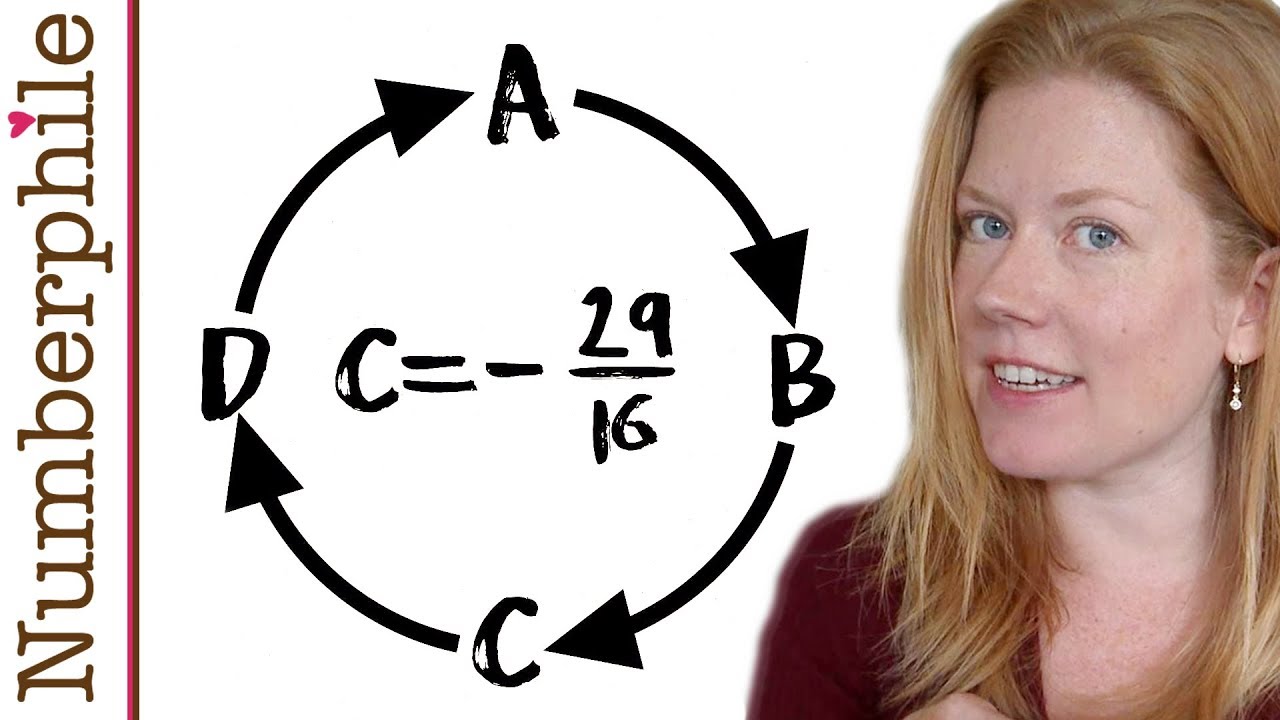
I don't think that -29/16 equals -7/4. -7/4 would equal -28/16 NOT -29/16. I may be mistaken, because I am not a professional mathematician, but it seems to me if you divide the numerator and denomator by 4 then it is -28/16 NOT -29/16. Did I miss something in my calculations?
reply
I don't think that -29/16 equals -7/4. -7/4 would equal -28/16 NOT -29/16. I may be mistaken, because I am not a professional mathematician, but it seems to me if you divide the numerator and denomator by 4 then it is -28/16 NOT -29/16. Did I miss something in my calculations?
reply
Amy
Idk if I'm thinking about this correctly but surely you could just put f(z) = z-2 + c and then solve for ffff(z) = z to get the ones that iterate 4 times. You could then expand this algebraically and solve? I'm probably wrong somewhere but I'm still confused
reply
Idk if I'm thinking about this correctly but surely you could just put f(z) = z-2 + c and then solve for ffff(z) = z to get the ones that iterate 4 times. You could then expand this algebraically and solve? I'm probably wrong somewhere but I'm still confused
reply
axiomist
What's happened? When did nerdy girls sart looking so beautiful? ! Ahem, uhh, lets see ahh, oh, yeah, that-a, that was really interesting. Woke me up out of this other - imposed -lock down-. My brain feels refreshed. Thank you.
reply
What's happened? When did nerdy girls sart looking so beautiful? ! Ahem, uhh, lets see ahh, oh, yeah, that-a, that was really interesting. Woke me up out of this other - imposed -lock down-. My brain feels refreshed. Thank you.
reply
Don
I feel that if any of the Numberphile guests had been my math teacher, I'd be much better at math today. Especially Holly, Matt, and James. They bring an enthusiasm sadly lacking in a lot of math teachers.
reply
I feel that if any of the Numberphile guests had been my math teacher, I'd be much better at math today. Especially Holly, Matt, and James. They bring an enthusiasm sadly lacking in a lot of math teachers.
reply
Add a review, comment
Other channel videos