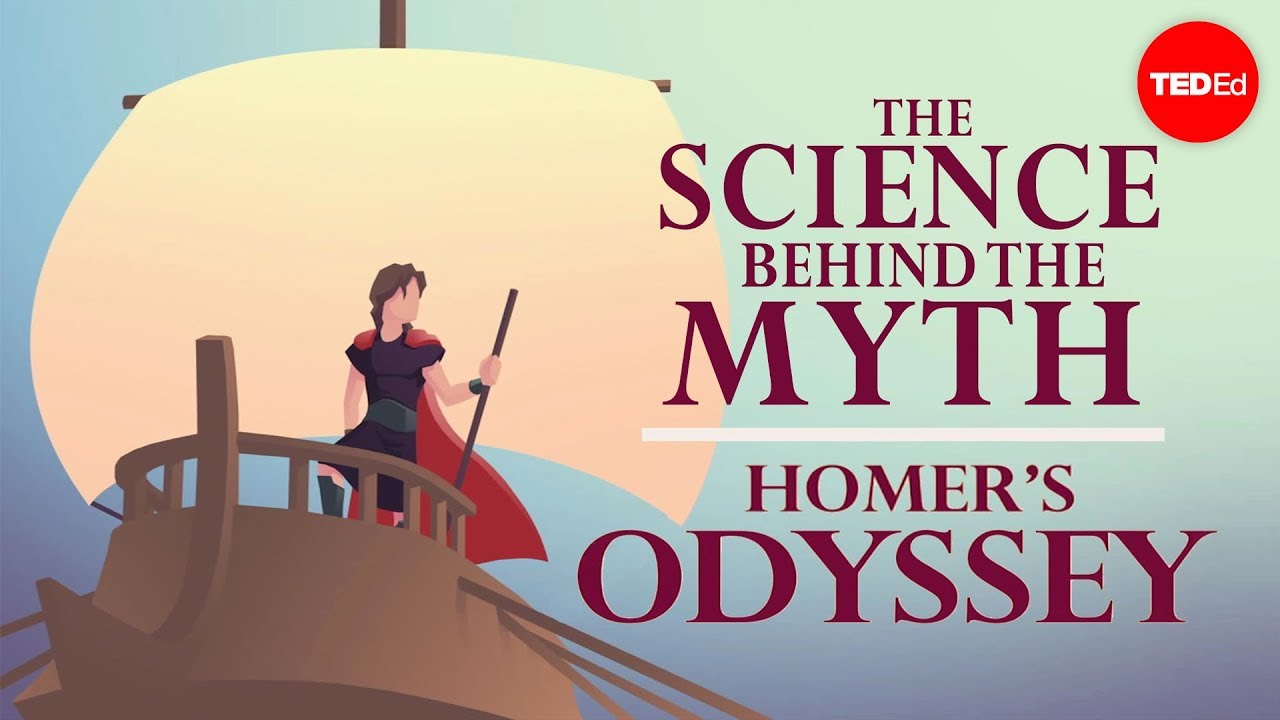
The science behind the myth: Homer's Odyssey - Matt Kaplan
video description
Date: 2020-08-22
Related videos



Comments and reviews: 10
Marmik
As much as I like people trying to connect scientific stuff with ancient folklore and stories. I hate it when they forget the essence of it and start calling things they can't explain as fake or writers exaggeration. Why can't you just believe that, yes something like that might have happened, something mysterious, something that we can't explain? And preserve the story instead of trying to prove it false? Even if it might be false, but what is wrong in accepting culture as it is. Please don't be that one guy who ruins stuff for everyone by being to the point always.
reply
As much as I like people trying to connect scientific stuff with ancient folklore and stories. I hate it when they forget the essence of it and start calling things they can't explain as fake or writers exaggeration. Why can't you just believe that, yes something like that might have happened, something mysterious, something that we can't explain? And preserve the story instead of trying to prove it false? Even if it might be false, but what is wrong in accepting culture as it is. Please don't be that one guy who ruins stuff for everyone by being to the point always.
reply
SlainSoul
The people back then didnt have a lot of knowledge or education, either at the news about new discoveries, so they were mostly listen to the their masters or teachers about the myths which they created, relying in foundings and explorations thats they could do, as today scientists, and presented into theatres or other places into a fairytale to be easier to understand. I believe those myths were created to pass messages about their development on thinking and foundings not nessary to exits anything.
reply
The people back then didnt have a lot of knowledge or education, either at the news about new discoveries, so they were mostly listen to the their masters or teachers about the myths which they created, relying in foundings and explorations thats they could do, as today scientists, and presented into theatres or other places into a fairytale to be easier to understand. I believe those myths were created to pass messages about their development on thinking and foundings not nessary to exits anything.
reply
manifestgtr
Honestly, Ive always assumed there was some truth behind these myths. Take the sirens for example. How easy is it to picture a group of teenage chicks hanging on the beach, whistling at passing boats, shouting and singing, then howling with laughter and retreating back into the woods as they ran aground. I mean come on. that sounds like it could be a news story from two weeks ago.
reply
Honestly, Ive always assumed there was some truth behind these myths. Take the sirens for example. How easy is it to picture a group of teenage chicks hanging on the beach, whistling at passing boats, shouting and singing, then howling with laughter and retreating back into the woods as they ran aground. I mean come on. that sounds like it could be a news story from two weeks ago.
reply
Johanna
If you want to know more about the herbs given by Hermes and similar truths behind myths, I highly suggest you read Science of the Magical by Matt Kaplan. Its very good and quite witty. It feels not like a textbook or a scientific report, but rather a series of stories, told by someone with a joyous fascination.
reply
If you want to know more about the herbs given by Hermes and similar truths behind myths, I highly suggest you read Science of the Magical by Matt Kaplan. Its very good and quite witty. It feels not like a textbook or a scientific report, but rather a series of stories, told by someone with a joyous fascination.
reply
Fausto
Jimsonweed, Datura stramonium, is native to North America, its introduction to Europe must have been after Columbus voyages. So Circe could not even know about that plant existence. If Circe used jimsonweed, she might as well have served turkey and sweet potatoes to those sailors.
reply
Jimsonweed, Datura stramonium, is native to North America, its introduction to Europe must have been after Columbus voyages. So Circe could not even know about that plant existence. If Circe used jimsonweed, she might as well have served turkey and sweet potatoes to those sailors.
reply
Caleb
Tim Severin attempted to recreate the journey in an authentic boat from the era, and he identified numerous real features along the way which could have led to the legendary features in the story
reply
Tim Severin attempted to recreate the journey in an authentic boat from the era, and he identified numerous real features along the way which could have led to the legendary features in the story
reply
DrSharkBoy
Meanwhile, the Cyclops was most likely inspired by an elephant skull, and Charybdis is a whirlpool, albeit exaggerated. The sirens were probably just the sailors being high.
reply
Meanwhile, the Cyclops was most likely inspired by an elephant skull, and Charybdis is a whirlpool, albeit exaggerated. The sirens were probably just the sailors being high.
reply
StopFear
I think in Russian that snowdrop any is called Podsnezhnik. It literally means something like that which is from under snow. I never heard of it having any effects though.
reply
I think in Russian that snowdrop any is called Podsnezhnik. It literally means something like that which is from under snow. I never heard of it having any effects though.
reply
Jerry
For centuries, people believed that the city of Troy was a myth. Then an amateur archeologist followed the clues in Homer's Iliad and found the ruins of Troy.
reply
For centuries, people believed that the city of Troy was a myth. Then an amateur archeologist followed the clues in Homer's Iliad and found the ruins of Troy.
reply
Master
Jimson weed grows all over as an invasive weed. I see it all the time in street planters. I had no idea it was involved with the odyssey though.
reply
Jimson weed grows all over as an invasive weed. I see it all the time in street planters. I had no idea it was involved with the odyssey though.
reply
Add a review, comment
Other channel videos