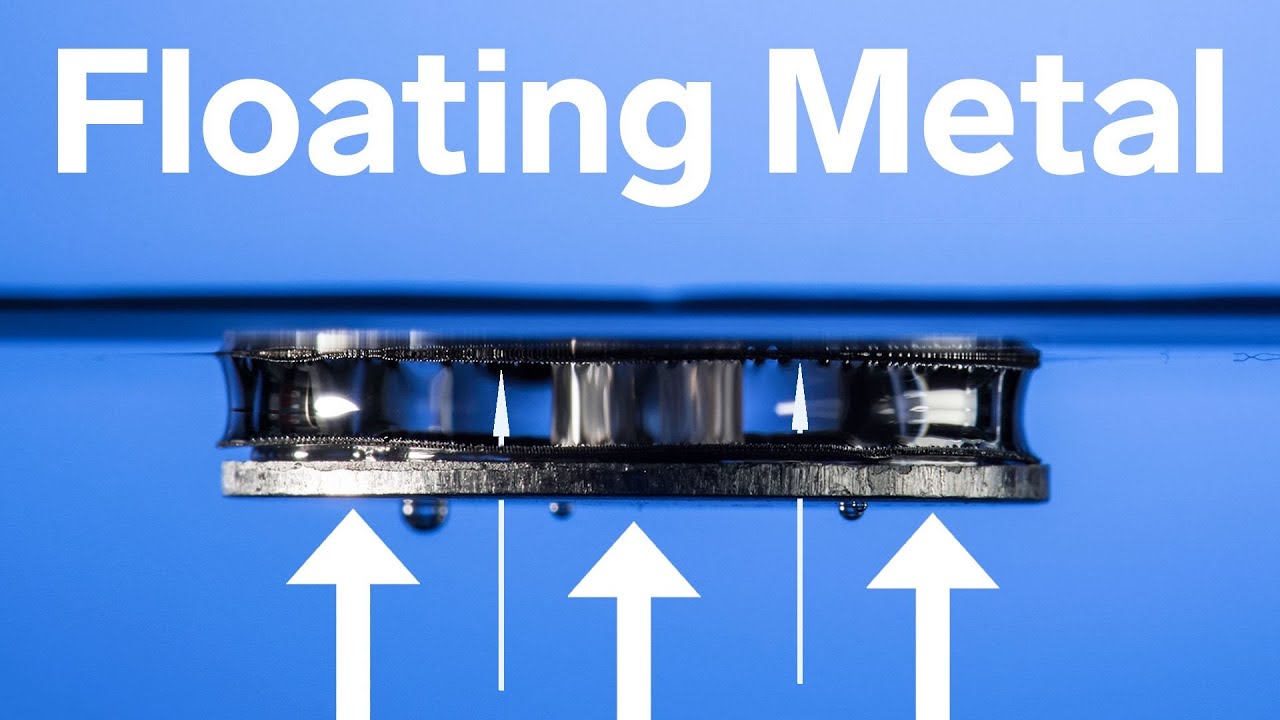
Scientist Explains How Unsinkable Metal Works
video description
Date: 2022-07-06
Related videos




Comments and reviews: 10
MysteriusBhoice
but then heres the deal tho
at higher pressure let's say the pressure of the weight of the ship onto the water will cause the air gap to diminish because all that gas would dissolve in the water
also movement of the ship will cause even further pressure on the air gap causing failure and it behaving like a non coated metal.
So the only way to prove it works is if they used a high pressure chamber to mimmic the pressure at which the bottom part of a boat hull would be exposed to
reply
but then heres the deal tho
at higher pressure let's say the pressure of the weight of the ship onto the water will cause the air gap to diminish because all that gas would dissolve in the water
also movement of the ship will cause even further pressure on the air gap causing failure and it behaving like a non coated metal.
So the only way to prove it works is if they used a high pressure chamber to mimmic the pressure at which the bottom part of a boat hull would be exposed to
reply
Linktothepast83
Unsinkable metal doesn't mean unsinkable boat, simply because a boat would never be only of this metal alone, all the cargo, people, etc. inside would drive it to the bottom of the ocean. Without cargo and people sure it would stay afloat like a wooden plank stays afloat even if it is punctured. Ride that wooden plank though and it will sink. Same here.
reply
Unsinkable metal doesn't mean unsinkable boat, simply because a boat would never be only of this metal alone, all the cargo, people, etc. inside would drive it to the bottom of the ocean. Without cargo and people sure it would stay afloat like a wooden plank stays afloat even if it is punctured. Ride that wooden plank though and it will sink. Same here.
reply
swgeezer
the gaps created by the texture are so small that they don't break the surface tension of the water. you can sink those ants with if you spray them with a super soaker that has some common dish soap because it reduces the waters surface tension. may be able to do that to this metal as well.
reply
the gaps created by the texture are so small that they don't break the surface tension of the water. you can sink those ants with if you spray them with a super soaker that has some common dish soap because it reduces the waters surface tension. may be able to do that to this metal as well.
reply
education
What if the surface gets scratched/damaged?
What if salts form on it or it gets dirty, or metal oxidates?
Do metals oxidate faster or slower?
Interesting concept, but as of yet I wouldn't trust a ship to float just with this, though it could at least slow down the sinking.
reply
What if the surface gets scratched/damaged?
What if salts form on it or it gets dirty, or metal oxidates?
Do metals oxidate faster or slower?
Interesting concept, but as of yet I wouldn't trust a ship to float just with this, though it could at least slow down the sinking.
reply
Poe
There-s some research into a similar material that is cheaper but slightly less effective using diatomaceous earth and a semi hydrophobic coating similar to wax. As of right now it-s only used as a hydrophobic paint but could easily be used for the purpose of floatation.
reply
There-s some research into a similar material that is cheaper but slightly less effective using diatomaceous earth and a semi hydrophobic coating similar to wax. As of right now it-s only used as a hydrophobic paint but could easily be used for the purpose of floatation.
reply
Trebor
-How a typical metal surface becomes hydrophobic: -
-YIKES! I'm being SCORCHED by a laser! -
-Whew, well that wasn't TOO bad I guess. -
-Wait, is that. WATER! What. what. what are you going to do with that! SOMEONE! PLEASE HOLD ME! I'M SCARED! -
reply
-How a typical metal surface becomes hydrophobic: -
-YIKES! I'm being SCORCHED by a laser! -
-Whew, well that wasn't TOO bad I guess. -
-Wait, is that. WATER! What. what. what are you going to do with that! SOMEONE! PLEASE HOLD ME! I'M SCARED! -
reply
CarpIXOYE
Cool research. but producing this laser painted metal is more expensive than producing carbon composite rocket hull. good luck getting turning this into any practical production vehicle, ONCE they figure out how to produce it at a larger scale.
reply
Cool research. but producing this laser painted metal is more expensive than producing carbon composite rocket hull. good luck getting turning this into any practical production vehicle, ONCE they figure out how to produce it at a larger scale.
reply
sanjuansteve
Unsinkable at this scale where the thickness of the metal is not so much more than the thickness of the trapped air pocket, but what happens when you scale up to boat or ship building metal thicknesses?
reply
Unsinkable at this scale where the thickness of the metal is not so much more than the thickness of the trapped air pocket, but what happens when you scale up to boat or ship building metal thicknesses?
reply
El
As to the tech, it's a neat science experiment but completely useless in shipping. The ocean with it's salt and algae and barnacles would destroy the coating so quick. Doubt you could paint it either.
reply
As to the tech, it's a neat science experiment but completely useless in shipping. The ocean with it's salt and algae and barnacles would destroy the coating so quick. Doubt you could paint it either.
reply
concinnus
Even if this could be made economical at ship scale, it would still be only as buoyant as using Styrofoam(EPS)/EPP. Canoes already do this. This guy may be brilliant at materials design, buuuuut.
reply
Even if this could be made economical at ship scale, it would still be only as buoyant as using Styrofoam(EPS)/EPP. Canoes already do this. This guy may be brilliant at materials design, buuuuut.
reply
Add a review, comment
Other channel videos