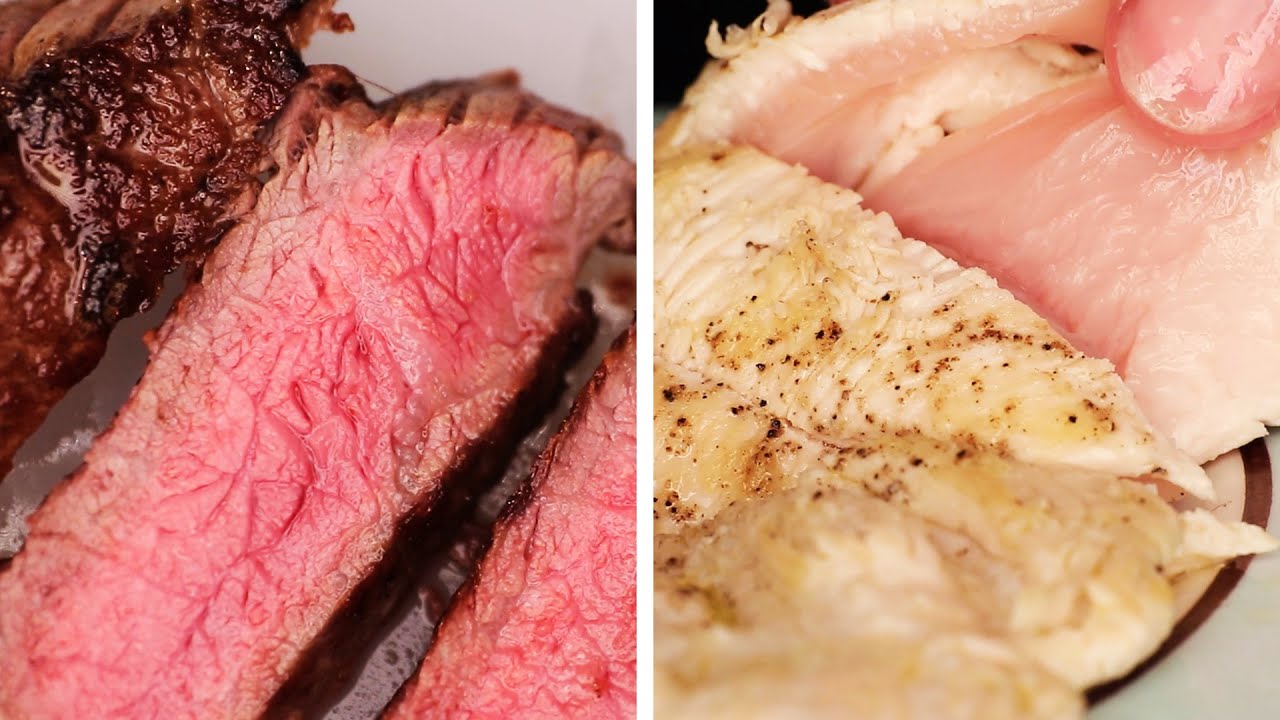
Why Rare Steak is Safe but NOT Rare Chicken
video description
Date: 2019-08-15
Related videos





Comments and reviews: 10
Adam Ragusea
Q: Who actually eats rare chicken? A: Chicken sashimi really is a thing in Japan, but the more likely scenario in which most people in the world would eat underdone chicken is by accident. I know that most people watching this video are aware that underdone chicken is dangerous. My goal was to explain WHY underdone chicken is dangerous, while medium rare beef is generally safe. Q: WHY are pathogens more likely to be present in the interior of a chicken piece, as opposed to the interior of a cut of meat? A: From Dr. Diez: Scientific evidence has shown that bacteria can be detected inside of the muscle tissue of chicken, but in very rare instances they are found inside of a bovines muscle. The explanation may be that bacteria can penetrate the tissues of chicken via the lymphatic system, and that because of the size and shape of the chicken carcasses, they are more prone to absorb fecal bacteria when slaughtered. Q: People in my country commonly eat raw meat of various kinds, and were not dead yet. Why are you being so cautious? A: Food safety standards vary dramatically across the globe. Dr. Diez and I are in the United States, and this video is about how to safely consume the mainstream U. S. food supply. Heres a response from Dr. Diez: A foodborne disease is a complex event that is influenced by a series of factors that involve the pathogen, the person and the environment. First, it depends whether the pathogenic microorganisms are actually present in the piece of meat as much as 30% of raw chicken may have pathogenic bacteria, and in the case of beef and pork, its typically less than 10%. Second, humans have a series of protections against the invasion by pathogenic organisms that involve the acidity of the stomach and our immune system. Third, because of this protection, if the microorganism is present in very low doses, then it will die before it can make us sick. And fourth, the conditions that the meat had been subjected to before been ingested affect the fitness of the microorganism to make us sick and then can be more susceptible to not causing disease. The recommendations are intended to minimize the risk to its minimal. Many of those countries in which meat is eaten raw do not have epidemiological systems that allow us to tell if someone got sick from meat. In many countries, getting a foodborne disease is considered just part of life and consumers do not get outraged if they develop symptoms, even mild ones. Q: You said that pink pork and beef are safe, but what about tapeworm? A: Beef and pork tapeworm do not pose a significant risk in the mainstream food supplies of the U. S, Canada and Western Europe, where the bulk of my audience lives. They do pose a significant risk across much of the Global South. If tapeworm is a big risk where you live, you can kill it by cooking your meat to 145 F (63 C. For steak, that means cooking to at least medium. Q: Ive eaten underdone (or raw) meat in the U. S. many times, and Ive never gotten sick. How is that possible? A: Just because something is risky doesnt mean you definitely will get sick. While pathogens are always present in meat to some degree, they are not always present in concentrations that would be enough to make you sick. U. S. food safety regulators work to enforce practices designed to minimize the presence of pathogens, but the system doesnt always work, and these temperature guidelines are designed to keep you safe in the event of contaminations that can occur in various links of the supply chain. There are documented outbreaks all the time. Another thing to consider is that peoples immune systems vary. Sometimes your body is able to fight off an infection, and sometimes it isnt; some peoples immune systems are particularly weak, such as young children and elderly people. There are many factors that go into determining your risk, and nothing is certain. But following these basic temperature guidelines will keep you out of most trouble. Q: What if I get really high-quality meat from a farm? A: From Dr. Diez: Foodborne pathogens are zoonotic organisms that live naturally in the intestines of livestock and they do not discriminate from one type of production system to the other. Despite the fact that we have made significant progress in developing pre-slaughter food safety systems, they are yet to be fully implemented. The incidence of pathogenic bacteria in poultry and meats has been declining thanks to the multiple interventions during slaughter and meat processing that the industry has been implementing for decades, but it is still far from eliminating all the pathogens completely. Q: Does freezing really make fish safe to eat? A: As Dr. Diez said, freezing helps, but its not a sliver bullet. Bacteria can survive freezing, though studies have shown that Vibrio (the bacteria Dr. Diez mentioned) can be mostly killed (i. e. most of the bacteria dead, some still alive) by long freezing. The main benefit of freezing seafood is that its good for killing parasites, which are the primary risk with seafood. In the U. S, the feds actually mandate that most fish species sold for sushi have to be frozen, for this purposeQ: Cant you make meat safe by heating it to lower cooking temperatures than those recommended and then holding it there for a long time? A: Yes, pasteurization is a function of both time and temperature. You could kill the pathogens in a chicken by holding it at a temperature less than 165 F for a long time. Thats easy to do with a method like sous vide, but thats hardly a common method for home cooking. I made this video to speak to the way I think most people actually cook at home. If you want to get more advanced, thats great.
reply
Q: Who actually eats rare chicken? A: Chicken sashimi really is a thing in Japan, but the more likely scenario in which most people in the world would eat underdone chicken is by accident. I know that most people watching this video are aware that underdone chicken is dangerous. My goal was to explain WHY underdone chicken is dangerous, while medium rare beef is generally safe. Q: WHY are pathogens more likely to be present in the interior of a chicken piece, as opposed to the interior of a cut of meat? A: From Dr. Diez: Scientific evidence has shown that bacteria can be detected inside of the muscle tissue of chicken, but in very rare instances they are found inside of a bovines muscle. The explanation may be that bacteria can penetrate the tissues of chicken via the lymphatic system, and that because of the size and shape of the chicken carcasses, they are more prone to absorb fecal bacteria when slaughtered. Q: People in my country commonly eat raw meat of various kinds, and were not dead yet. Why are you being so cautious? A: Food safety standards vary dramatically across the globe. Dr. Diez and I are in the United States, and this video is about how to safely consume the mainstream U. S. food supply. Heres a response from Dr. Diez: A foodborne disease is a complex event that is influenced by a series of factors that involve the pathogen, the person and the environment. First, it depends whether the pathogenic microorganisms are actually present in the piece of meat as much as 30% of raw chicken may have pathogenic bacteria, and in the case of beef and pork, its typically less than 10%. Second, humans have a series of protections against the invasion by pathogenic organisms that involve the acidity of the stomach and our immune system. Third, because of this protection, if the microorganism is present in very low doses, then it will die before it can make us sick. And fourth, the conditions that the meat had been subjected to before been ingested affect the fitness of the microorganism to make us sick and then can be more susceptible to not causing disease. The recommendations are intended to minimize the risk to its minimal. Many of those countries in which meat is eaten raw do not have epidemiological systems that allow us to tell if someone got sick from meat. In many countries, getting a foodborne disease is considered just part of life and consumers do not get outraged if they develop symptoms, even mild ones. Q: You said that pink pork and beef are safe, but what about tapeworm? A: Beef and pork tapeworm do not pose a significant risk in the mainstream food supplies of the U. S, Canada and Western Europe, where the bulk of my audience lives. They do pose a significant risk across much of the Global South. If tapeworm is a big risk where you live, you can kill it by cooking your meat to 145 F (63 C. For steak, that means cooking to at least medium. Q: Ive eaten underdone (or raw) meat in the U. S. many times, and Ive never gotten sick. How is that possible? A: Just because something is risky doesnt mean you definitely will get sick. While pathogens are always present in meat to some degree, they are not always present in concentrations that would be enough to make you sick. U. S. food safety regulators work to enforce practices designed to minimize the presence of pathogens, but the system doesnt always work, and these temperature guidelines are designed to keep you safe in the event of contaminations that can occur in various links of the supply chain. There are documented outbreaks all the time. Another thing to consider is that peoples immune systems vary. Sometimes your body is able to fight off an infection, and sometimes it isnt; some peoples immune systems are particularly weak, such as young children and elderly people. There are many factors that go into determining your risk, and nothing is certain. But following these basic temperature guidelines will keep you out of most trouble. Q: What if I get really high-quality meat from a farm? A: From Dr. Diez: Foodborne pathogens are zoonotic organisms that live naturally in the intestines of livestock and they do not discriminate from one type of production system to the other. Despite the fact that we have made significant progress in developing pre-slaughter food safety systems, they are yet to be fully implemented. The incidence of pathogenic bacteria in poultry and meats has been declining thanks to the multiple interventions during slaughter and meat processing that the industry has been implementing for decades, but it is still far from eliminating all the pathogens completely. Q: Does freezing really make fish safe to eat? A: As Dr. Diez said, freezing helps, but its not a sliver bullet. Bacteria can survive freezing, though studies have shown that Vibrio (the bacteria Dr. Diez mentioned) can be mostly killed (i. e. most of the bacteria dead, some still alive) by long freezing. The main benefit of freezing seafood is that its good for killing parasites, which are the primary risk with seafood. In the U. S, the feds actually mandate that most fish species sold for sushi have to be frozen, for this purposeQ: Cant you make meat safe by heating it to lower cooking temperatures than those recommended and then holding it there for a long time? A: Yes, pasteurization is a function of both time and temperature. You could kill the pathogens in a chicken by holding it at a temperature less than 165 F for a long time. Thats easy to do with a method like sous vide, but thats hardly a common method for home cooking. I made this video to speak to the way I think most people actually cook at home. If you want to get more advanced, thats great.
reply
Nicolás Chiari
I'm so glad you made this video (and the Q&A in the comments) YouTube is an global platform, and every country has different cares and laws on their food industry, that makes that eating raw or rare types of meat may be safe in one side of the World but not so much on the other side. For instance, I'm from Argentina, and we don't have the same controls on every meat seller, so you have to be very careful on where you buy the meat and how you cook it. I have seen a truck transporting meat, with no refrigeration whatsoever, on a very hot summer day. So it's nice that people like you takes the time to explain how to eat different kinds of meat in a safer way
reply
I'm so glad you made this video (and the Q&A in the comments) YouTube is an global platform, and every country has different cares and laws on their food industry, that makes that eating raw or rare types of meat may be safe in one side of the World but not so much on the other side. For instance, I'm from Argentina, and we don't have the same controls on every meat seller, so you have to be very careful on where you buy the meat and how you cook it. I have seen a truck transporting meat, with no refrigeration whatsoever, on a very hot summer day. So it's nice that people like you takes the time to explain how to eat different kinds of meat in a safer way
reply
Anthony Lane
I like to cook my meat well done on one side and let the heat boil the blood to the other side with all the dead bacteria and parasites in it, then flip it over and burn the shit out of them once again and then eat the meat that belongs to me and not them, or Ill hit them with a bunch of birch and hickory smoke. The meat is usually frozen before I cook it, but Im a good cook Id say.
reply
I like to cook my meat well done on one side and let the heat boil the blood to the other side with all the dead bacteria and parasites in it, then flip it over and burn the shit out of them once again and then eat the meat that belongs to me and not them, or Ill hit them with a bunch of birch and hickory smoke. The meat is usually frozen before I cook it, but Im a good cook Id say.
reply
Syed
He is not the most unique YouTuber but he is pretty up there. How often does one end a video all of a sudden without music or any conclusions with a joke. There was no well if you like the video please thumbs up or links down below. He also answers most questions I have about the video in the comments. I hate cooking shows and videos. but I'll watch his.
reply
He is not the most unique YouTuber but he is pretty up there. How often does one end a video all of a sudden without music or any conclusions with a joke. There was no well if you like the video please thumbs up or links down below. He also answers most questions I have about the video in the comments. I hate cooking shows and videos. but I'll watch his.
reply
legalise nature
Tipical slave living in fear. human stomachs are more acidic then dogs, we have evolved eating raw meat for millions of years before discovering fire, salmonella and ecoli are natural bacteria found in the colon of every animal and will do no harm to you. Humans can eat raw meat with no I'll effects.
reply
Tipical slave living in fear. human stomachs are more acidic then dogs, we have evolved eating raw meat for millions of years before discovering fire, salmonella and ecoli are natural bacteria found in the colon of every animal and will do no harm to you. Humans can eat raw meat with no I'll effects.
reply
Galanchris
Im from germany and we have something thats called Mett (search for it on wiki, its the same name in english)Mett is raw minced pork and some crazy people over here eat it every day. You put it on a bun and add some onions. Not my taste but its a very common dish over here.
reply
Im from germany and we have something thats called Mett (search for it on wiki, its the same name in english)Mett is raw minced pork and some crazy people over here eat it every day. You put it on a bun and add some onions. Not my taste but its a very common dish over here.
reply
DaBomJr
My Dad has cooked burger medium rare for 40 years. I have cooked burgers medium rare or rarer for 15 years. I have never gotten sick. Ever. Medium rare or rarer is safe in ground beef. And if fish are dangerous raw, then sushi will have killed millions.
reply
My Dad has cooked burger medium rare for 40 years. I have cooked burgers medium rare or rarer for 15 years. I have never gotten sick. Ever. Medium rare or rarer is safe in ground beef. And if fish are dangerous raw, then sushi will have killed millions.
reply
corturia
more people get sick from cross contamination useing raw meat than from ingesting it at home in- proper storage in the fridge, not washing hands properly after handleing then handleing something else, or my fav storeing cooked and raw meat together.
reply
more people get sick from cross contamination useing raw meat than from ingesting it at home in- proper storage in the fridge, not washing hands properly after handleing then handleing something else, or my fav storeing cooked and raw meat together.
reply
Sebastian Wendelin
I was a little bit confused by one thing, he says if you cook the steak well you will have no problems, is he talking about cooking it until all the way cooked through, or is he just talking about it being prepared in a well manner
reply
I was a little bit confused by one thing, he says if you cook the steak well you will have no problems, is he talking about cooking it until all the way cooked through, or is he just talking about it being prepared in a well manner
reply
chris
When I was 16 I had a lady come into the fastfood place I worked at and completley lost her shit when me and the cooks said no to her request for her chicken cooked rare. She literally just wanted it seared on each side
reply
When I was 16 I had a lady come into the fastfood place I worked at and completley lost her shit when me and the cooks said no to her request for her chicken cooked rare. She literally just wanted it seared on each side
reply
Add a review, comment
Other channel videos