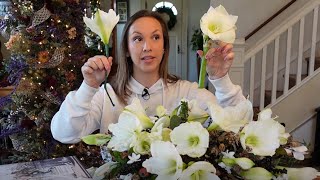
Control Fungus Gnats on Amaryllis Effectively and Easily!
video description
Date: 2022-08-07
Related videos



Comments and reviews: 20
Janie
Hi Danielle, I hope your holidays were wonderful! I find your information so very helpful. i watched your video on planting and growing amaryllis and am excited my two bulbs are beginning to start pushing out the leaves. The question I have is some of the shoots are not green but a light cream color. Is there anything I need to do to help them greenup? Also, do you water one quarter of a cup when the shoots are 2-3 inches high? Last year one stalk got so heavy with the buds and blooms it completely was bent over. i am thrilled to be growing them a second year. Yours are so beautiful! I look forward to what you will be sharing in the next weeks about seed starting and the coming growing season. Thank you, Janie
reply
Sarah
Thanks for the information! I started using sticky traps last year when my seed starting grew exponentially, but I didn't know about the hydrogen peroxide solution for the larvae. So helpful! Have you ever brought spider mites inside? That happened to me this fall when I brought impatiens in to overwinter and despite weekly treatment with insecticidal soap I can't seem to get rid of them. I love and appreciate how informative and helpful your videos are. not to mention your soothing voice makes even fungus gnats sound interesting! haha Thank you!
reply
Aromanesence
Just recently I found them in my house. for the second year! Last year was awful trying to get rid of them. I had inadvertently brought them out into my garden from inside under my grow lights. Now just a few weeks ago I made the mistake of bringing inside a hyacinth planter that had potting mix over a year old, and boom, fungus gnats. For those of you who make the same mistake that I did last year, and now your whole garden is infested, get nematodes. That was what finally got rid of them in my outside garden.
reply
Kathy
Would the hydrogen peroxide drench be safe to use on some other soil I had kale and lettuce seedlings in that were planted with the same bag of soil that had the fungus gnat issue? I have already removed those 2 planters from my grow room but hate to waste the potting soil. I was going to add it to some planters that I have strawberry plants growing in that need more soil. I just want to make sure the strawberries will be safe to eat after growing in this soil or should I just pitch it? The planters are outside.
reply
Garden
Fungus gnats! Such a pain and a very timely topic. The sticky traps are so helpful. I also use Mosquito Bits when watering, it works well too. I did an initial watering of all of my bulbs with the Hydrogen Peroxide mixture. The Amaryllis Man also suggests a hydrogen peroxide spray for the leaves to help control red blotch. (I believe that it is a ratio of 1 to 10, the peroxide needs to be really watered down for the spray)
reply
Caroline
Thank you Danielle, I had this problem last year. They were infesting all of my seedlings that I start on heat mats on my windowsills and my house plants. Is it OK to use the peroxide solution on emerging seedlings? Have you tried this? I'm worried about loosing expensive seeds but then again the gnats cause a lot of damage. Going to get some seed plug trays with better drainage, it it better to water from below?
reply
Lisa
Very helpful info! I-ve used the sticky yellow tags in past but was happy to learn about the hydrogen peroxide treatment for the soil. Would you happen to have any advice on aphid management as well? Those are another pest that I have had to deal with this past growing season, they seem impossible to get rid off. Thanks so much for sharing all that you do
reply
Lynn
Hydrogen Peroxide! for the win. I have learned so much from you. This treatment I have never heard of and did it immediately after watching the video yesterday. I already had the traps out but this helped and will help so much. Cannot thank you enough for your awesome videos. Keep up the great work.
reply
Arts
Once again, thanks for your helpful information! I had a bad fungus gnat infestation last spring and summer on my grow light stand where I was starting my seedlings, and so I bought the sticky traps. I will definitely try the hydrogen peroxide solution for the soil. Your plants are so beautiful!
reply
Susan
Thank you Danielle! Very helpful information. I wanted to know if you can use the part hydrogen peroxide / water soultion to water regular plants too? We have a number of African violets and are starting seedlings. Wanted to know if it would be okay to us the solution on them too? Thank you!
reply
Thank you Danielle! Very helpful information. I wanted to know if you can use the part hydrogen peroxide / water soultion to water regular plants too? We have a number of African violets and are starting seedlings. Wanted to know if it would be okay to us the solution on them too? Thank you!
reply
Gardening
Very helpful, thank you! Fungus gnats-ugh! I-ve decided to never use the coco coir planting medium with Amaryllis. It just holds on to too much moisture. Thank you for the info about the hydrogen peroxide. Will definitely remember that! Your Amaryllis are amazingly beautiful -
reply
Very helpful, thank you! Fungus gnats-ugh! I-ve decided to never use the coco coir planting medium with Amaryllis. It just holds on to too much moisture. Thank you for the info about the hydrogen peroxide. Will definitely remember that! Your Amaryllis are amazingly beautiful -
reply
EmKn
Oh my word I had the worst invasion of fungus gnats last year. I used old school fly strips and granular mosquito killer (bt) to finally get it under control. But hydrogen peroxide would definitely be a more affordable and -natural- option. Thanks!
reply
Oh my word I had the worst invasion of fungus gnats last year. I used old school fly strips and granular mosquito killer (bt) to finally get it under control. But hydrogen peroxide would definitely be a more affordable and -natural- option. Thanks!
reply
Seasonal
Incredibly helpful thank you. I have these gnats for the first time. I swear that my Espoma Organic Potting Mix is where mine came from as I transplanted a plant that was inside and use that mix and I-ve never had these gnats before.
reply
Incredibly helpful thank you. I have these gnats for the first time. I swear that my Espoma Organic Potting Mix is where mine came from as I transplanted a plant that was inside and use that mix and I-ve never had these gnats before.
reply
Pete
So helpful! When I do my seed starting I have horrible gnats and use those sticky traps. I'm thinking I'll make that Hydrogen Peroxide mixture and spray it on top of the soil in my trays? I'm thinking that would work.
reply
So helpful! When I do my seed starting I have horrible gnats and use those sticky traps. I'm thinking I'll make that Hydrogen Peroxide mixture and spray it on top of the soil in my trays? I'm thinking that would work.
reply
Thea
This is awesome and so helpful! I have been saving used coffee grounds to fertilize our hydrangeas and the gnats took to the grounds big time. Now that I-m done saving coffee this will help me get rid of the bugs!
reply
This is awesome and so helpful! I have been saving used coffee grounds to fertilize our hydrangeas and the gnats took to the grounds big time. Now that I-m done saving coffee this will help me get rid of the bugs!
reply
Kim
I was avoiding Amaryllis because I heard they were toxic to cats, but received one for Christmas from someone who was not aware of this. Do I need to be concerned about my cat? Are they as toxic as lilies?
reply
I was avoiding Amaryllis because I heard they were toxic to cats, but received one for Christmas from someone who was not aware of this. Do I need to be concerned about my cat? Are they as toxic as lilies?
reply
Alpine
I use the sticky traps and have caught several adults but have never tried the 3% hydrogen peroxide. Would this be safe for newly planted seeds and seedlings? Thanks again for all you share!
reply
I use the sticky traps and have caught several adults but have never tried the 3% hydrogen peroxide. Would this be safe for newly planted seeds and seedlings? Thanks again for all you share!
reply
Karen
THANKS! Can you put the 3% Hydrogen Peroxide 1: 3 water solution for ANY houseplants? Any to avoid? I have a fiddle leaf fig tree and peace lillies I want to treat. but don't want to kill: )
reply
THANKS! Can you put the 3% Hydrogen Peroxide 1: 3 water solution for ANY houseplants? Any to avoid? I have a fiddle leaf fig tree and peace lillies I want to treat. but don't want to kill: )
reply
Susan
I am so thankful for this information! I had a terrible infestation last year. i used sticky traps, but nothing for the larvae. This will help me so much if the same thing happens this year.
reply
I am so thankful for this information! I had a terrible infestation last year. i used sticky traps, but nothing for the larvae. This will help me so much if the same thing happens this year.
reply
Creatively,
People always look at me like I'm crazy when I'm popping out plants and examining them! - but hey if I'm paying for something, I don't want it to have bugs or any other issues!
reply
People always look at me like I'm crazy when I'm popping out plants and examining them! - but hey if I'm paying for something, I don't want it to have bugs or any other issues!
reply
Add a review, comment
Other channel videos

 13:32