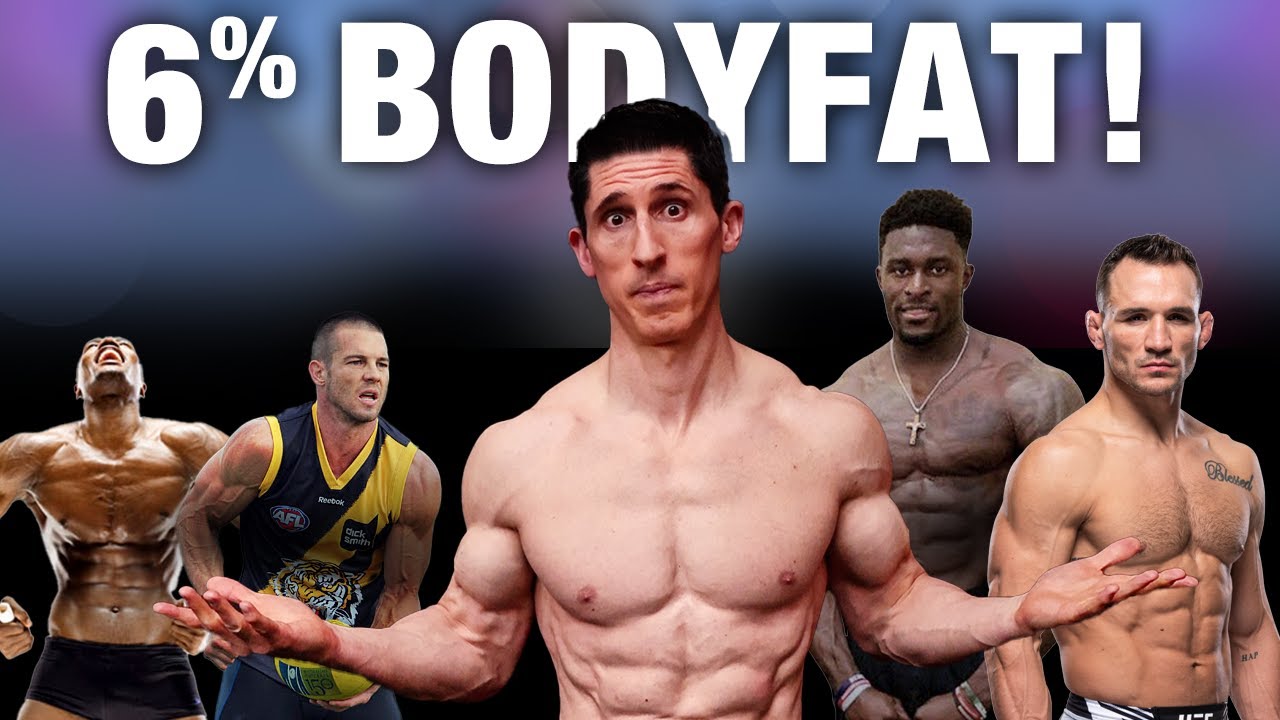
6% Body Fat is Ideal For Men (HARSH TRUTH)
video description
Date: 2023-02-20
Related videos



Comments and reviews: 14
VTPSTTU
Years ago, I used to do a great deal of bicycling. I once read an article about different body builds for cycling. The point of the article was that the best body build depended on the terrain that one rode the most. They said that for cyclists who were climbing hills most of the time, a much smaller body was better. They said that hill-climbing was mostly an exercise in aerobics. To paraphrase, a cyclist climbs hills on his or her oxygen use. More mass requires more oxygen uptake to go up the hill, and even the best-trained human lungs can only provide a certain amount of oxygen. Once someone goes beyond a certain mass, even in muscle mass, the additional mass causes more detriment than benefit. On the other hand, a cyclist who is riding mostly on flat ground can afford to carry more mass in order to get more strength. On flat ground, the cyclist's efforts are primarily spent overcoming air resistance. In those circumstances, the amount of air resistance added is almost insignificant with most increases in muscle mass. Therefore, the bigger, higher muscle mass rider isn't hampered in any way by having more muscle mass and can therefore ride faster on flat ground by having more muscle.
I understand that this article was not about body fat. While they didn't specify a body fat percentage that I can remember, the implication that I remember was that they were discussing athletes of equal body fat and varying amount of muscle tissue.
As I apply the ideas of that article to this video, my sense is that much depends on the type of performance one is trying to achieve. If elite performance in one's sport requires optimization of oxygen usage, particularly oxygen usage to push the body against gravity, then anything that lowers overall mass will improve performance. If optimization of oxygen usage is less of a factor in elite performance, than having more mass in either muscle or fat will be less of a problem. In some cases, more mass helps to set one's base and exert force on an object or an opponent. In other cases, more mass can be put into motion in a way that helps to exert force on an object or opponent. In those cases, more mass in either fat or muscle might be helpful.
(I was on the fire crew at work for ten years. In one of my first training sessions, one of the guys on the crew remarked that I was standing too upright as the second or third guy on a hose line. He showed me how to lean into the hose so that my weight was a tremendous advantage. I would have been much more effective if my weight had been in muscle instead of fat, and I was at a high body fat percentage. Even so, when I used that fat effectively, I could anchor a fire hose pretty effectively. As I got better at the technique, people were glad to have me behind them holding that hose in place against the force of the water)
In terms of appearance, you are right that appearance will be subjective, but I don't think you can say that ten percent will always look better than fifteen or twenty percent to every individual. Lower body fat makes anyone look more defined, but not everyone finds extreme definition attractive. As a man, I'm not automatically more attracted to women when they have more muscular definition. I've heard some women say that they are more attracted to a man who isn't flabby in any way but who isn't completely defined down to every muscle fiber.
I realize that definition is a good indication of one's dedication to fitness. A person who has a very low body fat and therefore extreme definition must have spent a great deal of time exercising in a very dedicated way and usually following a very specific exercise program. Likewise, achieving that look requires tremendous dedication to a specific kind of diet. For people who value those things, seeing the evidence of those things in someone else is probably very attractive.
The other side of that coin is that for those of us whose lives aren't defined by fitness training, that level of definition just doesn't hold the same attraction. I would like the guy that I see in the mirror more if my body fat were thirty percent instead of thirty-five percent. I'd like him better at twenty-five percent than at thirty percent. I'd probably even like him better at twenty percent than at twenty-five percent. On the other hand, I was at about ten percent body fat in my mid to late twenties. I thought that body fat was a better choice for me for the biking and hiking that I was doing. I don't think that body fat was most attractive. I would have looked better if I'd added some muscle mass but also added a little bit more fat so that I didn't look so gaunt. Adding more body fat would have made me appear less defined and possibly less muscular to those who define muscularity by definition. However, I think I would have looked stronger with more muscle mass and a little bit of fat smoothing that mass.
reply
Years ago, I used to do a great deal of bicycling. I once read an article about different body builds for cycling. The point of the article was that the best body build depended on the terrain that one rode the most. They said that for cyclists who were climbing hills most of the time, a much smaller body was better. They said that hill-climbing was mostly an exercise in aerobics. To paraphrase, a cyclist climbs hills on his or her oxygen use. More mass requires more oxygen uptake to go up the hill, and even the best-trained human lungs can only provide a certain amount of oxygen. Once someone goes beyond a certain mass, even in muscle mass, the additional mass causes more detriment than benefit. On the other hand, a cyclist who is riding mostly on flat ground can afford to carry more mass in order to get more strength. On flat ground, the cyclist's efforts are primarily spent overcoming air resistance. In those circumstances, the amount of air resistance added is almost insignificant with most increases in muscle mass. Therefore, the bigger, higher muscle mass rider isn't hampered in any way by having more muscle mass and can therefore ride faster on flat ground by having more muscle.
I understand that this article was not about body fat. While they didn't specify a body fat percentage that I can remember, the implication that I remember was that they were discussing athletes of equal body fat and varying amount of muscle tissue.
As I apply the ideas of that article to this video, my sense is that much depends on the type of performance one is trying to achieve. If elite performance in one's sport requires optimization of oxygen usage, particularly oxygen usage to push the body against gravity, then anything that lowers overall mass will improve performance. If optimization of oxygen usage is less of a factor in elite performance, than having more mass in either muscle or fat will be less of a problem. In some cases, more mass helps to set one's base and exert force on an object or an opponent. In other cases, more mass can be put into motion in a way that helps to exert force on an object or opponent. In those cases, more mass in either fat or muscle might be helpful.
(I was on the fire crew at work for ten years. In one of my first training sessions, one of the guys on the crew remarked that I was standing too upright as the second or third guy on a hose line. He showed me how to lean into the hose so that my weight was a tremendous advantage. I would have been much more effective if my weight had been in muscle instead of fat, and I was at a high body fat percentage. Even so, when I used that fat effectively, I could anchor a fire hose pretty effectively. As I got better at the technique, people were glad to have me behind them holding that hose in place against the force of the water)
In terms of appearance, you are right that appearance will be subjective, but I don't think you can say that ten percent will always look better than fifteen or twenty percent to every individual. Lower body fat makes anyone look more defined, but not everyone finds extreme definition attractive. As a man, I'm not automatically more attracted to women when they have more muscular definition. I've heard some women say that they are more attracted to a man who isn't flabby in any way but who isn't completely defined down to every muscle fiber.
I realize that definition is a good indication of one's dedication to fitness. A person who has a very low body fat and therefore extreme definition must have spent a great deal of time exercising in a very dedicated way and usually following a very specific exercise program. Likewise, achieving that look requires tremendous dedication to a specific kind of diet. For people who value those things, seeing the evidence of those things in someone else is probably very attractive.
The other side of that coin is that for those of us whose lives aren't defined by fitness training, that level of definition just doesn't hold the same attraction. I would like the guy that I see in the mirror more if my body fat were thirty percent instead of thirty-five percent. I'd like him better at twenty-five percent than at thirty percent. I'd probably even like him better at twenty percent than at twenty-five percent. On the other hand, I was at about ten percent body fat in my mid to late twenties. I thought that body fat was a better choice for me for the biking and hiking that I was doing. I don't think that body fat was most attractive. I would have looked better if I'd added some muscle mass but also added a little bit more fat so that I didn't look so gaunt. Adding more body fat would have made me appear less defined and possibly less muscular to those who define muscularity by definition. However, I think I would have looked stronger with more muscle mass and a little bit of fat smoothing that mass.
reply
Erick
10 years ago I was 155lbs with 6. 6% bodyfat according to a metabolic study I took part in. My bench press was 350lb, Olympic squat of 455lb, and deadlift of 480lbx2 (pulled it twice. It was a different lifestyle. I did cardio for about 45 minutes at least 3 days a week. I ate lean chicken and stayed away from carbs except for Saturdays when I would eat pizza. I was able to maintain that level of fitness for less than 2 years.
Currently I am 15% body fat at 152lbs. I am nowhere near as strong as I was but I did take a long break and have only been working out for 4. 5 months. I started off weighing 126lbs at 8% body fat 4. 5 months ago. I have been trying to bulk ever since. I'm not doing any cardio and I'm eating whatever I want but I'm comfortable with it. It's a lot easier to maintain because I don't have to eat a certain way and with 3 kids I don't get enough sleep anyway.
I probably will never achieve the body I once had 10 years ago. Going on 40 years old this year and with 2 shoulder surgeries I can't lift the way I used to. It really was a different lifestyle (at least for me) to achieve that 6. 6% body fat. Hats off to anyone who've been able to comfortably maintain it.
reply
10 years ago I was 155lbs with 6. 6% bodyfat according to a metabolic study I took part in. My bench press was 350lb, Olympic squat of 455lb, and deadlift of 480lbx2 (pulled it twice. It was a different lifestyle. I did cardio for about 45 minutes at least 3 days a week. I ate lean chicken and stayed away from carbs except for Saturdays when I would eat pizza. I was able to maintain that level of fitness for less than 2 years.
Currently I am 15% body fat at 152lbs. I am nowhere near as strong as I was but I did take a long break and have only been working out for 4. 5 months. I started off weighing 126lbs at 8% body fat 4. 5 months ago. I have been trying to bulk ever since. I'm not doing any cardio and I'm eating whatever I want but I'm comfortable with it. It's a lot easier to maintain because I don't have to eat a certain way and with 3 kids I don't get enough sleep anyway.
I probably will never achieve the body I once had 10 years ago. Going on 40 years old this year and with 2 shoulder surgeries I can't lift the way I used to. It really was a different lifestyle (at least for me) to achieve that 6. 6% body fat. Hats off to anyone who've been able to comfortably maintain it.
reply
Jacob
I'm pretty happy with where I'm at right now. I'm 8-9% body fat plus or minus the 5% error margin (I'm going to be clear though, while it's mathematically possible that I'm lower, I know that there's no way I'm under 8%. I don't get much satisfaction from my food, so it doesn't bother me to eat chicken and brocolli day after day for lunch and dinner with eggs, a banana, and oatmeal in the morning. I do get that its not everyones goal to get super low in body-fat% though, and I totally respect that. For me, my personal restrictions are that I need to have a visible V-cut, even if it isn't the best or most clear V-cut ever, as long as its visibly there I'm happy. I don't think that anyone should worry about what their bodies look like as long as they're healthy and are acheiving their personal goals, but I feel pretty insecure about my own body, even at this level. That's why its important for me to keep up my phisique like I have for the past 3 years. I'd like to try and get lower to 6 or 7% one day, just to see what its like, though I probably wouldn't want to stay there.
Good luck in achieving your goals, whatever they may be.
reply
I'm pretty happy with where I'm at right now. I'm 8-9% body fat plus or minus the 5% error margin (I'm going to be clear though, while it's mathematically possible that I'm lower, I know that there's no way I'm under 8%. I don't get much satisfaction from my food, so it doesn't bother me to eat chicken and brocolli day after day for lunch and dinner with eggs, a banana, and oatmeal in the morning. I do get that its not everyones goal to get super low in body-fat% though, and I totally respect that. For me, my personal restrictions are that I need to have a visible V-cut, even if it isn't the best or most clear V-cut ever, as long as its visibly there I'm happy. I don't think that anyone should worry about what their bodies look like as long as they're healthy and are acheiving their personal goals, but I feel pretty insecure about my own body, even at this level. That's why its important for me to keep up my phisique like I have for the past 3 years. I'd like to try and get lower to 6 or 7% one day, just to see what its like, though I probably wouldn't want to stay there.
Good luck in achieving your goals, whatever they may be.
reply
sport
The title of the video was intriguing and glad to hear that you don't recommend 6% body fat for everyone. I do agree 100% with you on being consistent. Once I changed my eating habits and style (eliminate majority sugar and salt) I was able to finally see the top 2 upper abs. Not fully but when I crunch I can see them. this was immense motivation because I know the bottom 2 abs are the HARDEST. With that said, I do agree in that certain body types may not, as you put it, physiologically be able to get down to 6%. In my case I took an InBody fitness test (Body Composition Analysis: Muscle, Fat & Water) at my local gym. My resutls was 12. 1% body fat. For my age (above 40) I was told that was great. Ideally I thought if I can get to 10% (or even single digit) that would be a goal. But in the end. would I be able to maintain it? I know that's the hard part. But if not then I'd be happy at 10% and still try to see if I can get the other 2 abs to show. Just have to continue to be consistent in my daily eating habits.
Great video Jeff.
reply
The title of the video was intriguing and glad to hear that you don't recommend 6% body fat for everyone. I do agree 100% with you on being consistent. Once I changed my eating habits and style (eliminate majority sugar and salt) I was able to finally see the top 2 upper abs. Not fully but when I crunch I can see them. this was immense motivation because I know the bottom 2 abs are the HARDEST. With that said, I do agree in that certain body types may not, as you put it, physiologically be able to get down to 6%. In my case I took an InBody fitness test (Body Composition Analysis: Muscle, Fat & Water) at my local gym. My resutls was 12. 1% body fat. For my age (above 40) I was told that was great. Ideally I thought if I can get to 10% (or even single digit) that would be a goal. But in the end. would I be able to maintain it? I know that's the hard part. But if not then I'd be happy at 10% and still try to see if I can get the other 2 abs to show. Just have to continue to be consistent in my daily eating habits.
Great video Jeff.
reply
Marc
It's also important to understand the impact low body fat can have on your hormones, specifically testosterone. Yes everybody is different, but 2 great examples are Jesse James West and Alex Eubank. Both content creators in their mid 20s (highly recommended. Both have amazing physiques and genetics. Don't quote me but I want to say they're currently around 10-12% bf. A few months ago they were both single digit bf, both had their testosterone tested and both their T levels' were that of a 75 year old male. Both complained of low energy, brain fog, short temper, etc. etc. Their journeys and videos on this was super eye opening. Yes we all chase that shredded physique but listen to your body and figure out what works for you and maintain it. Not saying to let yourself go and binge but don't keep chasing unicorns if that means sucking the life out of you. whether that's 6-7% for Jeff, 10-12% for the Jesse's and Alex's of the world, 12-15% for the average Joe, and 15-17% for the rest. STAY RELENTLESS. PEACE!
reply
It's also important to understand the impact low body fat can have on your hormones, specifically testosterone. Yes everybody is different, but 2 great examples are Jesse James West and Alex Eubank. Both content creators in their mid 20s (highly recommended. Both have amazing physiques and genetics. Don't quote me but I want to say they're currently around 10-12% bf. A few months ago they were both single digit bf, both had their testosterone tested and both their T levels' were that of a 75 year old male. Both complained of low energy, brain fog, short temper, etc. etc. Their journeys and videos on this was super eye opening. Yes we all chase that shredded physique but listen to your body and figure out what works for you and maintain it. Not saying to let yourself go and binge but don't keep chasing unicorns if that means sucking the life out of you. whether that's 6-7% for Jeff, 10-12% for the Jesse's and Alex's of the world, 12-15% for the average Joe, and 15-17% for the rest. STAY RELENTLESS. PEACE!
reply
D.
One video that may be helpful to those newer to working out (forgive me if you ve done it already I discovered you a week ago and restructured my daily workouts) would be on how to structure your workouts throughout the week. For example what order you should/shouldn t target certain muscle groups (if today you do back tomorrow don t do ___, how many exercises and sets in each workout, is it better to combine muscle groups like back and bi or dedicate full days to each, how many days should you rest certain muscle groups before hitting them again, etc. I know that s a lot but for example right now I have 8 3-set exercises per workout, each workout targeting a specific muscle group. I do chest on tue & Fri, back on wed, shoulder on thur, bi on Saturday, full upper body on sun morning, legs sun night, rest Monday. Now I want to add tricep and forearms but am scared to sacrifice parts of my other workouts or overdo it. I know I m doin something, probably a few things wrong, I just don t know what lol
reply
One video that may be helpful to those newer to working out (forgive me if you ve done it already I discovered you a week ago and restructured my daily workouts) would be on how to structure your workouts throughout the week. For example what order you should/shouldn t target certain muscle groups (if today you do back tomorrow don t do ___, how many exercises and sets in each workout, is it better to combine muscle groups like back and bi or dedicate full days to each, how many days should you rest certain muscle groups before hitting them again, etc. I know that s a lot but for example right now I have 8 3-set exercises per workout, each workout targeting a specific muscle group. I do chest on tue & Fri, back on wed, shoulder on thur, bi on Saturday, full upper body on sun morning, legs sun night, rest Monday. Now I want to add tricep and forearms but am scared to sacrifice parts of my other workouts or overdo it. I know I m doin something, probably a few things wrong, I just don t know what lol
reply
Imtiyaz
I don't think Jeff answer the question. After watching this video I still don't know where I need to be. The answer I was hoping from him was, if you are looking for aesthetics (6-packs, then you need to be between 6%-10%, if you are looking for body definition 8%-13%, with dense muscle mass then x, etc. I do not believe people asking about body fat questions are coming from professional marathon runner, or MMA fighter or linebacker. They have their own fitness trainer. I believe, Jeff's audiences are average people who are either full-time student or have full-time job. Jeff has created many video about nutrition and body fat and this video directly related to it. If we need to follow those videos to reach at certain body fat level then we need to know what that needs to be. So again what would be an ideal body fat for men to have visible 6 packs and muscles definition.
reply
I don't think Jeff answer the question. After watching this video I still don't know where I need to be. The answer I was hoping from him was, if you are looking for aesthetics (6-packs, then you need to be between 6%-10%, if you are looking for body definition 8%-13%, with dense muscle mass then x, etc. I do not believe people asking about body fat questions are coming from professional marathon runner, or MMA fighter or linebacker. They have their own fitness trainer. I believe, Jeff's audiences are average people who are either full-time student or have full-time job. Jeff has created many video about nutrition and body fat and this video directly related to it. If we need to follow those videos to reach at certain body fat level then we need to know what that needs to be. So again what would be an ideal body fat for men to have visible 6 packs and muscles definition.
reply
Doc
I definitely suffer performance wise and struggle with health at 6% levels and get all kinds of problems and my body simply wont stay in that zone but I can force it doing very high deficits like with long fasts (5 to 7 day water and electrolytes only) which I actually REALLY enjoy so I would use that as excuse to do more often rather than just every other month but I lose musclemass like crazy if I do so I stick to time restricted. I eat hyper clean and have for 25 years, I'm mid 40's and 6'4 height and drift between 8% and 14% tbf and perform, look and feel my best around 12%. I currently sit at 10% and that is where I am most the time but 6% is just terrible for me. At 6% I look scary gaunt, body looks alright at first with hard definition although hard to keep from dropping too much muscle but it makes my face look like Christian bale in the machinist at that level
reply
I definitely suffer performance wise and struggle with health at 6% levels and get all kinds of problems and my body simply wont stay in that zone but I can force it doing very high deficits like with long fasts (5 to 7 day water and electrolytes only) which I actually REALLY enjoy so I would use that as excuse to do more often rather than just every other month but I lose musclemass like crazy if I do so I stick to time restricted. I eat hyper clean and have for 25 years, I'm mid 40's and 6'4 height and drift between 8% and 14% tbf and perform, look and feel my best around 12%. I currently sit at 10% and that is where I am most the time but 6% is just terrible for me. At 6% I look scary gaunt, body looks alright at first with hard definition although hard to keep from dropping too much muscle but it makes my face look like Christian bale in the machinist at that level
reply
Steve
Recent body fat bet between 2 poker players: One year ago, Doug Polk bet 200, 000 on dropping 50% body fat within 365 days against fellow poker player Bill Perkins. He revealed on Thursday that he fell just short of victory.
There weren't many stipulations to the bet, which began on Feb. 11, 2022. By 1: 30 p. m. CT on Feb. 10, 2023, the Upswing Poker founder had to drop at least 50% of his body fat, going from around 28% body fat to 13. 85%, or he'd lose. He was at liberty to choose any diet and exercise regimen he wanted.
At the end of the challenge, he was down to 15. 1% body fat, just 1. 3% body fat away from winning. Instead, he's out 200, 000 to Perkins, an avid prop bettor.
reply
Recent body fat bet between 2 poker players: One year ago, Doug Polk bet 200, 000 on dropping 50% body fat within 365 days against fellow poker player Bill Perkins. He revealed on Thursday that he fell just short of victory.
There weren't many stipulations to the bet, which began on Feb. 11, 2022. By 1: 30 p. m. CT on Feb. 10, 2023, the Upswing Poker founder had to drop at least 50% of his body fat, going from around 28% body fat to 13. 85%, or he'd lose. He was at liberty to choose any diet and exercise regimen he wanted.
At the end of the challenge, he was down to 15. 1% body fat, just 1. 3% body fat away from winning. Instead, he's out 200, 000 to Perkins, an avid prop bettor.
reply
Nelness
The one thing that Jeff really never addresses is how uncomfortable it is for those who want to gain weight to force feed themselves. My natural weight is 134lbs and I m 5 11. I m built to run distance and do, but I also like to lift weights. I ve given up trying to gain weight because force feeding myself doesn t feel good. I also wonder how healthy it is for those who try to gain more weight than their natural body weight is. I read about an NFL lineman who had to eat 5000kcals a day and he had such a hard time doing this that he had to eat ground-up meat. What a shame. Then he ll end up with CTE.
reply
The one thing that Jeff really never addresses is how uncomfortable it is for those who want to gain weight to force feed themselves. My natural weight is 134lbs and I m 5 11. I m built to run distance and do, but I also like to lift weights. I ve given up trying to gain weight because force feeding myself doesn t feel good. I also wonder how healthy it is for those who try to gain more weight than their natural body weight is. I read about an NFL lineman who had to eat 5000kcals a day and he had such a hard time doing this that he had to eat ground-up meat. What a shame. Then he ll end up with CTE.
reply
Steven
6% imo is definitely NOT optimal for most men. Few can even achieve it. At 18 I was very strong at 6% bf 27 waist 41 chest. But I lifted, ran 5 miles almost every day, in martial arts and (in the 70 s) devoured everything I could about lifting, supplementation dieting. And i was blessed with the genetics for it. At 60 now 6% is achievable but I hate it. It s now very hard to maintain my muscle mass at 6%. 46 chest and 32 waist at 10% to 12% bf. And still gives me a decent 6 pack. But honestly, few seem to really be interested to do the work and maintain the discipline to even look fairly good.
reply
6% imo is definitely NOT optimal for most men. Few can even achieve it. At 18 I was very strong at 6% bf 27 waist 41 chest. But I lifted, ran 5 miles almost every day, in martial arts and (in the 70 s) devoured everything I could about lifting, supplementation dieting. And i was blessed with the genetics for it. At 60 now 6% is achievable but I hate it. It s now very hard to maintain my muscle mass at 6%. 46 chest and 32 waist at 10% to 12% bf. And still gives me a decent 6 pack. But honestly, few seem to really be interested to do the work and maintain the discipline to even look fairly good.
reply
Indomitable25
Sean nalewanjyi and others tried to dunk on Jeff by saying he recommends being at 6% body fat when he never explicitly recommended that in his videos. Just because he is at 6% body fat doesn t mean you should be at 6% body fat. Jeff has always been a proponent of doing what works for you and your goals, so he never means to say that you should copy him, especially when it comes to nutrition. For him, he s at 6% body fat cause his goal is to be shredded and achieve a certain leanness. It s his job and brand, and it helps him in videos (muscle markers, outlining the muscle fibers, etc )
reply
Sean nalewanjyi and others tried to dunk on Jeff by saying he recommends being at 6% body fat when he never explicitly recommended that in his videos. Just because he is at 6% body fat doesn t mean you should be at 6% body fat. Jeff has always been a proponent of doing what works for you and your goals, so he never means to say that you should copy him, especially when it comes to nutrition. For him, he s at 6% body fat cause his goal is to be shredded and achieve a certain leanness. It s his job and brand, and it helps him in videos (muscle markers, outlining the muscle fibers, etc )
reply
Mike
I like the way you explained and use jessi as an example the problem is not many people that has the desire to look like jessi are skinny as he was mostly are obese like me that I m following your program and counting macros every day it to difficult to go lower than 25% fat and if I it less than 1700 calories I feel crap at the gym and hungry the whole day and I can drink 3 gallons of water it does not goes away. In my case I focus to gain muscle and look leaner by muscle growth it s hard not impossible.
Thanks for the explanation Jeff
reply
I like the way you explained and use jessi as an example the problem is not many people that has the desire to look like jessi are skinny as he was mostly are obese like me that I m following your program and counting macros every day it to difficult to go lower than 25% fat and if I it less than 1700 calories I feel crap at the gym and hungry the whole day and I can drink 3 gallons of water it does not goes away. In my case I focus to gain muscle and look leaner by muscle growth it s hard not impossible.
Thanks for the explanation Jeff
reply
Bruce
I guess you have to work out where your testosterone levels peak and where your recovery is optimal. Most is about optimal hormone levels for performance, to get them to optimal, most people that is 10 to 14% bodyfat. Like muscle growth happens because you get your hormones corrected. Protein synthesis and shit. Like you aren't growing cause your hormones aren't optimal. The rest is down to eye of the beholder. Nuts starring at lean people all the time think 6% is best. Regular people, the vast majority probably think 20% is best
reply
I guess you have to work out where your testosterone levels peak and where your recovery is optimal. Most is about optimal hormone levels for performance, to get them to optimal, most people that is 10 to 14% bodyfat. Like muscle growth happens because you get your hormones corrected. Protein synthesis and shit. Like you aren't growing cause your hormones aren't optimal. The rest is down to eye of the beholder. Nuts starring at lean people all the time think 6% is best. Regular people, the vast majority probably think 20% is best
reply
Add a review, comment
Other channel videos