Where Is the Best Place to Locate a Theme Park
video description
Date: 2025-09-01
Related videos





Comments and reviews: 20
ReeseofEastAnglia
A few other points I would mention on locating a theme park
1) Correlation with other theme parks. Disneyland Anaheim and Disneyworld Orlando are both in areas where there are many rival theme parks. In Southern California there's: Universal Studios Hollywood, Knott's Berry Farm, Six Flags Magic Mountain and Legoland California, while in Florida there's Universal Orlando Studios, Legoland and Busch Gardens in Tampa. Arguably this isn't so much of a problem for Disney as many people are atrracted to the parks from across the world and so Disneyworld isn't exclusively competing for local visitors in a way that a rival like Six Flags tends to. Six Flags parks are often the only, or one of the only major theme parks in their region and so can enjoy a monopoly on the region (such as in Atlanta, St Louis and in New Jersey)
2) Climate: The two Disney parks are located in warm climates that can boast good temperatures year round, Florida may have to deal with quite a bit of rain and the risk of hurricanes, but its still a pretty good site, and California can boast vacation temperatures year round. In comparison with Disney's more northerly parks in Paris, France and Tokyo, Japan (as well as Universal's Parks in Osaka, Japan and Bedford, UK) where rides and the design of the park have to deal with heavier rainfall and more seasonal patterns, the design for Universal Studios in Bedford (which is definitely worth talking about) plans more indoor attractions to cope with British weather.
3) Visitor Patterns/attractions: Disney and Universal tend to attract overnight visitors, where smaller parks tend to focus more on day trippers. This means that Disney and Universal parks are surrounded by hotels and restaurants much more than Six Flags parks. Then certain coastal cities like Santa Monica, Santa Cruz and Blackpool have amusement parks that integrate into the wider urban environment, with beaches and shopping districts within walking distance as people visit these parks as part of their wider visit to these towns, so overnight visitors use local hotels and restuarants rather than dedicated park facilities. Some cities also have city centre theme parks like La Ronde in Montreal, Luna Park in Sydney and Tivoli Gardens in Copenhagen. But it also correllates to how they design their park, Disney and Universal parks focus on big IP's, Six Flags less so, and small beachside parks focus on general themes rather than notable IP's
4) Transportation: Most US parks are focus on guest access by car, and situate near freeways, and rail transportation is scarce. Of the 4 Universal/Disney Parks in the United States, only Universal Hollywood has rail access, but is still far from the nearest metro station. In comparison, the Universal Parks in Europe and Asia are better connected to rail options, and in terms of the future I think Universal is doing more to connect their parks to rail access, working with Brightline in Florida and strategically locating their UK park between two railway lines.
reply
A few other points I would mention on locating a theme park
1) Correlation with other theme parks. Disneyland Anaheim and Disneyworld Orlando are both in areas where there are many rival theme parks. In Southern California there's: Universal Studios Hollywood, Knott's Berry Farm, Six Flags Magic Mountain and Legoland California, while in Florida there's Universal Orlando Studios, Legoland and Busch Gardens in Tampa. Arguably this isn't so much of a problem for Disney as many people are atrracted to the parks from across the world and so Disneyworld isn't exclusively competing for local visitors in a way that a rival like Six Flags tends to. Six Flags parks are often the only, or one of the only major theme parks in their region and so can enjoy a monopoly on the region (such as in Atlanta, St Louis and in New Jersey)
2) Climate: The two Disney parks are located in warm climates that can boast good temperatures year round, Florida may have to deal with quite a bit of rain and the risk of hurricanes, but its still a pretty good site, and California can boast vacation temperatures year round. In comparison with Disney's more northerly parks in Paris, France and Tokyo, Japan (as well as Universal's Parks in Osaka, Japan and Bedford, UK) where rides and the design of the park have to deal with heavier rainfall and more seasonal patterns, the design for Universal Studios in Bedford (which is definitely worth talking about) plans more indoor attractions to cope with British weather.
3) Visitor Patterns/attractions: Disney and Universal tend to attract overnight visitors, where smaller parks tend to focus more on day trippers. This means that Disney and Universal parks are surrounded by hotels and restaurants much more than Six Flags parks. Then certain coastal cities like Santa Monica, Santa Cruz and Blackpool have amusement parks that integrate into the wider urban environment, with beaches and shopping districts within walking distance as people visit these parks as part of their wider visit to these towns, so overnight visitors use local hotels and restuarants rather than dedicated park facilities. Some cities also have city centre theme parks like La Ronde in Montreal, Luna Park in Sydney and Tivoli Gardens in Copenhagen. But it also correllates to how they design their park, Disney and Universal parks focus on big IP's, Six Flags less so, and small beachside parks focus on general themes rather than notable IP's
4) Transportation: Most US parks are focus on guest access by car, and situate near freeways, and rail transportation is scarce. Of the 4 Universal/Disney Parks in the United States, only Universal Hollywood has rail access, but is still far from the nearest metro station. In comparison, the Universal Parks in Europe and Asia are better connected to rail options, and in terms of the future I think Universal is doing more to connect their parks to rail access, working with Brightline in Florida and strategically locating their UK park between two railway lines.
reply
MattMcIrvin
Something that's happening with the Six Flags/Cedar Fair chain right now is that if the land a theme park is on gets so valuable that the owner can make more money by selling it for residential or commercial development than by running the park, the park will die. That's probably never going to be the case with Disneyland (well, not for a good long while, but with a more typical theme park all it takes is one downturn in revenue, and it's more likely if the park is on prime land closer to an urban center. That makes parks that are out in exurban sprawl land safer from the wrecking ball than urban ones, even if they're not drawing in huge crowds.
In the days before car culture, there were huge numbers of small amusement parks in the United States, and many of them were built by trolley lines to draw riders on weekends. The whole point of these parks was to have good transit connections to urban centers. But almost all of them died in the middle to late 20th century, as the trolley lines that fed them died, and they eventually were outcompeted by large regional and destination parks taking inspiration from Disney's parks that people could drive or even fly to. The trolley parks that are still around are precious relics.
reply
Something that's happening with the Six Flags/Cedar Fair chain right now is that if the land a theme park is on gets so valuable that the owner can make more money by selling it for residential or commercial development than by running the park, the park will die. That's probably never going to be the case with Disneyland (well, not for a good long while, but with a more typical theme park all it takes is one downturn in revenue, and it's more likely if the park is on prime land closer to an urban center. That makes parks that are out in exurban sprawl land safer from the wrecking ball than urban ones, even if they're not drawing in huge crowds.
In the days before car culture, there were huge numbers of small amusement parks in the United States, and many of them were built by trolley lines to draw riders on weekends. The whole point of these parks was to have good transit connections to urban centers. But almost all of them died in the middle to late 20th century, as the trolley lines that fed them died, and they eventually were outcompeted by large regional and destination parks taking inspiration from Disney's parks that people could drive or even fly to. The trolley parks that are still around are precious relics.
reply
ValueNetwork
I think it is important to note that Universal Orlando, Disneys direct east coast competitor, is also on the I4 but also closer to the Airport and the Florida turnpike. Plus it’s directly connected to the International drive tourist area. When the theme park was built it was basically one attraction in the larger Orlando entertainment and Tourism district. Honestly not to dissimilar to Anaheim where people could walk into a large immersive theme park from cheaper off site hotels.
However over the past decade or so Universal has made a active attempt to create its own Bubble by making large land purchases around I drive including its own exclusive bus route on newly constructed roads so Hotel guests stay in the bubble. This also includes Universal epic universe, a Theme park completely Detached from Orlando, built on a patch of swampland with its own hotel, fire house and water treatment plant sound familiar. Basically universal has decided that the Disney Anaheim model doesn’t work for them, so they’re trying everything they can to transform an urban area into a Theme park bubble by buying up neighbouring properties. Something that Disney hasn’t done in Anaheim (Yet.
reply
I think it is important to note that Universal Orlando, Disneys direct east coast competitor, is also on the I4 but also closer to the Airport and the Florida turnpike. Plus it’s directly connected to the International drive tourist area. When the theme park was built it was basically one attraction in the larger Orlando entertainment and Tourism district. Honestly not to dissimilar to Anaheim where people could walk into a large immersive theme park from cheaper off site hotels.
However over the past decade or so Universal has made a active attempt to create its own Bubble by making large land purchases around I drive including its own exclusive bus route on newly constructed roads so Hotel guests stay in the bubble. This also includes Universal epic universe, a Theme park completely Detached from Orlando, built on a patch of swampland with its own hotel, fire house and water treatment plant sound familiar. Basically universal has decided that the Disney Anaheim model doesn’t work for them, so they’re trying everything they can to transform an urban area into a Theme park bubble by buying up neighbouring properties. Something that Disney hasn’t done in Anaheim (Yet.
reply
gridley
If Orlando were closer to Miami, some of the same urban-social-cultural dynamics of Anaheim & LA would be repeated. However, central Fla proves that a huge market does exist for things like Disney World. Orlando brings in more tourists per year than any other city in the US. As for me, the only theme park I'd make an effort to travel to would be DisneySea in Tokyo.
The Mediterranean climate of SoCal, which generally allows a theme park to operate year-round, helps both technically & financially. Because of water-management systems (eg, the LA Aqueduct of 1913, regional LA/OC is one of the few large urban areas in the world that exists with the type of weather it has.
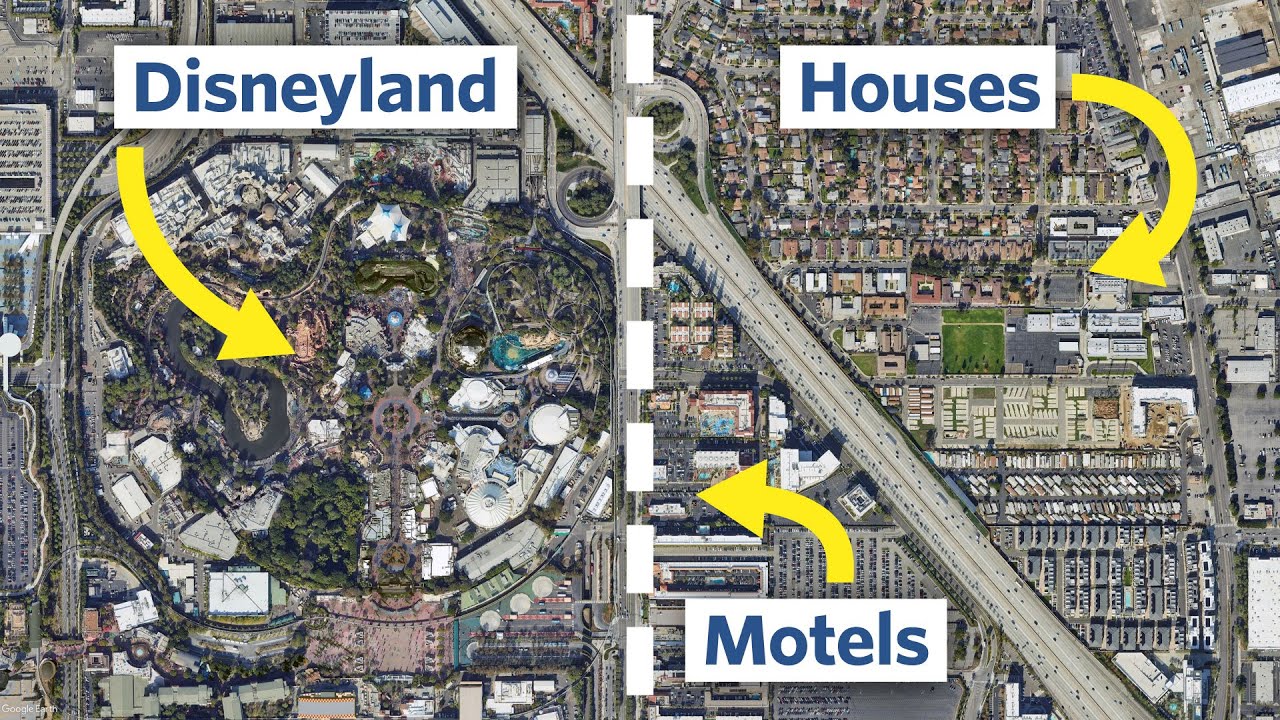
As for Anaheim, prior to the late 1990s it was in fairly rough shape. The streets around Disneyland were barely landscaped, commercial signage was a 1950's-type clutter, wood power poles were on most of them---Edison's high-tension lines regrettably remain. All the land south of Disneyland was a huge asphalt parking lot, & worn-out motels were throughout the area. So older Disneyland Anaheim didn't really meet today's higher standards & expectations.
reply
If Orlando were closer to Miami, some of the same urban-social-cultural dynamics of Anaheim & LA would be repeated. However, central Fla proves that a huge market does exist for things like Disney World. Orlando brings in more tourists per year than any other city in the US. As for me, the only theme park I'd make an effort to travel to would be DisneySea in Tokyo.
The Mediterranean climate of SoCal, which generally allows a theme park to operate year-round, helps both technically & financially. Because of water-management systems (eg, the LA Aqueduct of 1913, regional LA/OC is one of the few large urban areas in the world that exists with the type of weather it has.
As for Anaheim, prior to the late 1990s it was in fairly rough shape. The streets around Disneyland were barely landscaped, commercial signage was a 1950's-type clutter, wood power poles were on most of them---Edison's high-tension lines regrettably remain. All the land south of Disneyland was a huge asphalt parking lot, & worn-out motels were throughout the area. So older Disneyland Anaheim didn't really meet today's higher standards & expectations.
reply
Loremastrful
I grew up near Disneyland. I lived in Garden Grove, just south of the Park during the early 80's. As a kid, I knew where Disneyland was, but most times we never got close. During the summers, we could hear and with some effort see the fireworks. Since the OC is one enormous bedroom community, it didn't seem out of place to have houses next to attractions. The same could be said of Knott's Berry Farm and Magic Mountain. The only exception was Universal which was a working studio lot. (I remember a studio tour in 82 that got diverted because they were filming Dukes of Hazard or some other show that used the town square lot.
As far as public transportation. Disneyland is better than most of SoCal. The thing you need to understand about Californians and public transportation, for every 1 advocating for better rail lines or more bus access, there are 2-3 who hate the concept. Public transportation brings in homeless, and undesirables. Californians don't just love their cars, but cars are an easy barrier to filter out those who have money from those who don't.
reply
I grew up near Disneyland. I lived in Garden Grove, just south of the Park during the early 80's. As a kid, I knew where Disneyland was, but most times we never got close. During the summers, we could hear and with some effort see the fireworks. Since the OC is one enormous bedroom community, it didn't seem out of place to have houses next to attractions. The same could be said of Knott's Berry Farm and Magic Mountain. The only exception was Universal which was a working studio lot. (I remember a studio tour in 82 that got diverted because they were filming Dukes of Hazard or some other show that used the town square lot.
As far as public transportation. Disneyland is better than most of SoCal. The thing you need to understand about Californians and public transportation, for every 1 advocating for better rail lines or more bus access, there are 2-3 who hate the concept. Public transportation brings in homeless, and undesirables. Californians don't just love their cars, but cars are an easy barrier to filter out those who have money from those who don't.
reply
DavidVitrano
Here's what I want to see come to the Downtown Disney District.
(FOOD) IN-N-OUT Burger, The Old Spaghetti Factory, Skyline Chili, Portillo’s, Slater’s 50/50, The Melting Pot: The Original Fondue Restaurant, Guy Fieri's Downtown Flavortown, Guy Fieri's Chicken Guy, Gott's Roadside, Curry Up Now, Fire Wings, Max Brenner Chocolate, Starbucks Reserve Roastery, Boudin Sourdough, Ghirardelli Chocolate, Hash House A GO GO, Primanti Bros, KOJA Kitchen, Mad Greens and Gideon's Bakehouse.
(SHOPPING) Vans, Tom's, Dooney & Bourke and COACH.
(ENTERTAINMENT) Cirque du Soleil, Aerophile Tethered Balloon & Aerobar, Fabbri Group 400ft Sky Walking, DEFY Trampoline and a 3, 270. 62 FT to 3, 665. 98 FT Zip-Line.
(RETURN) Haagen-Dazs, Rainforest Cafe and THE ESPN Zone.
Most of it can go in the small parking lot, that's on the left side of the east end of the District and the Massive parking Lot, that’s on right side, of the east end of the District. After all, there’s that Disneyland Forward Idea in the works.
reply
Here's what I want to see come to the Downtown Disney District.
(FOOD) IN-N-OUT Burger, The Old Spaghetti Factory, Skyline Chili, Portillo’s, Slater’s 50/50, The Melting Pot: The Original Fondue Restaurant, Guy Fieri's Downtown Flavortown, Guy Fieri's Chicken Guy, Gott's Roadside, Curry Up Now, Fire Wings, Max Brenner Chocolate, Starbucks Reserve Roastery, Boudin Sourdough, Ghirardelli Chocolate, Hash House A GO GO, Primanti Bros, KOJA Kitchen, Mad Greens and Gideon's Bakehouse.
(SHOPPING) Vans, Tom's, Dooney & Bourke and COACH.
(ENTERTAINMENT) Cirque du Soleil, Aerophile Tethered Balloon & Aerobar, Fabbri Group 400ft Sky Walking, DEFY Trampoline and a 3, 270. 62 FT to 3, 665. 98 FT Zip-Line.
(RETURN) Haagen-Dazs, Rainforest Cafe and THE ESPN Zone.
Most of it can go in the small parking lot, that's on the left side of the east end of the District and the Massive parking Lot, that’s on right side, of the east end of the District. After all, there’s that Disneyland Forward Idea in the works.
reply
ddc163264
A flawed modernist, young persons view. Katella and Harbor used to be horrid to look at and to drive on. To get to the park, there were two drive in entrances, but almost always one of the two would be closed and you never knew which one it would be on any given day. Also, as Walt himself said, he would've bought MORE land for Disneyland if he could, but by the time he tried, all the land became too expensive to purchase. Which is why he did so in Florida. Next flaw, the current WDW ISN'T what Walt wanted nor what he was trying to build long term. So the land usage isn't how or what Walt wanted. It's the REAL reason behind Reedy Creek District. So that he could do his plans without much outside interference. But of course he died and the people who followed him weren't anywhere near visionary as he was. While his brother Roy basically gave his life to complete the beginning of his little brothers dream. So, to compare the parks based on this modern interpretation is severely flawed on that basis alone.
reply
A flawed modernist, young persons view. Katella and Harbor used to be horrid to look at and to drive on. To get to the park, there were two drive in entrances, but almost always one of the two would be closed and you never knew which one it would be on any given day. Also, as Walt himself said, he would've bought MORE land for Disneyland if he could, but by the time he tried, all the land became too expensive to purchase. Which is why he did so in Florida. Next flaw, the current WDW ISN'T what Walt wanted nor what he was trying to build long term. So the land usage isn't how or what Walt wanted. It's the REAL reason behind Reedy Creek District. So that he could do his plans without much outside interference. But of course he died and the people who followed him weren't anywhere near visionary as he was. While his brother Roy basically gave his life to complete the beginning of his little brothers dream. So, to compare the parks based on this modern interpretation is severely flawed on that basis alone.
reply
sergalocity
I lived in Fullerton in the early 90's off Harbor and Chapman near Fullerton College. Traffic wasn't so much an issue until you got closer to the park, or caught in the mass exodus of everyone leaving for the night as the park let out. However there was one instance where it was a MAJOR problem when in 93 - 94 when the park in October decided that ANYONE who showed up in costume on Halloween would get in for FREE. ALL major freeways and surface streets leading into Anaheim was at a complete standstill as anyone who was everyone converged on the park that day. I couldn't get to work that day much less leave my neighborhood it was that jam packed. I moved out just as they started building the California Adventure park and Im sure they made some improvements to the roads leading to the Parks. I have seen dedicated exits leading to the park from the 5 last I went through there, but as to if it had any effect on traffic improvement I cannot say.
reply
I lived in Fullerton in the early 90's off Harbor and Chapman near Fullerton College. Traffic wasn't so much an issue until you got closer to the park, or caught in the mass exodus of everyone leaving for the night as the park let out. However there was one instance where it was a MAJOR problem when in 93 - 94 when the park in October decided that ANYONE who showed up in costume on Halloween would get in for FREE. ALL major freeways and surface streets leading into Anaheim was at a complete standstill as anyone who was everyone converged on the park that day. I couldn't get to work that day much less leave my neighborhood it was that jam packed. I moved out just as they started building the California Adventure park and Im sure they made some improvements to the roads leading to the Parks. I have seen dedicated exits leading to the park from the 5 last I went through there, but as to if it had any effect on traffic improvement I cannot say.
reply
Spudeaux
Important point that seems to have been missed - Disney World wasn't originally intended to be a few theme parks inside a massive bubble, but a blank slate to try out new ideas in urban planning and design that didn't come to fruition due to Walt's death and thus the loss of the vision. EPCOT - the Experimental Prototype Community of Tomorrow was supposed to be just that - an experimental prototype of a new kind of city, not another theme park. Walt's death, and corporations wanting keep their R&D out of the public's (i. e. their competition's) eye, made the idea impossible to execute though, and they just focused on perfecting the theme park experience rather than experiment with broader urbanism. They did kind of get around to that with the development of Celebration in the 90s, but that's a whole another kettle of fish.
reply
Important point that seems to have been missed - Disney World wasn't originally intended to be a few theme parks inside a massive bubble, but a blank slate to try out new ideas in urban planning and design that didn't come to fruition due to Walt's death and thus the loss of the vision. EPCOT - the Experimental Prototype Community of Tomorrow was supposed to be just that - an experimental prototype of a new kind of city, not another theme park. Walt's death, and corporations wanting keep their R&D out of the public's (i. e. their competition's) eye, made the idea impossible to execute though, and they just focused on perfecting the theme park experience rather than experiment with broader urbanism. They did kind of get around to that with the development of Celebration in the 90s, but that's a whole another kettle of fish.
reply
fatviscount6562
Why do urbanists like you not shaming Disney as they deserve
Disney has taken every legal action to prevent Brighline from serving other Orlando theme parks.
How is that good, moral, or even legal
Worse, Disney fought Anaheim and Santa Ana from building affordable housing. Guess whose employees would benefit from those housing that should’ve been built seven decades ago. Drusbey makes George Pullman a philanthropist by comparison.
As for your cheerful take on people who walk from their off-Disney hotels to the resort, they still face the Hobson’s choice of either eating in Disney Parks, or renting a car just to drive to a burger shack.
Disney is a recurring environmental calamity. .
reply
Why do urbanists like you not shaming Disney as they deserve
Disney has taken every legal action to prevent Brighline from serving other Orlando theme parks.
How is that good, moral, or even legal
Worse, Disney fought Anaheim and Santa Ana from building affordable housing. Guess whose employees would benefit from those housing that should’ve been built seven decades ago. Drusbey makes George Pullman a philanthropist by comparison.
As for your cheerful take on people who walk from their off-Disney hotels to the resort, they still face the Hobson’s choice of either eating in Disney Parks, or renting a car just to drive to a burger shack.
Disney is a recurring environmental calamity. .
reply
tompatterson1548
What about California's Great America It's less than a 10 minute walk from the nearest VTA light rail station. The station is actually like in the middle of the road outside it, but you have to cross the parking lot to get to the gate. If you had looked beyond global brands you would see that major theme parks such as Great America do exist with good public transit connections. And there are some plans to develop that area of Santa Clara in a denser fashion than the rest of the city. It's near to a sports stadium, and a bunch of tech offices and a hotel. A half an hours walk away is an Amtrak station.
reply
What about California's Great America It's less than a 10 minute walk from the nearest VTA light rail station. The station is actually like in the middle of the road outside it, but you have to cross the parking lot to get to the gate. If you had looked beyond global brands you would see that major theme parks such as Great America do exist with good public transit connections. And there are some plans to develop that area of Santa Clara in a denser fashion than the rest of the city. It's near to a sports stadium, and a bunch of tech offices and a hotel. A half an hours walk away is an Amtrak station.
reply
InternetJury
Disneyland is 100% better. It's the legacy and the only place where Walt walked, lived and played. He only visited the Florida site twice, once the day after they announced the project and against 6 months later. He had been dead for years before it even opened. He barely had anything to do with it beyond the land acquisition, plans and ideas. It was his brother, Roy, who built World - and he strayed quite a bit form his brother's vision. Plus, WDW is in the swamp. Disneyland is not. The weather is way better. The problem is WDW is that Walt didn't build it. he envisioned it and planned EPCOT,
reply
Disneyland is 100% better. It's the legacy and the only place where Walt walked, lived and played. He only visited the Florida site twice, once the day after they announced the project and against 6 months later. He had been dead for years before it even opened. He barely had anything to do with it beyond the land acquisition, plans and ideas. It was his brother, Roy, who built World - and he strayed quite a bit form his brother's vision. Plus, WDW is in the swamp. Disneyland is not. The weather is way better. The problem is WDW is that Walt didn't build it. he envisioned it and planned EPCOT,
reply
ec1628
I work in the Anaheim UHSD. Disneyland has zero negative impact on the school districts. There’s another elementary school north of the intersection of Harbor and Ball that is closer than the one you featured. Ball Junior High School is even closer to Disneyland on Ball west of the parks. No negative impact. In fact you would never know the parks are there while on campus.
There is Walt Disney School near by where Walt Disney had his cartoonists create the school’s mascots and choose the school’s colors. That is the only real impact that Disneyland has on the local schools.
reply
I work in the Anaheim UHSD. Disneyland has zero negative impact on the school districts. There’s another elementary school north of the intersection of Harbor and Ball that is closer than the one you featured. Ball Junior High School is even closer to Disneyland on Ball west of the parks. No negative impact. In fact you would never know the parks are there while on campus.
There is Walt Disney School near by where Walt Disney had his cartoonists create the school’s mascots and choose the school’s colors. That is the only real impact that Disneyland has on the local schools.
reply
five-toedslothbear
The best place to put a theme park would be in the middle of an inner ring suburban area, where everybody could get to it, and just make it a little amusement park that families would like and is affordable. That’s what we had here, but the owner died and part of the family got the amusement park and part of the family got the land. The part of the family that got the land Sold it to Costco. And we lost a 60 year-old clean, fun amusement park that at least three generations of my family went to, and now there’s just a big box full of merchandise. I refuse to join Costco.
reply
The best place to put a theme park would be in the middle of an inner ring suburban area, where everybody could get to it, and just make it a little amusement park that families would like and is affordable. That’s what we had here, but the owner died and part of the family got the amusement park and part of the family got the land. The part of the family that got the land Sold it to Costco. And we lost a 60 year-old clean, fun amusement park that at least three generations of my family went to, and now there’s just a big box full of merchandise. I refuse to join Costco.
reply
jonathanyeh6624
The original development agreement Disney had with Reedy Creek before Florida took over the district was voided. While Disney did sue, they did eventually settle with the district and agree on a new development agreement more favorable to the district and with a 15 year timeframe (rather than a clause based on King Charles’ descendants.
There are also two cities within the district (Bay Lake and Lake Buena Vista) that Disney still retains control of, with the Disney selected residents still running both cities and still having their own city council meetings.
reply
The original development agreement Disney had with Reedy Creek before Florida took over the district was voided. While Disney did sue, they did eventually settle with the district and agree on a new development agreement more favorable to the district and with a 15 year timeframe (rather than a clause based on King Charles’ descendants.
There are also two cities within the district (Bay Lake and Lake Buena Vista) that Disney still retains control of, with the Disney selected residents still running both cities and still having their own city council meetings.
reply
MultigrainKevinOs
Disneyland is better just for the fact it's not in Florida. You can absolutely do Disneyland as a tourist car free. Easy to walk from lots of nearby hotels, lots more options for food etc. but it still is a night and day difference being used to easily getting around in the park to the lack of transport outside the park. It feels like some hyper local Disneyised transit would open up more hotels and grocery options kinda similar to what Disney world does. Keep the illusion of the park active longer and not be a nuisance for locals that actually live and work there.
reply
Disneyland is better just for the fact it's not in Florida. You can absolutely do Disneyland as a tourist car free. Easy to walk from lots of nearby hotels, lots more options for food etc. but it still is a night and day difference being used to easily getting around in the park to the lack of transport outside the park. It feels like some hyper local Disneyised transit would open up more hotels and grocery options kinda similar to what Disney world does. Keep the illusion of the park active longer and not be a nuisance for locals that actually live and work there.
reply
SalivatingSteve
Disneyland is better due to the sheer number of attractions in its 2 parks. Disney World in Florida feels like an overpriced scam in comparison because each park has only a handful of attractions. Even Magic Kingdom has way less rides despite its blessing of size. Disneyland (and Knott's Berry Farm) is easily accessible via plublic transit. Also Disneyland tends to be better maintained overall thanks to its smaller size, whereas parts of WDW and Epcot in particular notoriously has large swaths of the park which are akin to a dead mall, left entirely abandoned.
reply
Disneyland is better due to the sheer number of attractions in its 2 parks. Disney World in Florida feels like an overpriced scam in comparison because each park has only a handful of attractions. Even Magic Kingdom has way less rides despite its blessing of size. Disneyland (and Knott's Berry Farm) is easily accessible via plublic transit. Also Disneyland tends to be better maintained overall thanks to its smaller size, whereas parts of WDW and Epcot in particular notoriously has large swaths of the park which are akin to a dead mall, left entirely abandoned.
reply
dynasty0019
Disneyland actually has a half-decent mass transit connection; you can take Metrolink or Amtrak Pacific Surfliner to Anaheim's ARTIC station then transfer on to a complimentary ART shuttle for a 10 to 15 minute ride to the resort. I've always said that Disneyland should expand the monorail to ARTIC so more guests will leave their cars at home and ride trains to Disneyland. Anaheim is also developing the land around ARTIC, Honda Center, and Angels Stadium into a TOD-style shopping, dining, entertainment, parks, and dense residential district called OC Vibe.
reply
Disneyland actually has a half-decent mass transit connection; you can take Metrolink or Amtrak Pacific Surfliner to Anaheim's ARTIC station then transfer on to a complimentary ART shuttle for a 10 to 15 minute ride to the resort. I've always said that Disneyland should expand the monorail to ARTIC so more guests will leave their cars at home and ride trains to Disneyland. Anaheim is also developing the land around ARTIC, Honda Center, and Angels Stadium into a TOD-style shopping, dining, entertainment, parks, and dense residential district called OC Vibe.
reply
city_beautiful
11: 51 I used to live 1. 5 miles from the park on the intersection of Orangewood & West (I moved in 2020, and there was ZERO impact from the park. In fact, you'd never even know one of the busiest tourist attractions in the U. S. was literally a stone's throw from the front porch. That said, what I did notice occasionally was increased traffic (both foot and automobile) when major conventions came to town, such as ComiCon or D23. It was actually a great way to make $100 a day, charging people $20 a pop to park on my lawn and extra driveway space
reply
11: 51 I used to live 1. 5 miles from the park on the intersection of Orangewood & West (I moved in 2020, and there was ZERO impact from the park. In fact, you'd never even know one of the busiest tourist attractions in the U. S. was literally a stone's throw from the front porch. That said, what I did notice occasionally was increased traffic (both foot and automobile) when major conventions came to town, such as ComiCon or D23. It was actually a great way to make $100 a day, charging people $20 a pop to park on my lawn and extra driveway space
reply
eddiec9756
I was in the Disney College Program between 2022 and 2023 at Walt Disney World and during that time I realized you could walk almost anywhere in the resort. Sure the walk between EPCOT and Hollywood Studios was long but it was possible. You could even walk all the way around the 7 Seas Lagoon if you were crazy. Animal Kingdom and its associated resorts were the only thing that wasn’t really walkable if you really wanted to. Of course the same thing goes for Disney Springs, Golden Oak and a few select hotels but it really is connected.
reply
I was in the Disney College Program between 2022 and 2023 at Walt Disney World and during that time I realized you could walk almost anywhere in the resort. Sure the walk between EPCOT and Hollywood Studios was long but it was possible. You could even walk all the way around the 7 Seas Lagoon if you were crazy. Animal Kingdom and its associated resorts were the only thing that wasn’t really walkable if you really wanted to. Of course the same thing goes for Disney Springs, Golden Oak and a few select hotels but it really is connected.
reply
Add a review, comment
Other channel videos