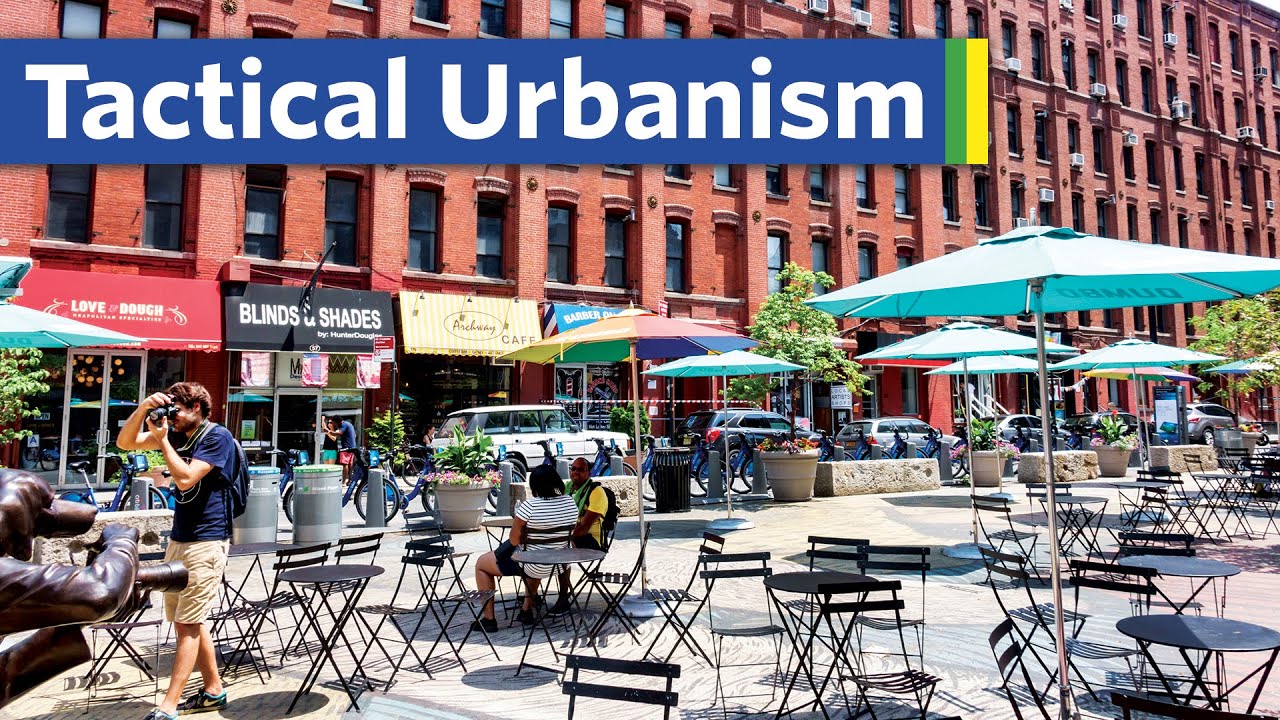
The quick way to make new pedestrian plazas
video description
Date: 2021-05-14
Related videos




Comments and reviews: 9
Zyonin
While not in the US, I do live in a city that had converted many streets and squares into pedestrian plazas. When I first moved to Turin, Italy, it was dominated by the car, even in the historic center. However over the last twenty years, the Commune (city) has done a lot to claw back space for people. Historic piazzas like Piazza Castello and Piazza San Carlo are now pedestrian areas that swarm with tourists and locals alike. Many of the major shopping streets are now pedestrian zones. Cars are not completely banned, residents who live along those streets can still access their apartments with their cars however they are also know that they are not the primary users of those streets.
These pedestrian zones really help make the city feel more vibrant. On a sunny Sunday, it is not uncommon for those areas to be full of people shopping, drinking coffee at the many cafes, eating at the outdoor terraces, etc.
reply
While not in the US, I do live in a city that had converted many streets and squares into pedestrian plazas. When I first moved to Turin, Italy, it was dominated by the car, even in the historic center. However over the last twenty years, the Commune (city) has done a lot to claw back space for people. Historic piazzas like Piazza Castello and Piazza San Carlo are now pedestrian areas that swarm with tourists and locals alike. Many of the major shopping streets are now pedestrian zones. Cars are not completely banned, residents who live along those streets can still access their apartments with their cars however they are also know that they are not the primary users of those streets.
These pedestrian zones really help make the city feel more vibrant. On a sunny Sunday, it is not uncommon for those areas to be full of people shopping, drinking coffee at the many cafes, eating at the outdoor terraces, etc.
reply
Habib
In the west of Algiers there was a sub section nick named little Paris as tons of foreign tourists would dominate the streets and how tables, outdoor sheesha lounges, grass and so on and it had cars going through the street now they add 2 dedicated tram lanes and now the area is empty and boring as Algiers despite being designed like most European cities our authorities made it impossible to live here without a car I would say even worse than the USA and most of our historical buildings are being demolished to create ugly commie blocks cause of the uncontrollable immigration also the traffic is worse than LA cause it never stops on our highways it just shows how city planners can ruin an amazing city to become polluted, dangerous, ugly, dirty, the bad kind of quiet and the bad kind of loud
reply
In the west of Algiers there was a sub section nick named little Paris as tons of foreign tourists would dominate the streets and how tables, outdoor sheesha lounges, grass and so on and it had cars going through the street now they add 2 dedicated tram lanes and now the area is empty and boring as Algiers despite being designed like most European cities our authorities made it impossible to live here without a car I would say even worse than the USA and most of our historical buildings are being demolished to create ugly commie blocks cause of the uncontrollable immigration also the traffic is worse than LA cause it never stops on our highways it just shows how city planners can ruin an amazing city to become polluted, dangerous, ugly, dirty, the bad kind of quiet and the bad kind of loud
reply
Pietro
Hello City Beautiful, big fan here! Here is my submission:
I am a first-year student at Syracuse University and there is a cute-looking plaza across the street on the east of the triangular Hanover Square in Downtown Syracuse, NY. It is a short pedestrian space with restaurants made from a section of a diagonal street. The night lights there look amazing.
The sad thing is the section of the diagonal street (E Genesee St) that touches Hanover Square is still serving as a vehicle passage for the bars there. I hope it can be a part of the square-plaza system for pedestrians soon.
If you need more info feel free to DM me! :) Thank you!
reply
Hello City Beautiful, big fan here! Here is my submission:
I am a first-year student at Syracuse University and there is a cute-looking plaza across the street on the east of the triangular Hanover Square in Downtown Syracuse, NY. It is a short pedestrian space with restaurants made from a section of a diagonal street. The night lights there look amazing.
The sad thing is the section of the diagonal street (E Genesee St) that touches Hanover Square is still serving as a vehicle passage for the bars there. I hope it can be a part of the square-plaza system for pedestrians soon.
If you need more info feel free to DM me! :) Thank you!
reply
Dawid
As a European living in BC (Canada) and who has visited many US cities, I don't really get most of NA plazas. They're often small and next to some busy or loud streets. It's rather stressful to stay there for longer (20+ min) and frustrating to have some conversations. Most that I stayed on (intentionally didn't leave straight away) were because it was work lunch break, or I was visiting city and there were some arts on pavements or musicians. It's definitely a steer towards positive but it is the bare minimum and I hope it won't be used as a token in balancing for people in urban infrastructure.
reply
As a European living in BC (Canada) and who has visited many US cities, I don't really get most of NA plazas. They're often small and next to some busy or loud streets. It's rather stressful to stay there for longer (20+ min) and frustrating to have some conversations. Most that I stayed on (intentionally didn't leave straight away) were because it was work lunch break, or I was visiting city and there were some arts on pavements or musicians. It's definitely a steer towards positive but it is the bare minimum and I hope it won't be used as a token in balancing for people in urban infrastructure.
reply
C.
0: 45 I've been to this area both before and after they turned it into a plaza and I love it so much as a plaza. It was a decently nice area before because there was a little public seating area (that you can see on the left in the video, but the location and street confluence meant there were always tons of cars. If the street is permanently closed (or at least, the plaza is made seasonal, that little area could turn into one of the public spaces in the entire city. Its got food and shopping and its always packed because, unlike the loop, its a much more residential area.
reply
0: 45 I've been to this area both before and after they turned it into a plaza and I love it so much as a plaza. It was a decently nice area before because there was a little public seating area (that you can see on the left in the video, but the location and street confluence meant there were always tons of cars. If the street is permanently closed (or at least, the plaza is made seasonal, that little area could turn into one of the public spaces in the entire city. Its got food and shopping and its always packed because, unlike the loop, its a much more residential area.
reply
Marcel
Thank you, once again, for an impeccable, informative video. Pedestrian plazas allow people to interact joyfully without having to deal with ubiquitous automobiles. If cities create lush, creative, inviting spaces, the people will come! I am fortunate to live in the Netherlands where most city centres are closed off to automobiles. Plazas abound, and Europeans delight in watching passers-by and spending time with others. The ensuing result is one of pure bliss.
reply
Thank you, once again, for an impeccable, informative video. Pedestrian plazas allow people to interact joyfully without having to deal with ubiquitous automobiles. If cities create lush, creative, inviting spaces, the people will come! I am fortunate to live in the Netherlands where most city centres are closed off to automobiles. Plazas abound, and Europeans delight in watching passers-by and spending time with others. The ensuing result is one of pure bliss.
reply
Mike
If you wanna take some inspiration for nice plazas, you can look at the Austrian concept of so-called Schanigarten. It's an outdoor seating place on a public street, instead of a few parking lots. So there's a sidewalk separating the seating area with the entrance of the restaurant.
They are really popular in Austria, and I have even seen a lot of them in Italy (although they are called something else in Italian)
reply
If you wanna take some inspiration for nice plazas, you can look at the Austrian concept of so-called Schanigarten. It's an outdoor seating place on a public street, instead of a few parking lots. So there's a sidewalk separating the seating area with the entrance of the restaurant.
They are really popular in Austria, and I have even seen a lot of them in Italy (although they are called something else in Italian)
reply
Lorenzo
The same thing is happening in Milan. The municipality started years ago to spread these projects all over the city. The interesting part is that after a year or two these areas become permanently pedestrian with more green spaces and better urban furniture. I suggest you to follow Demetrio Scopelliti on Twitter, he shares a lot of interesting images about what's happening in our cities.
reply
The same thing is happening in Milan. The municipality started years ago to spread these projects all over the city. The interesting part is that after a year or two these areas become permanently pedestrian with more green spaces and better urban furniture. I suggest you to follow Demetrio Scopelliti on Twitter, he shares a lot of interesting images about what's happening in our cities.
reply
Van
It does kind of feel like something Aldo van Eyck started in the 1949-ies in Amsterdam (Netherlands) where unused plots within the city were transformed into playgrounds for kids. With kind of a similar idea: to improve liveliness and safety in cities, while at the same time offering play facilities in very urbanised area (something large cities tend to miss)
reply
It does kind of feel like something Aldo van Eyck started in the 1949-ies in Amsterdam (Netherlands) where unused plots within the city were transformed into playgrounds for kids. With kind of a similar idea: to improve liveliness and safety in cities, while at the same time offering play facilities in very urbanised area (something large cities tend to miss)
reply
Add a review, comment
Other channel videos