A Brief History of U. S. City Planning
video description
Date: 2019-09-12
Related videos


Comments and reviews: 10
Hai Huang
I see you are in favor of mass transit or things like bike. As a person lived in three maga cities in China and seeing those cities grow from few millions to 40 million people. I actually think American cities and sub urban design is quite good. in the 80s to 90s any typical Chinese city will have most people commute by bike, as public transit getting more and more developed, more start riding buses. Then as car start getting popularity 04 onward, people perfer driving on their own. Then the entire city become a giant parking lot and the government start limit car usage. at the same time subways starting getting ground in the early 2010s. taking a subway ride in morning rush hours is no fun, in Beijing and Shang Hai they have train as often as 3 minutes but still can't quite handle the people. there are close to 6 million people moving in any given day, peak hours you will see a million people entering the system through out all the stations. things are so bad that you get thousands of people jam in the line to line transition tunnel. there is a reason when you visit Beijing, the line to line transfer tunnel is so damn long, they serve as a buffer zone during peak hours. I used to live in San Francisco, and my family could not afford a car, and as Chinese immigrants, my parents doesn; t want a car because they so get used to public transit. I lived there for 5-6 years. public transit is a good thing when you don't need to wait for it and plan for it, also when you don't need to share space with other. I used to took BART to downtown, then took 30 or 45 to cal train station, then took the train to san jose, then took a metro, then walk a bout a mile to my intern company. The whole trip took 3 hours one way, 6 hours round trip. I absolutely hate it. I want my own car so bad that I beg my uncle for his 93 corolla, at the time it was a 10 years old car. There is a thing for car that nothing else will give you, the feeling of freedom, the day that I have my own car, I never touch public transit again. I understand that public transit does give poor family a mean for commute, but too much emphasis on public transit and bike lane like Seattle does actually killing the incentive to go to the city. I also lived in Bellevue WA for over 6 years and hardly drive to Seattle as the city traffic is so bad and parking is so difficult. San Francisco is bad, be not as Seattle bad because downtown Seattle is much narrow, and the bike lines kills a lot of on street parking space.
reply
I see you are in favor of mass transit or things like bike. As a person lived in three maga cities in China and seeing those cities grow from few millions to 40 million people. I actually think American cities and sub urban design is quite good. in the 80s to 90s any typical Chinese city will have most people commute by bike, as public transit getting more and more developed, more start riding buses. Then as car start getting popularity 04 onward, people perfer driving on their own. Then the entire city become a giant parking lot and the government start limit car usage. at the same time subways starting getting ground in the early 2010s. taking a subway ride in morning rush hours is no fun, in Beijing and Shang Hai they have train as often as 3 minutes but still can't quite handle the people. there are close to 6 million people moving in any given day, peak hours you will see a million people entering the system through out all the stations. things are so bad that you get thousands of people jam in the line to line transition tunnel. there is a reason when you visit Beijing, the line to line transfer tunnel is so damn long, they serve as a buffer zone during peak hours. I used to live in San Francisco, and my family could not afford a car, and as Chinese immigrants, my parents doesn; t want a car because they so get used to public transit. I lived there for 5-6 years. public transit is a good thing when you don't need to wait for it and plan for it, also when you don't need to share space with other. I used to took BART to downtown, then took 30 or 45 to cal train station, then took the train to san jose, then took a metro, then walk a bout a mile to my intern company. The whole trip took 3 hours one way, 6 hours round trip. I absolutely hate it. I want my own car so bad that I beg my uncle for his 93 corolla, at the time it was a 10 years old car. There is a thing for car that nothing else will give you, the feeling of freedom, the day that I have my own car, I never touch public transit again. I understand that public transit does give poor family a mean for commute, but too much emphasis on public transit and bike lane like Seattle does actually killing the incentive to go to the city. I also lived in Bellevue WA for over 6 years and hardly drive to Seattle as the city traffic is so bad and parking is so difficult. San Francisco is bad, be not as Seattle bad because downtown Seattle is much narrow, and the bike lines kills a lot of on street parking space.
reply
Blair Hawkins
The 3 Pillars of modern urban systemic racism. (1) First zoning was 1860s in New York City. Zoning is inherently racist, with many controversies & battles until the Euclid case. Racist zoning double standards exists in every city, interpreted as legal. (2) Most cities switched from republic to democracy in 1920s explicitly to disenfranchise the black vote. This At-Large crime continues today where only one majority-white district exists. Black precincts were eliminated. 1965 Voting Rights Act prohibits At-Large but is rarely enforced. (3) Urban Renewal has not ended whatsoever, certainly not in 1973. Existence of public housing proves urban renewal exists. Housing Authorities & HUD still exist. In a sense, urban renewal has always existed when Eminent Domain (loophole for Due Process) is used to seize & sell real estate. So the town can vote (illegally) to publicly steal & destroy black neighborhoods & business districts by majority vote of town council or town referendum. It's Constitutional to steal your house if it is to be used by all members of the public (Public Use) and compensation to justify the stealing (Just Compensation. It's sad these systemic crimes are invisible to this video, that blames commercial interests for the many public votes that authorize the massive government crime wave.
reply
The 3 Pillars of modern urban systemic racism. (1) First zoning was 1860s in New York City. Zoning is inherently racist, with many controversies & battles until the Euclid case. Racist zoning double standards exists in every city, interpreted as legal. (2) Most cities switched from republic to democracy in 1920s explicitly to disenfranchise the black vote. This At-Large crime continues today where only one majority-white district exists. Black precincts were eliminated. 1965 Voting Rights Act prohibits At-Large but is rarely enforced. (3) Urban Renewal has not ended whatsoever, certainly not in 1973. Existence of public housing proves urban renewal exists. Housing Authorities & HUD still exist. In a sense, urban renewal has always existed when Eminent Domain (loophole for Due Process) is used to seize & sell real estate. So the town can vote (illegally) to publicly steal & destroy black neighborhoods & business districts by majority vote of town council or town referendum. It's Constitutional to steal your house if it is to be used by all members of the public (Public Use) and compensation to justify the stealing (Just Compensation. It's sad these systemic crimes are invisible to this video, that blames commercial interests for the many public votes that authorize the massive government crime wave.
reply
29 Lets Go
It'd be interesting to hear more about the rust belt cities. Buffalo for example was one of the largest and richest cities in America, then practically died, and now it's experiencing a massive renaissance. Cleveland and Detroit are also on the rise and is fixing their mistakes along with Buffalo. The history of the rust belt cities are amazing yet horrible and now they are being fixed. You might also like how Olmsted designed the park and parkway system in Buffalo (a city built around parks, not parks made in a city) and how they were the first to get electric street lights among other things. Buffalo is a must for people interested in cities. Another interesting area is Ft Lauderdale. Broward county is practically out of land (they may be out of land already) and it's causing a lot of problems. Very high cost of living, bad traffic, the list goes on. They're between the Everglades and Atlantic Ocean and they can't build anymore and I'm sure are paying for a lot of mistakes made.
reply
It'd be interesting to hear more about the rust belt cities. Buffalo for example was one of the largest and richest cities in America, then practically died, and now it's experiencing a massive renaissance. Cleveland and Detroit are also on the rise and is fixing their mistakes along with Buffalo. The history of the rust belt cities are amazing yet horrible and now they are being fixed. You might also like how Olmsted designed the park and parkway system in Buffalo (a city built around parks, not parks made in a city) and how they were the first to get electric street lights among other things. Buffalo is a must for people interested in cities. Another interesting area is Ft Lauderdale. Broward county is practically out of land (they may be out of land already) and it's causing a lot of problems. Very high cost of living, bad traffic, the list goes on. They're between the Everglades and Atlantic Ocean and they can't build anymore and I'm sure are paying for a lot of mistakes made.
reply
TheCriminalViolin
If one follows the mass gentrification trends of major US cities, one usually finds a specific form of transit causing it: Light Rail. And with this transit induced gentrification comes the housing and homeless crisis' alongside a massive jump and continuous rapid rise in overall cost of living. Portland, Minneapolis/St. Paul, Seattle/Tacoma, Phoenix/Mesa/Tempe region, etc are all prime examples of this. Add in the fact it costs on average a billion dollars per mile of track laying and building of the catenary poles and wires (this is for MAX in Portland, and the fact it is very unreliable, and anything happening on the system causes the entire thing to shut down both directions, it's clear it's a massive problem that does a lot of damage overall. Not much good comes with it.
reply
If one follows the mass gentrification trends of major US cities, one usually finds a specific form of transit causing it: Light Rail. And with this transit induced gentrification comes the housing and homeless crisis' alongside a massive jump and continuous rapid rise in overall cost of living. Portland, Minneapolis/St. Paul, Seattle/Tacoma, Phoenix/Mesa/Tempe region, etc are all prime examples of this. Add in the fact it costs on average a billion dollars per mile of track laying and building of the catenary poles and wires (this is for MAX in Portland, and the fact it is very unreliable, and anything happening on the system causes the entire thing to shut down both directions, it's clear it's a massive problem that does a lot of damage overall. Not much good comes with it.
reply
CH1PSET
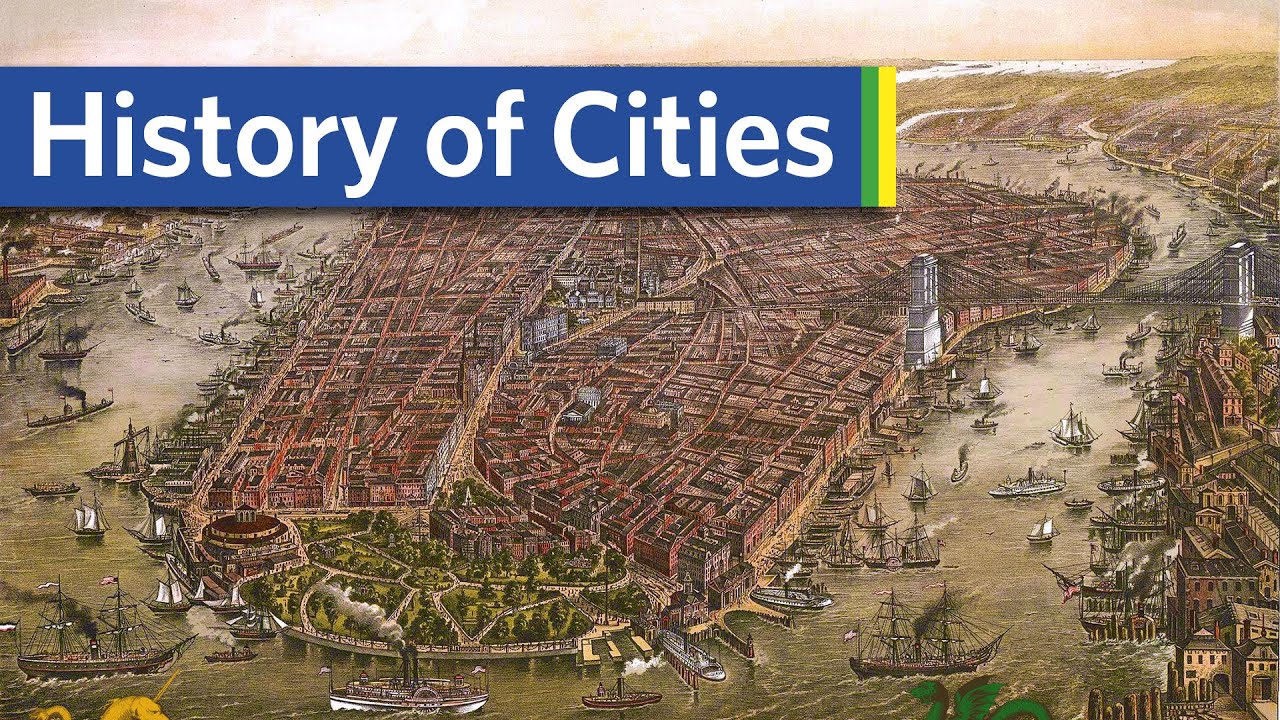
I don't see anyone calling out how the sea monsters were a clever way to show significant world events starting with WWI(as far as I can tell. 1914 was the year WWI started. It looks like he skipped over WWI, but looks like maybe he included the Korea and Vietnam wars and idk what for 1981-1982? Berlin wall came down in 1989, so if it was meant to signal the end of the Cold War(which happened in 1991, kinda, then it's off by 10 years. There's also the Reagan Peace Plan of 1982, but I don't think that really lead to peace(sea monster love, really just exacerbated the destabilization of the middle east as far as I can tell(looking at search results. Whatever the case, I'm thinking the sea monsters are meant to mark the end or start of wars. I didn't verify all the dates though.
reply
I don't see anyone calling out how the sea monsters were a clever way to show significant world events starting with WWI(as far as I can tell. 1914 was the year WWI started. It looks like he skipped over WWI, but looks like maybe he included the Korea and Vietnam wars and idk what for 1981-1982? Berlin wall came down in 1989, so if it was meant to signal the end of the Cold War(which happened in 1991, kinda, then it's off by 10 years. There's also the Reagan Peace Plan of 1982, but I don't think that really lead to peace(sea monster love, really just exacerbated the destabilization of the middle east as far as I can tell(looking at search results. Whatever the case, I'm thinking the sea monsters are meant to mark the end or start of wars. I didn't verify all the dates though.
reply
Josh Fredman
Along the whole West Coast (everything west of the Sierras and Cascades, rising housing costs have led to over half the population becoming rent-burdened, yet housing costs are still rising even now. Gentrification is accelerating even in regional cities, and is more or less already complete in the major metropolitan centers (San Diego, Los Angeles, San Francisco, Portland, and Seattle. I think the next major era of city planning, at least on the West Coast, isn't going to be rich-people-only projects like urban villages: It's going to be rent controls, tenant rights laws, densification, and regional mass transit.
reply
Along the whole West Coast (everything west of the Sierras and Cascades, rising housing costs have led to over half the population becoming rent-burdened, yet housing costs are still rising even now. Gentrification is accelerating even in regional cities, and is more or less already complete in the major metropolitan centers (San Diego, Los Angeles, San Francisco, Portland, and Seattle. I think the next major era of city planning, at least on the West Coast, isn't going to be rich-people-only projects like urban villages: It's going to be rent controls, tenant rights laws, densification, and regional mass transit.
reply
kikivoorburg
Im Dutch, and Im super pleased with the cities here I live in The Hague, and the amazing tram network as well as the great national railway system allows many people to avoid car use. On top of that, the many historic buildings mean that the majority of the city looks absolutely beautiful. Theres the occasional brutalist monstrosity (really how on earth did people think those would improve a city) but designers are generally shifting back towards nice-looking buildings. (The Babylon building is a good example. Its unique in design yet looks really good. (And best of all, no exposed concrete)
reply
Im Dutch, and Im super pleased with the cities here I live in The Hague, and the amazing tram network as well as the great national railway system allows many people to avoid car use. On top of that, the many historic buildings mean that the majority of the city looks absolutely beautiful. Theres the occasional brutalist monstrosity (really how on earth did people think those would improve a city) but designers are generally shifting back towards nice-looking buildings. (The Babylon building is a good example. Its unique in design yet looks really good. (And best of all, no exposed concrete)
reply
Johan Wittens
As someone who has lived his whole life in a European city, and studied city planning in Europe, it is stunning how little land in many cities in the US is used for actual buildings. Just look at the footage at 11: 57 Around 60-70% of land is either roads or parking space, and only 30-40% are actual buildings. No wonder many american cities are so spread out and dependend on cars to get anywhere. It's such a vicious circle. Spread out cities mean you need more cars, more cars means a need for more parking, and more parking means more spread out cities wich lead to more cars, and so on.
reply
As someone who has lived his whole life in a European city, and studied city planning in Europe, it is stunning how little land in many cities in the US is used for actual buildings. Just look at the footage at 11: 57 Around 60-70% of land is either roads or parking space, and only 30-40% are actual buildings. No wonder many american cities are so spread out and dependend on cars to get anywhere. It's such a vicious circle. Spread out cities mean you need more cars, more cars means a need for more parking, and more parking means more spread out cities wich lead to more cars, and so on.
reply
Stifled Voice
This video ticks off all the boxes as an introduction to the history of city planning in the U. S. Good job. Ever since little Ms. Jacobs battled with the Penn Station destroying Goliath figure of Robert Moses, city planning as an object lesson of the forces of good and evil, has ensnared history buffs like myself. My dear old prof, Ray Mohl, was a lovely guy who also turned me on to this particular aspect of the American story. But my dad, a plumber, gave me the best insight into design, from a house to a city, when he said poop always runs downhill so build accordingly.
reply
This video ticks off all the boxes as an introduction to the history of city planning in the U. S. Good job. Ever since little Ms. Jacobs battled with the Penn Station destroying Goliath figure of Robert Moses, city planning as an object lesson of the forces of good and evil, has ensnared history buffs like myself. My dear old prof, Ray Mohl, was a lovely guy who also turned me on to this particular aspect of the American story. But my dad, a plumber, gave me the best insight into design, from a house to a city, when he said poop always runs downhill so build accordingly.
reply
Jess Draws
Dave Can you make a video about how city planners decide street names? How do they choose between numbers and names? Is one better than the other? Does doing something like Phoenix did where many have the same number but Avenues and Drives are west of Central Avenue and Streets and Places are east of Central Avenue a good idea? Are there cities that don't name or number their streets in a traditional way? What's the ideal way to designate streets, in the cities of the distant future? I love your videos and I am so curious to know what you think about this.
reply
Dave Can you make a video about how city planners decide street names? How do they choose between numbers and names? Is one better than the other? Does doing something like Phoenix did where many have the same number but Avenues and Drives are west of Central Avenue and Streets and Places are east of Central Avenue a good idea? Are there cities that don't name or number their streets in a traditional way? What's the ideal way to designate streets, in the cities of the distant future? I love your videos and I am so curious to know what you think about this.
reply
Add a review, comment
Other channel videos