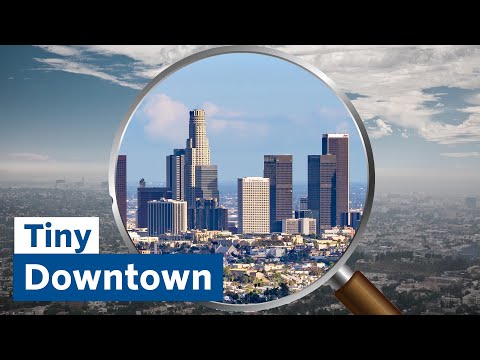
Why Is Downtown Los Angeles So Small?
video description
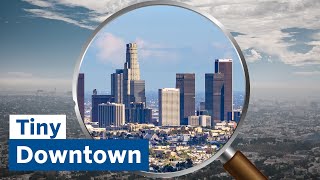
At any rate, downtown is being redeveloped with taller residential buildings in mind (quite a few of them, actually) and it's probably only a matter of time before DTLA bears more of a resemblance to downtown Chicago or downtown Philadelphia than it currently does, but it's never going to have the same importance to the LA area that the cores of those cities do to their respective regions.
Date: 2022-09-10
Related videos



Comments and reviews: 13
Bryan
As a native Angeleno, there was always an anti-NYC sentiment here. We didn't want to look like Manhattan (or San Francisco) in any way, shape, or form. Throughout its development, Angelenos rejected any attempt to Manhattanize Los Angeles. We didn't want to live on top of each other. We didn't want to be crammed into trains every day. Los Angeles was meant to be a new modern city that made obsolete all the old cramped, dingy, and crowded cities of yesteryear like New York and San Francisco. Even the small houses in the densest Los Angeles neighborhoods have a little backyard and front yard whereas the vast majority of houses in San Francisco do not.
I remember going to school in downtown Los Angeles in the 80s and kind of wondering what it would be like if it was like Manhattan w subways and tall buildings everywhere but frankly, I love Los Angeles the way it is. We have a lifestyle that is impossible in NYC or San Francisco. Yes, it means I have to spend an hour on the San Diego Freeway to get my friends house but, I don't mind. LA's form has a direct correlation to its attitude. I grew up in a city that is laid back, outdoorsy, colorful, and sun-loving. I grew up w beaches, sunny days, deserts and mountains. I grew up with Spanish mission architecture, palm trees, and wide boulevards. Los Angeles is a resort city compared to NYC, San Francisco, or Chicago. Even Los Angeles's famous dingbat apartment buildings have a resort look to them.
NYC has a lot of cool things but I get a lot of anxiety after a few days there. The monotone cityscape, the lack of wide spaces, even the river is the same color as the streets. It's only when flying back into LAX and seeing yellow, green, and orange houses, seeing the Hollywood Hills, and the blue Pacific, that my spirits pick up. There is no other place like Los Angeles.
Does Los Angeles have its problems? Definitely but, I have to agree with you in that Los Angeles, especially downtown Los Angeles, will never look like Chicago. Now that work from home is more common I doubt that even downtown San Francisco will ever be what it was anymore. Almost 2/3 of downtown LA is manufacturing. Downtown Los Angeles will likely remain a business and manufacturing district but interspersed with low to mid-rise LA style housing and entertainment to bring people there after hours.
reply
As a native Angeleno, there was always an anti-NYC sentiment here. We didn't want to look like Manhattan (or San Francisco) in any way, shape, or form. Throughout its development, Angelenos rejected any attempt to Manhattanize Los Angeles. We didn't want to live on top of each other. We didn't want to be crammed into trains every day. Los Angeles was meant to be a new modern city that made obsolete all the old cramped, dingy, and crowded cities of yesteryear like New York and San Francisco. Even the small houses in the densest Los Angeles neighborhoods have a little backyard and front yard whereas the vast majority of houses in San Francisco do not.
I remember going to school in downtown Los Angeles in the 80s and kind of wondering what it would be like if it was like Manhattan w subways and tall buildings everywhere but frankly, I love Los Angeles the way it is. We have a lifestyle that is impossible in NYC or San Francisco. Yes, it means I have to spend an hour on the San Diego Freeway to get my friends house but, I don't mind. LA's form has a direct correlation to its attitude. I grew up in a city that is laid back, outdoorsy, colorful, and sun-loving. I grew up w beaches, sunny days, deserts and mountains. I grew up with Spanish mission architecture, palm trees, and wide boulevards. Los Angeles is a resort city compared to NYC, San Francisco, or Chicago. Even Los Angeles's famous dingbat apartment buildings have a resort look to them.
NYC has a lot of cool things but I get a lot of anxiety after a few days there. The monotone cityscape, the lack of wide spaces, even the river is the same color as the streets. It's only when flying back into LAX and seeing yellow, green, and orange houses, seeing the Hollywood Hills, and the blue Pacific, that my spirits pick up. There is no other place like Los Angeles.
Does Los Angeles have its problems? Definitely but, I have to agree with you in that Los Angeles, especially downtown Los Angeles, will never look like Chicago. Now that work from home is more common I doubt that even downtown San Francisco will ever be what it was anymore. Almost 2/3 of downtown LA is manufacturing. Downtown Los Angeles will likely remain a business and manufacturing district but interspersed with low to mid-rise LA style housing and entertainment to bring people there after hours.
reply
salty
I lived I an apricot orchard in City of Los Angeles. You forgot why LA grew its territory so big. The city had rights to the LA River and if you wanted water you had to join LA. When Mulholland built the Owens River Aqueduct, most of the San Fernando Valley joined LA. LA became a vast agriculture area where downtown its commerce center. Pasadena didn't want to be absorbed by LA so Morris convinced other Cities in need of water to create the Metropolitan District which built the Colorado River Aqueduct as a non LA water source. The result was a vast agriculture output in LA County with a small population compared to New York or Chicago. Yes, Henry Huntington's Pacific Electric made it easy for people to live all over the big county and commute to downtown. You could live in Santa Monica and commute it Downtown.
If you were like me griwing up in the apricot Orchard there was no reason to go downtown because there was almost nothing to attract a youngster there. LA developed largely without cultural edifices. It wasn't until Buffy Chandler got the music center built that there was reason other than your job to go downtown.
Most of the cultural investment was in Hollywood which again was mostly for those who worked in the industry.
LA had good weather, fresh fruit and vegetables all year. It was like living in a resort.
People were used to cheap land and open space. After the demise of the Pacific Electric, there wasn't the density to support mass transit.
Compare us to San Francisco. Small territory, important natural port, wasn't as desert like. LA is different
reply
I lived I an apricot orchard in City of Los Angeles. You forgot why LA grew its territory so big. The city had rights to the LA River and if you wanted water you had to join LA. When Mulholland built the Owens River Aqueduct, most of the San Fernando Valley joined LA. LA became a vast agriculture area where downtown its commerce center. Pasadena didn't want to be absorbed by LA so Morris convinced other Cities in need of water to create the Metropolitan District which built the Colorado River Aqueduct as a non LA water source. The result was a vast agriculture output in LA County with a small population compared to New York or Chicago. Yes, Henry Huntington's Pacific Electric made it easy for people to live all over the big county and commute to downtown. You could live in Santa Monica and commute it Downtown.
If you were like me griwing up in the apricot Orchard there was no reason to go downtown because there was almost nothing to attract a youngster there. LA developed largely without cultural edifices. It wasn't until Buffy Chandler got the music center built that there was reason other than your job to go downtown.
Most of the cultural investment was in Hollywood which again was mostly for those who worked in the industry.
LA had good weather, fresh fruit and vegetables all year. It was like living in a resort.
People were used to cheap land and open space. After the demise of the Pacific Electric, there wasn't the density to support mass transit.
Compare us to San Francisco. Small territory, important natural port, wasn't as desert like. LA is different
reply
Jorge
The LA - Long Beach - Anaheim metropolitan statistical area is the most densely populated MSA in the country just ahead of NYC - Newark - Jersey City.
The Californian metropolitan area of Los Angeles, Long Beach, and Anaheim tops the list partly due to its incredible diversity. California has more immigrants than any other, with more than 10 million foreign citizens currently living there according to recent data by the Public Policy Institute of California. It is also a major state for economic opportunity.
The second most densely populated part of the US is the combined metropolitan area of New York City, Newark, and Jersey City, sharing three states between them but also locking together as a single major economic zone. Indeed, the combined forces of these cities create the richest metropolitan area in the country by a wide margin, with a combined GDP output which even surpasses the entirety of Australia. This economic powerhouse thus attracts an incredible number of people, making for a highly crowded area.
reply
The LA - Long Beach - Anaheim metropolitan statistical area is the most densely populated MSA in the country just ahead of NYC - Newark - Jersey City.
The Californian metropolitan area of Los Angeles, Long Beach, and Anaheim tops the list partly due to its incredible diversity. California has more immigrants than any other, with more than 10 million foreign citizens currently living there according to recent data by the Public Policy Institute of California. It is also a major state for economic opportunity.
The second most densely populated part of the US is the combined metropolitan area of New York City, Newark, and Jersey City, sharing three states between them but also locking together as a single major economic zone. Indeed, the combined forces of these cities create the richest metropolitan area in the country by a wide margin, with a combined GDP output which even surpasses the entirety of Australia. This economic powerhouse thus attracts an incredible number of people, making for a highly crowded area.
reply
Kenz300
Bicycles, ebikes, electric cargo bicycles, robo taxis and escooters are great options for last mile, short distance travel.
Cities need to do more to encourage people to ride bicycles by providing SAFE, PROTECTED BIKE LANES and trails. Every adult and child should own a bicycle and ride it regularly. Bicycles are healthy exercise and fossil fuels free transportation. Electric bicycles are bringing many older adults back to cycling. Ride to work, ride to school, ride for health or ride for fun. Children should be able to ride a bicycle to school without having to dodge cars and trucks. Separated and protected bike lanes are required. It will also make the roads safer for automobile drivers. Transportation planners and elected officials need to encourage people to walk, bike and take public transportation. Healthy exercise and fossil fuels free transportation. In the future cities will be redesigned for people not cars. Crazy big parking lots will be transformed.
reply
Bicycles, ebikes, electric cargo bicycles, robo taxis and escooters are great options for last mile, short distance travel.
Cities need to do more to encourage people to ride bicycles by providing SAFE, PROTECTED BIKE LANES and trails. Every adult and child should own a bicycle and ride it regularly. Bicycles are healthy exercise and fossil fuels free transportation. Electric bicycles are bringing many older adults back to cycling. Ride to work, ride to school, ride for health or ride for fun. Children should be able to ride a bicycle to school without having to dodge cars and trucks. Separated and protected bike lanes are required. It will also make the roads safer for automobile drivers. Transportation planners and elected officials need to encourage people to walk, bike and take public transportation. Healthy exercise and fossil fuels free transportation. In the future cities will be redesigned for people not cars. Crazy big parking lots will be transformed.
reply
Calypso
Earthquakes and the threat of it. The Long Beach Earthquake of 1933 was quite the wakeup call which destroyed many public buildings--many of which were elementary schools. Though your claims are valid. There were no apartment buildings in Los Angeles before World War II--or so was the local expression of pride--only single-family homes. This legacy continues today throughout California and The West which is exacerbating the lack of housing diversity needed. The LA Chamber of Commerce of the 1870's has had a lasting impression on the tone of development of this city/metropolitan area. One overall goal was to create the largest White Anglo Saxon Protestant city in the world-- City of Quartz which is a great source of information if one can handle the degree of cynicism the author utilizes with great liberty. Thanks for the video.
reply
Earthquakes and the threat of it. The Long Beach Earthquake of 1933 was quite the wakeup call which destroyed many public buildings--many of which were elementary schools. Though your claims are valid. There were no apartment buildings in Los Angeles before World War II--or so was the local expression of pride--only single-family homes. This legacy continues today throughout California and The West which is exacerbating the lack of housing diversity needed. The LA Chamber of Commerce of the 1870's has had a lasting impression on the tone of development of this city/metropolitan area. One overall goal was to create the largest White Anglo Saxon Protestant city in the world-- City of Quartz which is a great source of information if one can handle the degree of cynicism the author utilizes with great liberty. Thanks for the video.
reply
buckyhermit
For a weird case study, look at Vancouver's metro area. It also had a history like LA, where many surrounding suburbs started as major hubs in their own right back in the day (including the former capital city of New Westminster) before growing into each other. The difference between Vancouver and LA is the downtown. Vancouver's is highly densified and has a large residential population. And a lot of that can be attributed to the lack of freeways within city limits and focus on public transit. The suburbs, meanwhile, continue to boast their own downtowns, which connect to downtown Vancouver via transit in a hub-and-spoke format. And each suburb is an independent city, with its own mayor and council, just like the LA area. It kinda makes you wonder what LA could've been like, had a few things turned out differently.
reply
For a weird case study, look at Vancouver's metro area. It also had a history like LA, where many surrounding suburbs started as major hubs in their own right back in the day (including the former capital city of New Westminster) before growing into each other. The difference between Vancouver and LA is the downtown. Vancouver's is highly densified and has a large residential population. And a lot of that can be attributed to the lack of freeways within city limits and focus on public transit. The suburbs, meanwhile, continue to boast their own downtowns, which connect to downtown Vancouver via transit in a hub-and-spoke format. And each suburb is an independent city, with its own mayor and council, just like the LA area. It kinda makes you wonder what LA could've been like, had a few things turned out differently.
reply
JSR
This is spot on. I know so many people who don't even know they're in LA city proper because they're in suburbs so far from downtown. They don't go downtown, rather shopping malls.
The taxes from the suburb go to making downtown look nice rather than the suburb itself, since barely anyone lives downtown and it doesn't make enough tax revenue to sustain itself.
The result is ugly, car-dependent suburbs and not enough housing downtown. LA is so hyped up that people want in anyway and our housing stock cant meet demand so prices are insane.
Our city is a poorly planned disaster, San Francisco is way better.
reply
This is spot on. I know so many people who don't even know they're in LA city proper because they're in suburbs so far from downtown. They don't go downtown, rather shopping malls.
The taxes from the suburb go to making downtown look nice rather than the suburb itself, since barely anyone lives downtown and it doesn't make enough tax revenue to sustain itself.
The result is ugly, car-dependent suburbs and not enough housing downtown. LA is so hyped up that people want in anyway and our housing stock cant meet demand so prices are insane.
Our city is a poorly planned disaster, San Francisco is way better.
reply
pacerdanny
Great video. Downtown LA has so much potential with all the transit that's been built over the last 30 years, but unfortunately, too much of it is still dominated by massive buildings with little or no pedestrian profile. Note: The image that appears around 2: 44 looks to be from maybe 1965. It includes the Dorothy Chandler Pavilion (opened 1964) and 1150 S. Olive (opened 1965, the tower in the lower left corner, which now carries the USC logo. Interesting to see that about 9 years after the lifting of the height limit in 1956, there was still hardly anything taller than City Hall.
reply
Great video. Downtown LA has so much potential with all the transit that's been built over the last 30 years, but unfortunately, too much of it is still dominated by massive buildings with little or no pedestrian profile. Note: The image that appears around 2: 44 looks to be from maybe 1965. It includes the Dorothy Chandler Pavilion (opened 1964) and 1150 S. Olive (opened 1965, the tower in the lower left corner, which now carries the USC logo. Interesting to see that about 9 years after the lifting of the height limit in 1956, there was still hardly anything taller than City Hall.
reply
travel
downtown LA has always been seen as a work center, not really a neighborhood or community. Also people in LA prefer to live in homes or low rises. High density isn't attractive to the relax and fun vibe LA has. That makes LA different than pretty much all the other big cities. You can find density everywhere these days which makes it less cool IMO. It all feels the same to me when I'm in New York, Chicago, Philly, Shanghai, Tokyo, Dubai, etc. These all feel like places with big buildings and too many people in one area to feel comfortable.
reply
downtown LA has always been seen as a work center, not really a neighborhood or community. Also people in LA prefer to live in homes or low rises. High density isn't attractive to the relax and fun vibe LA has. That makes LA different than pretty much all the other big cities. You can find density everywhere these days which makes it less cool IMO. It all feels the same to me when I'm in New York, Chicago, Philly, Shanghai, Tokyo, Dubai, etc. These all feel like places with big buildings and too many people in one area to feel comfortable.
reply
Jordi
Just wanted to correct one your stats. Downtown LA was estimated in 2019 to actually have 85, 000 residents, which gives it a population density around 14. 5 thousand people per square mile, which, while still pretty paltry, is more in line with the rest of Central LA. In addition, in 2000 only 28, 000 people lived in downtown, which just shows the tremendous growth that s been occurring recently. That being said there is still a lot that needs to be done to encourage more density and walkability in the neighborhood and the city as a whole
reply
Just wanted to correct one your stats. Downtown LA was estimated in 2019 to actually have 85, 000 residents, which gives it a population density around 14. 5 thousand people per square mile, which, while still pretty paltry, is more in line with the rest of Central LA. In addition, in 2000 only 28, 000 people lived in downtown, which just shows the tremendous growth that s been occurring recently. That being said there is still a lot that needs to be done to encourage more density and walkability in the neighborhood and the city as a whole
reply
Mitch
Something doesn't seem right about this video. I think his population stats are off as others have commented. Also, I'm not sure the area we know today as DTLA is the correct study area. I believe a better comparison would be to include some of the densest areas of LA just to the west of the area surrounded by freeways '; Westlake Pico-Union, Koreatown/Wilshire Center and Hollywood. These neighborhoods plus a few more are sometimes referred to collectively as Central LA, which is probably a better comparison area.
reply
Something doesn't seem right about this video. I think his population stats are off as others have commented. Also, I'm not sure the area we know today as DTLA is the correct study area. I believe a better comparison would be to include some of the densest areas of LA just to the west of the area surrounded by freeways '; Westlake Pico-Union, Koreatown/Wilshire Center and Hollywood. These neighborhoods plus a few more are sometimes referred to collectively as Central LA, which is probably a better comparison area.
reply
Nicholas
LA has more than one downtown as far as dense population areas are concerned. To the west of downtown a few miles is Koreatown, as of 2008 numbers (which I ASSUME is higher now) it has 124K people in 2. 7 sq miles. So a pop density of 46K. It's a very walkable area, and as a resident, I can actually function without a car. We live in LA so we still have one car, but that's one car for an adult married couple (something that seems odd to our Angeleno friends.
reply
LA has more than one downtown as far as dense population areas are concerned. To the west of downtown a few miles is Koreatown, as of 2008 numbers (which I ASSUME is higher now) it has 124K people in 2. 7 sq miles. So a pop density of 46K. It's a very walkable area, and as a resident, I can actually function without a car. We live in LA so we still have one car, but that's one car for an adult married couple (something that seems odd to our Angeleno friends.
reply
Tony
Another uniqueness of LA is that it's not a single city, it's made up of 88 individual city-level governments, so they all kind of competing against each other for businesses and tax dollars, thereby preventing any centralization of business activities like in a typical city. Interestingly, even with dispersion, there's a natural core, in that this area is where one can reach the most job opportunities throughout the region, hence the miniature LA downtown.
reply
Another uniqueness of LA is that it's not a single city, it's made up of 88 individual city-level governments, so they all kind of competing against each other for businesses and tax dollars, thereby preventing any centralization of business activities like in a typical city. Interestingly, even with dispersion, there's a natural core, in that this area is where one can reach the most job opportunities throughout the region, hence the miniature LA downtown.
reply
Add a review, comment
Other channel videos