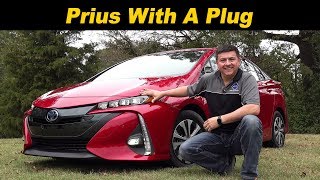
2018 Kia Niro Plug In Hybrid Review / Comparison - In 4K
video description
Date: 2019-05-30
Related videos


Comments and reviews: 10
Paul DesRoches
Hey Alex, Love your in-depth reviews and your keen insights into so many vehicles which you seem to keep within your noggin in great detail. The value of your reviews is very much heightened by your ability to do comparisons and analyses on the fly which is so helpful to us folk who dont get opportunities to have these cars for loan over a week or two as you do. But the real reason Im writing for the first time after being a fan for so long looking at your videos, is that I just purchased a loaded EX Premium Kia Niro, and have to say this is a well thought out vehicle in so many ways. It feels extremely planted while driving so I have to only guess on how much better the Touring Hybrid with the wide and taller tires feels in this area. I traded in a 2012 Honda CRV that had 76K mis on the clock, and had to drive about a hundred miles to find a PHEV Niro, so the ride up with the Honda when compared with the ride back in the Niro was very different. The sense of stability and steadiness was significantly better in the Niro than in the CRV, which came as a surprise to me. The sensitivity to input and response in the steering wheel was markedly better in the Niro as well. The techical acoutrements in the Niro were years ahead of the CRV, with the highly functional Smart cruise, or adaptive cruise control, which works worlds better than the one in our 2018 Honda Accord Touring 2. 0 my wife drives for work, which Ive driven many times using that feature. Theres no sudden braking or seeming confusion like one feels in the Accord. Also, in the Accord, during slowdown while having the adaptive cruise control working, weve both experienced the very unsettling experience of the system crashing and simply not slowing down anymore with no advance warning, so it becomes a rather hair-raising experience to expect the car to keep slowing and in fact the system has crashed and no longer slows. leaving you with a kind of exigency bordering on emergency to haul the cars speed down to avoid the rapidly approaching vehicle directly in front of you. Well see if that happens with the Niro in time I guess, but the greater issue here is that these safety adaptations to motoring technology must be cautiously employed and enjoyed, because like anything else high-tech, they can fail completely when you least expect it. Im pretty sure the crash avoidance feature in the Accord was simultaneously dismantled when the adaptive cruise control failed during both my wifes and my shocking experiences, which kind of defeats the whole purpose of the crash avoidance technology, it seems to me. Perhaps theres a glitch or problem with the system, but who can tell? I do know that once this happens, the system must be shut down by turning off the vehicle, then restarting it, to get these systems working again. You begin to rely on these new technologies, since they make the driving experience much more enjoyable, particularly with the adaptive cruise control. The only thing missing on the Kia that we absolutely love on the new Accord is the Heads-up display which weve both come to really enjoy on the Accord. Speaking of the Accords problems, weve also had trouble with speed limit visual recognition technology which optically recognizes and displays the speed limit on the dash as well as in the heads-up display in the windscreen. Frequently it has nothing to show, as I believe it defaults to nothing after so many minutes pass, since thats what appears to happen when speed limit signs fail to appear for lengthly periods of time. and also weve seen speed limit signs of 90 and 100 mph on rare occasions which shows that the recognition tecnology is far from perfect, and clearly isnt linked with GPS navigation data which is inherent in all modern navigation systems. If that were the case there would never be a weird readout like 100 mph for example, and there would also never be a blank screen when theres no frequent posted speed limit signs. These are very technical details but theyre from experience so I think theyre worth noting. BTW, I was hoping for a review of the new Accord Hybrid since it incorporates all of that Honda Sensing technology now and makes the car different and better in my opinion than the 17 model which you reviewed in great detail. I know theyre similar in technology re: the drivetrain, but the car is so new it makes for a new experience and is worth a critical look at once again. It would have been appreciated since I was considering one of those and the Niro for this purchase. In the end, I found the pure electric mode really appealing, especially since we dont expect to use the car very much after we both officially retire at the end of this year, so if we keep it charged up daily, it should seldom require petrol in our driving styles. The Niro is a very interesting niche in hybrid technology it seems, having a really nice blend of usable storage space, easily accessible and roomy rear seating, economical running costs, and a nice sporty feel to the handling and driving experience. So far, Im really pleased with our decision, and I guess time will tell if that satisfaction is durable, right? So, thanks again for your excellent quality reviews, and Ill continue to visit your page to keep up with the never-dull world of automotive evolution. One final note, though I know Im long-winded here. I discovered that CO2 exhausted by a Honda Accord Hybrid in a 15, 000 mile yearly usage emits a whopping 6, 192 lbs of the stuff. And thats a hybrid. I really had no mental concept of just how much carbon dioxide each vehicle was dumping into the atmosphere by our prolific use of internal combustion engines. Twice the weight of a car in just one year in the greenhouse gas CO2? Good grief, man, no wonder we are concerned about our effect on the environment, our global warming activity.
reply
Hey Alex, Love your in-depth reviews and your keen insights into so many vehicles which you seem to keep within your noggin in great detail. The value of your reviews is very much heightened by your ability to do comparisons and analyses on the fly which is so helpful to us folk who dont get opportunities to have these cars for loan over a week or two as you do. But the real reason Im writing for the first time after being a fan for so long looking at your videos, is that I just purchased a loaded EX Premium Kia Niro, and have to say this is a well thought out vehicle in so many ways. It feels extremely planted while driving so I have to only guess on how much better the Touring Hybrid with the wide and taller tires feels in this area. I traded in a 2012 Honda CRV that had 76K mis on the clock, and had to drive about a hundred miles to find a PHEV Niro, so the ride up with the Honda when compared with the ride back in the Niro was very different. The sense of stability and steadiness was significantly better in the Niro than in the CRV, which came as a surprise to me. The sensitivity to input and response in the steering wheel was markedly better in the Niro as well. The techical acoutrements in the Niro were years ahead of the CRV, with the highly functional Smart cruise, or adaptive cruise control, which works worlds better than the one in our 2018 Honda Accord Touring 2. 0 my wife drives for work, which Ive driven many times using that feature. Theres no sudden braking or seeming confusion like one feels in the Accord. Also, in the Accord, during slowdown while having the adaptive cruise control working, weve both experienced the very unsettling experience of the system crashing and simply not slowing down anymore with no advance warning, so it becomes a rather hair-raising experience to expect the car to keep slowing and in fact the system has crashed and no longer slows. leaving you with a kind of exigency bordering on emergency to haul the cars speed down to avoid the rapidly approaching vehicle directly in front of you. Well see if that happens with the Niro in time I guess, but the greater issue here is that these safety adaptations to motoring technology must be cautiously employed and enjoyed, because like anything else high-tech, they can fail completely when you least expect it. Im pretty sure the crash avoidance feature in the Accord was simultaneously dismantled when the adaptive cruise control failed during both my wifes and my shocking experiences, which kind of defeats the whole purpose of the crash avoidance technology, it seems to me. Perhaps theres a glitch or problem with the system, but who can tell? I do know that once this happens, the system must be shut down by turning off the vehicle, then restarting it, to get these systems working again. You begin to rely on these new technologies, since they make the driving experience much more enjoyable, particularly with the adaptive cruise control. The only thing missing on the Kia that we absolutely love on the new Accord is the Heads-up display which weve both come to really enjoy on the Accord. Speaking of the Accords problems, weve also had trouble with speed limit visual recognition technology which optically recognizes and displays the speed limit on the dash as well as in the heads-up display in the windscreen. Frequently it has nothing to show, as I believe it defaults to nothing after so many minutes pass, since thats what appears to happen when speed limit signs fail to appear for lengthly periods of time. and also weve seen speed limit signs of 90 and 100 mph on rare occasions which shows that the recognition tecnology is far from perfect, and clearly isnt linked with GPS navigation data which is inherent in all modern navigation systems. If that were the case there would never be a weird readout like 100 mph for example, and there would also never be a blank screen when theres no frequent posted speed limit signs. These are very technical details but theyre from experience so I think theyre worth noting. BTW, I was hoping for a review of the new Accord Hybrid since it incorporates all of that Honda Sensing technology now and makes the car different and better in my opinion than the 17 model which you reviewed in great detail. I know theyre similar in technology re: the drivetrain, but the car is so new it makes for a new experience and is worth a critical look at once again. It would have been appreciated since I was considering one of those and the Niro for this purchase. In the end, I found the pure electric mode really appealing, especially since we dont expect to use the car very much after we both officially retire at the end of this year, so if we keep it charged up daily, it should seldom require petrol in our driving styles. The Niro is a very interesting niche in hybrid technology it seems, having a really nice blend of usable storage space, easily accessible and roomy rear seating, economical running costs, and a nice sporty feel to the handling and driving experience. So far, Im really pleased with our decision, and I guess time will tell if that satisfaction is durable, right? So, thanks again for your excellent quality reviews, and Ill continue to visit your page to keep up with the never-dull world of automotive evolution. One final note, though I know Im long-winded here. I discovered that CO2 exhausted by a Honda Accord Hybrid in a 15, 000 mile yearly usage emits a whopping 6, 192 lbs of the stuff. And thats a hybrid. I really had no mental concept of just how much carbon dioxide each vehicle was dumping into the atmosphere by our prolific use of internal combustion engines. Twice the weight of a car in just one year in the greenhouse gas CO2? Good grief, man, no wonder we are concerned about our effect on the environment, our global warming activity.
reply
Alli Glass
NOT A CROSSOVER I put that as an exclamation b/c people will be disappointed expecting this to act as an SUV/ crossover like the Ford Edge, Chevy Equinox, etc. Ive owned a Jeep Liberty, Ford Escape, & Chrysler Pacifica Crossover Wagon. The Chrysler was a crossover being a Wagon/ Minivan for space & cargo area while it was as capable as my Jeep for heavy rains, light flooding, and driving in snow. I will NEVER drive this Kia Niro in heavy rains/ light flooding or heavy snow. If I hit the mountains in winter I will REQUIRE snow chains. This is a small wagon or hatchback. Seriously a Ford Fusion Energi is 20. 3 inches longer than this wagon. Kia Niro specs are similar to Toyota Matrix which no one called a SUV even though it had an AWD option. Statements that a Nissan Kick is an SUV are incorrect since it too is a wagon albeit a sporty version. God forbid anyone say they drive a wagon. I really miss the Volvo V70 when it was still an independent Swiss car company. Volvo created that 3rd row seat that folds down and faces back, which Telsa HAS & it is all the rage. A city driver in an area with mild weather will get the best fuel economy with the KIA Niro or Niro PHEV. See The Kia Niro forums - gas mileage is frustrating people in very cold/ very hot climates driving highways primarily. I like but DONT love it which is why I did a lease. The tech is so new & I waited until the clutch jerk issue was resolved before signing anything. The issue became a recall. If you need a cargo area that will handle a serious Costco trip, you need a car for a 70+ pound dog, you have 4 or less in your family, &/or you have tall friends & family members you regularly drive in the back seat then this is your plug-in. If you have more than 3 car seats, you have a family of 5 or more, or you have more than 2 large 70+ pound dogs then save up for the new Chrysler Pacifica Mini-Van PHEV. The Mitsubishi Outlander PHEV is only an option if you live less than 20-30 minutes from a Mitsubishi dealership & you have AAA for towing.
reply
NOT A CROSSOVER I put that as an exclamation b/c people will be disappointed expecting this to act as an SUV/ crossover like the Ford Edge, Chevy Equinox, etc. Ive owned a Jeep Liberty, Ford Escape, & Chrysler Pacifica Crossover Wagon. The Chrysler was a crossover being a Wagon/ Minivan for space & cargo area while it was as capable as my Jeep for heavy rains, light flooding, and driving in snow. I will NEVER drive this Kia Niro in heavy rains/ light flooding or heavy snow. If I hit the mountains in winter I will REQUIRE snow chains. This is a small wagon or hatchback. Seriously a Ford Fusion Energi is 20. 3 inches longer than this wagon. Kia Niro specs are similar to Toyota Matrix which no one called a SUV even though it had an AWD option. Statements that a Nissan Kick is an SUV are incorrect since it too is a wagon albeit a sporty version. God forbid anyone say they drive a wagon. I really miss the Volvo V70 when it was still an independent Swiss car company. Volvo created that 3rd row seat that folds down and faces back, which Telsa HAS & it is all the rage. A city driver in an area with mild weather will get the best fuel economy with the KIA Niro or Niro PHEV. See The Kia Niro forums - gas mileage is frustrating people in very cold/ very hot climates driving highways primarily. I like but DONT love it which is why I did a lease. The tech is so new & I waited until the clutch jerk issue was resolved before signing anything. The issue became a recall. If you need a cargo area that will handle a serious Costco trip, you need a car for a 70+ pound dog, you have 4 or less in your family, &/or you have tall friends & family members you regularly drive in the back seat then this is your plug-in. If you have more than 3 car seats, you have a family of 5 or more, or you have more than 2 large 70+ pound dogs then save up for the new Chrysler Pacifica Mini-Van PHEV. The Mitsubishi Outlander PHEV is only an option if you live less than 20-30 minutes from a Mitsubishi dealership & you have AAA for towing.
reply
John Donaldson
Nice review as always Alex. We would have strongly considered the Ioniq PHEV or the Niro PHEV had they been available before the end of 2017 for the tax credit that we were concerned about it going away with the new federal budget. However when we discovered the Honda Clarity there was no turning back. I think you short changed the Clarity just a bit when you mentioned the ICE would start up if you push down on the accelerator all the way. While that is true there is a strong detent in the accelerator so that is easy to avoid. Also in Sport mode with Econ switched on the Clarity has more than ample power to accelerate without bringing the ICE on line. I consider the Niro to be a cross-over based on shape alone. I dont think all wheel drive helps define whether a car is a hatch back or cross over. Another thing about the Clarity (we drive for months on EV only) is the 47 mile EV EPA range. What most car companies, like Toyota in the Prime, dont talk about is loss of range in cold weather. The 25-30 mile EV range of many of these PHEV cars is said to be adequate for some percentage of drivers. But when the winter comes that range is dramatically reduced. The Clarity can dip from the high 40s to the mid 30s in cold climates. Im so glad we have the Clarity rather than one of the 25-30 EV range cars because wed be using gas a lot more often. All in all though we would have been happy to have the Niro especially for the cargo space and proper 60/40 fold down rear seats. I think the Niro is not only a good looking vehicle it is also an overall winner.
reply
Nice review as always Alex. We would have strongly considered the Ioniq PHEV or the Niro PHEV had they been available before the end of 2017 for the tax credit that we were concerned about it going away with the new federal budget. However when we discovered the Honda Clarity there was no turning back. I think you short changed the Clarity just a bit when you mentioned the ICE would start up if you push down on the accelerator all the way. While that is true there is a strong detent in the accelerator so that is easy to avoid. Also in Sport mode with Econ switched on the Clarity has more than ample power to accelerate without bringing the ICE on line. I consider the Niro to be a cross-over based on shape alone. I dont think all wheel drive helps define whether a car is a hatch back or cross over. Another thing about the Clarity (we drive for months on EV only) is the 47 mile EV EPA range. What most car companies, like Toyota in the Prime, dont talk about is loss of range in cold weather. The 25-30 mile EV range of many of these PHEV cars is said to be adequate for some percentage of drivers. But when the winter comes that range is dramatically reduced. The Clarity can dip from the high 40s to the mid 30s in cold climates. Im so glad we have the Clarity rather than one of the 25-30 EV range cars because wed be using gas a lot more often. All in all though we would have been happy to have the Niro especially for the cargo space and proper 60/40 fold down rear seats. I think the Niro is not only a good looking vehicle it is also an overall winner.
reply
Eric Peltzer
Dont see the point of splitting hairs over efficiency and fuel economy and all the comparisons in this plug-in segment seems kind of superfluous when you come to the bottom line of the efficiency question, which is cost to drive. Better to consider more which vehicle you would really want to live with every day. You have a great summation near the end that shows over 15, 000 miles the cost of this is around 900 vs the Prius Prime at 750. So in the great scheme of things for a 30, 000 vehicle the difference of 150 per year is (3 a week) - to me, insignificant. And actually we only put about 9k mi a year on our car. So the difference is about ONE fill-up of gas on my 17mpg van. I think a lot of people like me in the market for a plug-in or any hybrid really just want great economy without having to drive an odd vehicle. Sorry Prius Prime, you may have a technical and efficiency edge, but just a low slung car with wacko styling. Toyota has lost this longtime Prius fan. This is at the top of my list to replace our 08 Prius and looks like a huge step up. You can drive this 25 mi in complete silence as a pure EV, but then blast down a road trip with a 500mi range and quick fill-ups anywhere for less than 35. In a thoroughly modern normal CUV/wagon THATS the cool dual use thing a plug in promises and this one looks to deliver.
reply
Dont see the point of splitting hairs over efficiency and fuel economy and all the comparisons in this plug-in segment seems kind of superfluous when you come to the bottom line of the efficiency question, which is cost to drive. Better to consider more which vehicle you would really want to live with every day. You have a great summation near the end that shows over 15, 000 miles the cost of this is around 900 vs the Prius Prime at 750. So in the great scheme of things for a 30, 000 vehicle the difference of 150 per year is (3 a week) - to me, insignificant. And actually we only put about 9k mi a year on our car. So the difference is about ONE fill-up of gas on my 17mpg van. I think a lot of people like me in the market for a plug-in or any hybrid really just want great economy without having to drive an odd vehicle. Sorry Prius Prime, you may have a technical and efficiency edge, but just a low slung car with wacko styling. Toyota has lost this longtime Prius fan. This is at the top of my list to replace our 08 Prius and looks like a huge step up. You can drive this 25 mi in complete silence as a pure EV, but then blast down a road trip with a 500mi range and quick fill-ups anywhere for less than 35. In a thoroughly modern normal CUV/wagon THATS the cool dual use thing a plug in promises and this one looks to deliver.
reply
Dan Sanger
Alex does a great job explaining the different types of plug-in hybrids. Ill throw in my two cents as a Chevy Volt owner. After living with a plug-in hybrid for a year, I have to say that I have grown really fond of the smoothness and quietness of EV mode, plus the ability to charge at home. But, when the gasoline engine switches on, I feel like Im being rudely thrust back into the 20th century. Even though I love my Volt, and more than 96% of my miles have been in EV mode, if I were looking for a new car today I think I would restrict my choices to battery only, betting that charging infrastructure will improve within a year or two. Right now, the only affordable 200+ mile EV thats readily available in the US is the Chevy Bolt. In a year or so, the choices will expand to include Tesla Model 3, Nissan Leaf, and Hyundai Kona EV. If you still want the security of a gasoline engine, then there are lots of good plug-in hybrids to pick from, including the Niro. But, once you drive electric, its hard to go back to a gasoline engine again. Electric drive is just way more civilized.
reply
Alex does a great job explaining the different types of plug-in hybrids. Ill throw in my two cents as a Chevy Volt owner. After living with a plug-in hybrid for a year, I have to say that I have grown really fond of the smoothness and quietness of EV mode, plus the ability to charge at home. But, when the gasoline engine switches on, I feel like Im being rudely thrust back into the 20th century. Even though I love my Volt, and more than 96% of my miles have been in EV mode, if I were looking for a new car today I think I would restrict my choices to battery only, betting that charging infrastructure will improve within a year or two. Right now, the only affordable 200+ mile EV thats readily available in the US is the Chevy Bolt. In a year or so, the choices will expand to include Tesla Model 3, Nissan Leaf, and Hyundai Kona EV. If you still want the security of a gasoline engine, then there are lots of good plug-in hybrids to pick from, including the Niro. But, once you drive electric, its hard to go back to a gasoline engine again. Electric drive is just way more civilized.
reply
Dale Shinskey
Ive owned the Niro PHEV since 2/28/18 and really like it. As a former Volt owner (2 of them in 6 years) the Niro has some shortfalls, running A/C or heat means your engine is on and youre not getting your EV efficiency when you have battery power and in Florida I need to run the A/C in the summer, that kind of bums me out. The size is so much more practical than the Volt (having a real back seat that real people can use) and the actual gas mileage is higher than the Volt which is more practical when you take longer trips. Ive had a couple of long trips and have gotten 45-46 mpg at 75 mph. You do have to be light on the gas pedal to NOT engage the gas engine when youre running on in all electric mode though. I think that for the price and the features it is a great first entry by Kia into the PHEV world. It can only get better in the next version I hope. Thanks for a great review.
reply
Ive owned the Niro PHEV since 2/28/18 and really like it. As a former Volt owner (2 of them in 6 years) the Niro has some shortfalls, running A/C or heat means your engine is on and youre not getting your EV efficiency when you have battery power and in Florida I need to run the A/C in the summer, that kind of bums me out. The size is so much more practical than the Volt (having a real back seat that real people can use) and the actual gas mileage is higher than the Volt which is more practical when you take longer trips. Ive had a couple of long trips and have gotten 45-46 mpg at 75 mph. You do have to be light on the gas pedal to NOT engage the gas engine when youre running on in all electric mode though. I think that for the price and the features it is a great first entry by Kia into the PHEV world. It can only get better in the next version I hope. Thanks for a great review.
reply
David Smith
That was an extensive review, thanks for that. I would call it a cross-over, kinda like you were saying, based on the fact that cross-over title is as simple as it doesnt look like a car and I feel that the cabin seating is setup as more upright like a truck. People who attempt to define Cross-over are wrong because its just a simple title for a vehicle styling mash-up. No one said cross-overs had to be AWD; nor, is there a specific ride height requirement. But, for SUVs there are requirements and a lot of what people call SUVs, are not. They are cross-overs too. Thats a Jab at greencarreports. com. That guy thinks he defines what a cross-over means to the entire world, and he is wrong.
reply
That was an extensive review, thanks for that. I would call it a cross-over, kinda like you were saying, based on the fact that cross-over title is as simple as it doesnt look like a car and I feel that the cabin seating is setup as more upright like a truck. People who attempt to define Cross-over are wrong because its just a simple title for a vehicle styling mash-up. No one said cross-overs had to be AWD; nor, is there a specific ride height requirement. But, for SUVs there are requirements and a lot of what people call SUVs, are not. They are cross-overs too. Thats a Jab at greencarreports. com. That guy thinks he defines what a cross-over means to the entire world, and he is wrong.
reply
Svik DK
I dont get why peoble complain about the car need the enginge to produce heat. This is NOT an EV car, but an Ice with EV as a bonus. If it was equipped with at heater, the range would drop drastic in the cold, and the EV range would be really low. And if you can live with a low range, get a regular EV instead. Interessting also, that there are differences in cargo area in the US vs. Europe version, since the PHEV loses 25% cargo space compared the the regular HEV. But thats all under the bootfloor. Great review anyway, even if I think the EV range was abit on the low side. I get around 32-35 miles on pure EV driving i mine. Maybe 28-30 in freezing temperature: )
reply
I dont get why peoble complain about the car need the enginge to produce heat. This is NOT an EV car, but an Ice with EV as a bonus. If it was equipped with at heater, the range would drop drastic in the cold, and the EV range would be really low. And if you can live with a low range, get a regular EV instead. Interessting also, that there are differences in cargo area in the US vs. Europe version, since the PHEV loses 25% cargo space compared the the regular HEV. But thats all under the bootfloor. Great review anyway, even if I think the EV range was abit on the low side. I get around 32-35 miles on pure EV driving i mine. Maybe 28-30 in freezing temperature: )
reply
Charlene Root
Great review again Alex. Youre the best One small point, the battery in the Niro PHEV is about 6 times larger than that in the regular Niro rather than the 8 times larger mentioned in the review but whos counting. One other question? Does the top end Niro PHEV have heated rear seats as in the top end hybrid Niro? That is a feature my rear seat passengers have greatly appreciated in our Dodge Grand Caravan. These heated seats can significantly reduce the need for cabin heating when combined with the heating steering wheel. This of course would benefit fuel economy in this Niro PHEV.
reply
Great review again Alex. Youre the best One small point, the battery in the Niro PHEV is about 6 times larger than that in the regular Niro rather than the 8 times larger mentioned in the review but whos counting. One other question? Does the top end Niro PHEV have heated rear seats as in the top end hybrid Niro? That is a feature my rear seat passengers have greatly appreciated in our Dodge Grand Caravan. These heated seats can significantly reduce the need for cabin heating when combined with the heating steering wheel. This of course would benefit fuel economy in this Niro PHEV.
reply
Serge St-Pierre
Hi Alex. Nice detail review as usual. They can call it what they want, it is a very practical design. it is selling 3 to 1 compare to the Ionic here in Canada. Unfortunately, where I live, near Ottawa Canada, the plug in part will be useless for 6 months of the year as it start the engine as soon as you need heat. That is why I order a Honda Clarity PHEV which comes with a battery heater in Canada, climate control remote start when plug in or not, and it also drive in EV mode in the cold. It is also a much bigger car that I actually fit in. Cant wait to see your review on it.
reply
Hi Alex. Nice detail review as usual. They can call it what they want, it is a very practical design. it is selling 3 to 1 compare to the Ionic here in Canada. Unfortunately, where I live, near Ottawa Canada, the plug in part will be useless for 6 months of the year as it start the engine as soon as you need heat. That is why I order a Honda Clarity PHEV which comes with a battery heater in Canada, climate control remote start when plug in or not, and it also drive in EV mode in the cold. It is also a much bigger car that I actually fit in. Cant wait to see your review on it.
reply
Add a review, comment
Other channel videos