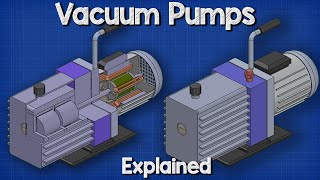
Vacuum Pumps Explained - Basic working principle HVAC
video description
Date: 2023-11-17
Related videos





Comments and reviews: 26
Ragaven
hi, we have an similar principled pump but in our pump its not achieving deeper vacuum above -100 mmhg, i dismantled the pump to check carbon vanes & outer gaskets on both sides everything was fine but the pump was not able to suck in the oil from the sump, i checked for cloggings but nothing was there, if i pour oil directly into rotary compression chamber there's deep vacuum around -740 but only few seconds before the oil & air gets exhausted at high pressure into the sump but no suction of oil from sump happening again losing the seal at vanes & no vacuum, how to rectify this sir? what am i missing?
reply
hi, we have an similar principled pump but in our pump its not achieving deeper vacuum above -100 mmhg, i dismantled the pump to check carbon vanes & outer gaskets on both sides everything was fine but the pump was not able to suck in the oil from the sump, i checked for cloggings but nothing was there, if i pour oil directly into rotary compression chamber there's deep vacuum around -740 but only few seconds before the oil & air gets exhausted at high pressure into the sump but no suction of oil from sump happening again losing the seal at vanes & no vacuum, how to rectify this sir? what am i missing?
reply
Tarash
only one problem with this video. balloons dont work that way, smaller balloon will push air into big balloon. sounds counterintuitive but makes sense if you think about when you try to inflate balloon its harder at the beginning and easier as it gets bigger. also, smaller ballon has pressure >ambient pressure and as it inflates it decreases, approaching ambient pressure. then gets to it plastic deformation stage where pressure starts increasing again and eventually if pressure's sufficient enough it pops. balloons are not analogous to pressurized tanks
reply
only one problem with this video. balloons dont work that way, smaller balloon will push air into big balloon. sounds counterintuitive but makes sense if you think about when you try to inflate balloon its harder at the beginning and easier as it gets bigger. also, smaller ballon has pressure >ambient pressure and as it inflates it decreases, approaching ambient pressure. then gets to it plastic deformation stage where pressure starts increasing again and eventually if pressure's sufficient enough it pops. balloons are not analogous to pressurized tanks
reply
Njindom
Please guys I need your help. I currently want to build a system, that allows hot steam to enter and leave a vacuum while maintaining a specific pressure. I know how to keep the temperature in the system constant at 200 degrees Celsius. I also know how to attend the initial desired pressure. The problem now is how do I make pass hot steam through this system, and allowing the steam to escape the system without changing the pressure of the system? What device(s) could be used to achieve this desire? Thanks for helping out guys.
reply
Please guys I need your help. I currently want to build a system, that allows hot steam to enter and leave a vacuum while maintaining a specific pressure. I know how to keep the temperature in the system constant at 200 degrees Celsius. I also know how to attend the initial desired pressure. The problem now is how do I make pass hot steam through this system, and allowing the steam to escape the system without changing the pressure of the system? What device(s) could be used to achieve this desire? Thanks for helping out guys.
reply
Cameron
So I understand or think i do how it operates, but my question is how does the high pressure side not flow to the low pressure side inside the pump itself. Your illustration doesnt show a gap, but I dont underestand how low pressure was created to start with besides compression, so how does the high pressure affect the low pressure if its sealed away? If its not, than how does it not equalize?
reply
So I understand or think i do how it operates, but my question is how does the high pressure side not flow to the low pressure side inside the pump itself. Your illustration doesnt show a gap, but I dont underestand how low pressure was created to start with besides compression, so how does the high pressure affect the low pressure if its sealed away? If its not, than how does it not equalize?
reply
Cammi
I have a vacuum pump, but never knew the mechanics of it. Now I know.
Incidentally, it is the same mechanics that are in my hand-cranked fuel transfer pump, with the inlet being the tube on the bottom that goes into the bulk tank/drum, and the outlet being the spout on top of the pump. These pumps are nice because they are self-priming and reversible.
reply
I have a vacuum pump, but never knew the mechanics of it. Now I know.
Incidentally, it is the same mechanics that are in my hand-cranked fuel transfer pump, with the inlet being the tube on the bottom that goes into the bulk tank/drum, and the outlet being the spout on top of the pump. These pumps are nice because they are self-priming and reversible.
reply
Creativity
I recently purchased a freeze dryer which utilizes a vacuum pump for Long periods of time they recommend not to stay in the same room with the vacuum pump because of small oil vapor so I made a hole in the wall and extending the house how do you think a longer hose will affect a vacuum pumps ability to remove air?
reply
I recently purchased a freeze dryer which utilizes a vacuum pump for Long periods of time they recommend not to stay in the same room with the vacuum pump because of small oil vapor so I made a hole in the wall and extending the house how do you think a longer hose will affect a vacuum pumps ability to remove air?
reply
engineering_mindset
I just felt the need to research this and i have to say you are an incredible science communicator. I didn't have to pause at any point and understood everything you said. Maybe i am just dumb as hell but with physics videos this is almost never the case.
Very well made!
reply
I just felt the need to research this and i have to say you are an incredible science communicator. I didn't have to pause at any point and understood everything you said. Maybe i am just dumb as hell but with physics videos this is almost never the case.
Very well made!
reply
Dilyan
I don't think that example with the balloons is correct. The balloon that is more inflated has lower pressure inside because the walls of the balloon are exerting a force over a much greater surface area. The less inflated balloon is actually going to push air into the more inflated one.
reply
I don't think that example with the balloons is correct. The balloon that is more inflated has lower pressure inside because the walls of the balloon are exerting a force over a much greater surface area. The less inflated balloon is actually going to push air into the more inflated one.
reply
Omnious42
That's so cool! I have been binge watching your videos after I discovered this page several weeks ago now. I saw the HVAC school and after a few classes Brian mentioned he teamed up with you for this and now I am back here watching clips
reply
That's so cool! I have been binge watching your videos after I discovered this page several weeks ago now. I saw the HVAC school and after a few classes Brian mentioned he teamed up with you for this and now I am back here watching clips
reply
Ben
I have a pump with weak suction. No visible oil leaking anywhere, but I can feel air leaking out of the side seams- either where the pump or compressor sections screw into the body. Is this potentially a bad gasket or something?
reply
I have a pump with weak suction. No visible oil leaking anywhere, but I can feel air leaking out of the side seams- either where the pump or compressor sections screw into the body. Is this potentially a bad gasket or something?
reply
B67FSTB
How long can a vacuum pump operate? Can it run for an hour? Cause mine shuts of after 20 min cause its hot!
I also have air bubbles in the oil fter a minute of operation?
reply
How long can a vacuum pump operate? Can it run for an hour? Cause mine shuts of after 20 min cause its hot!
I also have air bubbles in the oil fter a minute of operation?
reply
ChaChaMan
Is this process primarily for removing moisture, or can it also test the structural strength of the piping at the high operating pressures it will be subject to?
reply
Is this process primarily for removing moisture, or can it also test the structural strength of the piping at the high operating pressures it will be subject to?
reply
Ghostrider
if we have ice block. can we dry the system with out change the dry filter? only with heat and vagum and nitrogen? to small system 530 gr 407c
thanks
reply
if we have ice block. can we dry the system with out change the dry filter? only with heat and vagum and nitrogen? to small system 530 gr 407c
thanks
reply
Joseph
As usual, your explanation coupled with great animation is an excellent and worthy teaching aid to all institutions of technical education.
reply
As usual, your explanation coupled with great animation is an excellent and worthy teaching aid to all institutions of technical education.
reply
manikandan
Thanks for the explanation
I have a doubt. How theblow pressure region and high pressure region gets separated. Please explain.
reply
Thanks for the explanation
I have a doubt. How theblow pressure region and high pressure region gets separated. Please explain.
reply
INNOVATION
How it sealed the chamber from front side because it should be air tight but this can jam rotation? But how it's managed?
reply
How it sealed the chamber from front side because it should be air tight but this can jam rotation? But how it's managed?
reply
Smiley
4: 30 you balloon animation is incorrect. The balloon that is more inflated (the bigger one) actually has a lower pressure.
reply
4: 30 you balloon animation is incorrect. The balloon that is more inflated (the bigger one) actually has a lower pressure.
reply
The
Thanks for the great video. I'm just confused why the there is a lower pressure inside the inlet of the compression chamber?
reply
Thanks for the great video. I'm just confused why the there is a lower pressure inside the inlet of the compression chamber?
reply
Peter
6: 20, why isn't the high-pressure side (red) going right over to the low-pressure side (blue) at the top of the cylinder?
reply
6: 20, why isn't the high-pressure side (red) going right over to the low-pressure side (blue) at the top of the cylinder?
reply
Jory
Refrigeration mechanic here well done! Used a vacuum pump for 15 yrs now and always wondered what the inside looked like!
reply
Refrigeration mechanic here well done! Used a vacuum pump for 15 yrs now and always wondered what the inside looked like!
reply
TheJPomp
One question: How is it only air reaching the compressor? Would an inlet from the system include the coolant?
reply
One question: How is it only air reaching the compressor? Would an inlet from the system include the coolant?
reply
Renole
Wow! For a person like myself who knew nothing about a vacuum pump, this was extremely simple to grasp! Kudos!
reply
Wow! For a person like myself who knew nothing about a vacuum pump, this was extremely simple to grasp! Kudos!
reply
Steves
The balloons connected with a tube is an incorrect example of pressure equilibration that's not what happens
reply
The balloons connected with a tube is an incorrect example of pressure equilibration that's not what happens
reply
mani
Technical video made to understand it's principles, working conditions and usage in air-conditioning. Thanks.
reply
Technical video made to understand it's principles, working conditions and usage in air-conditioning. Thanks.
reply
Jesper
Try to perform that balloon argument of high to low flow as an experiment. I think you'll be surprised.
reply
Try to perform that balloon argument of high to low flow as an experiment. I think you'll be surprised.
reply
James
I just wanted to see the vane compressor arrangement - so perfect level of detail for me. Super video.
reply
I just wanted to see the vane compressor arrangement - so perfect level of detail for me. Super video.
reply
Add a review, comment
Other channel videos