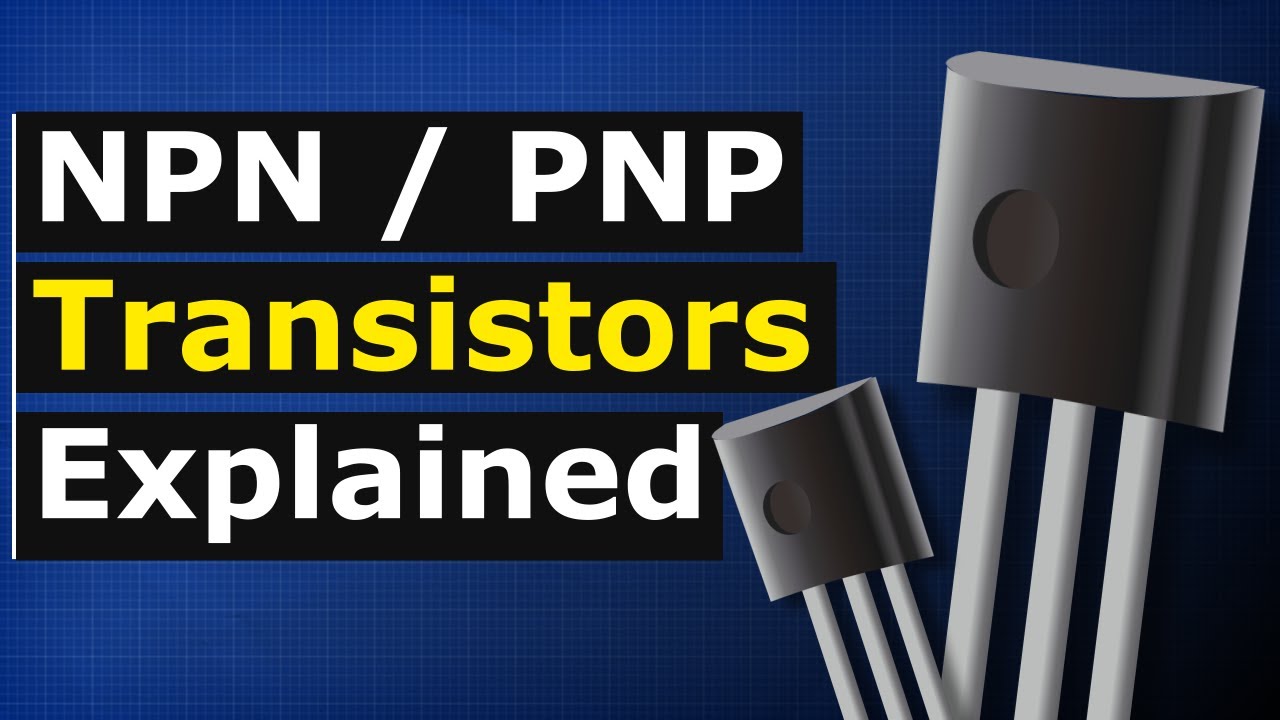
NPN & PNP Transistors explained - electronics engineering
video description
If I add a resistor to the mix, anywhere, the board won't work. I was afraid that having a 5V power source, and the On/Off from a separate Arduino might fry the board or the transistor.
Why does transistor stop this circuit from working? If I literally put it anywhere into the circuit the ESP32 switches on, but does not operate.
Date: 2023-11-17
Related videos



Comments and reviews: 24
HeroCP7
Im confused. I thought that for PNP type when the base is off the main circuit should be on. Because for NPN when base is powered Collector and emitter is connected but for PNP it is said that it is the opposite so when the base pin is powered the collector and emitter should not connect since they are opposites. yet in the video 2: 22, PNP base is off but the emitter and collector is also not connected?
reply
Im confused. I thought that for PNP type when the base is off the main circuit should be on. Because for NPN when base is powered Collector and emitter is connected but for PNP it is said that it is the opposite so when the base pin is powered the collector and emitter should not connect since they are opposites. yet in the video 2: 22, PNP base is off but the emitter and collector is also not connected?
reply
Lennart
The numbers are the same, it's just the opposite polarity. The direction really depends on seeing it as electron flow or hole flow. Why do you say that one combines the current and one divides it? It doesn't make sense to me.
What I am lacking is a practical example of why you want to choose one type over the other. When do you want each type?
reply
The numbers are the same, it's just the opposite polarity. The direction really depends on seeing it as electron flow or hole flow. Why do you say that one combines the current and one divides it? It doesn't make sense to me.
What I am lacking is a practical example of why you want to choose one type over the other. When do you want each type?
reply
Jarrod
Hey I dont think you mentioned the purpose of the transistor which was key to this explanation. in the circuit shown what was the point of the BJT? Why would you have it versus not having it? A circuit comparison between one with versus without would have been nice in this overview.
reply
Hey I dont think you mentioned the purpose of the transistor which was key to this explanation. in the circuit shown what was the point of the BJT? Why would you have it versus not having it? A circuit comparison between one with versus without would have been nice in this overview.
reply
macknumber9
So the collector and emitter are both conductive and the base is semi conductor? Or are all 3 semi conductors? Because I'm having trouble grasping the layout of my transistor. it has the base on the outside, the collector in the middle and the emitter next to the collector.
reply
So the collector and emitter are both conductive and the base is semi conductor? Or are all 3 semi conductors? Because I'm having trouble grasping the layout of my transistor. it has the base on the outside, the collector in the middle and the emitter next to the collector.
reply
Omega
So, let me see if I got this right. One of the differences between NPN and PNP transistors is that, with NPNs, the current flows from the collector to the emitter, and, with PNPs, the current flows from the emitter to the collector. Is that correct?
reply
So, let me see if I got this right. One of the differences between NPN and PNP transistors is that, with NPNs, the current flows from the collector to the emitter, and, with PNPs, the current flows from the emitter to the collector. Is that correct?
reply
Tiny
I never understood how a transistor wad been chosen for a particular circuit, never could wrap my head around it.
I always thought/assumed the emmiter was th negative side of a transistor in a circuit, wrong again
reply
I never understood how a transistor wad been chosen for a particular circuit, never could wrap my head around it.
I always thought/assumed the emmiter was th negative side of a transistor in a circuit, wrong again
reply
sadrevolution
I know time travel isn't possible, because no future physicist has gone back to whisper in Benjamin Franklin's ear that current is negatively charged electrons travelling from the anode to the cathode.
reply
I know time travel isn't possible, because no future physicist has gone back to whisper in Benjamin Franklin's ear that current is negatively charged electrons travelling from the anode to the cathode.
reply
Taavi
Why did you flip the battery + and - on the side by side view. This makes understanding the comparison difficult. The LEDs would not work if you flip the current flow. Only the transistor should change.
reply
Why did you flip the battery + and - on the side by side view. This makes understanding the comparison difficult. The LEDs would not work if you flip the current flow. Only the transistor should change.
reply
Tim
Ugh! Believe it or not, I say that with great respect. I am an ME who worked for an electronics company for many years. My bosses were EEs, for the most part, and had great fun in maligning us MEs.
reply
Ugh! Believe it or not, I say that with great respect. I am an ME who worked for an electronics company for many years. My bosses were EEs, for the most part, and had great fun in maligning us MEs.
reply
starventure
Could it be said that besides enabling a control circuit to activate a main circuit, transistors are also for division or recombining of current? New to this so please show mercy.
reply
Could it be said that besides enabling a control circuit to activate a main circuit, transistors are also for division or recombining of current? New to this so please show mercy.
reply
Delaware
Thanks for the brush up. Good pneumonic device to remember this by is NPN negative/ neutral to battery. PNP positive/power from battery. That's how I remember it anyhow.
reply
Thanks for the brush up. Good pneumonic device to remember this by is NPN negative/ neutral to battery. PNP positive/power from battery. That's how I remember it anyhow.
reply
Richard
Regarding the terms Collector and Emitter, what is being collected and emitted?
I ask this because their designations do not change with the direction of the current.
reply
Regarding the terms Collector and Emitter, what is being collected and emitted?
I ask this because their designations do not change with the direction of the current.
reply
Lukman
Can you make a video how to use transistor as switch and as amplifier? and maybe how to calculate resistor value. That will be very nice. Your animation is very good.
reply
Can you make a video how to use transistor as switch and as amplifier? and maybe how to calculate resistor value. That will be very nice. Your animation is very good.
reply
RGBD
even more confued after watching this. i mean he did quite a good ting at trying to xplain. its me who always takes some time to understand smth even smth as basic: P
reply
even more confued after watching this. i mean he did quite a good ting at trying to xplain. its me who always takes some time to understand smth even smth as basic: P
reply
Rem1061
cute that you are showing flow from + to - even though it is actually from negative to positive, or did we stop using electrons and electron energy waves?
reply
cute that you are showing flow from + to - even though it is actually from negative to positive, or did we stop using electrons and electron energy waves?
reply
knowmater
What Im curious about is why the electrons and holes do not uniformly distribute themselves when you put a P and an N type region into contact.
reply
What Im curious about is why the electrons and holes do not uniformly distribute themselves when you put a P and an N type region into contact.
reply
oranu
Thanks. This video was wonderful. Just what I've been looking for. But i would have also like to see some real life applications.
reply
Thanks. This video was wonderful. Just what I've been looking for. But i would have also like to see some real life applications.
reply
treeman
why is it called 'emitter' still, whether current flows in or out of it, depending on npn or pnp? why not swap pin names at it?
reply
why is it called 'emitter' still, whether current flows in or out of it, depending on npn or pnp? why not swap pin names at it?
reply
Southern
Conventional current is worse than the imperial measurements! At least imperial is correct. Why has this not changed!
reply
Conventional current is worse than the imperial measurements! At least imperial is correct. Why has this not changed!
reply
Scoopta
The arrow points in the direction of conventional current. so it points backwards to the way physics works. got it
reply
The arrow points in the direction of conventional current. so it points backwards to the way physics works. got it
reply
Knight
Why does this use Conventional Flow Theory instead of Electron Flow Theory? That'd the source of my confusion
reply
Why does this use Conventional Flow Theory instead of Electron Flow Theory? That'd the source of my confusion
reply
Augusta
Except this is backwards and the arrow points at the negative substrate and is not actual electron flow.
reply
Except this is backwards and the arrow points at the negative substrate and is not actual electron flow.
reply
Henry
I don't ever think I'll get this stuff, I always thought electricity flows from negative to positive.
reply
I don't ever think I'll get this stuff, I always thought electricity flows from negative to positive.
reply
Jyv
conventional current, plus to minus/ground, in reality the electrons go from minus to plus terminal.
reply
conventional current, plus to minus/ground, in reality the electrons go from minus to plus terminal.
reply
Add a review, comment
Other channel videos