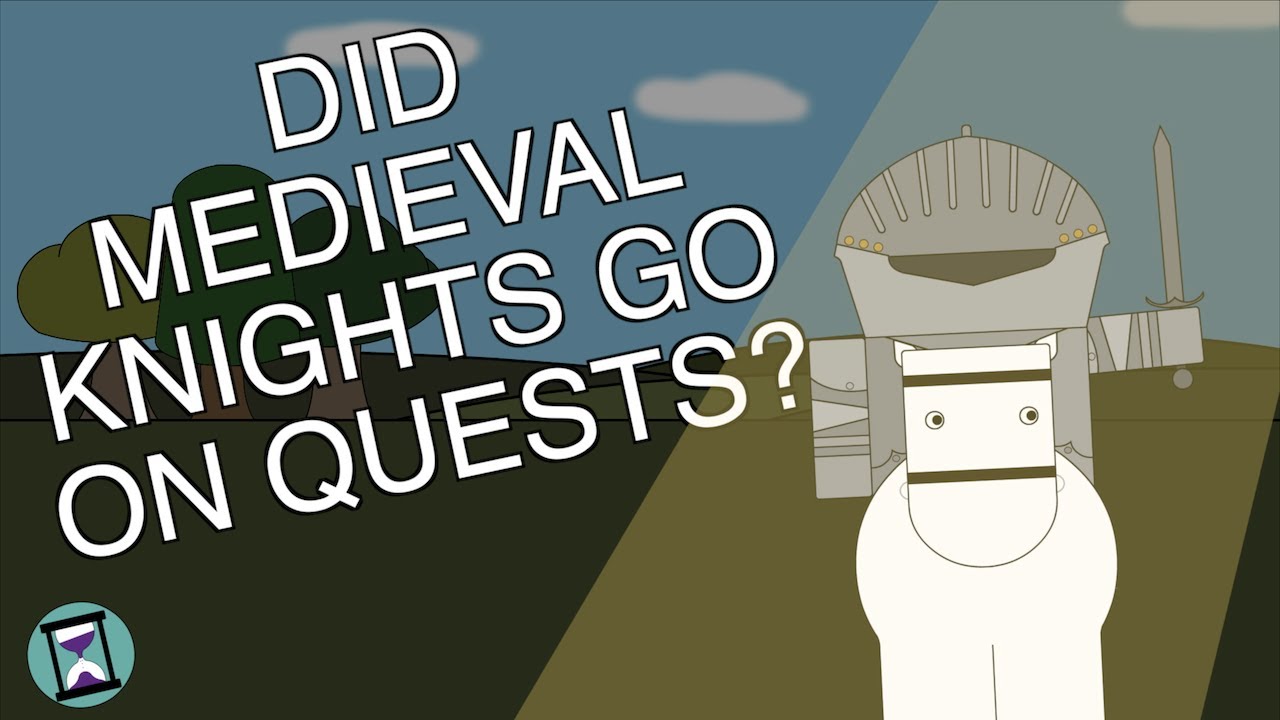
Did Medieval Knights Actually Go On Quests? Documentary
video description
Tradition expected from landlords that they would invite any noble traveler for a day or two. The traveler would provide news and tales from the countries and domains they visited.
After a few years of tornament and small battles, a knight could hope to make a good marriage to a settled heiress, or to enter service of a powerful landlord. When not achieving this, the knight could turn into a monk, take duty for a city, or turn a robber. Crusade and military orders later gave additional opportunities
A good late example is William the Marshall, described by Duby: first a junior supported by his kinship, then a poor knight making is name by traveling from tornaments to tornaments, he married a rich heiress, lived as a landlord and finally as a religious to prepare his afterlife.
In 13th-14th century, poetry started to celebrate wandering knights, selfessly fighting for honor and love, awarded by generous landlords and beautiful ladies - just when this lifestyle was disappearing: power of kings, dukes and counts was strong enough to stop local feud, errand warriors became better organized in bands of mercenaries, knighthood was not awarded for feats of arms, but by inheritance.
Date: 2022-07-19
Related videos




Comments and reviews: 19
Matthew
Considering how much I enjoy D&D, and have for around 30 years, this is too bad, and I appreciate that literature somehow made this idea popular enough that some of my favorite games, books, and more, where wizards, rogues, and fighters stalked the land, looking for loot, saving maidens, and killing ancient monsters. Considering the real world lacks mages, dragons, and curses, maybe I shouldn't be so surprised, but it's still too bad. Still do like the heroic knight-errant character, though, even if I do personally favor wizards.
reply
Considering how much I enjoy D&D, and have for around 30 years, this is too bad, and I appreciate that literature somehow made this idea popular enough that some of my favorite games, books, and more, where wizards, rogues, and fighters stalked the land, looking for loot, saving maidens, and killing ancient monsters. Considering the real world lacks mages, dragons, and curses, maybe I shouldn't be so surprised, but it's still too bad. Still do like the heroic knight-errant character, though, even if I do personally favor wizards.
reply
RambleOn07
Personally, I would have chosen the early medieval period as it's the one that inspired such tales in many ways. Especially, the Norman adventurers that traveled all around the medieval world at the time.
This video came off as an effort to argue that an ideal theatrical version of the world isn't real. It's the same as saying that movies aren't real life. However, that doesn't mean that those movies weren't inspired by anything and didn't capture people's romantic vision of the world.
reply
Personally, I would have chosen the early medieval period as it's the one that inspired such tales in many ways. Especially, the Norman adventurers that traveled all around the medieval world at the time.
This video came off as an effort to argue that an ideal theatrical version of the world isn't real. It's the same as saying that movies aren't real life. However, that doesn't mean that those movies weren't inspired by anything and didn't capture people's romantic vision of the world.
reply
Ulfcytel
There were occasional examples of questing. On one occasion, a southern English knight was presented with a gilded helmet by a lady with the message he should go bravely to fight the Scots. On arrival at the border, the locals didn't really know what to do with him (temporary pragmatic truces and all that. So he rode out of one of the castles, challenged the Scots and was promptly beaten up and nearly killed. Not quite the Morte d'Arthur experience.
reply
There were occasional examples of questing. On one occasion, a southern English knight was presented with a gilded helmet by a lady with the message he should go bravely to fight the Scots. On arrival at the border, the locals didn't really know what to do with him (temporary pragmatic truces and all that. So he rode out of one of the castles, challenged the Scots and was promptly beaten up and nearly killed. Not quite the Morte d'Arthur experience.
reply
XCodes
. spend most of their time administering their own lands. Making sure your peasants paid you, you've fulfilled your obligations to your lord, and maintaining law and order.
You said they didn't go questing but this sounds a whole lot like dailies, but if you want dailies to not count because they suck then. fair.
reply
. spend most of their time administering their own lands. Making sure your peasants paid you, you've fulfilled your obligations to your lord, and maintaining law and order.
You said they didn't go questing but this sounds a whole lot like dailies, but if you want dailies to not count because they suck then. fair.
reply
Johny
Questing to retrieve holy artifacts MUST have happened. How else do you transport relics from the Holy Land to Europe? Sure it was probably not some epic adventure, more like being a delivery boy. But being assigned to escort relics on would be seen as quite romantic compared to, collecting toll.
reply
Questing to retrieve holy artifacts MUST have happened. How else do you transport relics from the Holy Land to Europe? Sure it was probably not some epic adventure, more like being a delivery boy. But being assigned to escort relics on would be seen as quite romantic compared to, collecting toll.
reply
The
You say that, yet in earlier times they would go off questing, they'd go to a foreign nation that was at war (during a time their own lands were at peace) and sign up as mercs. So as to remain in peak fighting condition. This practice was fairly common.
reply
You say that, yet in earlier times they would go off questing, they'd go to a foreign nation that was at war (during a time their own lands were at peace) and sign up as mercs. So as to remain in peak fighting condition. This practice was fairly common.
reply
Nico
Spanish El Cid. He went on quests. He set himself a goal that was against his king and was outlawed by said king, later he befriended and helped a couple of christian and muslim kingdoms. And he joined both forces to repell a greater evil
reply
Spanish El Cid. He went on quests. He set himself a goal that was against his king and was outlawed by said king, later he befriended and helped a couple of christian and muslim kingdoms. And he joined both forces to repell a greater evil
reply
Danny
My RPG tales are still based on some possibility it could all happen and did happen (to some degree) in the past or maybe even present somewhere in the world. I will not let this video make me feel differently.
reply
My RPG tales are still based on some possibility it could all happen and did happen (to some degree) in the past or maybe even present somewhere in the world. I will not let this video make me feel differently.
reply
Spartan007x
Now playingn an a RPG Knight is no fun. They sound like they just did what most rich children/people do. Get money for people who don't have money and have kids that get bored and cause trouble lol.
reply
Now playingn an a RPG Knight is no fun. They sound like they just did what most rich children/people do. Get money for people who don't have money and have kids that get bored and cause trouble lol.
reply
Mankey
in china and other areas there were something similar now I don't know if remeber right but daoist travelers would help villages they visited with dealing with eg bandits for a price
reply
in china and other areas there were something similar now I don't know if remeber right but daoist travelers would help villages they visited with dealing with eg bandits for a price
reply
iutaro
You said no, but then you said second sons often joined mercenary companies, what's motor quest like than literally getting paid to go fight some people for money. Jeez
reply
You said no, but then you said second sons often joined mercenary companies, what's motor quest like than literally getting paid to go fight some people for money. Jeez
reply
flamespear86
This myth has mostly been perpetuated because of the rise of DnD and it's derivatives which in turn took inspiration from the crusades and literature.
reply
This myth has mostly been perpetuated because of the rise of DnD and it's derivatives which in turn took inspiration from the crusades and literature.
reply
Misiulo
Wait! I see some potential for questing here. I mean there's got to be something in between going on a crusade and becoming a common highway robber!
reply
Wait! I see some potential for questing here. I mean there's got to be something in between going on a crusade and becoming a common highway robber!
reply
Benjamin
Among professional historians since the 1970s, it's become a commonplace to say feudalism never existed. Could you do a video on what did exist?
reply
Among professional historians since the 1970s, it's become a commonplace to say feudalism never existed. Could you do a video on what did exist?
reply
Smack
I mean, they probably did, but their quests were just really boring. Like, go rough up the guy that won't pay taxes or go get us some good spices
reply
I mean, they probably did, but their quests were just really boring. Like, go rough up the guy that won't pay taxes or go get us some good spices
reply
wayner396
During times of political instability Knights would just go to town. and rob it blind. Haha best joke of the video. Works twice
reply
During times of political instability Knights would just go to town. and rob it blind. Haha best joke of the video. Works twice
reply
C. S.
Disappointing. Its like that with cowboys too. The cowboy period was short and mostly work oriented but its fun to romanticize.
reply
Disappointing. Its like that with cowboys too. The cowboy period was short and mostly work oriented but its fun to romanticize.
reply
Zraknul
If you throw enough knights at the wall, eventually you get some that don't spend most of their time oppressing people.
reply
If you throw enough knights at the wall, eventually you get some that don't spend most of their time oppressing people.
reply
purinikos
I wonder, how did the myth of the chivalrous knight start since they were all murdering and ruthless psychopaths
reply
I wonder, how did the myth of the chivalrous knight start since they were all murdering and ruthless psychopaths
reply
Add a review, comment
Other channel videos