
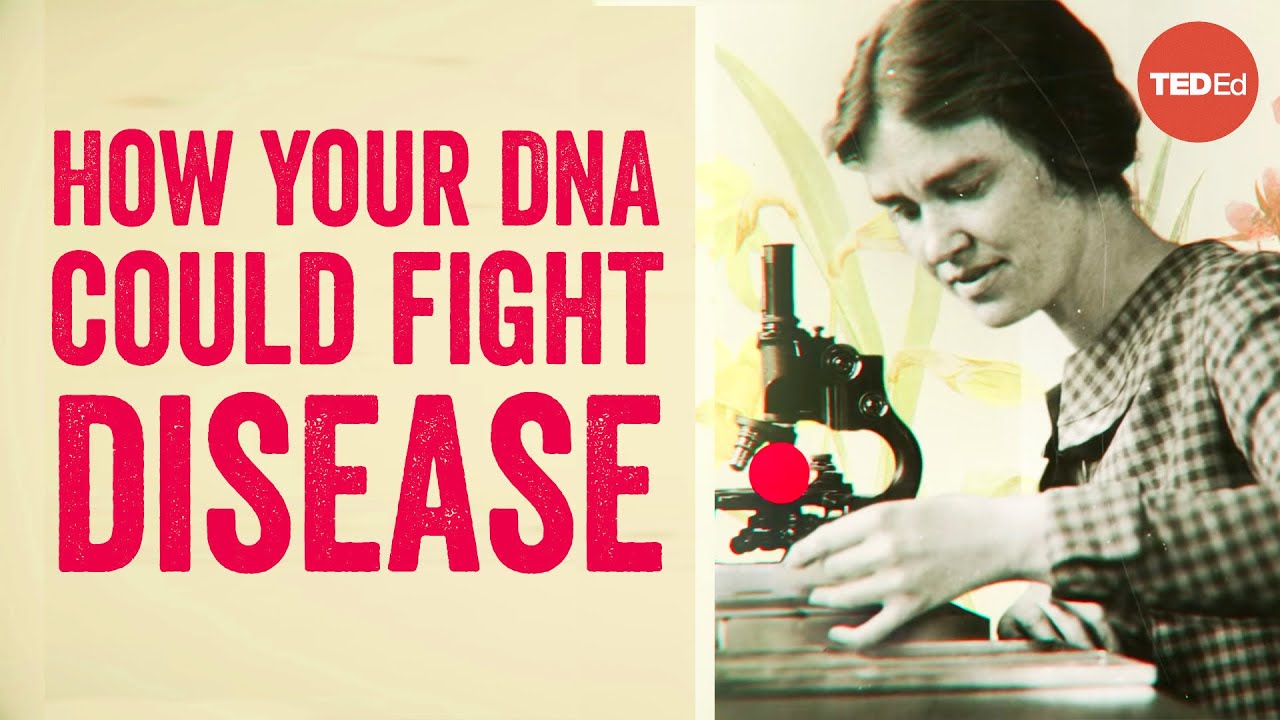
Should you donate your DNA to help cure diseases? - Greg Foot
video description
Date: 2021-05-14
Related videos





Comments and reviews: 9
MiWiArts
SCA3, or Spinocelebrary Ataxia Type 3, is a dominantly hereditary disease. It is also called Machado-Joseph's Disease. It is a horrible disease that causes the nervous system in ones body to break down, due to the body creating an excess of a protein that breaks down nervous cells. From the point you reach adulthood, your body starts to break down. You lose your balance at first, then you become sensitive to loud noises and bright lights. After that, the nerves that control the very intricate motions of your tongue has broken down, impairing your ability to speak, eat and even breathe properly. You can no longer walk, since your loss of balance forces you on a pair of wheels.
We already know what genetic mutation it is caused by - a repetition of A's, 13 letters too long in a certain gene that causes a nerve eating protein to be produced. Yet no cure has been found for it, due to a lack of interest from the scientific community.
reply
SCA3, or Spinocelebrary Ataxia Type 3, is a dominantly hereditary disease. It is also called Machado-Joseph's Disease. It is a horrible disease that causes the nervous system in ones body to break down, due to the body creating an excess of a protein that breaks down nervous cells. From the point you reach adulthood, your body starts to break down. You lose your balance at first, then you become sensitive to loud noises and bright lights. After that, the nerves that control the very intricate motions of your tongue has broken down, impairing your ability to speak, eat and even breathe properly. You can no longer walk, since your loss of balance forces you on a pair of wheels.
We already know what genetic mutation it is caused by - a repetition of A's, 13 letters too long in a certain gene that causes a nerve eating protein to be produced. Yet no cure has been found for it, due to a lack of interest from the scientific community.
reply
Jonas
I would absolutely give my data (blood, DNA, whatever else they need) IF it would be anonymous. I think this is totally possible to do anonymously and if so I think more people would be okay with donating their data to science. Just make clear, that this would help even the donators if they would become sick in the future and their disease can be cured because there were enough donations of required information.
reply
I would absolutely give my data (blood, DNA, whatever else they need) IF it would be anonymous. I think this is totally possible to do anonymously and if so I think more people would be okay with donating their data to science. Just make clear, that this would help even the donators if they would become sick in the future and their disease can be cured because there were enough donations of required information.
reply
RedTree
You'd have to convince me first that my DNA won't be used to create unlimited numbers of digital clones generated from my genome that will be put through infinite situations of torture and experimentation. Admittedly digital though that torture may be, it will be very real for my clones and I just don't think a copy of myself would be very happy in that situation
reply
You'd have to convince me first that my DNA won't be used to create unlimited numbers of digital clones generated from my genome that will be put through infinite situations of torture and experimentation. Admittedly digital though that torture may be, it will be very real for my clones and I just don't think a copy of myself would be very happy in that situation
reply
German
Analyzing the DNA from 1 billion people would increase our knowledge of the human body by a tremendous amount, not just for diseases, but also for understanding our behavior, our social interactions, our needs, and so many other things. Keeping it just for the medical companies is one step, but we can do so much more with this information. I am up for that!
reply
Analyzing the DNA from 1 billion people would increase our knowledge of the human body by a tremendous amount, not just for diseases, but also for understanding our behavior, our social interactions, our needs, and so many other things. Keeping it just for the medical companies is one step, but we can do so much more with this information. I am up for that!
reply
Parth
Well, these could lead to huge debates about privacy and personal safety in long run, but I'd give my DNA if they promise that no one would be able to identify me personally as the source of that information. Like a random ID that will be used for all correspondence, and that mapping information is highly protected like government secrets.
reply
Well, these could lead to huge debates about privacy and personal safety in long run, but I'd give my DNA if they promise that no one would be able to identify me personally as the source of that information. Like a random ID that will be used for all correspondence, and that mapping information is highly protected like government secrets.
reply
SpeedStriker
The thing about the DNA data industry is why I, the origin and original seller of the data, don't have more control and more of a stake in it? Why isn't the recognition of the individual as his or her DNA's prime proprietor the industry norm? What will it take for that to happen? A DNA union?
reply
The thing about the DNA data industry is why I, the origin and original seller of the data, don't have more control and more of a stake in it? Why isn't the recognition of the individual as his or her DNA's prime proprietor the industry norm? What will it take for that to happen? A DNA union?
reply
Karan
At 0: 29 - I wonder why it's ok to show the private parts or genitals of men but not women!
Why should women be exempt from this Ted-Ed
Why? If you support gender equality only in paper then you are not worth my time!
Sorry I am unsubscribing and reporting you, hope you understand! :-)
reply
At 0: 29 - I wonder why it's ok to show the private parts or genitals of men but not women!
Why should women be exempt from this Ted-Ed
Why? If you support gender equality only in paper then you are not worth my time!
Sorry I am unsubscribing and reporting you, hope you understand! :-)
reply
education
So I'm supposed to give away something that can be used to clone me or identify me without my knowing, for free and if it's useful in any way, everyone else in the medical industry racks up the down the line? I don't think so.
reply
So I'm supposed to give away something that can be used to clone me or identify me without my knowing, for free and if it's useful in any way, everyone else in the medical industry racks up the down the line? I don't think so.
reply
vegan
When you donate your DNA, the government will see you have something they really want. Then come for you at night and kidnap you, or take you in during the end of of world to keep you safe for reproduction purposes
reply
When you donate your DNA, the government will see you have something they really want. Then come for you at night and kidnap you, or take you in during the end of of world to keep you safe for reproduction purposes
reply
Add a review, comment
Other channel videos


