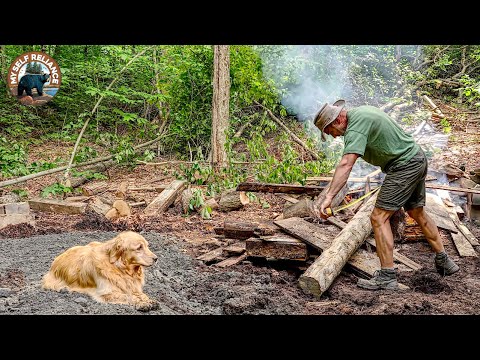
How to Preserve Wood with Fire
video description
Date: 2024-07-24
Related videos




Comments and reviews: 14
yoshitakagoh4176
Regarding to preserve wood, the history of practice is unknown in Japan, precisely when it had begun. However the place of practice is widely known. It had started in southwestern Japan where the wether is warm and humid, that means woods tend to rot and to be damaged by insects like termites. In northeastern Japan there had not been known that practice. Rather painting has been common. With gloval warming I am not sure about recent trend. As you say, carbonizing wood has been practiced hundreds years, Is that historically proved or you just asume that is so. Some historian in Japan says, historically speaking that is unknown. I think that is an correct answer. How do you think
reply
Regarding to preserve wood, the history of practice is unknown in Japan, precisely when it had begun. However the place of practice is widely known. It had started in southwestern Japan where the wether is warm and humid, that means woods tend to rot and to be damaged by insects like termites. In northeastern Japan there had not been known that practice. Rather painting has been common. With gloval warming I am not sure about recent trend. As you say, carbonizing wood has been practiced hundreds years, Is that historically proved or you just asume that is so. Some historian in Japan says, historically speaking that is unknown. I think that is an correct answer. How do you think
reply
timcisneros1351
Studies have shown that with a 2mm charring it will provide resistance for 30-50 years and if oiled indefinitely. I have been trying to educate the building department but they are still insisting that I use Pressure Treated lumber for lumber that's in contact with concrete. Of course it is poisonous and toxic but they don't care. I have charred all of my timbers but only for aesthetics as it brings out the beautiful grain in Douglas Fir. The exterior siding (Cypress) is blackened for the first 3 courses of lap siding for fire protection. Have a great day Shawn. I'm on year 8 of a 5 year plan. Right on schedule! Haha
reply
Studies have shown that with a 2mm charring it will provide resistance for 30-50 years and if oiled indefinitely. I have been trying to educate the building department but they are still insisting that I use Pressure Treated lumber for lumber that's in contact with concrete. Of course it is poisonous and toxic but they don't care. I have charred all of my timbers but only for aesthetics as it brings out the beautiful grain in Douglas Fir. The exterior siding (Cypress) is blackened for the first 3 courses of lap siding for fire protection. Have a great day Shawn. I'm on year 8 of a 5 year plan. Right on schedule! Haha
reply
shawn_james
Preserving wood with fire is a fascinating and skilled technique that showcases your innovative approach and craftsmanship. Your expertise in using fire to enhance and protect wood not only reflects your deep understanding of traditional methods but also your commitment to creating durable and beautiful materials. The way you master this process highlights your dedication to preserving quality and craftsmanship in every project. And I am Floating Village Life.
reply
Preserving wood with fire is a fascinating and skilled technique that showcases your innovative approach and craftsmanship. Your expertise in using fire to enhance and protect wood not only reflects your deep understanding of traditional methods but also your commitment to creating durable and beautiful materials. The way you master this process highlights your dedication to preserving quality and craftsmanship in every project. And I am Floating Village Life.
reply
user-sm4ql6yd4j
I have what is probably an odd question about oiling the wood. When you said that you used Motor Oil, I wondered if you used fresh (un-used) oil, or if this is one of the few semi- safe things that you can use, used oil (i. e. after changing a vehicle's oil) Like I said, probably seems an odd/dumb question to people who are used to this type of thing. Thank You for sharing all of your knowledge/experiences with us.
reply
I have what is probably an odd question about oiling the wood. When you said that you used Motor Oil, I wondered if you used fresh (un-used) oil, or if this is one of the few semi- safe things that you can use, used oil (i. e. after changing a vehicle's oil) Like I said, probably seems an odd/dumb question to people who are used to this type of thing. Thank You for sharing all of your knowledge/experiences with us.
reply
jackieow
Old Roman wharf piles preserved this way 2, 000 yrs ago are still in use. In Romania, old-time peasants would cook bread at 500-600 degrees F to char the outer inch, with the interior being cooked normally but sterilized by the heat. Bread kept on a shelf that way could be eaten a year later with no fungal mold, with the char also forming a vapor barrier to keep the normal bread interior at a good normal moisture level.
reply
Old Roman wharf piles preserved this way 2, 000 yrs ago are still in use. In Romania, old-time peasants would cook bread at 500-600 degrees F to char the outer inch, with the interior being cooked normally but sterilized by the heat. Bread kept on a shelf that way could be eaten a year later with no fungal mold, with the char also forming a vapor barrier to keep the normal bread interior at a good normal moisture level.
reply
LakierosJordy
Quick question for anyone, if the deeply charred wood has deep cracks and is meant for direct exposure wouldn't it get a physical erosion from water sitting in the cracks and expanding when freezing etc So deterioration not through rot but through splitting. Is it a real concern and if so best way to mitigate that
reply
Quick question for anyone, if the deeply charred wood has deep cracks and is meant for direct exposure wouldn't it get a physical erosion from water sitting in the cracks and expanding when freezing etc So deterioration not through rot but through splitting. Is it a real concern and if so best way to mitigate that
reply
thegoodtom1718
The deep char is to ensure there are no points for microbes to penetrate into untreated wood. This can also be achieved by a thinner char and rubbing the carbon into a smooth unbroken surface. The oil will help bond the layer together. It becomes a carbon armor.
reply
The deep char is to ensure there are no points for microbes to penetrate into untreated wood. This can also be achieved by a thinner char and rubbing the carbon into a smooth unbroken surface. The oil will help bond the layer together. It becomes a carbon armor.
reply
leekent3325
Hi there from Northern Bruce peninsula. I have definitely used this technique to strengthen wood. It’s pretty cool.
We also had a fire here 100 years ago and we still are finding stumps perfectly intact, but burnt.
Great video!
reply
Hi there from Northern Bruce peninsula. I have definitely used this technique to strengthen wood. It’s pretty cool.
We also had a fire here 100 years ago and we still are finding stumps perfectly intact, but burnt.
Great video!
reply
annedunstan1171
I would be worried that the fire would break down the wood, but I guess you just allow the outer part to be burnt Great video - thank you so much for sharing as this has been something I wondered about for a long time!
reply
I would be worried that the fire would break down the wood, but I guess you just allow the outer part to be burnt Great video - thank you so much for sharing as this has been something I wondered about for a long time!
reply
synetic
i guess the natural question is - if you're burning off a lot of the wood to carbonize it, how can you trust it will retain it's ability to hold weight (in the case of posts, or anything wood that's structural)
reply
i guess the natural question is - if you're burning off a lot of the wood to carbonize it, how can you trust it will retain it's ability to hold weight (in the case of posts, or anything wood that's structural)
reply
iris1501
THANK YOU JAMES. we learn sooo much vital thing about life from you. thank you for that you exist good man and share whit us all your konolege. WE ALL LOVE YOU. and meee. more than alllll
reply
THANK YOU JAMES. we learn sooo much vital thing about life from you. thank you for that you exist good man and share whit us all your konolege. WE ALL LOVE YOU. and meee. more than alllll
reply
athollmcnicoll1028
Yeah Cali, age is creeping up on you in close-up definition. The old muzzle starting to go grey to white and the reliance from Dad flys stay at bay as much as possible.
reply
Yeah Cali, age is creeping up on you in close-up definition. The old muzzle starting to go grey to white and the reliance from Dad flys stay at bay as much as possible.
reply
SuperUnclebill
Good morning, I enjoyed this video and all the others I have watched. I used to work like you. I enjoy watching someone who enjoys hard work and don't backdown.
reply
Good morning, I enjoyed this video and all the others I have watched. I used to work like you. I enjoy watching someone who enjoys hard work and don't backdown.
reply
SteveP-vm1uc
Another great CALI SHOW! What a sweetheart! So, Shawn, when are you going to show us how you use fire to carbonize and preserve wood ; )
reply
Another great CALI SHOW! What a sweetheart! So, Shawn, when are you going to show us how you use fire to carbonize and preserve wood ; )
reply
Add a review, comment
Other channel videos

 10:3
10:3


 41:51
41:51