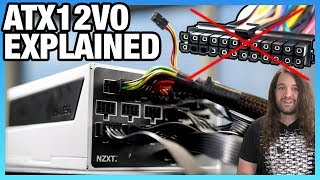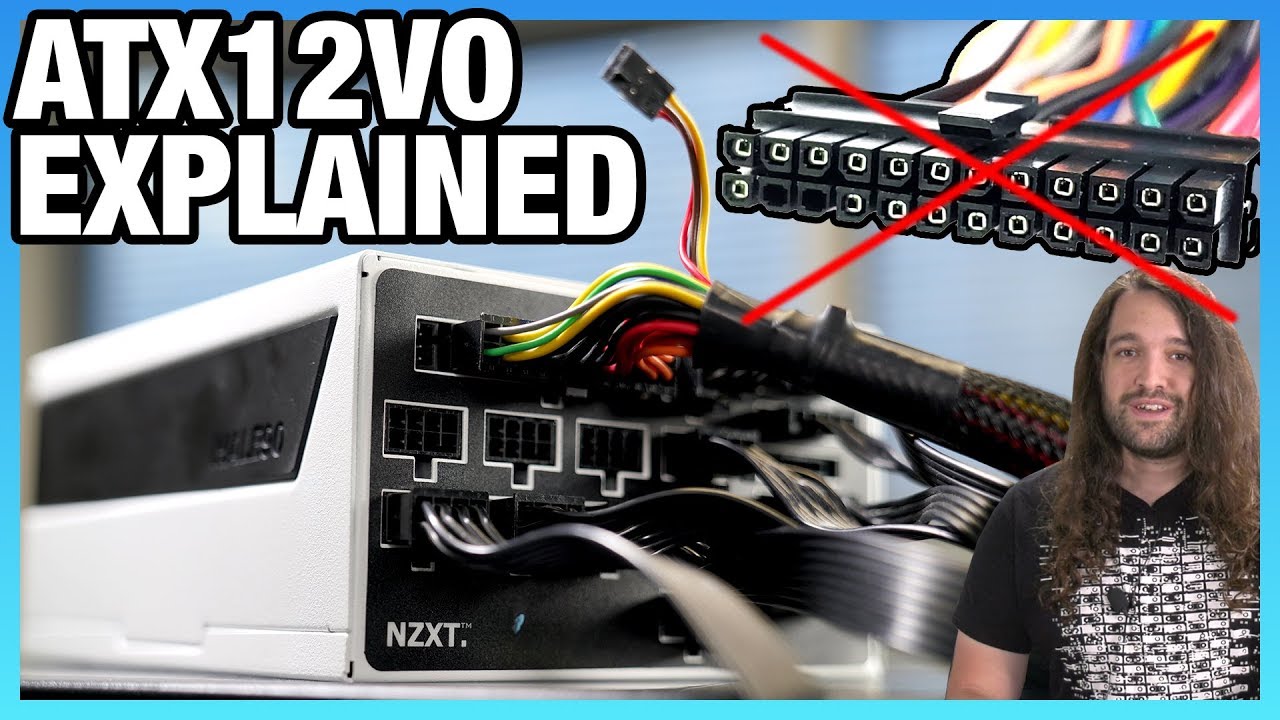
Intel's ATX12VO Spec Explained & What Manufacturers Think
video description
Date: 2020-05-06
Related videos



Comments and reviews: 10
Joshua
This new standard is a mess in my opinion. Assuming the standard goes ahead, the mobo should not create 5v for HDD's etc. It should only switch 12v to them (when PC is powered on, then there should be a buck converter for 5v on the cable close to the drive. Making 5v for drives on the mobo is dumb because you have no idea whether the user will connect SATA SSD's, or SATA HDDs (dramatically different power consumption) or how many they will connect. So if the standard goes ahead the buck to SATA adapter would take a 2 pin (12v and ground) and output SATA power. No doubt a new standard shakes things up requiring adaptation regardless of how its done AND saving power is good! But 12v is a lame single rail voltage! I would prefer if they made it 48v or at _bare-minimum_ 19v. With 48v you could have just 2 wires to the GPU instead of 8 and 2 wires to the motherboard instead of 8. Since the motherboard is converting the 12v down to low voltages like 1 2v for the CPU and RAM, 5v for USB etc; the input voltage might as well be much higher! Then since the SATA drives will need small bucks to make 5v, close to the drives, the bucks might as well take a higher voltage than 12v. You might say (well that's 2 bucks instead of 1) but that only applies to HDDs. SATA SSD's only take 5v, so you could use a single rail cable mounted buck for those. Then new HDDs and SSD's would eventually come out that take 48v, then you omit the buck at the end of the cable. In this scenario everything from the motherboard, GPU, HDDs would all take a single pair of 48v and ground wires. At 48v with slightly thicker wires you could easily split or daisy chain power connectors. Cable management would be much easier. Aside from the (temporarily needed) cable mounted buck converters. You could have literally just 2 wires coming out of the PSU. The PSU could even be an external brick for low power systems. Also with only 2 rails you could electrify rails that hold SSD's and HDD's and 5. 25 bays, incl a rail that the PSU slides into. Infact you could even pass the 48v into the motherboard via the mounting screws. And 48v would reduce the current enough that if you pass it to the GPU via a upgraded PCI-E connector, you wouldn't even need a GPU power connector for most GPUs. So basically with 48v you could actually have no power cables in the entire PC in 95+% of enthusiast systems. #JustAnIdea
reply
This new standard is a mess in my opinion. Assuming the standard goes ahead, the mobo should not create 5v for HDD's etc. It should only switch 12v to them (when PC is powered on, then there should be a buck converter for 5v on the cable close to the drive. Making 5v for drives on the mobo is dumb because you have no idea whether the user will connect SATA SSD's, or SATA HDDs (dramatically different power consumption) or how many they will connect. So if the standard goes ahead the buck to SATA adapter would take a 2 pin (12v and ground) and output SATA power. No doubt a new standard shakes things up requiring adaptation regardless of how its done AND saving power is good! But 12v is a lame single rail voltage! I would prefer if they made it 48v or at _bare-minimum_ 19v. With 48v you could have just 2 wires to the GPU instead of 8 and 2 wires to the motherboard instead of 8. Since the motherboard is converting the 12v down to low voltages like 1 2v for the CPU and RAM, 5v for USB etc; the input voltage might as well be much higher! Then since the SATA drives will need small bucks to make 5v, close to the drives, the bucks might as well take a higher voltage than 12v. You might say (well that's 2 bucks instead of 1) but that only applies to HDDs. SATA SSD's only take 5v, so you could use a single rail cable mounted buck for those. Then new HDDs and SSD's would eventually come out that take 48v, then you omit the buck at the end of the cable. In this scenario everything from the motherboard, GPU, HDDs would all take a single pair of 48v and ground wires. At 48v with slightly thicker wires you could easily split or daisy chain power connectors. Cable management would be much easier. Aside from the (temporarily needed) cable mounted buck converters. You could have literally just 2 wires coming out of the PSU. The PSU could even be an external brick for low power systems. Also with only 2 rails you could electrify rails that hold SSD's and HDD's and 5. 25 bays, incl a rail that the PSU slides into. Infact you could even pass the 48v into the motherboard via the mounting screws. And 48v would reduce the current enough that if you pass it to the GPU via a upgraded PCI-E connector, you wouldn't even need a GPU power connector for most GPUs. So basically with 48v you could actually have no power cables in the entire PC in 95+% of enthusiast systems. #JustAnIdea
reply
Artur
My opinion is that the PSU Engineer is right. I'm not a PSU expert but. 3. 3v and -12v where designed to supply older hardware inside the motherboard, in older days even your CPU was powered drectly by 3. 3v on the PSU, there wasn't a regulator like in modern boards, and -12v is a requirement for ancient NMOS sillicon that isn't used for more than two decades. It can be completly removed without affecting anything in modern hardware. 5v is a different beast. When talking about hardware integrated to the motherboard that requires 5v such as M2 and USB, its easier to move those VRMs to the motherboard and just supply the whole board with 12v rails. That is because those interfaces uses low power and can be easly converted from 12v as the power supply is doing today. So the 12v only new ATX12VO connector is a good idea in general, less cable and smaller/simpler PSU designs will expands the possibilities without compromising the MB capacities by offloading everything. Powering external SATA devices from the motherboard IS A TERRIBLE IDEA in my opinion, that is where I draw the line. Building a regulator in a motherboard to drive multiple external SATA or MOLEX devices is a bad design! So, although i'm favorable in removing the 5v from the MB connector, I'm not favorable in removing it entirelly from the PSU, at least not yet! Maintaining SATA and MOLEX 5v compatibility is necessary at least until the market adapted to 12v only devices, if one day it does! Then we can think about 12v to 5v molex/sata adaptors that are not that hard to developed when talking about a single component like a old HDD or led strip. But this progress has to be linear. And i think this standard should arrive to the enthusiast market as well, in form of new 12VO PSUs and motherboards with some companies supplying a adapter for older hardware. Its even not hard to imagine a 12v only PSU with a small adaptor on the molex/cable sata itself that its responsable for splitting the 12v rail into a suitable 5v line for a single or maybe two devices at once. This standard is a progress, but currently at the wrong direction.
reply
My opinion is that the PSU Engineer is right. I'm not a PSU expert but. 3. 3v and -12v where designed to supply older hardware inside the motherboard, in older days even your CPU was powered drectly by 3. 3v on the PSU, there wasn't a regulator like in modern boards, and -12v is a requirement for ancient NMOS sillicon that isn't used for more than two decades. It can be completly removed without affecting anything in modern hardware. 5v is a different beast. When talking about hardware integrated to the motherboard that requires 5v such as M2 and USB, its easier to move those VRMs to the motherboard and just supply the whole board with 12v rails. That is because those interfaces uses low power and can be easly converted from 12v as the power supply is doing today. So the 12v only new ATX12VO connector is a good idea in general, less cable and smaller/simpler PSU designs will expands the possibilities without compromising the MB capacities by offloading everything. Powering external SATA devices from the motherboard IS A TERRIBLE IDEA in my opinion, that is where I draw the line. Building a regulator in a motherboard to drive multiple external SATA or MOLEX devices is a bad design! So, although i'm favorable in removing the 5v from the MB connector, I'm not favorable in removing it entirelly from the PSU, at least not yet! Maintaining SATA and MOLEX 5v compatibility is necessary at least until the market adapted to 12v only devices, if one day it does! Then we can think about 12v to 5v molex/sata adaptors that are not that hard to developed when talking about a single component like a old HDD or led strip. But this progress has to be linear. And i think this standard should arrive to the enthusiast market as well, in form of new 12VO PSUs and motherboards with some companies supplying a adapter for older hardware. Its even not hard to imagine a 12v only PSU with a small adaptor on the molex/cable sata itself that its responsable for splitting the 12v rail into a suitable 5v line for a single or maybe two devices at once. This standard is a progress, but currently at the wrong direction.
reply
Abstract
If 3. 3 V and 5 V power is still necessary, how does moving the conversion to the motherboard help efficiency? I am far more familiar with software than hardware, but to me this sounds like it would add additional, wasteful, power conversion: ATX: 120/240 V (AC) 3. 3/5 V (DC) ATX12VO: 120/240 V (AC) 12 V (DC) 3. 3/5 V (DC) Is it not more efficient to do a conversion once, rather than twice? Even if a DC transformer is better than an AC transformer, you could still do that in the power supply, no? To me it sounds like either a wash, or system efficiency is worse with 12VO. The only way this makes any sense to me at the moment is if: A) ATX spec tells PSUs to provide excess amperage in 3. 3/5 V, and motherboards could choose to provide only the modern amperage needs, therefore reducing waste - but you could then also fix this by reducing the amps available on 3. 3/5 V from the PSU, a less-amps-for-3/5-volts spec if you will B) CEC regulation only applies to power supplies, not the system as a whole, so this makes PSUs more efficient, but the system overall is less efficient Apologies if I am missing something obvious here.
reply
If 3. 3 V and 5 V power is still necessary, how does moving the conversion to the motherboard help efficiency? I am far more familiar with software than hardware, but to me this sounds like it would add additional, wasteful, power conversion: ATX: 120/240 V (AC) 3. 3/5 V (DC) ATX12VO: 120/240 V (AC) 12 V (DC) 3. 3/5 V (DC) Is it not more efficient to do a conversion once, rather than twice? Even if a DC transformer is better than an AC transformer, you could still do that in the power supply, no? To me it sounds like either a wash, or system efficiency is worse with 12VO. The only way this makes any sense to me at the moment is if: A) ATX spec tells PSUs to provide excess amperage in 3. 3/5 V, and motherboards could choose to provide only the modern amperage needs, therefore reducing waste - but you could then also fix this by reducing the amps available on 3. 3/5 V from the PSU, a less-amps-for-3/5-volts spec if you will B) CEC regulation only applies to power supplies, not the system as a whole, so this makes PSUs more efficient, but the system overall is less efficient Apologies if I am missing something obvious here.
reply
Democrab
Honestly, I think it's worth dropping 3. 3v (At least outside of servers) but keeping +5v, albeit making it all a single, somewhat heavier +5VSB rail because quite a few things actually still use 5v to be honest, it's not just HDDs but also the USB power delivery and a handful of other things. This simplifies power supplies still, only needs a single pin to the motherboard thus keeping the motherboard designs simple and allows any PCs using the new spec to act as a phone charger, albeit probably with more efficient components. That and most PSUs already just convert AC 120-240v to DC 12v then that 12v to everything else, so it's just moving the same thing elsewhere. I also really think we should keep power delivery off of the mainboard as much as possible, VRMs aren't too bad but you can certainly hear the extra electrical noise in those OEM systems even with a soundcard. That said, I wouldn't be against a new SATA revision that implements power delivery and data in a single cable if it also allows budget SATA SSDs to get faster.
reply
Honestly, I think it's worth dropping 3. 3v (At least outside of servers) but keeping +5v, albeit making it all a single, somewhat heavier +5VSB rail because quite a few things actually still use 5v to be honest, it's not just HDDs but also the USB power delivery and a handful of other things. This simplifies power supplies still, only needs a single pin to the motherboard thus keeping the motherboard designs simple and allows any PCs using the new spec to act as a phone charger, albeit probably with more efficient components. That and most PSUs already just convert AC 120-240v to DC 12v then that 12v to everything else, so it's just moving the same thing elsewhere. I also really think we should keep power delivery off of the mainboard as much as possible, VRMs aren't too bad but you can certainly hear the extra electrical noise in those OEM systems even with a soundcard. That said, I wouldn't be against a new SATA revision that implements power delivery and data in a single cable if it also allows budget SATA SSDs to get faster.
reply
Desmond
12v DC is the perfect voltage to provide to a PC because this will then allow anyone to use solar panels to directly power that PC with no need of an Inverter to convert to 120/240v AC so the normal PSU can then convert it back down to 12V, 5V & 3. 3v DC. This increases inefficiency by a minimum of x2 since Inverters are also not 100% effective. Using an 80+ Bronze PSU would actually only be at best 60+ Bronze due to the loss in the inverter. Using 12v DC to the PC would be 99+ Platinum since there would be no loss on the 12v rail. The only loss will be on the 5v & 3. 3v rails. This will also remove a lot of heat from that PC since the dropdown from the 120v/240v AC space heater is not needed. WOW, I just realized something. For those with Solar/Battery setups there would be no need of a PSU at all, None since they have as many Watts & AMPs of 12v DC as they wish up to the multi-Kilowatt range Power Supply that can be Grid-Tied.
reply
12v DC is the perfect voltage to provide to a PC because this will then allow anyone to use solar panels to directly power that PC with no need of an Inverter to convert to 120/240v AC so the normal PSU can then convert it back down to 12V, 5V & 3. 3v DC. This increases inefficiency by a minimum of x2 since Inverters are also not 100% effective. Using an 80+ Bronze PSU would actually only be at best 60+ Bronze due to the loss in the inverter. Using 12v DC to the PC would be 99+ Platinum since there would be no loss on the 12v rail. The only loss will be on the 5v & 3. 3v rails. This will also remove a lot of heat from that PC since the dropdown from the 120v/240v AC space heater is not needed. WOW, I just realized something. For those with Solar/Battery setups there would be no need of a PSU at all, None since they have as many Watts & AMPs of 12v DC as they wish up to the multi-Kilowatt range Power Supply that can be Grid-Tied.
reply
Evan
Seems like this could create a new standard size for motherboards (thinking E-ATX) for mid-range and budget DIYs, and/or make having lighting effects more expensive. I'm imaging that this could make pre-built PCs with custom motherboards more attractive simply by being smaller and having RGB. So, not much of a hit to the true PC building enthusiast, but the general consumer will stray towards pre-builts more and more. People like pretty lights and not having a massive tower. Its like adding ECUs and automatic transmission in cars. It gained its popularity because its attractive to the general consumer that just wants to go drive and not think about all the shit going on under the hood. Overall, its a new standard that lays the ground for better things to come (Dual clutch automatic transmission and modern engines that restructure their power curves to match common driving behaviors.
reply
Seems like this could create a new standard size for motherboards (thinking E-ATX) for mid-range and budget DIYs, and/or make having lighting effects more expensive. I'm imaging that this could make pre-built PCs with custom motherboards more attractive simply by being smaller and having RGB. So, not much of a hit to the true PC building enthusiast, but the general consumer will stray towards pre-builts more and more. People like pretty lights and not having a massive tower. Its like adding ECUs and automatic transmission in cars. It gained its popularity because its attractive to the general consumer that just wants to go drive and not think about all the shit going on under the hood. Overall, its a new standard that lays the ground for better things to come (Dual clutch automatic transmission and modern engines that restructure their power curves to match common driving behaviors.
reply
DR.NEGA
cause nobody using 5v and 3. 3v rail anymore. last time was use when CPU was using the 5v rail while devices and ram using 3. 3v rail. cpu shared with board 5v usb and these days. cpu using more than 5v it seems lately. and cpus are getting close to gpu 12v rail. i notice nowdays 12v rails getting bigger and bigger due to gpu using more power and more power. during the time VRMS been used more than mother board cpu 5v rail. back then motherboards never had VRMS before and never used when first been added to motherboard as a overclocking feature to switch cpu from 140w 5v to 700w 12v rail. by turning it on through BIOS. only for cpu's gonna beyond TDP rating. also shrinking lifespan. during that time many powersuppy mfgs starting to shrink the 5v rail from 140w to 100w even further down 90w. soon it won't be utilize due to VRMS starting to grow on the board for 12v rail thirst
reply
cause nobody using 5v and 3. 3v rail anymore. last time was use when CPU was using the 5v rail while devices and ram using 3. 3v rail. cpu shared with board 5v usb and these days. cpu using more than 5v it seems lately. and cpus are getting close to gpu 12v rail. i notice nowdays 12v rails getting bigger and bigger due to gpu using more power and more power. during the time VRMS been used more than mother board cpu 5v rail. back then motherboards never had VRMS before and never used when first been added to motherboard as a overclocking feature to switch cpu from 140w 5v to 700w 12v rail. by turning it on through BIOS. only for cpu's gonna beyond TDP rating. also shrinking lifespan. during that time many powersuppy mfgs starting to shrink the 5v rail from 140w to 100w even further down 90w. soon it won't be utilize due to VRMS starting to grow on the board for 12v rail thirst
reply
Dan
What I would like to see for efficiency and ease of use standard, is built in memory on the motherboard for your OS only and a secondary memory spot for software but also gives you the option to store your regular files there but you can move the regular files off to extended memory by a library option in settings so the OS knows how to handle it's files and you won't receive errors for doing so, like what usually happens when you re-allocate your documents folder. Doing this separation also makes it so if that piece of memory is not really being used it can reduce power consumption. I can see something like the small form factor Kioxia 1 TB drive being used as a built in option on motherboards, It also directly borrows excess RAM which I think is common these days giving RAM more usage. This would also make Basic PCs off the shelf quicker to assemble.
reply
What I would like to see for efficiency and ease of use standard, is built in memory on the motherboard for your OS only and a secondary memory spot for software but also gives you the option to store your regular files there but you can move the regular files off to extended memory by a library option in settings so the OS knows how to handle it's files and you won't receive errors for doing so, like what usually happens when you re-allocate your documents folder. Doing this separation also makes it so if that piece of memory is not really being used it can reduce power consumption. I can see something like the small form factor Kioxia 1 TB drive being used as a built in option on motherboards, It also directly borrows excess RAM which I think is common these days giving RAM more usage. This would also make Basic PCs off the shelf quicker to assemble.
reply
Antonio
Oh my god. The comments. 99% conviction, 1% knowledge. 1. Hello? Laptops are always single-voltage. The technology to convert the single PSU voltage to the various voltages used around the board (which aren t just 5V and 3. 3V) is completely proven and totally ubiquitous in both laptop and desktop computers and servers. Server farms are energy-sensitive, and they wouldn t have moved to 12VO long ago if it were less efficient. 2. California isn t dictating anything to anywhere else. California has every right to create standards for itself. That those standards often end up applying industry-wide is merely because California is a huge market, and it s cheaper to support one standard than multiple ones. Witness how the whole electronics industry has gone lead-free worldwide, simply because the EU mandated it. It s more expensive to do two styles.
reply
Oh my god. The comments. 99% conviction, 1% knowledge. 1. Hello? Laptops are always single-voltage. The technology to convert the single PSU voltage to the various voltages used around the board (which aren t just 5V and 3. 3V) is completely proven and totally ubiquitous in both laptop and desktop computers and servers. Server farms are energy-sensitive, and they wouldn t have moved to 12VO long ago if it were less efficient. 2. California isn t dictating anything to anywhere else. California has every right to create standards for itself. That those standards often end up applying industry-wide is merely because California is a huge market, and it s cheaper to support one standard than multiple ones. Witness how the whole electronics industry has gone lead-free worldwide, simply because the EU mandated it. It s more expensive to do two styles.
reply
cfb
HP is already basically doing this and has been for at least some months. My recent pavillion model came with a B550 OEM motherboard with just two four pin 12v power cables from the power supply to the motherboard, along with one small signalling cable for fan control and power supply checks on boot. Aside from the anti intel stuff in the video, the smaller plugs are much easier to deal with than the big old atx style connector and its a lot simpler. Maybe THAT has something to do with it, along with 3. 3v and 5v not really being necessary to be provided separately from the power supply. Be nice to see video reviews of things on their merits or demerits, rather than neckbeards pontificating about stuff they have no clue about. Just title every video Intel sucks and AMD is great.
reply
HP is already basically doing this and has been for at least some months. My recent pavillion model came with a B550 OEM motherboard with just two four pin 12v power cables from the power supply to the motherboard, along with one small signalling cable for fan control and power supply checks on boot. Aside from the anti intel stuff in the video, the smaller plugs are much easier to deal with than the big old atx style connector and its a lot simpler. Maybe THAT has something to do with it, along with 3. 3v and 5v not really being necessary to be provided separately from the power supply. Be nice to see video reviews of things on their merits or demerits, rather than neckbeards pontificating about stuff they have no clue about. Just title every video Intel sucks and AMD is great.
reply
Add a review, comment
Other channel videos