
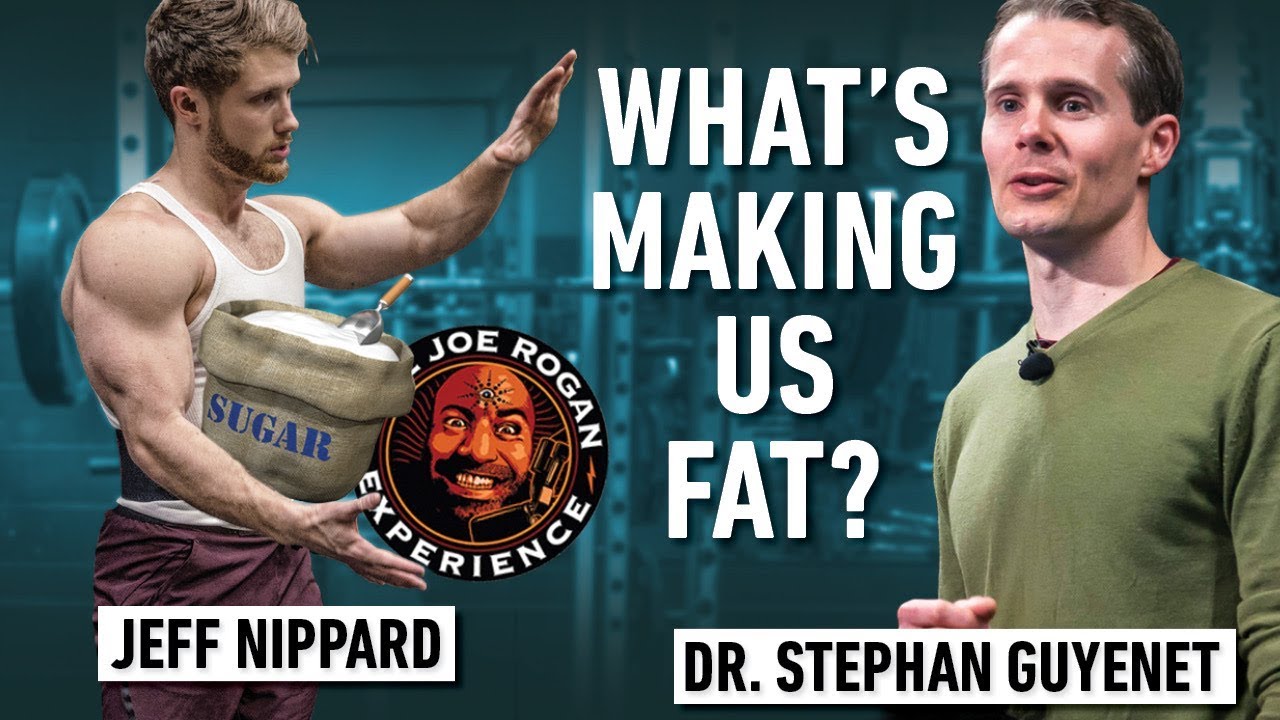
What's Really Making Us Fat? Carbs? Sugar? (Joe Rogan Response) ft. Stephan Guyenet
video description
Date: 2019-11-06
Related videos


Comments and reviews: 10
Docinaplane
10 Diet TruthsYou may or may not know these, but they are an important place to start when you are on a weight loss journey. 1) One pound of fat equals 3, 500 calories. Add that and you will be one pound heavier, subtract that and you will be one pound lighter. Thats Newtons fourth law of the motion of calories. Move 3500 in, you are one pound heavier, move 3500 out and you are one pound lighter. I think Newton discovered this from eating too many apples that had fallen from that tree he was sitting under. 2) Your weight will be the total of your calorie availability versus your calorie utilization. Calorie availability relates to the intake, uptake and distribution of calories. Calorie utilization relates to the effect of the activity level and calorie usage. This accounts for factors such as metabolic rate, disease states, hormonal levels, drug usage, and the intensity and timing of activities and eating. 3) Specific, concrete diet plans work best, abstract concepts sound good but don't work so well. 4) You will tend to over-estimate the amount of calories you use. 5) You will tend to under-estimate the amount of calories you consume. 6) The more meals a day you eat, the harder it will be to keep track of your calorie consumption. Eating consistent meals that you know the nutritional value of can be very useful to help negate this problem. 7) One helpful answer to reaching a lower-calories goal is to eat higher-volume, lower-calorie dense foods. These will make you feel full and still keep your total from being excessive. 8) As you lose weight, over time, you must continue to lower your calorie consumption or increase your calorie usage to keep losing weight. 9) Once you can establish good dietary behaviors, maintain them with a consistent plan. This will help you break any food addictions that you may have and allow you to build new habits that will carry you through the more difficult challenging times. 10) Dont avoid the scale. Its just a number, but its your number and you must face that reality if you are ever going to make progress and reach your weight loss goals. You dont need to use the scale every day in the beginning of your weight loss journey; probably once a week will work. Look at the general trend. If it is in the wrong direction, change your behaviors; do not make useless excuses to rationalize what is happening.
reply
10 Diet TruthsYou may or may not know these, but they are an important place to start when you are on a weight loss journey. 1) One pound of fat equals 3, 500 calories. Add that and you will be one pound heavier, subtract that and you will be one pound lighter. Thats Newtons fourth law of the motion of calories. Move 3500 in, you are one pound heavier, move 3500 out and you are one pound lighter. I think Newton discovered this from eating too many apples that had fallen from that tree he was sitting under. 2) Your weight will be the total of your calorie availability versus your calorie utilization. Calorie availability relates to the intake, uptake and distribution of calories. Calorie utilization relates to the effect of the activity level and calorie usage. This accounts for factors such as metabolic rate, disease states, hormonal levels, drug usage, and the intensity and timing of activities and eating. 3) Specific, concrete diet plans work best, abstract concepts sound good but don't work so well. 4) You will tend to over-estimate the amount of calories you use. 5) You will tend to under-estimate the amount of calories you consume. 6) The more meals a day you eat, the harder it will be to keep track of your calorie consumption. Eating consistent meals that you know the nutritional value of can be very useful to help negate this problem. 7) One helpful answer to reaching a lower-calories goal is to eat higher-volume, lower-calorie dense foods. These will make you feel full and still keep your total from being excessive. 8) As you lose weight, over time, you must continue to lower your calorie consumption or increase your calorie usage to keep losing weight. 9) Once you can establish good dietary behaviors, maintain them with a consistent plan. This will help you break any food addictions that you may have and allow you to build new habits that will carry you through the more difficult challenging times. 10) Dont avoid the scale. Its just a number, but its your number and you must face that reality if you are ever going to make progress and reach your weight loss goals. You dont need to use the scale every day in the beginning of your weight loss journey; probably once a week will work. Look at the general trend. If it is in the wrong direction, change your behaviors; do not make useless excuses to rationalize what is happening.
reply
Rohann van Rensburg
Does this demonstrate a calorie is a calorie? Yeah, it doesWhat about the studies that show superior weight/fat loss and improvements in health markers in people on a higher calorie low-carb diet vs a lower calorie low-fat diet? I have no doubt that if you consume a large excess in fat while still restricting carbohydrates that you'll eventually gain weight, nor that one can violate the first law of thermodynamics (which continually gets paraded out into discussion) but the comparison between the diets in the literature in randomized, controlled trials seems to render this hypothesis false (namely that a calorie is simply a calorie, especially if we consider that weight loss isn't necessarily very relevant when we control for fat loss and health biomarkers (considering longevity is really the key issue. It's not as simple as just carbohydrates, but it appears incredibly clear from the literature that human bodies do not treat all calories the same and that what one eats affects how that energy is used. It's obviously not as simple as what Stephan presents Taubes' model to be, but someone like Attia seems to very much be on the right track and the plethora of studies on LC (especially ketogenic diets) vs LF/calorie diets is impossible to ignore, most especially the effect they have on diabetes and reliable health markers. I think defining terms is probably important too -- even Stephan distinguishes between obesity and i. e. fat distribution. For non-obese populations some of these considerations may be more relevant. I'm also unsure why the DIETFITS study gets the attention it does when few people consider low-carb/high-fat to be 30/45 carbohydrates to fat, respectively. Appeals to the scientific community are irrelevant beyond actual study analysis, for the record.
reply
Does this demonstrate a calorie is a calorie? Yeah, it doesWhat about the studies that show superior weight/fat loss and improvements in health markers in people on a higher calorie low-carb diet vs a lower calorie low-fat diet? I have no doubt that if you consume a large excess in fat while still restricting carbohydrates that you'll eventually gain weight, nor that one can violate the first law of thermodynamics (which continually gets paraded out into discussion) but the comparison between the diets in the literature in randomized, controlled trials seems to render this hypothesis false (namely that a calorie is simply a calorie, especially if we consider that weight loss isn't necessarily very relevant when we control for fat loss and health biomarkers (considering longevity is really the key issue. It's not as simple as just carbohydrates, but it appears incredibly clear from the literature that human bodies do not treat all calories the same and that what one eats affects how that energy is used. It's obviously not as simple as what Stephan presents Taubes' model to be, but someone like Attia seems to very much be on the right track and the plethora of studies on LC (especially ketogenic diets) vs LF/calorie diets is impossible to ignore, most especially the effect they have on diabetes and reliable health markers. I think defining terms is probably important too -- even Stephan distinguishes between obesity and i. e. fat distribution. For non-obese populations some of these considerations may be more relevant. I'm also unsure why the DIETFITS study gets the attention it does when few people consider low-carb/high-fat to be 30/45 carbohydrates to fat, respectively. Appeals to the scientific community are irrelevant beyond actual study analysis, for the record.
reply
BlackPaw
Jeff you proud yourself about being a science based fitness guy but your workouts and your overpriced programs are based on what science? Sets reps and rest times - you have not given any scientific breakdown of how muscles work to give the numbers for the reps or rest times -except you post information on what various studies have shown. that is not science based workouts - thats statistics based workouts which is not different from any other workout programs based on empirical data instead of biological principles. A muscle doesn't know what a rep is - thats not how the body works - I have even watched your fundamentals series and its pretty much the same. you don't have a single video on how myofibrils work or the role of H+ in their destruction. I hope you don't take this as harsh criticism or hate comment. as someone already said in your other videos when you recommended to stack creatine with finasteride and someone pointed out how you chose to not mention the various side effects of finasteride. But its very dishonest to build an image that you are science based fitness guy and be so biased or one dimensional in your videos/presentations
reply
Jeff you proud yourself about being a science based fitness guy but your workouts and your overpriced programs are based on what science? Sets reps and rest times - you have not given any scientific breakdown of how muscles work to give the numbers for the reps or rest times -except you post information on what various studies have shown. that is not science based workouts - thats statistics based workouts which is not different from any other workout programs based on empirical data instead of biological principles. A muscle doesn't know what a rep is - thats not how the body works - I have even watched your fundamentals series and its pretty much the same. you don't have a single video on how myofibrils work or the role of H+ in their destruction. I hope you don't take this as harsh criticism or hate comment. as someone already said in your other videos when you recommended to stack creatine with finasteride and someone pointed out how you chose to not mention the various side effects of finasteride. But its very dishonest to build an image that you are science based fitness guy and be so biased or one dimensional in your videos/presentations
reply
John Cole
When the body, through hormones, can change BMR with no changes to diet or exercise, the idea of eat less, move more doesn't fully hold water. You can certainly choose to eat fewer calories, but there's no way to guarantee that doing so will reduce bodyfat levels (the body may respond by reducing BMR, shutting down or slowing down certain processes. You can choose to exercise more, and that will also not guarantee reduced bodyfat levels. The combination might help, but even then, there are no guarantees. If you want to target fat levels, yes, you need to create a calorie deficit, but you also need to give the body every motivation not to reduce BMR in response, and you need to be free to metabolize fat stores. There are proven ways to do this, including intermittent fasting regimens and reducing carbohydrates. Both strategies carry hormonal effects which make it easier to target fat stores without sacrificing (much) muscle mass. They can also be used in concert, if you are so inclined.
reply
When the body, through hormones, can change BMR with no changes to diet or exercise, the idea of eat less, move more doesn't fully hold water. You can certainly choose to eat fewer calories, but there's no way to guarantee that doing so will reduce bodyfat levels (the body may respond by reducing BMR, shutting down or slowing down certain processes. You can choose to exercise more, and that will also not guarantee reduced bodyfat levels. The combination might help, but even then, there are no guarantees. If you want to target fat levels, yes, you need to create a calorie deficit, but you also need to give the body every motivation not to reduce BMR in response, and you need to be free to metabolize fat stores. There are proven ways to do this, including intermittent fasting regimens and reducing carbohydrates. Both strategies carry hormonal effects which make it easier to target fat stores without sacrificing (much) muscle mass. They can also be used in concert, if you are so inclined.
reply
kersa96
i would love to see him talk with dr jason fung. i have limited knowledge on this but what he says makes sense to me. I also don't want to attribute malicious intent to dr stephan personally but I do think there are incentives for people to promote the calories-in vs calories-out mantra. and i think the key distinction is not about energy expenditure but more about hormonal response. I'm a vegetarian and I went keto for 6 months, lost a ton of weight but I find it very unsustainable for me. I also think I have a propensity to binge eat so that also plays a role in my failure on keto. I think overall the keto diet is great for weight loss and it might even be the healthier option but I'm having trouble with the sustainability aspect of it. i would like to see doctor vs doctor instead of doctor vs science journalist lol not that he didn't have valuable contributions but I don't think it's the same
reply
i would love to see him talk with dr jason fung. i have limited knowledge on this but what he says makes sense to me. I also don't want to attribute malicious intent to dr stephan personally but I do think there are incentives for people to promote the calories-in vs calories-out mantra. and i think the key distinction is not about energy expenditure but more about hormonal response. I'm a vegetarian and I went keto for 6 months, lost a ton of weight but I find it very unsustainable for me. I also think I have a propensity to binge eat so that also plays a role in my failure on keto. I think overall the keto diet is great for weight loss and it might even be the healthier option but I'm having trouble with the sustainability aspect of it. i would like to see doctor vs doctor instead of doctor vs science journalist lol not that he didn't have valuable contributions but I don't think it's the same
reply
Jeff Nippard
Timestamps below guys Enjoy0: 00 - Intro and topics summary1: 44 - Joe Rogan's podcast has a negative bias toward carbs3: 54 - Cliffs notes summary of Gary Taubes and Stephan's positions7: 25 - Is Gary's or Stephan's model the mainstream scientific model of weight gain? 12: 20 - Is the calories in/calories out (CICO) model of weight gain correct? 17: 02 - Is tracking calories or eating less and moving more the best way to implement weight loss? 23: 22 - What does the science say about calories in/calories out? 28: 54 - Is a calorie a calorie? discussion38: 22 - Why do some people gain fat more easily than others? 45: 27 - Is there anything different about the brains of obese people? 47: 06 - What is the role of sugar in driving fat gain, obesity and diabetes? 58: 53 - Is sugar addictive? 1: 03: 39 - What are the practical takeaways for avoiding obesity or losing weight?
reply
Timestamps below guys Enjoy0: 00 - Intro and topics summary1: 44 - Joe Rogan's podcast has a negative bias toward carbs3: 54 - Cliffs notes summary of Gary Taubes and Stephan's positions7: 25 - Is Gary's or Stephan's model the mainstream scientific model of weight gain? 12: 20 - Is the calories in/calories out (CICO) model of weight gain correct? 17: 02 - Is tracking calories or eating less and moving more the best way to implement weight loss? 23: 22 - What does the science say about calories in/calories out? 28: 54 - Is a calorie a calorie? discussion38: 22 - Why do some people gain fat more easily than others? 45: 27 - Is there anything different about the brains of obese people? 47: 06 - What is the role of sugar in driving fat gain, obesity and diabetes? 58: 53 - Is sugar addictive? 1: 03: 39 - What are the practical takeaways for avoiding obesity or losing weight?
reply
mikehenkes
I think there may be to types of people #1 No Hormonal issues and able to handle this horrific food landscape that we find ourselves and #2 Hypothyroid, Leptin and/or Insulin resistance. If you have any of these three issues your ability to loss weight is EXTREMELY hard to impossible, even for very active people. If you can eat carbs daily and stay sub 15% body fat AWESOME. If you have one of the medical issues above workout and make good choices with food Keto/Low Carb may be your only options. 54: 01 if you have insulin resistance maintain good body composition Bro that war is lost already if your resistant. Keto/Low Carb and IF are your only options to stay in the fight. Any carbs or sugars require an insulin response from your pancreas. PS: Your body has no physiological response to a calorie its a measure of physics and thermodynamics not body chemistry.
reply
I think there may be to types of people #1 No Hormonal issues and able to handle this horrific food landscape that we find ourselves and #2 Hypothyroid, Leptin and/or Insulin resistance. If you have any of these three issues your ability to loss weight is EXTREMELY hard to impossible, even for very active people. If you can eat carbs daily and stay sub 15% body fat AWESOME. If you have one of the medical issues above workout and make good choices with food Keto/Low Carb may be your only options. 54: 01 if you have insulin resistance maintain good body composition Bro that war is lost already if your resistant. Keto/Low Carb and IF are your only options to stay in the fight. Any carbs or sugars require an insulin response from your pancreas. PS: Your body has no physiological response to a calorie its a measure of physics and thermodynamics not body chemistry.
reply
Isaac Wendt
A couple of questions: When you say sugar is empty calories I assume this is only added sugar and would also assume this is because they don't add vitamins or minerals? compared to other carbs like fruit and veg which do? Also when you are talking about some people can overeat and not gain weight while others can not. I assume this is just used up by increasing NEAT? As energy can't be created or destroyed? Lastly a statement: I truly believe that ALL people need to learn how to count macros and calories for a good 6 month and after that, they can move away to intuitively eating. If you don't understand the basic's of calorie, serving sizes I truly believe you can't have a level of knowledge that is needed to intuitively eat. I believe this is the same with money and many other areas of your life. Thanks for the great interview.
reply
A couple of questions: When you say sugar is empty calories I assume this is only added sugar and would also assume this is because they don't add vitamins or minerals? compared to other carbs like fruit and veg which do? Also when you are talking about some people can overeat and not gain weight while others can not. I assume this is just used up by increasing NEAT? As energy can't be created or destroyed? Lastly a statement: I truly believe that ALL people need to learn how to count macros and calories for a good 6 month and after that, they can move away to intuitively eating. If you don't understand the basic's of calorie, serving sizes I truly believe you can't have a level of knowledge that is needed to intuitively eat. I believe this is the same with money and many other areas of your life. Thanks for the great interview.
reply
davidsirmons
Sugar is the culprit, and it's in literally every single processed food out there. Reason? it's the singlemost addictive, ubiquitous, legal substance known to man. Studies with humans AND rats have proven that cocaine-addicted subjects given a choice between cocaine and sugar will eventually defer away from the cocaine and TOWARD sugar, since it gives the additional reward center bonus of taste in addition to lighting up the reward centers like a christmas tree. Sugar spikes your insulin levels, forcing the sugars to go into fat unless you're doing laps in an Olympic swimming pool. And there aren't any obese people doing those. And because Fructose and HFCS tend to short-circuit the Leptin feedback loop, the hunger signal remains strong, encouraging people to continue eating the processed crap they have around them. Alas.
reply
Sugar is the culprit, and it's in literally every single processed food out there. Reason? it's the singlemost addictive, ubiquitous, legal substance known to man. Studies with humans AND rats have proven that cocaine-addicted subjects given a choice between cocaine and sugar will eventually defer away from the cocaine and TOWARD sugar, since it gives the additional reward center bonus of taste in addition to lighting up the reward centers like a christmas tree. Sugar spikes your insulin levels, forcing the sugars to go into fat unless you're doing laps in an Olympic swimming pool. And there aren't any obese people doing those. And because Fructose and HFCS tend to short-circuit the Leptin feedback loop, the hunger signal remains strong, encouraging people to continue eating the processed crap they have around them. Alas.
reply
marleymusic217
About sugar and diabetes: Can you develop diabetes type 2 if you have been consuming an ultra low sugar diet (keto/carnivore) since puberty (or other ages after having been fully grown. Sugar is the main component in significant blood insuline swings, I don't see how diabetes type 2 can occur without these swings. I'm not at all surprised insuline sensitivity goes up, once fat is reduced in a carb rich diet for instance (because total kcals go down. I also would say insuline sensitivity goes up once all carbohydrate are eliminated from the diet, not changing anything in total kcals, simply because blood insuline swings are evened out. If there's science on this I'd love to know. I feel like Stephan's science is only focusing on diets that include sugar/carbs, correct me if I'm wrong.
reply
About sugar and diabetes: Can you develop diabetes type 2 if you have been consuming an ultra low sugar diet (keto/carnivore) since puberty (or other ages after having been fully grown. Sugar is the main component in significant blood insuline swings, I don't see how diabetes type 2 can occur without these swings. I'm not at all surprised insuline sensitivity goes up, once fat is reduced in a carb rich diet for instance (because total kcals go down. I also would say insuline sensitivity goes up once all carbohydrate are eliminated from the diet, not changing anything in total kcals, simply because blood insuline swings are evened out. If there's science on this I'd love to know. I feel like Stephan's science is only focusing on diets that include sugar/carbs, correct me if I'm wrong.
reply
Add a review, comment
Other channel videos


 14:39
14:39


